

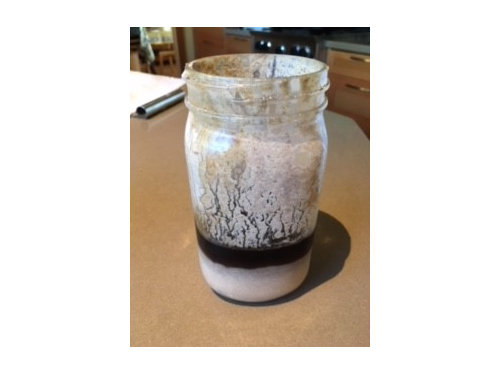
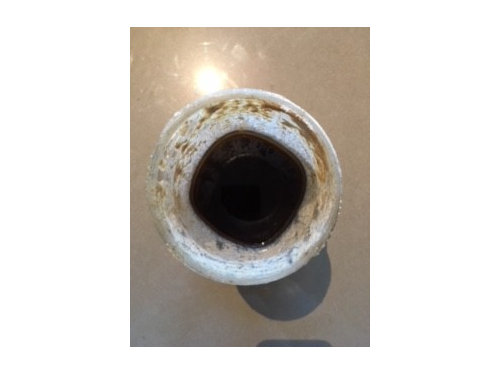
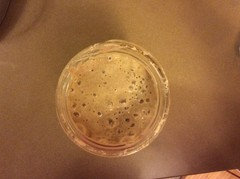
Is this old sourdough starter is still good to use?
8 years ago
Featured Answer
Sort by:Oldest
Comments (16)
Related Discussions
Consistency of sourdough starter/sponge
Comments (19)Susy, I also often add flour by hand after doing most of the kneading (or after sitting, for a no knead loaf), and don't have any trouble. I make sure that I have at least half of the flour in before kneading, so that I get enough gluten development for the bread to rise, and mix in the new flour well enough that I don't get flour pockets in the finished loaf. I think starting the recipe with all of the water and part of the flour is a helpful tool in several situations. If you're kneading by hand, it's almost impossible with a very stiff dough. You can go for 20 or 30 minutes and bruise your knuckles and the bread still won't rise. A wet dough (and wet hands!) is so much easier. If you've got sub-optimal tools, also. A cheapo hand mixer can't handle dough, but you can use it to whir up all the water mixed with half the flour and save yourself some elbow grease. As long as it's thick pancake batter consistency, you're getting some gluten development. Many stand mixers struggle with stiff dough. You can do most of your kneading with the loose dough, then knead in some extra flour toward the end. Adding different amounts of flour also allows you to use the same dough for a bunch of different uses. With my no-knead dough, I can add no flour and bake it in a loaf pan, add a little and make a free-form loaf or a pizza crust, or add a lot and make bagels. I'm not very familiar with bread makers, but I think over time you'll figure out the easiest method. If you've got a good strong motor on your bread machine and you prefer to measure your ingredients, once you iron out your recipe, putting everything in from the start may work perfectly for you. I'm more of a fly-by-the-seat-of-my-pants kind of gal. I hope you'll come back and brag about your loaves, and maybe show us some pictures. We love that! :-)...See MoreRECIPE: Sourdough Starter
Comments (13)I'd recommend getting a starter from someone rather than trying to create your own. If you create a starter yourself, the starter is created by yeast and bacteria in the air, and that is the reason why everyone's sourdough tastes different, it's because of the natural yeast and bacteria in that local, that's why San Francisco is known for it's sourdough bread. If you make your own, you might get lucky and get a good flavored starter, you might just waste some flour and time. And even if it does taste decent, chances are, it won't taste like San Francisco's sourdough. If you get a starter from a good source, it will continue to grow the yeast and bacteria in that starter. King Arthur Flour's web site has a good starter. Here is a link that might be useful: King Arthur's Sourdough Starter...See MoreLOOKING for: Recipes using Sourdough Starter
Comments (1)Here is a good recipe for Sourdough English Muffins Sourdough English Muffins from "Sourdough Cookin'" by Dean Tucker, 1 cup sourdough starter (after being fed and left to expand for several hours) 2 1/2 cups unbleached bread flour 3/4 cup buttermilk 1/4 cup yellow cornmeal 1 t. baking soda 1/2 t. salt Take buttermilk and starter from refrigerator at least 30 minutes before preparing recipe. When all ingredients are at room temp, combine and stir well. Turn dough onto a lightly floured board or work surface and knead until smooth or knead about 5 minutes in a heavy duty mixer such as a Kitchen Aid or Bosch, adding a little more flour if necessary. Roll dough to 1/2-inch thickness and allow to rest for 10 minutes. Cut with a floured 3 or 4-inch round floured biscuit cutter. You can use a very clean tuna can with both ends cut out if need be. Sprinkle 2 TB cornmeal on a sheet of waxed paper. Place muffins on cornmeal and press lightly to coat each side. Cover with plastic wrap and a clean towel and let rise for 1 hour. Cook muffins on a lightly greased griddle heated to 350 (or a medium low burner) for 20 minutes (or less-see my note), turning occasionally while cooking. When done, split and butter and toast, then spread with honey or your favorite jam, jelly, or cream cheese. Recipe makes 10-12 muffins. Note: you can sub 1 cup whole wheat flour for 1 cup of the unbleached if you want whole wheat muffins. I made a note that mine took only 6-7 minutes per side to bake on a lightly greased cast iron griddle. Teresa...See MoreAnother new Sourdough Starter
Comments (11)Thanks Plllog. I'm pretty familar with the good and bad of sourdough starters and recognize the difference between what is an acceptable "smell" and one that isn't. I've been baking sourdough for about ten years now. First starter I kept going for s number of years. The last one that I neglected to the point of no return was two years old. To be honest, since I'm not really a big fan of sourdough bread to begin with, so I lose interest. My family, especially Matthew loves sourdough so I make it mostly for him and share it with friends. I do get a sense of satisfaction out of being able to bake bread from wild yeast without the addition of commercial yeast. Hooch is something that usually develops if I let my starter go longer than 8 to 10 days. I don't care for it so I pour it off. It isn't necessary to keep it. I know that my new starter is good and strong since it baked the above bread when it was only three to four days old. And without the addition of commerical yeast. The flavour is already quite developed. I fed both starters again this morning before leaving for work. And I used the discard to make a rye preferment that will be going into a batch of rye bread that I will handmix tonight and probably bake on Monday. This is what the starters looked like when I got home. One fed with white and one with rye. and the rye preferment had more than doubled....See More 8 years ago
- 8 years ago
 8 years ago
- 8 years ago
- 8 years ago
- 8 years ago
- 8 years ago
 8 years agolast modified: 8 years ago
- 8 years ago
- 8 years ago
- 8 years ago
- 8 years ago
Related Stories

GARDENING AND LANDSCAPINGBid Bad Garden Bugs Goodbye and Usher In the Good
Give ants their marching orders and send mosquitoes moseying, while creating a garden that draws pollinators and helpful eaters
Full Story
PETSHow to Help Your Dog Be a Good Neighbor
Good fences certainly help, but be sure to introduce your pup to the neighbors and check in from time to time
Full Story
PRODUCT PICKSGuest Picks: The Well-Stocked Starter Kitchen
We’ve got all the kitchen basics and tableware you need (or that recent grad needs) to make cooking a joy
Full Story
LIFEThe Good House: An Experience to Remember
A home that enriches us is more than something we own. It invites meaningful experiences and connections
Full Story
HOUZZ TVRetired Houston Couple Replaces Starter Home With Forever Home
See how the Elders built their dream home while preserving the memory of the home they lived in for nearly 4 decades
Full Story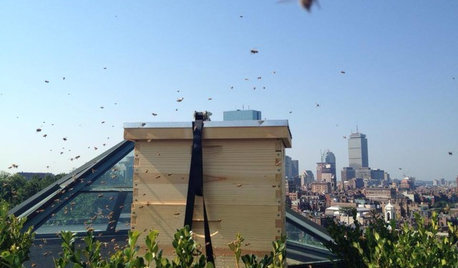
FARM YOUR YARDHello, Honey: Beekeeping Anywhere for Fun, Food and Good Deeds
We need pollinators, and they increasingly need us too. Here, why and how to be a bee friend
Full Story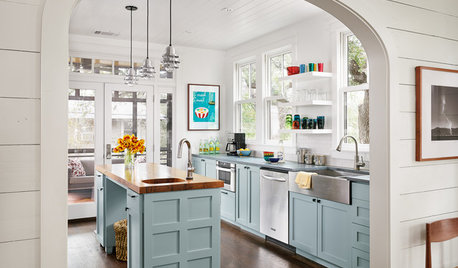
ECLECTIC HOMESHouzz Tour: Playing With Good Tension in Austin
A 1938 bungalow gets updates — including a whole new floor — but keeps much of its traditional charm
Full Story
BEDROOMSGet More From Your Bed (Storage, for Starters)
Find space for all your stuff — and maybe even a seat, a writing desk or another sleep spot — by cozying up to a multipurpose bed
Full Story
GARDENING GUIDESThe Surprising Ingredients Every Good Garden Should Have
See what to do — and not do — for lasting rewards in your landscape
Full Story
PRODUCT PICKSGuest Picks: Chop Chop! 20 Cutting Boards Too Good to Miss
Any way you slice it, these cutting boards, chopping blocks and serving boards are both artful and practical
Full StorySponsored

Customized Award-Winning Interior Design Solutions in Franklin Cnty OH




gardengal48 (PNW Z8/9)