Houzz Logo Print
sooz_gw

Plastic cutting board - keep or replace

9 years ago

Let me preface this by saying we don't have a dishwasher.

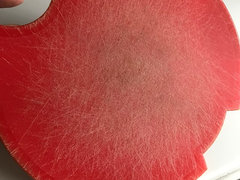
This afternoon, I pulled out the 20 x 15 plastic (HDPE poly? something or other) cutting board that we use -- one side for meat and chicken because it has a perimeter groove, and the other side for veggies. I have taught DH to sanitize after use with hot water and dish soap, followed by a good scrub with hot water and salt, and then scrub with diluted bleach, followed by rubbing with a cut lemon, and finishing up with diluted bleach and hot water, and let it air dry. It may be overkill, or perhaps incorrect, but so far, I'm okay with it.

DH tends to be very laid-back about stuff like dirt, dust bunnies & things he will just step over on the floor (i.e. they are invisible to him), so germies are something he doesn't really consider, which is why perhaps I .. (ahem) overtrained ... him with the cutting board? LOLAM

I noticed quite a few rather deep-ish knife cuts on it. I really want to make sure this is super sanitized for more uses, or is it time to just get a new plastic cutting board?

Thanks!

Smiles,

Sooz

Comments (54)

  • 9 years ago

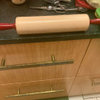
    Also know as cabinet scrapers.


    Cabinet Scraper

  • 9 years ago

    I'm a bit like your DH, and so I'm glad to hear that there are others like me. I just do not see dirt on the floor as much as others do, and so I don't feel compelled to clean floors as often as previous housemates of mine did. I would tell them that I would clean the floor when I saw dirt, but they always cleaned it before I could see any.

    I recommend replacing a plastic cutting board with a wooden one.

  • Related Discussions

    Cutting boards - $$$ vs $$

    Q

    Comments (34)
    Seems the price is often a factor of the wood and construction method. End grain and smaller peices mean more labor and more $$$. Exotic wood cost more $$$. Most is based on looks. You want to make sure what ever you get was constructed with straight lumber, glued with the right type of glue with good coverage, and clamped and allowed to dry adequately. However most of that you can't tell by looking at the product. My Ikea butcher block counter had one seam that didn't get adequate glue. Looked fine upon inspection, but after cutting part off, we discovered a section in the middle wasn't glued and started to open up. The Boos counter top has developed a crack in one of the boards on the underside (this is not a seam problem. I should take it off and glue and clamp before it gets worse. That one has only mineral oil applies. The end grain cutting boards I used as a temporarily island top ended up wanting to cup after time, and one opened up along one seam line. Those cost $36 a piece, and they were small. I have a nice cutting board that is face grain, and I've had it for years and years and a few of the joints are opening up at the edges, but overall I think it's given me the best value. I know I didn't pay much for it as I was poor at the time. The one I liked the best was the pine one my DH made for temporay use for the round island. That held up very well, but he cut the boards and made sure they were well glued and clamped. I would think that getting one that was made for you where a person hand selected the wood for grain/trueness and then made sure there was good glue in all joints would be your best bet. Have no idea what that would cost, but anything that goes through an automated process is subject to more problems. I once ordered something where the sample was clear and looked really good. When I got the items, one had a big knot in a very conspicuous location. Supplier said they never claimed to hand select the lumber and knots could be expected. It was coincidental the sample they chose to display was one with no knots at all.
    ...See More

    Wood vs Plastic cutting boards, updated study from Pubmed

    Q

    Comments (6)
    I treat anything that touches raw meat as if it were almost radioactive. I would never cross contaminate like that. I may not be great with the afternoon's mail or clutter, but there is no way that raw meat or dairy get left on any surface longer than they absolutely have to be there and then they get thoroughly cleaned. Has anyone ever watched a cooking segment where the chef wipes a meat juice laden knife (or cutting board) on a kitchen towel and then keeps going? I watch that towel like a hawk and cringe when they use it later on to wipe their hands... Yeeek! I think they should model proper kitchen safety even when no one actually is eating what they make on the show....
    ...See More

    Cutting Boards

    Q

    Comments (26)
    I used wooden until they came out with an article in the newspaper that they were unsanitary unless cleaned properly. I replaced it with plastic, a few years later I heard something dangerous about plastic, probably the same thing about germs in the cracks. I wouldn't worry about using either one. If someone gets sick in this country because of a dirty wooden cutting board, everyone throws theirs away and uses something else. In my opinion it is 6 one way half a dozen the other way. My sisters worry so much about salmonella on chicken and eggs. There was probably a salmonella problem on the first chicken ever hatched. I just keep my kitchen clean without using to many chemicals and don't worry about it. My family still makes homemade ice cream with raw eggs, it's never hurt any of us.
    ...See More

    Cutting boards....any you love, hate?

    Q

    Comments (48)
    Well, because I wasn't sure how a pink pig would look in my very non-pink kitchen, I just happened to find one at C&B. This will become our meat cutting board, appropriately enough. :-) Still looking for a pretty wood one that makes me happy. I want to have it out on the counter, so it needs to look pretty with my counter and cabinet colors, etc... oh, how I love a new obsession during a slow week!
    ...See More
  • 9 years ago

    I am pretty serious about making sure that the food I prepare in my kitchen is safe and that no one gets food poisoning from anything I make. Having said that, I think your cutting board cleaning routine is a bit complex. I would just scrub a plastic cutting board (if used for raw meat) with dish soap and hot water and then disinfect with bleach (1 tablespoon per gallon of water), letting the bleach sit for several minutes before rinsing off, then dry well. I will sometimes put mine (plastic) in the dishwasher, on sanitize, if I don't want to wash it by hand. I don't think it's necessary to throw out a cutting board unless the scratches are deep and hard to clean.

  • 9 years ago

    Another ways to clean ( I don't mean clean, actually. I mean sanitize) is to get an UV germicidal light.

    dcarch


  • 9 years ago

    Wood cuttingboards are naturally somewhat antimicrobial. Plastic is not. I do use plastic for some things just because it can go in the dishwasher, but have ones that are specifically for raw meats, a wood carving board for cooked meats, and a baking board for no cutting at all, besides the smaller wood and plastic boards for general (non-meat) prep.

    The textured nylon style boards aren't as easy on your knife edges as wood, but nearly. Harder plastic is not, nor are the soft plastic thin sheets that are used on top of stone, because the hardness of the stone is greater. Stone, glass, steel, etc., are fairly easily disinfected but very bad for your knives. If you have immune compromised people, the tradeoff of direct application of boiling water might be worth it.

    Deep cuts in any cutting board will harbor bacteria, and should be sanded out or the board thrown away. Even if you're using a bleach solution, unless you're heavily scrubbing, and not necessarily even then, you're not getting the hidden bacteria out.

    That said, if you're healthy people it probably doesn't matter. While food poisoning is drearily common, I don't know that it's ever been traced to well cleaned cuttingboards harboring small amounts of bacteria. This is more about taking conscientious care while healthy, so it's not a strain when suddenly someone becomes ill and needs more care.

  • 9 years ago

    I use those thin cheap plastic cutting boards because they are flexible and I can fold it up and dump my chopped veggies where ever...I replace them often and put them in the dishwasher after every use....but for meat I use wood. It harbors fewer bacteria than plastic.
    http://faculty.vetmed.ucdavis.edu/faculty/docliver/Research/cuttingboard.htm

  • 9 years ago

    Just pointing out Ricky, you have that around backwards. The cuts and scratches in plastic cutting boards harbour germs, whereas naturally germicidal wood tends not to.

  • 9 years ago

    Like others here, I have wooden cutting boards. I even have a butcherblock countertop, which gets a go-over with a palm sander and oil regularly. I have some of those flexible ones that LindaC talked about, but I mostly use them to put under the KitchenAid so I can just slide it forward and back on my counter easily. I have a plastic/nylon one next to the sink to save the countertop, and I do chop vegetables there occasionally but it's mostly used by Elery as a drying rack or a place to put my clean canning jars while I'm waiting for the canner to heat.

    Anyway, if the plastic cutting board were mine and I had no dishwasher, I'd replace it. That said, I also think the cleaning process is more involved than it needs to be. I took the food safety courses necessary to have a food service business back when we had the bar/grille and I was told to rinse the board carefully to avoid splattering bacteria around, wash well with soap and hot water, then sanitize with a bleach solution containing 1 tablespoon bleach to 1 gallon of water. Dry it well to avoid the accumulation of moisture, as bacteria need moisture to grow. With that action you are good to go but when the board accumulates deep cuts it should be replaced.

    I'm also one of those people who don't see dirt as quickly as some others, or maybe it just doesn't bother me as much. Elery will vacuum the carpet before I even notice that it needs it, same with shaking out rugs. I tend to "schedule" things like floor cleaning and don't even think about looking to see if it needs cleaning before the weekly "schedule" is up.

    Annie

  • 9 years ago

    Thanks for all the helpful input and links, too!

    I know I do a bit of overkill on this but for me, better to be totally sanitized and/or disinfected as best as possible!

    Smiles,

    Sooz

  • 9 years ago
    last modified: 9 years ago

    I can't say that I agree or disagree with the link which has done research that "Proves" that wood is better. I have not seen other researches that confirms the same finding. Everyone always links to the same research. Have you seen others?

    As that research pointed out, "--- Although some established scientific laboratories say their results differ from ours, we have received multiple communications from school children who have done science projects that have reached essentially the same conclusions that we did.----" there are ESTABLISHED Laboratories disagree with their findings, and the ones who agree are children's science projects.

    I know that wood rots, plastics don't.

    dcarch


  • 9 years ago

    Food safety procedures for restaurants say use a seperate cutting board for meat, fish, poultry...don't use the same for veggies, bread cutting or otherwise uncooked foods. Wash in hot soapy water, rinse, than soak in 1gallon water to 1T bleach for at least 2 minutes. .rinse well.

    The bleach choice is important here as they are not all certified in disinfection. Even the Clorox brand with all their choices only has one bleach on the store shelf that is certified by the epa to disinfect...its the one labeled Regular.

    Once the cutting board has deep cuts either sand smooth or replace.

  • 9 years ago

    There have been studies by U of Wisconsin and UC Davis proving the safety of wooden boards....others too...Google is your friend!

  • 9 years ago

    If you're really obsessive, they make disposable, one-use cutting boards. They're a bit pricey, but they would solve the problem.

    Getting back to wood versus plastic - I had always heard that wood retained germs because it was porous and that plastic had the advantage that nothing stuck to it. Either way, I've always used a wood cutting board and never had anyone get sick from my cooking.

  • 9 years ago
    last modified: 9 years ago

    Replace it or it will bother you every time you lay eyes on it.

  • 9 years ago

    I am pretty serious about making sure that the food I prepare in my kitchen is safe and that no one gets food poisoning from anything I make

    Is that a problem for you?

    Like others here, I use only wood cutting boards, and have for almost 50 years. No one has gotten food poisoning from my cooking. My cutting boards are clean, some are almost 100 years old, they've never rotted.

    Mankind has been using wood for cutting surfaces for ............. 10's of thousands of years, maybe.

    And even the old ones look good.

    Plastic cutting boards, Cliver found, are easier to sanitize. But cutting on them also leaves lots of grooves where bacteria can hide. Wood is tougher to sanitize, but it’s also (often) tougher in general – you won’t find as many deep scratches in the surface.

    In addition, researchers have discovered that the type of wood your cutting board is made from also makes a difference.

    “Hardwoods, like maple, are fine-grained, and the capillary action of those grains pulls down fluid, trapping the bacteria – which are killed off as the board dries after cleaning,” says Ben Chapman, a food safety researcher at NC State. “Soft woods, like cypress, are less likely to dull the edge of your knife, but also pose a greater food safety risk,” Chapman explains. “That’s because they have larger grains, which allows the wood to split apart more easily, forming grooves where bacteria can thrive.”

    Which type of cutting board should you use? Chapman recommends using plastic cutting boards for meat and wood cutting boards for fruit, vegetables, or any ready-to-eat foods (like bread or cheese).

    Cutting Boards and Food Safety

  • 9 years ago
    last modified: 9 years ago

    I use a plastic one for cutting up raw meat. It's then sprayed with diluted bleach and washed in hot water. The vegetables and breads get cut on wooden cutting boards.

  • 9 years ago

    I only use wood boards. The one for raw meat gets sanded once a year. I never use bleach on them ... just soap and hot water.

  • 9 years ago
    last modified: 9 years ago

    "Is that a problem for you?"

    I don't really understand what you're asking, but, I'm finding your post mildly offensive, possibly due to the tone/attitude that I think I'm detecting. If you're asking if I have ever had anyone get food poisoning from anything made in my kitchen, the answer is a resounding NO.

    Though I do have two wooden cutting boards, I prefer plastic. That's my choice. I like being able to put them in the dishwasher. I like a lot of things about them, actually. I did not ask for your advice or opinion about what I should use in my kitchen, nor do I need, or care to receive, a lecture from you about cutting boards or food safety. If you want to use wood, go ahead, because it's your kitchen and that's your choice. No one ever said you were giving anyone food poisoning doing that.

    I have extensive training as a microbiologist, which is why I take a special interest in ensuring no one gets food poisoning from my kitchen. No one ever has and no one ever will. I'm not interested in using wood cutting boards. I don't want to mess around with them, for a variety of reasons. They are also NOT somehow superior to plastic so far as preventing foodborne illness.

  • 9 years ago

    I take a special interest in ensuring no one gets food poisoning from my kitchen. No one ever has and no one ever will. I'm not interested in using wood cutting boards. I don't want to mess around with them, for a variety of reasons. They are also NOT somehow superior to plastic so far as preventing foodborne illness.

    But we don't know that no one will ever get food poisoning, do we? None of us can make such a guarantee.

    It seems that we are much more likely to get food borne illness from commercially prepared food.

    We use what we are most comfortable with. And we should continue to do that.

    I don't like plastic boards, they seem to get chewed up so quickly and are generally very ugly.

    Historically, I don't think food poisoning from wood cutting surfaces has ever been an important health issue.

    It's only in the late 20th Century, as Americans were coaxed, by advertising, that we have become obsessed by kitchen, and bathroom, hygiene. To the point, in some cases, that we are actually making ourselves sick, rather than safer.

    We now know that anti-bacterial soap seems to do more harm than good.

    As a nurse for many decades, I watched the "science" of hygiene products change in hospitals. And it's still changing. And it's still hard to get physicians to wash their hands.

    No one is claiming that wood is "superior" to plastic, just that it's no worse. And a wood cutting board can be a thing of beauty.

    The only advantage to using plastic or glass cutting boards is that they can go into the dishwasher.

    But giving a wood board a good cleaning after cutting meat, and every other use, seems to be as effective.

  • 9 years ago
    last modified: 9 years ago

    Momj, as I said, I take great care to ensure that nothing I do in do in my kitchen will cause anyone to get food poisoning. I cannot control what happens to food before I get it, or what people do with it after it leaves my care (e.g. with leftovers they take home). I am not obsessed with hygiene and I DO NOT USE ANTIBACTERIAL SOAPS, as I have previously stated in a post here on gardenweb. Again, I have not asked for, and do not need, your advice and I am not interested in your lectures.

    Use wood if you want. It's your choice and I really don't care what choice you make in your kitchen. Please refrain from advising me what to do in mine. I do not need your advice. You come across like you think that you are in possession of a great deal of knowledge and that everyone else is uninformed or uneducated or less educated than you. This is not the case.

    I'm sure that you know it's not just doctors who don't wash their hands. It's the nurses too.

  • 9 years ago
    last modified: 9 years ago

    Plastic cutting board - keep or replace

    If it has some rather deep cuts in it, then it should be replaced.

    That's a "feature" of plastic cutting boards I disliked. Having to sand down the sharp pieces.

  • 9 years ago

    CindyMac, your time would be better spent oiling your wooden cutting boards vs making snarky comments that are directed at me.

  • 9 years ago

    I recall the reporting about wood cutting boards vs. plastic from way back. I seem to recall it was from Consumer Reports..?

    I use wood boards for most foods & a have a hard plastic one for raw meats or sticky, messy things. I wash the plastic one after every use in soap & hot water & air dry. It's so hard it resists deep cuts, unlike softer plastics.

  • 9 years ago

    Who knew cutting boards could be such a Hot Topic!

  • 9 years ago

    LOL

  • 9 years ago

    I imagine plastic cutting boards have improved ALOT since I bought one many years ago. I saw some nice ones the other day. Almost like glass

    I kept getting pricked by hard little pieces of plastic from my plastic boards, so I went back to wood.

  • 9 years ago

    The advantage of a plastic board, such as the one by my sink, is that it doesn't react poorly to water. I had a wooden one there and no matter how diligently I tried to dry it, it still warped. I replaced it with a plastic one, which was replaced with another plastic one, which was replaced with another plastic one. The plastic boards get stained, discolored, gouged up. In my world they then become something else, like a device to block off the opening in a chicken coop so the chickens can't get out while I'm fixing the fence, or a work surface for the grandkids to paint rocks on. Hey, they're plastic, they're washable, they're cheap. (shrug).

    My wooden boards, though, are beautiful. If I don't do something foolish, like put them in the dishwasher or keep them in a wet spot or use a hatchet to cut up a butternut squash (yeah, I know, don't lecture me, LOL) they'll last virtually forever. A piece of sandpaper and some oil and they are beautiful again. Properly cleaned they are as safe as plastic.

    As for food poisoning, to my knowledge no one has ever become sick from eating anything I've cooked either, in spite of my best efforts. I've left things on the counter too long, I've forgotten to bleach my boards, I serve eggs with runny yolks, I eat vegetables straight out of the garden, just rinsed in the sprinkler. We've managed to survive anyway. However, and it's a really BIG HOWEVER, that does not apply to the very young, the very old or the immuno-compromised. That extends to my 3 year old granddaughter, my 82 year old mother, my Aunt on chemo. In those instances no rules are ever broken, I do everything possible, going overboard to keep them safe.

    As for the antibacterial soap, well, my old doctor told me at least a decade ago not to use them. He said we were "sanitizing ourselves sick" and that if we were not exposed to anything we would never develop immunities. I used that as my excuse to head into the garden, just working on strengthening those immunities. (grin) I did wash my hands when I came in, though.

    Annie


  • 9 years ago

    Annie, I'm with you on the bacteria. I try to contain sources of potentially bad bacteria--I don't want to be washing everything with bleach. It's bad for both me (the fumes) and the environment. Hot water and soap is adequate for most cleaning. Besides, bread won't rise in a sterile kitchen.

    There are different kinds of plastic cutting boards. I've never had a deep cut or hard sliver on my nylon one. It's designed to be easy on one's knives and not to get cut up, but I also am not a whacker. I started using it when my favorite small maple board delaminated from age and water. Cutting boards aren't so expensive that they can't be replaced as needed.

  • 9 years ago

    I too never use anti-bacterial soaps nor sterilize everything. We don't get colds, the flu etc etc.

    The only thing I use bleach on at all, is a very diluted solution on my plastic boards after cutting up chicken.

    Having said that, I'm still nervous, intrepid about using meats at all on my wooden boards. My beautiful, favourite hand-made board gets used most for cutting the bread! LOL. And for chopping lettuces, broccoli, etc. The onions and garlic get cut on my bamboo board. I don't want any smells to permeate my nice board :-)

    Hubby has finished radiation and is now on oral chemo, so I'm being a tad extra cautious.

  • 9 years ago

    Yeah - I refuse to cut meats on my wood boards. Sometimes I'll even use a china plate or the pyrex lid from a casserole dish.

  • 9 years ago

    I encourage you to spend the money and buy a really nice looking cutting board.

    A cutting board can be a work of art. You will be surprised that after you spent big time $$$$$ to renovate your kitchen, upscale appliances ----- but a cutting board can make such a big difference in enhancing the aesthetics of your kitchen.

    It can also fool your dinner guests that you are a better cook than you actually are. :-).


    dcarch


  • 9 years ago
    last modified: 9 years ago

    I'm not getting into the sanitizing topic, however to save the edge on my expensive knives, I was advised to use the Epicurean boards for cutting. I've replaced all but a few inexpensive plastic boards *used for raw meat or a quick cut of veggies-- with 3 Epicurean boards. They're a composite of wood and available on Amazon, Sur la Table, Target, Williams Sonoma and I'm sure many more stores. Dishwasher safe, they never hold a smell and most importantly, they won't dull your knives either. If I don't throw them in the dishwasher, I wash them with hot soapy water and if necessary, spray them with the Chlorox spray kept under my sink. "Epicurean Cutting Board Review. The Epicurean cutting boards are made of Richlite, an eco-friendly, wood composite that's non-porous, dishwasher safe, stain resistant and very strong."

  • 9 years ago
    last modified: 9 years ago

    Richlite is resin with wood dust in it. It's interesting that it's dishwasher safe nowadays. Even though it's long been used for kitchen counters, Richlite used to be not recommended for use around water. Or maybe it's just sink area installations that might never get dry that are the problem. I have a couple pretty, resin bound organics cutting boards that are too hard for regular use but are DW safe. Next time I see the Epicurean I'll look into seeing it they'd be a good replacement, even though they look like Masonite. (The difference is that Masonite uses the resin naturally occurring in the wood fibers as the binder, whereas Richlite has resin added.) It's very interesting that they're recommended for knives. It seems hard to me. I wonder if there's something else Epicurean does to the material to make it waterproof and softer? Or are they touting it over wood for being dishwasher safe.

  • 9 years ago

    I have used wooden cutting boards exclusively for nearly 40 years, including for cutting up raw meat. The boards themselves are years old, in one case, decades. I have only ever scrubbed them with hot water and dish soap and a plastic scrubber. Never given anyone food poisoning.

  • 9 years ago

    I've never heard of the Epicurean boards, but I'm sure I've seen them, I just never paid attention. Not expensive.

    They are dishwasher safe, that makes them very useful. And they don't look like plastic.

  • 9 years ago

    Pillog- Sur la Table told me that cutting on them wouldn't dull the knife edge like plastic does. They said wood boards are fine too, but I iike to be able to thoroughly clean the boards in the dishwasher.

    Momj47- the boards are less than $50, some as low as $20. They've lasted well and still look virtually new. I'll post a photo. Mine have rubber corner covers which is handy so they don't slip about on the granite countertops!

  • 9 years ago

    Do you know, if I was so worried that my food could kill me unless I went to those levels to clean the chopping board used to it it up, I think I'd become vegetarian.

  • 9 years ago

    Meanwhile, studies have found that the TV remote is the most contaminated item in the house. People watch TV, run to use the bathroom during the commercial, and well...

    How many of you doing this extraordinary cleaning of your cutting boards have cleaned your TV remotes?

  • 9 years ago

    "---People watch TV, run to use the bathroom during the commercial, and well...---"

    There are studies advising people not to flush toilets. The droplets from flushing your toilet will contaminate your whole house.

    Also, never wash chickens in your sink.

    dcarch


  • 9 years ago

    I don't go to extraordinary measures to clean my cutting boards--just hot water and soap, and a scrub if they need it--but I do clean my remotes now and then.

  • 9 years ago

    Yes, I clean my remotes lol

  • 9 years ago

    My mother has been using a wooden cutting board my dad made her 40 years ago for just about everything -- no ones died yet. Deep cuts in plastic -- I'd chuck it. I buy those plastic "sheet" cutting boards at Ikea -- they are cheap and when they are cut up I toss them.

  • 9 years ago

    Not only the remotes, but my computer mouse, keyboard, phones & all door handles get wiped down regularly w/ isopropyl alcohol. I do not wash chicken before cooking & scour my sink every night. Food borne illnesses are no joke!

    I wipe down my cell phone every night.

    Did you mean to write flush toilet w/ lid open, dcarch7? That IS actually a sanitary concern - esp. since so many people (like me) keep their toothbrushes nearby.

  • 9 years ago

    the only remote I touch is the one that opens the garage door, LOL, I don't watch television. We do have a TV (and an antenna!), but Elery is in charge, I can't even figure out how to get to Netflix when the grandkids want to watch cartoons....

    I just cleaned doorknobs tonight and I do clean the phones periodically.

    Annie

  • 9 years ago

    This board is way overdue for being discarded. It was just taken out of dishwasher. Today's the day. Got replacement for $4.

  • 9 years ago

    I use a bamboo one, i got it for about $3. I don't eat meat so i only use it for veggies...i alway put a couple of paper towels on it when i cut veggies to soak up the juices so they don't run everywhere and it seems to lessen the cut marks the board gets too.

  • 9 years ago

    I have a very old wooden cutting board that has had many a ride in the dishwasher. It's one piece, not laminated, oval about 15 by 8, likely pine. I bought it at an auction about 52 years ago ( I remember because my son was a toddler and I was trying to hold the board and him...left the sale early!) It was old when I bought it.
    I try to remember to remove it before the dry cycle....but it has made lots of dishwasher trips.....and it's fine!
    I bought it because I suspected it would fit the center of a platter....and I was right. It has had lots of meat cut on it....and that's why the dishwasher trips.


  • 9 years ago

    bamboo boards are very tough, not too good for knives. They use a lot of hard glue to glue the tiny bamboo pieces together.


    dcarch

  • 9 years ago

    One thing I hate is noise when chopping. I shudder when I still see glass cutting boards for sale. Do people actually think they're good for knives?? Not to mention the loud noise when chopping.

    I have a bamboo board as well as a nice, large wooden one. I tend to baby my nice wooden one. I don't chop garlic, onions or anything smelly on it. The bamboo one is noisy as well, so I figured the wood is hard, and probably hard on the knives :-(