

Raptors at a distance - how close/far can the armature identify
9 years ago
last modified: 9 years ago
Featured Answer
Sort by:Oldest
Comments (6)
Related Discussions
Faux bois armature
Comments (11)I know this is kind of off topic for hypertufa, but HT would also work for most of the following..... >MMW --- Boy...we sure hope you have pix of the class in action. Shotcrete is a process I'm itching to give a try. Had a friend who built a lot of sets & movie props out of the lightweight mix. Sounds excellent...who put it on? The class was through the "Workforce Training" center at a local vocational-technical turned community college here in Albuquerque. The WTC trains folks to work in construction, beauty salons, auto shops, your basic vo-tech output. The site we worked at is owned by the county and they were paying Desi to bring up classes to enhance the site, an old tuberculosis sanitorium near Albuquerque, NM. The teacher, named is Desi Brown, has about 20 years experience in fake rock work and has spent most of his time working at the local zoo, botanic gardens and for the city making rock facades here and there. My plan over the next month or so is to collect some photos of all of his stuff to post in an album which will include some pics I have of the class. Desi is getting out of the rock making game and into teaching, hence his foray into teaching techniques of rock making. Desi was very generous in offering recipes, experience in making press pads and molds of various rock surfaces, and his time in explaining what works and what doesn't work. We made, textured, carved and stained faux rocks and vines in addition to shotcreting additional rocks and vines. We learned to bend and tie rebar armatures, wire in lath/chicken wire subarmatures. Shotcrete is a fairly involved (and expensive) process. You need a cement truck (you need several yards of cement to make shotcreting worthwhile), a compressor/pump, alot of shotcrete hose and several nozzles just to start. It's not something you can do by yourself or even with one or two other folks. We shotcreted 10 yards of cement creating half a dozen large (boulder sized) rocks, steps, walkways, vines. We also used the shotcrete to backfill behind some molds of rockfaces that we had created in an earlier class and mounted throughout the landscape. It was a great experience and I learned alot about working with cement that can be applied to HT. I'll have to see about succinctly putting a review together. Make some friends of contractors and see if they'll let you come along or observe a shotcrete session. It's way cool and a great way to get alot of cement distributed in a relatively short time. BTW, our shotcrete recipe was 10 yards of "10 bag" cement, which works out to 940 lbs of portland per yard or 9400 lbs total. Whew. Desi recommends using lime if you are working on vertical surfaces and to make the cement stickier. I have a list of his recipes somewhere. I'll dig them out for you later. If you want to see what shotcrete can do, go to your local zoo and look at the habitats for various critters, 'specially outdoors. I'd bet that they are mostly shotcreted. Tah for now. Jo...See MoreWhen a window gets closed...
Comments (18)Thanks Tom. As it is, I am more central to central-north. The area I am in is one of the higher locations of this fairly flat state. According to historical data I have read, the area I am in is considered sandhills or pine sandhills. Both Slash and Longleaf grew here, but Longleaf has been far more extensively farmed to the point where one site, Floridata I think, stated that there are no longer ANY virgin stands of Longleaf. I am not trying to revert my yard back to pre-colonial times, but I do try to keep in mind what what naturally belongs here. The way I see it, God/Nature put those type of plants here for a reason, so the best I can do is try to incorporate them into my yard along with the exotics. And besides, it's hard for me to turn my nose up at the idea of free pine needle mulch! As far as my debate goes, I went out today and looked over my beds from various angles and it turns out that there was no debate. To try and incorporate three pines into the bed would have required a pretty massive transplanting effort of several plants that are finally to the point of being established. Something I was not really wanting to do. So now two grass-stage Longleafs are sitting in their new homes and starting their own establishment period....See MorePhotos Of Plants From Near And Far
Comments (57)I would like to announce my nomination of the Silver Beech tree as the premier survivor under adversity. We all have on our most revered lists the pre Madonnas that when given the exact measure of all of its desired elements will grow into a specimen usually just a limb shy of our dreams. All too often in the plant world the rugged survivor under the right conditions can be given the ugly title of being a thug, a pest, or invasive. As if these prejudices werent enough it is the rugged survivor that also faces the condescending sneers from those who judge a plant based solely on beauty. I will be rambling on for days attempting to not only state by case for the beech tree but in the process discuss the three different types of native forest in New Zealand and primarily the lowland native forest of Fiordland, the weather, geology, other plant types, and anything else you might be interested in. PLEASE throw me a bone and let me know if there is anything your interested in. kt Navigating through one of three fingers that make up the Doubtful Sound (fiord) towards the opening to the Tasman Sea. It is the rare day that it is not raining in Fiordland as moist westerly airstreams blow across the Tasman and crash into the high land mass of the southern alps and drop buckets of never ending rain before continuing east across dry regions of New Zealand. My camera is grateful for the chance to dry off and the only bit of travel advice I would have to offer you is dont go to NZ without a WATER PROOF CAMERA. Silver Beech lowland native forest at altitude where forest ends and alpine forest takes over (brown colored area). The trees and other plants that grow in alpine forests are adapted to survive the cold. Trees growing in alpine areas will not often grow as tall as the same species would grow in a lowland forest because of the colder climate and wind. The alpine forest areas have diverse plants that I will share with you later. Tree avalanches are a common occurrence with little other than a few cracks in the steep granite for the roots of a mature tree to hold it in place often a rain or snow storm will blow over a tree and then like a domino effect everything below the fallen tree goes too. Almost immediately moss, lichens, and hardier shrubs start growing and lay the foundation for the forests regeneration by acting as a propagating bed for larger forest trees....See MoreCurcurbit saving distances
Comments (4)Nice link, Julianna, I haven't seen that one before. Both hybrid & open-pollinated squashes are pictured... however, they are not identified as hybrid or OP. That is an important distinction, since you intend to take only OP varieties with you. For open-pollinated squash varieties _only_, there is a much more extensive squash listing (by species) in the book "Seed to Seed" by Suzanne Ashworth (which I highly recommend you take with you, considering what you are planning). If you have access to the book "Garden Seed Inventory, Sixth Edition" (published by the Seed Savers Exchange) it lists most of the OP varieties sold in the U.S., with descriptions. The C. pepo squashes are the most widely grown, because there are so many types - including nearly all Summer squashes, most pumpkins, acorn squash, spaghetti squash, ornamental gourds, and quite a few others. They run the greatest risk of crossing, with others of their species grown nearby. C. maxima & C. moschata will not cross with C. pepo under normal conditions. You could grow one of each in each plot, and still save seed. Even if your plots are only 2 miles apart (I mistakenly said "5 miles apart" in my previous post) the chances of a cross between the two plots is very small; if there are other pollen sources between them (such as flowers), the odds are almost infinitesimal. There are some references (which others may quote) that say inter-species crossing is possible in rare cases... but I & many others have not experienced any. I don't plant all three mixed together, however; I grow the different species on opposite sides of the garden, with other crops between. Not sure if this really makes a difference... but as long as it works, I'll keep doing it. ;-)...See More 9 years ago
- 9 years ago
- 9 years ago
- 9 years ago

Related Stories

MOVINGRelocating Help: 8 Tips for a Happier Long-Distance Move
Trash bags, houseplants and a good cry all have their role when it comes to this major life change
Full Story
LIFEHow Your Landscaping Can Keep Burglars Away
Prevent home break-ins with strategic landscaping and good practices instead of menacing — and maybe less effective — measures
Full Story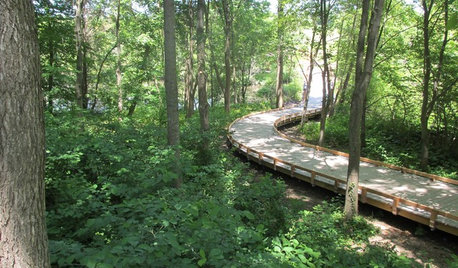
INSPIRING GARDENSWhat We Can Learn From Longwood Gardens’ New Meadow
Sustainability, ecology, native plant communities ... this public garden is brimming with lessons on horticulture for home gardeners
Full Story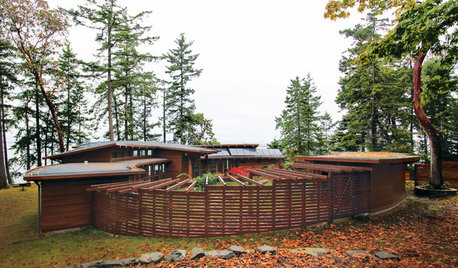
FENCES AND GATESA Deer Fence Can Be Decorative as Well as Protective
You need a monster-size fence to shelter your garden from deer, but it doesn’t have to look like a monstrosity
Full Story
WINDOW TREATMENTS6 Ways to Deal With a Bad View Out the Window
You can come out from behind the closed curtains now. These strategies let in the light while blocking the ugly
Full Story
GARDENING GUIDESBackyard Birds: Create a Home for American Kestrels
These copper-colored birds of prey can be found throughout North and South America and often find habitats near human activity
Full Story
WORKING WITH AN ARCHITECTWho Needs 3D Design? 5 Reasons You Do
Whether you're remodeling or building new, 3D renderings can help you save money and get exactly what you want on your home project
Full Story
MOVINGMaking a Home Away From Home
Feeling like a stranger in a strange land? These tips can help ease the transition after a big move
Full Story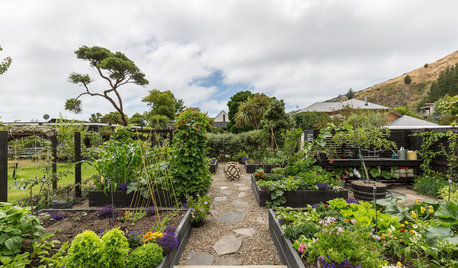
EDIBLE GARDENSNatural Ways to Get Rid of Weeds in Your Garden
Use these techniques to help prevent the spread of weeds and to learn about your soil
Full Story
DECORATING GUIDESYour Guide to Window Treatments
The right window treatments can provide privacy, light control and safety — or just better style
Full StorySponsored

Columbus Design-Build, Kitchen & Bath Remodeling, Historic Renovations
User