

Some antibacterial soaps are getting banned
10 years ago
Featured Answer
Sort by:Oldest
Comments (14)
 10 years ago
Related Discussions
Pesticide ban by-law and resident education
Comments (8)Yay Canada!!! How did you ever get something like this passed? In my community, we finally banned gas-powered leaf blowers after several years of discussions, and the crews that use the things are trying to get it rescinded already. (They are still allowed to use electric leaf blowers.) There is an escalating fine for use of gas-powered blowers, but it is handled on a complaint basis and starts with several warning notices before fines kick in. I still see them in use. Are all the local nurseries and garden-supply houses on board? I think that is the most important thing -- to make it convenient to use the organic products and really inconvenient to use the banned ones. People who aren't going to give up their toxic stuff will still find a way to use it (my mom insisted on using her supply of chlordane long after it was banned, and she refused to wear any protective gear), but I think the majority of people will just do whatever is most convenient (after the requisite amount of grumbling, of course). Do the local nurseries have talks on how to garden the "new" way? Does your community have a lot of yard workers coming in from places that still use toxic stuff? If so, they won't want to change their habits, and it will be important to have campaigns directed at making their habits easy and economical to change. Or do homeowners mostly do their own yard work? I imagine they will want to use up whatever's in the garage, then go out to the nursery when that runs out. If they find out it's cheaper to do things the new way, that will be one incentive (also if the old stuff is no longer available locally). King County (Wash. state) did a study of behavior change some years ago, and a glance at their report may be useful. http://www.govlink.org/hazwaste/publications/behavior.html Here are their key insights: Getting involved is the first step to making a commitment, and making a commitment makes people more likely to act. Small commitments lead to big ones. Start by getting the shop owner involved in a visit. Then ask them to sign a form stating changes they will make. Feedback and follow-up are important. Feedback gives people cues about the impacts of their behavior changes. Additional contact is also very important in motivating people to stick with a task. People will listen first to their friends or relatives, or others they see as credible. What they hear at a dinner party will have more weight than a comprehensive data summary. Change agents and role models are important. A few people in a group will typically adopt innovative ideas and behaviors first, and spread them through the group. Find these people and help them successfully adopt a new behavior. Changing attitudes may not change behavior. There is no strong, direct or consistent relationship between attitudes and subsequent action. Incentives may help change short-term, but probably not long-term, behavior. People may respond to incentives by changing their behavior, but when the reward is removed, they generally revert to their original behavior. If you need to provide information, present it effectively. People are more likely to pay attention to information that is: Vivid: Use language that conjures up a vivid and memorable image, or provide a demonstration that will stick in someone's mind. Personal: Make statistical data personally relevant. Talk about personal consequences or refer to a group with which the person identifies. Specific and concrete: Tell them how to do the behavior you want them to do. Stated in terms of loss rather than gain: Focus on showing people or businesses how much they are losing every month or year by not doing a specific behavior. Told as a story: Use success stories as a motivating example. Emotional: People tend to be persuaded more by emotional messages than logical ones One more thing: one of the counties around here has published a nice booklet called bay-friendly landscape guidelines. Last time I checked, it was available on the web-- one version for landscapers and one version for homeowners. Have a look; probably this is something like what you have planned. Look for it at www.stopwaste.org...See MoreBlack spot treatment antibacterial soap question
Comments (30)whats do you mean Jeri?? more bad news i was watering the rose's today and it looked like the roses were taking a bubble bath :( :( from all the soap mix i applied the other day is it possible the soap might get to the root system and cause serious damage to the plant? i hope not and this dame soap mix burnt enough of my leaves i took a closer look and there are a lot of burnt leaves i wish i had never sprayed them! from now on i';m just gonna do what Katie does spray with a good fungicide "2-3 times in the spring and a couple times in the fall." I live in Canada Ontario Zone 5A i get hit with black spots during spring and fall for anyone that wants to know on this website it says that this rose erotica hybrid tea is resistant to black spot ha! if it were i wouldnt be having this problem AND it says zone 7 to 10 i'm in zone 5a and these roses survived the winter no problem although they do have a few black/brown spots on the stems http://d a ve s ga r de n .com/guides/pf/go/63842/#b...See MoreForsyth County's watering ban
Comments (35)Hi. I am new to this board. I also live in Georgia. (Loganville-Walton County side) We haven't been given a total watering ban...but I am assuming it is enivitable. Over development of the land is one big problem here. The government sees dollar signs and revenue. They don't see the big picture and the problems they will cause allowing over development. I am sure in Forsyth, too. Also Alabama and Florida feel "entitled" to the water flowing out of the "hooch." The local goverments there have been hounding Georgia for years to "share." It is unfair that the TAX PAYING resident is being punished for poor government planning. I also thought about using grey water...I researched it. Local governments are extremely picky about it. They are right ...disease could be spread if not properly handled and used. I heard it wasn't recommended for veggies..only landscape plants. I looked up some info on the web site below. http://interests.caes.uga.edu/drought/articles/gwlands.htm http://www.oasisdesign.net/greywater/misinfo/index.htm Allot of info here. I collected rainwater last year...as much as could be collected. I had to use mosquito dunks to keep the mosquitoes out of it. I got those as the local home improvement store. Worked well. An article in the AJC online allowed commments to be posted about the watering ban in Forsyth. There were some really angry individual comments there. I don't blame them for being pissed off at all. They are well in their right to be mad. I spent alot of money and time in my garden. It is a precious place for me to be. It is simple but I cherish it. I'm preparing for the ban in Walton...a few suggestions here sound good. Especially, collecting cold bath water in buckets! I wish all of you luck and pray for rain! Just wondering...can ya hop over to another county ...to a friends house...fill up some garbage cans with water and haul them over to your house? It wouldn't be Forsyth County's water ...now would it....See MoreBar soap into liquid pump soap
Comments (6)Three decades ago when liquid soap for home use was "new", I would save bar soap slivers and small hotel soaps and make them into liquid hand soap. Now it's less expensive, and less mess, to purchase gallon jugs of liquid soap (Sam's Club and Big Lots are good sources). For foam dispensers I use a 1:3 mixture of liquid soap and water, so we use all foam dispensers for even more savings. The recipe I used is very similar.... Homemade Hand Soap 11 c. water 1 bar soap (or enough slivers to equal the same amount) 1 T. glycerin optional - 10 drops essential oil Grate soap on a box grater, microplane, or in a food processor. Bring 4 cups water to a boil. Add grated soap and stir to a boil. Add grated soap and stir until it melts. Add glycerin. Add remaining water. Once cooled, add essential oils. Let mixture sit overnight. Place 2-cups (at a time) in a blender. Mix well. If you want thicker add 2 more T. glycerin and allow to sit for a few hours. To use in a foam pump dispenser, add 1/4 c. homemade liquid soap and water to fill the bottle. You can add tea tree oil or grapefruit seed extract, or other essential oils like Four Thieves for additional anti-bacterial protection. HOMEMADE BODY WASH 1 c. Suave Shampoo ("flavor" of choice) 1/2 c. water 3 T. table salt or Epsom salts Whisk until frothy. \-Grainlady...See More- 10 years ago
 10 years ago
- 10 years agolast modified: 10 years ago
- 10 years ago
- 10 years ago
- 10 years ago
- 10 years ago
- 10 years ago
- 10 years ago
 10 years agolast modified: 10 years ago
- 10 years agolast modified: 10 years ago
- 10 years agolast modified: 10 years ago
Related Stories

KITCHEN DESIGNKitchen Sinks: Antibacterial Copper Gives Kitchens a Gleam
If you want a classic sink material that rejects bacteria, babies your dishes and develops a patina, copper is for you
Full Story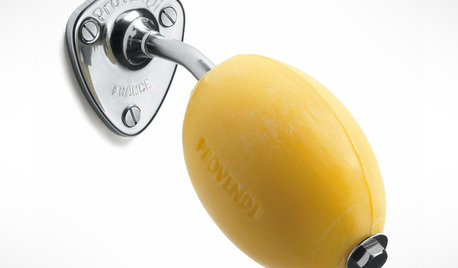
BATHROOM VANITIESBetter Places to Stash That Soap
Banish gloppy bars and flimsy pumps, and the only things you’ll need to clean are your hands
Full Story
MOST POPULAR5 Ways to Pare Down Your Stuff — Before It Gets in the Door
Want to free up some room around the house? Rethink gift giving, give yourself a shopping mantra and just say, ‘No, thank you’ to freebies
Full Story
BATHROOM DESIGN10 Top Tips for Getting Bathroom Tile Right
Good planning is essential for bathroom tile that's set properly and works with the rest of your renovation. These tips help you do it right
Full Story
KITCHEN DESIGNGet Quartz and Porcelain Surfaces Super Clean
These cleaning tips for quartz, travertine, porcelain and engineered stone will help keep your countertops and sinks looking spotless
Full Story
DECORATING GUIDESHemp, Hemp, Hooray! This Superplant May Be Legal Again in the USA
Hemp products are durable, sustainable, antibacterial and much more. Will the plant finally get the status it’s due in the States?
Full Story
SMALL SPACES10 Tips for Chic Little Bathrooms
Get more visual appeal and storage in less space, following the lead of these stylish compact bathrooms
Full Story
KITCHEN DESIGN8 Kitchen Sink Materials to Consider
Learn the pros and cons of these common choices for kitchen sinks
Full Story
KITCHEN DESIGN16 Practical Ideas to Borrow From Professional Kitchens
Restaurant kitchens are designed to function efficiently and safely. Why not adopt some of their tricks in your own home?
Full Story
FEEL-GOOD HOME21 Ways to Waste Less at Home
Whether it's herbs rotting in the fridge or clothes that never get worn, most of us waste too much. Here are ways to make a change
Full Story
colleenoz