

Beans and strings
10 years ago
last modified: 10 years ago
Featured Answer
Sort by:Oldest
Comments (14)
 10 years ago
 10 years ago
Related Discussions
HELP!!! Need a Plant Fix Bad {Stuff 4 Trade}
Comments (6)I have haemanthus (albiflos?) seeds for trade, which are pretty cool. These are actually either corms or bulbils, not seeds, 7mm translucent and you can see a green protoleaf inside ready to go. Anyone else like some? If you would like to trade a small drac offset or sauromatum offset, I can send extra postage. Contact me via my regular email shown on my GW page, and put the word 'SWAP' on the subject line so I know it's not spam. Thanks! --Rr...See MoreAnother idea on the best pole bean(s)
Comments (3)Well, it's a hard mentality for some of us to comprehend. Essentially it boils down to "One cent benefit for me is worth more to me than one thousand dollars of benefit for you." The little boy yanked the whole plant because he didn't want to be caught and was in a hurry to get out of there with "the loot." He probably never grew any of those beans either. Probably 7 years earlier I had an old "campesino" yank and run with the last of my Barksdale Wax Pole beans, when I was gardening in another town. If it wasn't for other members of the Seed Savers Exchange, that would have been the end of our family heirloom. But the main point I wanted to make, in that thread, which did do a bit of detouring, is that I like a bean with the following characteristics: 1) Dependability. I want a bean which will dependably produce under a wide range of conditions. 2) Tender pods, even when old: Most modern beans become tough when the pods begin to mature. Most dry beans do this. Some dry beans' pods are simply tough from the get go. But there are some varieties out there which produce pods which are tender right down to when they start to yellow and dry. Many of those varieties also have strings. It seems almost to be indication that one has a tender pod variety, if it has strings. Anyway, my favorites have strings and stay tender for a LONG TIME. My absolute favorite green beans are these old timers when they have filled out shell beans on the inside. I string and snap them and cook them up. ItÂs like getting snaps and shell beans at the same time. Plus, with our busy life style, it's sometime difficult to process our beans soon after picking. These tender hull varieties last a lot longer "on the shelf," before processing, than the tough hulled varieties. 3) Prodigious seed production. The best beans I know produce lots of nice, well developed seed. This is nice, not only because we like to eat the seeds, but we also like the ease of maintaining seed stocks, in order to share with others. George...See Morevegetable garden starting to yellow
Comments (6)Most likely cool and damp and darkish is what is causing the yellowing. Still, you have a nice looking garden! Several things may be at play here, too, though I am in a very dry climate so things may be different for you. Beans like it warm and not saturated. Early in the season when everything is cool, they have a tendency to develop chlorosis which is often related to zinc or iron deficiency. The soil isn't deficient, but it is cool and this seems to promote the problem. They green up as the soil warms, although they can be foliar fed with these minerals. Another factor which affects beans is that cool and damp soil/weather tends to promote fusarium root rot, which results in reddish/rust colored streaks on the roots (a healthy root is generally all white). The only cure for fusarium is for the ground to dry and warm. Fusarium will kill the roots, so hilling the soil up around the stems a bit will allow new roots to form above the infection so the plants don't die from the root loss. I think cool and wet also tends to play a similar number on squash type plants--at least for the yellowing from mineral deficiency induced by cool wet soil. You might try laying down black plastic on the ground under the plants to try to warm the soil a bit, or spray the squash with some micronutrients. I notice in the picture that it appears your corn is showing some signs of nitrogen deficiency. Corn is usually kind of a canary to low nitrogen levels, so you might want to fertilize the other crops (the corn is far enough along that additional nitrogen now won't have much effect). Composts and manures add organic matter to the soil and have a very high nutrient holding capacity, but depending on the source and whether it was dried or fresh, it may actually contribute very little nitrogen. Supplemental nigrogen may help. A commercial fertilizer is probably the quickest and easiest way to go. For those who prefer to have their nitrogen come with lots of organic matter, fresh manure will do the trick as it will still hold the urea from the livestock urine. Chicken manure is generally fairly high in nitrogen even when dry. Any material high in protein will also have good nitrogen levels, such as alfalfa or fish, although if it hasn't decomposed, the nitrogen won't be available until it does. With commercial fertilizers you know the nitrogen content of what you are applying. With the others, you really don't, so you apply and hope for the best....See MoreMixed bean teepee?
Comments (4)My pole bean teepees are six feet high and have wire wrapped around them to give horizontal support to the vines. I plant my seed in a perfect circle around the entire teepee with the plants spaced about 4 inches apart. The teepees get completely covered with the vines and they are beautiful as well as very productive. I planted two teepees like this last summer and we ate beans and ate beans all summer (April to November) plus I put 10 gallons in the freezer. I was happy. (It was an unusual summer that never got so hot the vines shut down. It was Rattlesnake beans. My first time. Winners.) Yes, you can grow different types of beans on one teepee, but I don't think you'll like it. The reason being, you will likely never have enough beans of one kind to make a mess, and you will get tired of keeping them separate, and when they are cooked, you won't know which is which anyway. The point of growing more than one variety is to see which not only grow better, but which TASTE better to you. Maybe you can grow two teepees? Or two crops at different times? My growing season is very long....maybe yours isn't. Just a thought. Peas and beans on the same poles? Yes. You plant what we in the south, call English peas (shelling peas) early, when it's too cold for snap beans anyway. Then sow your snap beans (green beans) around the pea plants at the right time. By the time the beans need the space, the peas are burned up by hot weather anyway. This technique is called succession planting. If you Google the term, you can read all about it. As stated above, a chain link fence is also ideal for English, Sugar Snap, or Snow peas. I rather suspect that you would have a hard time with Limas in Zone 5, mostly because your growing season may not be long enough. They need really hot weather for a really long time. But then, I have never gardened in Zone 5, and if your grand daddy did it, who knows? Personally, I would go for easy successes the first couple of years and work into the hard stuff. You'll be less likely to get discouraged. Carrots and radishes, as stated above should have time to grow and be harvested before beans get going, because they are Cool weather crops. You can plant them much earlier than beans. Before your last frost date even. I'm thinking you would find it very helpful to Google "Planting Guide" for your state and/or county. It will have the best planting dates for your area. Look at the seed packets (or catalog descriptions) for the number of Days to Maturity. Then start counting from the suggested planting date on your Planting Guide to the DTM on the packet. This will tell you when that crop will be ready to be pulled out. Do the same with your beans. There will be some overlap, which is fine. This technique is called intercropping. Google that term and you'll learn some more! Good Luck! We'll love hearing how it goes for you....See More 10 years ago
- 10 years ago
 10 years ago
 10 years ago
- 10 years ago
 10 years ago
- 10 years ago
- 10 years ago
- 10 years ago
- 10 years ago
- 10 years agolast modified: 10 years ago

Related Stories
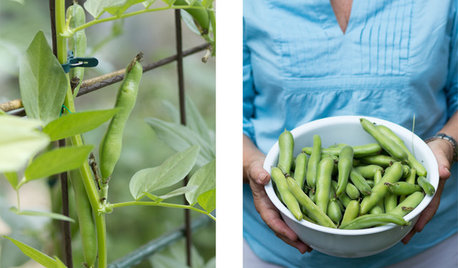
SUMMER FRUITS AND VEGETABLESSummer Crops: How to Grow Beans
Grow your own beans for amazing variety and healthy, convenient produce all summer
Full Story
ENTERTAININGSimple Pleasures: The Reimagined Potluck
Party guests can bring more to the table than just the food. Enlisting help with setup, decorations and drinks spreads the work and the fun
Full Story
GARDENING GUIDES15 Favorites for Your Summer Edible Garden
Get your summer garden off to a good start with these popular fruits and vegetables
Full Story
ORANGEInspired by Halloween: Candy Corn Color Palettes
The iconic orange, yellow and white Halloween candy suggests sunny colors for every season
Full Story
PETSPet-Proofing Your Home: A Room-by-Room Guide
Not all pet dangers are obvious. Keep furry friends safe and sound by handling all of these potential hazards
Full Story
FARM YOUR YARDIf You Have Room for Only One Summer Crop ...
Get an edible that’s long on flavor even if you’re short on space, with a long-time gardener’s favorite picks
Full Story
KITCHEN DESIGN7 Steps to Pantry Perfection
Learn from one homeowner’s plan to reorganize her pantry for real life
Full Story
FURNITURE6 Decades-Old Designs That Look Better Than Ever
After getting a few nips and tucks, some favorites from the ’60s and ’70s have made a stylish comeback
Full Story

ENTERTAINING8 Stress-Busting Tips for Hosting Small Gatherings
Make entertaining easy with these ideas for casual get-togethers
Full Story

PKponder TX Z7B