

Raw Heavy Cream
10 years ago
Featured Answer
Sort by:Oldest
Comments (9)
 10 years ago
Related Discussions
RECIPE: Home made ice cream with raw eggs
Comments (3)Raw eggs unless pasteurized can make you very sick! Old Fashioned Ice Cream-4 eggs, 2 c. sugar, 1/2 tsp salt, 3 c. heavy cream, 1 Tbs. vanilla, 2 qt. milk. Beat eggs until light. add sugar & salt gradually, beat well, add cream,vanilla & milk (last) Freeze in dasher type old fashioned ice cream freezer. Allow about 2 1/2 in. for swelling in container. Yield 1 gal. From the Brookville Hotel in Brookville, Kansas in 1940's....See MoreSubstitute for Heavy Cream?
Comments (8)If I need something creamy for a sauce....I sometimes put skim milk (which always is in my refrig) with some cream cheese....another thing that is always in my refrigerator. It's amazing how little cream cheese it takes to make skim milk "cream-like'...or perhaps sour cream like. And I never use the reduced fat stuff, I also think it tastes strange. When I am trying to reduce the fat in a recipe I will just use milk....and if I am looking for some thickness, I will whirr in the blender with a little cooked rice. I always have evaporated milk but that's only for certain things where that "boiled" taste is necessary...like Grandma's rice pudding and her pumpkin pie. Linda C...See MoreHeavy cream in bread recipe
Comments (3)One of the chief characteristics of rye flour in bread is a really sticky dough, even with the proper amount of hydration. When the dough is sticky, we tend to add more flour, and often add too much flour during kneading, trying to get the dough soft and smooth like white bread dough. In the world of bread, dense bread usually means too much flour has been added, especially if it was a stiff dough. But let's also look at what happens from fat AND when the fat is added, because that has a cause and effect as well. Since the cream is high in fat (and I assume there was other fat in the recipe), adding it early in the mix will coat the gluten so it develops in short strands. This is the same method we use when adding fat to flour when making pastry. Where the fat coats the flour, water can't penetrate it and the gluten develops in short strands. The fat "shortens" the gluten - hence, short crust pastry. When fat, and large amounts of fat, are added early in the mixing, you will get a close crumb and not as much loft because of the shortened gluten strands. Adding fat late in the gluten development (towards the end of the kneading), you will get an open crumb and higher loft. Adding fat early in the mixing is how you get a close grained crumb for sandwich bread (so fillings and spreads don't drip through it). Adding fat late is how you achieve an open crumb for toasting (so the butter and jam have lots of pockets to fill). You can make the same enriched bread recipe and add the fat early in one loaf, and add the fat after the gluten has developed in the second loaf, and you will see a completely different size, crumb, and loft - even using the same recipe. It's not about what's right or wrong, but what kind of grain we want the bread to achieve according to how it's going to be used. You listed the amounts of flour in the recipe, but did you add more flour during kneading due to the stickiness of the dough? As always, only add enough flour to make a well-hydrated soft dough, and always consider the amounts of flour in the recipe as a good (or bad) guess, and you have to go by that often elusive "feel" of the dough, not the amounts of flour noted in the recipe. Rye bread is an additional challenge because the dough will remain sticky, even with the correct hydration. TIP: Add the high-gluten white flour and VWG a little at a time to your liquid first, and give it a really good workout between additions. Mix it with a Danish Dough Whisk (the perfect tool for making batters and doughs), or a wooden spoon if you don't have a Danish Dough Whisk, in order to work and develop the gluten during mixing. This is the best time to develop the gluten in a recipe with a mix of high-gluten and low-gluten or gluten-free flour/s. It may take two hundred (or more) strokes to develop the gluten while mixing, and mixing is a critical step where people get a little lazy and often fail to do a good job. If your dough is a shaggy mess when you start kneading it, it wasn't mixed properly. Add the low-gluten flour last, after you've done a good job of mixing the high-gluten flour in the mixture. Add only enough flour to make a soft dough. You should only require a small amount of additional flour during kneading if you did a good job of developing the gluten during mixing. There are a few tips for kneading rye bread due to it's stickiness: -Save some (or all) of the fat/oil in the recipe and oil your hands during kneading so you don't add too much flour. -Have a bowl of water handy and dip your hands into water during kneading, instead of adding more bench flour. It's always better to err on the side of a wet dough than a dry, stiff dough, and the wet hands won't stick as much to the dough, and will add a little hydration. The wet hand method is also good for kneading dough for English Muffins. A wet dough is what makes the characteristic holey texture in well-made English Muffins (but I digress). -Knead the dough on a Silpat (or other brand of silicon mat) because you won't need any, or very little, bench flour. Dough doesn't stick to the mat. If you don't have a Silpat, spray your counter with PAM cooking spray instead of using bench flour. -You can also place the dough in a gallon freezer-style zip-lock bag (the freezer bags have thicker plastic than the storage bags - a good thing). Press out the air and zip it shut. Knead the dough through the bag. If you need to adjust the hydration of the dough, you can still open the bag and add flour. When you are done kneading, turn the bag inside out to get the dough out. This is one bag you will toss in the trash because cleaning it is nearly impossible. -Get a pair of kneading gloves (aka dough gloves). Alcohol does not form gluten when it's mixed with flour like water does. It's used in pastry recipes so a little more liquid can be added to make it easier to roll-out so it doesn't crack, without over-developing the gluten strands from adding more water to achieve the same moisture level, which results in over-developed gluten and tough pastry. I suspect it does the same thing in your pancake batter. Beer in bread is mainly for the flavor. If you add a low-alcohol or alcohol-free beer to a bread recipe, you will get a completely different flavor, interestingly enough. Is your beer bread recipe a quick bread or a yeast bread? Typically, they are a quick bread, and the alcohol would be beneficial because quick breads are another bread we don't want a lot of gluten-development. -Grainlady...See MoreSubstitute for heavy cream in scones
Comments (25)Lars : It is a shame you can't make good Waffles without Cream. Here is a recipe for Waffles you will love. Give them a try and let me know !!! LOUÂS Pancakes and Waffles Recipe Light, Crispy but Tender. 2 ½ cups milk ( IÂve been using powdered milk) 2 eggs ( separated ) . 1/3 cup of veg. Oil 2 tablespoon of vanilla Pinch of salt ½ cup Sugar 1 cup of Wheat Flour 4 teaspoons Baking Powder All Purpose flour --------------------------------------------------------------------- Mix Pancake Batter: Put the first 6 ingredients ( except egg whites ) in a mixing bowl and beat until smooth. Put in the Wheat flour, Baking pwd. and some All Purpose flour. Beat until smooth. Add enough flour to thicken slightly, (were it leaves ripples while mixing ) not thin and loose. Beat the egg whites with a teaspoon of sugar, until peaked. Add ½ the egg whites to the batter and fold in easy. Beat the other ½ of the whites until very stiff and fold these in also. After the pancakes are cooked, I put plastic in between for freezing. For Waffles: Thicken a little more, to where you have to move it around with a spoon, when it is put on the waffle iron . Then do the egg white thing as in the pancake batter. When baked I cool them fast on a rack and put them in a plastic bag, and right in the freezer. If you overcook a little, dampen slightly with water, before you put them in the toaster oven. As for the waffle iron , I have a very old round one with adjustable heat Range. You will have to adjust to your Waffle Baker. It makes a waffle about ½ inch + thickness. For me this is just right, for the amount of butter and syrup that you can put on top. I found one to match at Macy's it is a Cusineart. I donÂt use the Belgium Waffle Maker ; except when IÂm adding Ice cream and fruit topping , because itÂs too much waffle for the amount of syrup and butter. But may be good for you.! If I want a Belgium Waffle, I just make a double decker and put fruit or whatever filling in between. Then you have more cooked surface area , on the Waffles....See More 10 years ago
 10 years ago
- 10 years ago
- 10 years ago
- 10 years ago
- 10 years ago
 10 years ago
Related Stories
REMODELING GUIDESDesigns for Living: Heavy Metal in Home Decor
Explore the Edgy Beauty of Metal Cabinets, Walls, Ceilings and More
Full Story
KITCHEN DESIGNKitchen Sinks: Fireclay Brims With Heavy-Duty Character
Cured at fiery temperatures, fireclay makes for farmhouse sinks that just say no to scratches and dents
Full Story
HOUZZ TOURSMy Houzz: Going Heavy on the Metal for Industrial-Style Beauty
Steel and iron pieces mix with antiques and heirlooms in an eclectic Netherlands home
Full Story
MATERIALSRaw Materials Revealed: Drywall Basics
Learn about the different sizes and types of this construction material for walls, plus which kinds work best for which rooms
Full Story
KITCHEN DESIGNNew This Week: 4 Kitchens That Embrace Openness and Raw Materials
Exposed shelves, open floor plans and simple materials make these kitchens light and airy
Full Story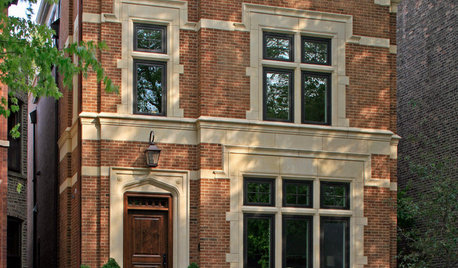
MATERIALSRaw Materials Revealed: Brick, Block and Stone Help Homes Last
Learn about durable masonry essentials for houses and landscapes, and why some weighty-looking pieces are lighter than they look
Full Story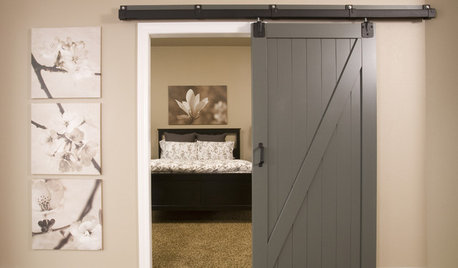
BASEMENTSA Raw Washington Basement Gets Serenity Now
Neutral tones and custom storage infuse a family's newly finished basement with a restful air
Full Story
HOUZZ TOURSHouzz Tour: Steel Fuses Industrial and Modern in a California Pavilion
Heavy on metal, this two-story addition entertains with a stargazing hot tub, a fire pole and an unusual fire feature
Full Story
RUSTIC STYLERoom of the Day: Refining the Rustic in a Log Home
A log-heavy Colorado ski house gets a contemporary makeover that brings the soft, calm and comfy
Full Story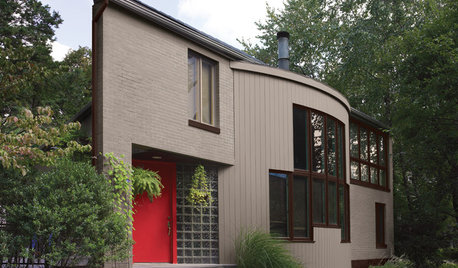
EXTERIOR COLORExterior Color of the Week: Tasteful Taupe
When you want to skip the peachy beiges and ubiquitous creams, consider this rich cool brown neutral instead
Full StorySponsored

Columbus Design-Build, Kitchen & Bath Remodeling, Historic Renovations

lindac92