

Homemade Pasta Sauces
10 years ago
Featured Answer
Sort by:Oldest
Comments (29)
 10 years ago
 10 years ago
Related Discussions
Want to see my tomatoes?
Comments (31)Cindee, I know they are wonderful. The only problem is that I cannot get any in the local stores. I will have to find some kind of a superstore that would sell me a pair of Sea Horses. I only had fresh water aquariums so far, so salt water would be a new adventure for me now. Jodi, I love freshwater, tropical fish. Especially the labyrinth fish that come up to the surface to breathe. I could not really say a kind of freswater tropical fish that I haven't had. :o) Here, in America, I always had huge aquariums, about 2-300 gallons or larger. In my first aquarium, I could successfully breed marble Angel Fish. I had a FEW HUNDRED Angels in like 10 tanks all over the house. Can you imagine? They slowly but surely outgrown every space. I sold them to an Aquarium superstore $10 each, getting store credit and bought other tings for the money. It was nice to see that my fish were gone in a jiffy. Never have I been able to recreate the same success with angels. They are difficult to keep alive when they are small. I also love live-bearers: Guppies, Mollies, Paradise Fish... And the list can go on... Now, it seems like I concentrate my efforts on amaryllis. They are easier to move, as you have said... Every time we have moved, the aquarium stayed in the house. Though it is true, that I usually build the Aquariums IN the house. They are too big to stand alone, so they are built in the wall between rooms, so you can look at them from both side... Interesting. Like a living window....See MoreWhat's Happening In Your Garden?
Comments (85)At our house, the harvest is hot and heavy right now. We have potatoes and onions curing everywhere, on every flat surface available. Today I'm going to start slicing and chopping onions to freeze for later use in cooking, and then the rest of the first batch of cured onions will go into tubular net bags for storage. The second onion batch needs to cure for at least another week and then they'll get the same treatment. I'm going to send 10 or 20 lbs. of onions and the same amount of potatoes to work with DS on the next day he works, which I think is Thursday, because I've promised his fire station chef a steady supply of fresh veggies. I am picking tomatoes about every other day, and we have more than we can handle at this point, which is a great problem to have. I don't think it will continue to be such a great tomato year for too many more weeks though, because our temperatures are well above the range at which flowers set fruit.) We need a cold spell here. By cold, I mean any weather with highs only in the low 90s and lows in the low 7os. We have enough tomato fruitset that I think we'll be harvesting all we can handle through mid-July but am not sure what we'll get after that. Yesterday we were down in the metroplex shopping for a few hours and we dropped off two Wal-Mart bags of tomatoes for DS's crew at the station which generated a lot of excitement among them, and saved me from having to do any canning yesterday. (I didn't have time.) On Sunday afternoon I put up 8 quart bags of green beans in the freezer, and I'm going outside in just a few minutes to pick beans again. I was hoping it would be nice and cool this morning, but our low temp for the night was 80, so we're starting out kind of warm already and the sun isn't even up yet. Yesterday morning we harvested the early sweet corn, which was the variety 'Early Sunglow'. We got about 75 good ears and a few bad ones that either had been 'sampled' by the raccoons, had poor fertilization because of the heat or something else that resulted in unusable ears. I gave the bad ears (less than a dozen total) to the chickens who were delighted with them, and put the rest in the refrigerator. We ate some fresh last night and will have more today, and I am going to blanch and freeze the rest this afternoon. Some years the raccoons get all the corn, and there's rarely a year in which we beat them to all of it, so I'm very happy with our harvest. I hope we're able to get as many ears from the mid-season corn and the late-season corn, but we'll be fighting both the coons and the corn earworms and European corn borers, so who knows what we'll get from them. Our garden is in the transition stage, where the last of the cool-season crops have just come out (I finally yanked the broccoli and cabbage because they just weren't doing anything at all) and have been replaced with hot-season crops so we'll have something to harvest in July and August. With highs in the upper 90s and lower 100s already and lows in the mid-70s throug low-80s, our weather here feels more like late July and August than June, so I am concerned about the effect of the heat on the garden---but there's nothing we can do about the heat except go with the flow. The bigger issue is the lack of rainfall. There's been no rain here for about 3 weeks our last rainfall was a half-inch on May 24t), and no good chance of rain anytime for us anytime in the foreseeable future. With 100-degree heat and no rainfall, everything here is rapidly drying out and turning brown, and we are starting to see grassfires. I'm already wrestling with the decision about whether to water or how much to water. We did run the soaker hoses to water the soil/foundation area yesterday, and I'm going to run a soaker hose in the garden today to water a couple of beds, but I am not doing a lot of watering. The problem with trying to keep a veggie garden green in this kind of heat is that the garden becomes an oasis that attracts tons of bugs when everything else is browning out, and we have a lot of wildlife (deer, raccoons, possums, skunks, rabbits, etc.) trying to get into the garden every day and every night. It is going to be a long summer. We have a surging spider mite and grasshopper population too, but also have lots of ladybugs so I'm not overly worried about the mites. The hoppers may be a problem, but only time will tell. Dawn...See MorePeron Sprayless Tomatoe
Comments (12)Susan, I've been pondering the fact that Peron is describes as an RL because I'm almost positive that when I grew it in 2003 and 2004 it was a PL or rugose leaved plant. So, maybe there is a crossed version floating around out there with PL foliage, or maybe I am remembering the wrong tomato from those years. Or, maybe I'm remembering the plant performance correctly but the foliage incorrectly. I guess I need to start taking notes because my memory gets worse every year. If you're looking for disease tolerance for your container-grown tomatoes, I'd like to share the following with you. The tomatoes I grow in containers rarely get diseases and probably that's because the soil in containers is easier to manage/control/keep disease free. It also is likely a result of my efforts to keep moisture off the foliage as much as possible and to mulch heavily (mulch in the pots and on the ground where the containers are placed) to reduce soil splash which carries soilborne diseases up onto the stems and foliage of the plants. When my tomatoes in containers get diseases, it is usually stuff like bacterial speck, bacterial spot, early blight or septoria leaf spot. Those are not the diseases which commercial breeders are working to combat in their hybrid varieties---they are working on increasing tolerance of fusarium wilt, verticillium wilt, alternaria stem canker, tomato spotted wilt virus, tomato yellow leaf curl, etc. So, I don't make disase resistance/tolerance a huge priority when choosing varieties because the disease resistance/tolerance that varieties are tested for are not the diseases I have to worry about. I hope that makes sense. It is much the same with pests. The main pest resistance breeders are able to breed into tomatoes is resistance to root knot nematodes. For me, that's irrelevant because I don't have RKNs in my soil. They cannot breed resistance to other common tomato pests like tomato or tobacco hornworms, spider mites, stink bugs, leaf-footed bugs, blister beetles, etc. So, we gardeners have to control those pests ourselves in other ways and since I don't use chemical pesticides, I rely on organic methods like hand picking or vacuuming the pests off the plants or the release of beneficial insects. At our house, tomato plants in containers rarely have any sort of pest problem. I don't know why. I may be seeing stinkbugs on plants in the big garden, for example, but rarely see them on plants in containers. Maybe it is just that my containers are far from the big garden and the stink bugs don't find them. I sort of doubt that though, because I have had stink bugs near the container plants and even on the ground right by the containers, but not on them. My best guess is that the container-grown plants are less stressed (because it is easier to control their moisture and fertility), and pests always seem more drawn to stressed plants. For me, the tomato plants in the ground are always more stressed than the ones in containers because their soil mix isn't as good and it is harder to maintain an even moisture level. The plant disease I can't speak to is Late Blight. We almost never have the weather conditions that late blight needs at my end of the state. We simply stay too hot for it most of the time, at least from April through October. I do know that folks in NE OK have more of an issue with it in some years, but think that those of you in the OKC area probably don't see late blight much more than I do. I've seen it on 2 or 3 plants in my entire lifetime, and I'm 51 years old and have been around home-grown tomato plants my entire life dating way back to my childhood. Late blight resistance/tolerance of tomatoes is sort of the "Holy Grail" all the breeders are seeking to breed into their tomato varieties, and I don't know that anyone has managed to achieve it yet. I think there are a couple of the newest hybrids (some still in the testing stage and not yet released to the public) that may show some sort of tolerance, and some folks in the affected states found some varieties tolerated LB for a while during 2009's late blight epidemic here in the USA but those plants also eventually contracted it. I think if you can find varieties with flavor and productivity you like, you can manage the diseases and pests we have here pretty easily in containers. That doesn't mean you'll never had disease or pest issues, but rather than even when you do have them, you will be able to get a good harvest anyway by using good management techniques. About 7 or 8 years ago I finally gave up on the idea that I had to keep beautiful, picture-perfect tomato plants going in my garden all summer long. They start looking really stressed in July and if I don't pull them out and replace them with new plants for fall, they look like crap by August. However, they're still producing tomatoes which is why, after all, I grow them. So, I've arrived at the point where I don't care what they look like after June because I'm not growing them for their looks. I'm growing them for their fruit. I do care what they look like in March, April, May and June because if they show disease issues that early, they're not likely to produce much if I can't get those disease issues under control. I choose varieties for flavor first and productivity second. The only way I know which varieties tolerate diseases that are an issue in our area is just to try them and see. Hope this info helps. Dawn...See MoreThis is the end
Comments (26)elskunkito, I'll follow up your question with my best guess. :) ************************** I refuse to give up the fight. Today I built a cold frame arround my more prized plants. Can I expect much more time from these plants? *************************** depends, where are you? One thing you might try is putting out a 75 or 100 watt bulb in the cold frame at night and cooler days. But with the shorter days, rain and cloud cover, I don't think you'll get too many more. *********************************** For those not under the cold frame, should I pick all the near ripe tomatoes now? *********************************** I think so and the greenies too. If we get a hard frost, they will turn to mush. ****************************** Being such a newb I am unsure if I had a good or bad year. Most plants have not had ripe ones yet, but the 4 or 5 plants that have ripe ones fill a plastic grocery bag a week for a few weeks now. Is that good or bad? ****************************** This has been a bad year and that is a so-so harvest. last year I gave away over 20 plastic bags full. My late season plants have only given me a few this year. My early and mid season plants haven't faired much better. I need to do some soil prep for next year which is another reason I pulled mine. Good luck with the cold frame. Bill...See More- 10 years ago
 10 years ago
 10 years agolast modified: 10 years ago
 10 years ago
- 10 years ago
 10 years agolast modified: 10 years ago
 10 years agolast modified: 10 years ago
- 10 years ago
- 10 years ago
 10 years ago
- 10 years ago
- 10 years ago
- 10 years ago
 10 years ago
- 10 years ago
- 10 years ago
- 10 years ago
- 10 years ago
- 10 years ago
 10 years ago
- 10 years ago
- 10 years agolast modified: 10 years ago
- 10 years ago
- 10 years agolast modified: 10 years ago
- 10 years ago
- 10 years ago
Related Stories
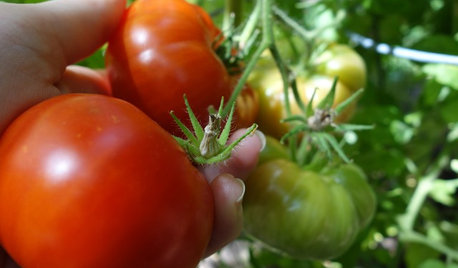
LIFEKitchen Traditions: Tomato Season Meets a Family Legacy
Somewhere a Sicilian great-great-grandmother is smiling at a bowl of American-made sauce
Full Story
GARDENING AND LANDSCAPING21 Patios Ready to Party
Mix up some margaritas and break out the barbecue sauce. Outdoor party season is upon us, and these patios show how to do it right
Full Story
Get the Scoop on Dish Display
Pretty dishware deserves a place at the table. And above it. And maybe over the couch or near a console or ...
Full Story
Figure Out Your Art Style
Bemoaning bare walls but flummoxed by all the choices for art? Here's help deciding on a style
Full Story
FEEL-GOOD HOME21 Ways to Waste Less at Home
Whether it's herbs rotting in the fridge or clothes that never get worn, most of us waste too much. Here are ways to make a change
Full Story
KITCHEN DESIGN7 Steps to Pantry Perfection
Learn from one homeowner’s plan to reorganize her pantry for real life
Full Story
EDIBLE GARDENSSummer Crops: How to Grow Tomatoes
Plant tomato seedlings in spring for one of the best tastes of summer, fresh from your backyard
Full Story
KITCHEN DESIGN16 Scrumptious Eat-In Kitchens and What They Want You to Serve
Whether apple-pie cheerful or champagne sophisticated, these eat-in kitchens offer ideas to salivate over
Full Story
LIFESimple Pleasures: The Joy of Baking
Fill your house with a heavenly scent and your heart with cheer by making time to bake
Full Story
KITCHEN DESIGNHouzz Call: What’s Cooking in Your Kitchen?
Most of us turn to recipes, videos and culinary shows when we cook. Where do you set your cookbook, tablet or TV screen?
Full StorySponsored

Central Ohio's Trusted Home Remodeler Specializing in Kitchens & Baths



User