

Many faces of the American Bittern
10 years ago







Featured Answer
Sort by:Oldest
Comments (10)
 10 years ago
 10 years ago
Related Discussions
A very un-american attitude....but still worth discussing.
Comments (67)I came to terms with this years ago -- I stopped trying to do everything and now just do what I can when I can do it, and I try my best not to bite off more than I can chew (although admittedly it still happens sometimes). Someone wisely told me years ago that the most important tool in the toolbox is the checkbook - and I agree with that wholeheartedly. I work full time and am in grad school - those are more important than my garden and take precedence. If I have to pay to have something done that needs to be done, so be it (I am working as is my husband, and I do realize I am fortunate in this, work is most definitely a blessing). At this point in my life I refuse to spend my precious free time fretting over things that are waiting for me to do. Of course there are seasonal chores, but if they don't get done, so what? What's the worst that's going to happen if I don't clean up the garden in the fall? So I'll have to clean up in the spring. Big deal. My annuals didn't get planted until June. So what. They got in the ground late, but they're fine. So what if you lose some of your seedlings? You can sow more. It took me years to cultivate this attitude, and IT IS FREEING. Now when I work outside it's normally because I *want* to and I enjoy it, not because I *have* to and end up dreading it instead. This post was edited by mxk3 on Sun, Jun 29, 14 at 13:26...See MoreDon't you feel any pressure to Buy American??
Comments (52)NO. I think the same way as ebse - my husband and i slog it out to make money, get no benefits for being responsible with money, just keep seeing our taxes shooting up and up as a reward for our hard work. So, I buy the best value for my money. I hate my old GE profile cook top and am waiting to get rid of it. My fridge is a sub-zero and pretty much every thing else in my kitchen is not american. BTW/ we have never owned an American car - but, our last european car was manufactured in South Carolina - so maybe that is not true, after all. I am american, but have worked for 12 years in a Japanese semi conductor company with huge operations and thousands of american employees in California. So, what is American and what is non-american anymore? This is a global economy whether we like it or not. So, I am always happy to buy the best quality for my money without any pressure to buy american. If some american companies suffer (especially in the auto sector), it is not because of our lack of support, it is because of the poor business strategies - and anyway, Congress is always there to bail them out with my tax $$$$. So, no worries, I am supporting them by working hard to pay my taxes :)...See MoreNative American Cross stitch charts and/or children's characters
Comments (3)*faints* 2....years....umm....it does look rather special though..I'm tempted....hehe To be more specific it's for my dad. Not a huge huge project but I want to stitch him something like a dreamcatcher with a saying on...or a saying with vaious things round the outside...not a major project as at the same time I have to do something for my daughter, son, mum, sister, etc...etc...etc.... the life of a stitcher is never done eh? LOL people always say to me ...oooh I could never do that... but they could it just takes the patience to spend ages doing it and sitting on your bottom hehe...See MoreOpen Letter From An American Airlines Pilot
Comments (4)I don't even read these email forwards. There's really enough spam floating around and when the authenticity can't be determined (according to Snopes) it's best IMO to not get too worked up over something that's most likely a hoax....See More- 10 years ago
- 10 years ago
 10 years ago
- 10 years ago
- 10 years ago
Related Stories
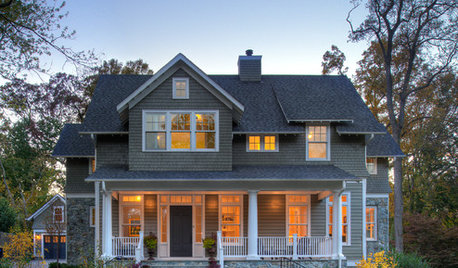
GREEN BUILDINGGreen Grows Up: The Many Faces of Today's LEED Homes
While LEED-certified homes have some common characteristics, the rest is up to your imagination
Full Story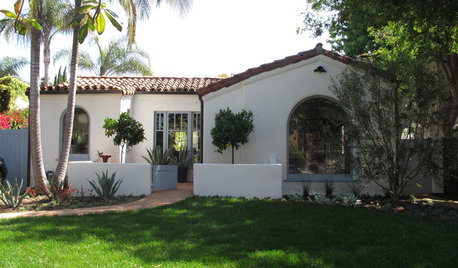
ARCHITECTURERoots of Style: Many Cultures Make Their Marks on Mediterranean Design
If you live in California, Florida or certain other parts of the U.S., your architecture may show distinct cultural influences
Full Story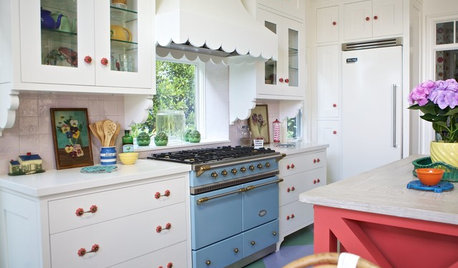
KITCHEN APPLIANCESThe Many Ways to Get Creative With Kitchen Hoods
Distinctive hood designs — in reclaimed barn wood, zinc, copper and more — are transforming the look of kitchens
Full Story
HOUZZ TOURSMy Houzz: Many Styles Meld Handsomely in a Vermont Countryside Home
With a traditional exterior, a contemporary interior and lots of Asian furniture, this home goes for the element of surprise
Full Story
SOUTHWEST GARDENINGUnderstanding the American Southwest's Three Main Climate Zones
If you live in one of the arid or semiarid regions of the U.S. Southwest, this gardening zone guide is for you
Full Story
ARCHITECTURETimeline of American House Styles
Inspired by the Super Bowl commercials, a visual narrative of American home design
Full Story
GARDENING GUIDESBackyard Birds: How to Care for American Goldfinches
The American goldfinch is a bright-in-the-summer visitor and one of the only vegetarian songbirds. Here's how to give them a healthy habitat
Full Story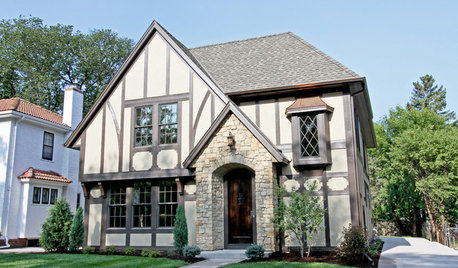
ROOTS OF STYLERoots of Style: The Indelible Charm of American Tudors
Rich details and an intimate scale give this English-inspired architectural style memorable character and flexibilty
Full Story
DECORATING GUIDESSo Your Style Is ... ‘Wet Hot American Summer’
11 ways to bring nostalgic early-’80s camp fun to your home
Full Story
MOST POPULARHow to Hang the American Flag at Home
We’ll show you how to display the American flag on your house for Memorial Day, the Fourth of July or all year round
Full StorySponsored
More Discussions
whwo