

Baking question for Grainlady
10 years ago
Featured Answer
Sort by:Oldest
Comments (7)
Related Discussions
Grainlady, oil questions please
Comments (22)Agreed pretty much across the board, to avoid dangerous fats, eliminate processed foods. Just start there. It is that simple. Starting there, and using whole foods, you've got many choices. Knowing where your food is sourced, less hands involved, you will find pure, less processed products. Many of the diets studied around the world that dcarch refers to are most likely sourced close to home. Probably eating local produce and using oils processed nearby? A much different diet than vegetable oils here. Those that use olive oils know how to cook with them. A low heat or med heat is fine using olive oil. Save the first pressing for dressings or a drizzle. A bit of heat will change the fresh flavor so save it for later off heat. The second pressing is lighter in flavor and color and better for cooking. Can handle a higher heat. Really depends on your cooking style. If you blast your veggies with high heat, most oils will burn and smoke. My coconut oils are always solid. I warm them and add other oils to keep it fluid. I rarely use high heat for anything but water to boil. And baking bread. A slow and low saute just needs a tbsp or less for a mirepoix and then broth to steam tender veggies or a slow roasting in the oven with even less oil. I just don't buy into the 'capsule on-line' supplement oils and their health claims. Raw and fresh food oils are in many things. Cold pressed/expeller oils are so easily available that it doesn't make sense to buy oils that use heat processed and chemically treated extraction methods. Use real butter over the cheap spreads like margarine and veg oils. Even some butter tastes weird and rancid. Buy quality organic and just use less. Research the source, buy local/fresh. Or a brand that you and others trust. It really does taste so much better. We don't use that much butter but have it in the freezer. We prefer good olive oils infused with herbs and garlic for fresh warm bread. Butter with eggs and toast or waffles with maple syrup. Just personal preference. A cod/fish cake, crab cake, i have to use good butter. I like the flavor for some things. No reason to change the way you cook completely and avoid oils. Or using gobs of butter on everything more out of habit rather than flavor....See MoreQuestion for Grainlady
Comments (4)laceyvail- Long before reading "Wheat Belly" I was utilizing more low-carb and low-glycemic foods, including coconut flour and almond flour in our diet, and using less wheat products. I'd been using more spelt than wheat for about a year, since it was lower on the GI. Diabetes is rampant in hubby's family, so we are trying to avoid it with food choices. Consuming whole foods on the lower half of the Glycemic Index of Foods and reducing the amount of wheat in our diet was already happening. I've been involved in gluten-free cooking/baking for years, including developing gluten-free recipes for a local sorghum mill, which started because my mother had celiac disease and I did a lot of food preparation for her before she died. Comments shared here made me head to the library and read "Wheat Belly", as well as "Perfect Health Diet" by Paul Jaminet, Ph.D. and Shou-Ching Jaminet, Ph.D. After that, we had a big food discussion and decided to do a 4-month trial without wheat products. After 4-months, and feeling great, I consumed a flour tortilla on Friday and a whole wheat bun on Saturday and by Saturday night I had a huge flair-up of arthritis like I haven't seen for many years (I've had arthritis since I was 14-years old). So that was enough to make me continue elimination of wheat in my diet. We also both dropped 10-pounds :-) I really don't make a big deal out of it because it's not a one-size-fits-all world when it comes to food choices. Ironically, during this time the Extension Office contacted me to see if I knew anything about using coconut flour. Evidently there are a number of "Wheat Belly" folks asking for information and guidance and the agent isn't up-to-speed on the subject. I've been mentoring individuals through the Extension Office, which suits me fine. I still teach food and nutrition classes at the local Food Bank and they generally include food available through the Food Bank and through the Commodity Distribution Program. My sister suffers IBS and a number of "gut" issues and is following a Gut and Psychology Syndrome (GAP Syndrome or GAPS) Diet, which includes elimination of grains, and is seeing some great improvement after 2-months. We think our genetics (mother with Celiac Disease), as well altering grain, pointed out in "Wheat Belly", hasn't been a good thing in our family. Eliminating it has done wonders! -Grainlady...See MoreGrainlady? bread flour question
Comments (3)Great information already posted... Here's an expanded version. Flour 101- -The more protein, the lighter the yeast bread - up to a point. Too much protein (gluten) will make bread tough, which is why commercial flour is a combination of protein levels so that it has an average amount correct for different baking needs. -There are two types of protein that make up the gluten group - glutenins and gliadins. This is what we generally call "gluten". Glutenins provide the elastic quality that allows bread dough to expand. Gliadins play a secondary roll by contributing to the viscosity and extensibility of bread dough. -Although durum wheat has the highest amount of protein of all wheat types, the main protein in durum wheat is gliadin, which makes it excellent for pasta, not bread, because of the viscosity and extensibility. This is the type of wheat I use for wholegrain pasta. -Bread flour is highest in the protein glutenins (great for yeast breads), milled from hard wheat varieties. -All-purpose flour is a mixture of hard and soft wheat so that it fits a protein profile that suits "all-purposes" for general baking. A little too much protein for really fine cakes, a little less protein than needed for really good bread. A middle-of-the-road flour. (Source: CookWise by Shirley O. Corriher) Percentage of protein.... Durum wheat - 13-13.5% protein - used for pasta Bread flour - 11.5-12.5% - use for yeast breads, pasta, pizza Northern unbleached all-purpose flour (King Arthur) - 11.7% - use for yeast breads, cream puffs, puff pastry, pasta, pizza Northern all-purpose flour (Robin Hood, Hecker's)- 11.7% - 11-12% - use for yeast breads, cream puffs, puff pastry National brand unbleached all-purpose flour (Gold Medal, Pillsbury) - 10-12% - yeast breads, cream puffs National brand bleached all-purpose flour (Gold Medal, Pillsbury) - 9.5-12% - biscuits, quick breads, muffins Bleached Southern all-purpose flour (White Lily, Martha White, Gladiola, Red Band) - 7.5-9.5% - Pie crusts, biscuits, quick breads, muffins Cake flour - 7.5-8.5% - Cakes, quick breads, muffins, pancakes ------------------------ Whole grain flour can have as much or more gluten than commercial flours. I'm using hard white winter wheat that has 13.1% protein - excellent for yeast breads. I've worked with wheat that had 16% protein levels. It takes more kneading to develop the gluten in high-protein wheat varieties and you won't get as tender a crumb as you do with lower protein levels. I also mill soft wheat for pastry, biscuits, cakes, quick breads; or mixtures of low-gluten flour (spelt) and hard wheat to make "all-purpose" protein levels when I need lower-gluten flour (cookies, quick breads, etc.). For low-gluten "cake" flour, I use a 3:1 mixture of soft white wheat and oats (or spelt) for fine cakes like chiffon or angel food. -Grainlady...See MoreQuestions for Grainlady!
Comments (12)Boy, what a challenge... I'd take the Polenta Pizza Crust mixture and make small rounds (about the size of an English Muffin), and see if you get better results making individual-sized pizza crusts. You might try baking them in a slow oven to dry them out, THEN in a higher oven to crisp them up and brown them. Have you tried converting a baked corn tortilla into a pizza crust (if that's a corn-based food you can have), or even converting a pancake? I remember making low-carb pancakes and using them for a wrap for sandwiches and a "crust" (base) for pizzas. How about a blender batter made with cornmeal, dairy, oil, salt and making a crepe-type shell. Here's a recipe from "An Introduction to Whole Grain Baking" - by Sue Gregg (www.suegregg.com). Blender Crepes Stage 1 1. Place in blender, cover and blend at highest speed 3-5 minutes: 1-1/2 c. warm filtered water 2 T. whey or cultured milk, (optional) (you can drain whey from plain yogurt) 2/3 c. whole grain - choice (soft white wheat, Kamut, spelt, barley, brown rice, millet, oats (whole oat groats), etc. (Grainlady note: you could probably use coarse corn meal.) 2. (DO NOT BLEND YET) Cover and let stand at room temperature several hours, or overnight. Stage 2 3. Add remaining ingredients except eggs and blend briefly until evenly blended; add eggs; cover and continue blending on highest speed for 1-3 minutes: 1 T. melted butter, extra-virgin olive oil, or melted coconut oil 1 t. honey (for fruit-filled or snack crepes) 1/2 t. cinnamon (for fruit-filled or snack crepes) 2 T. unbleached all-purpose flour, optional* see note below 1/4 t. salt 2 eggs 4. Preheat seasoned crepe pan over moderately high heat until drops of water sizzle gently in pan. 5. Grease pan as needed. 6. Pour about 3 T. batter into hot pan, quickly tilting pan to swirl the batter evenly across the bottom of the pan to the edges. Stir the batter before making each crepe. 7. Bake until browned at edges, about 1-2 minutes. Loosen along edge with shish kabob or party stick. Lift gently with fingers, loosening from pan carefully as you turn it over to bake on the second side. * (Grainlady note) If you have a grain mill, you can substitute milled bean flour for the all-purpose flour or use flaxmeal. I suggest using small white beans because they have the mildest flavor when added to baked goods. I've done a lot of food experiments using bean and chana dal flour (I mill them into flour myself). ----------------------------- Cookies from these ingredients... I have a recipe for corn meal cookies (NO flour), but they take a lot of sugar. What are you using for a sweetener? Can you use Stevia or low-glycemic agave nectar? I bet you could work out an oatmeal cookie. It's probably possible if you use powdered shredded wheat as the flour substitute - since that's essentially what it is. Can you have eggs? If not, substitute tofu for the eggs. Good luck - necessity is the mother of invention! -Grainlady...See More 10 years ago
- 10 years ago
 10 years ago
 10 years ago
Related Stories
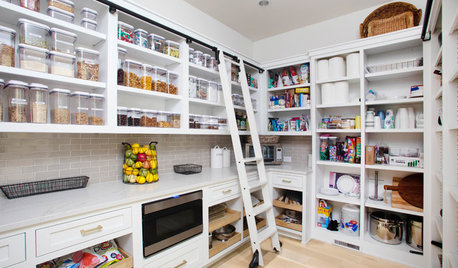
KITCHEN DESIGN9 Questions to Ask When Planning a Kitchen Pantry
Avoid blunders and get the storage space and layout you need by asking these questions before you begin
Full Story
ORGANIZINGPre-Storage Checklist: 10 Questions to Ask Yourself Before You Store
Wait, stop. Do you really need to keep that item you’re about to put into storage?
Full Story
REMODELING GUIDESPlanning a Kitchen Remodel? Start With These 5 Questions
Before you consider aesthetics, make sure your new kitchen will work for your cooking and entertaining style
Full Story
FEEL-GOOD HOMEThe Question That Can Make You Love Your Home More
Change your relationship with your house for the better by focusing on the answer to something designers often ask
Full Story
GREEN BUILDINGConsidering Concrete Floors? 3 Green-Minded Questions to Ask
Learn what’s in your concrete and about sustainability to make a healthy choice for your home and the earth
Full Story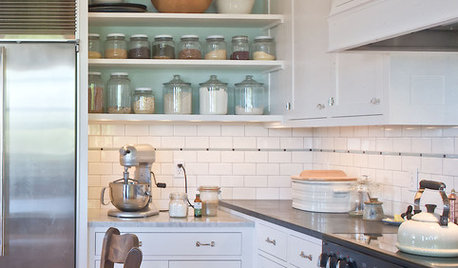
KITCHEN DESIGNLove to Bake? Try These 13 Ideas for a Better Baker's Kitchen
Whether you dabble in devil's food cake or are bidding for a bake-off title, these kitchen ideas will boost your baking experience
Full Story
LIFESimple Pleasures: The Joy of Baking
Fill your house with a heavenly scent and your heart with cheer by making time to bake
Full Story
KITCHEN DESIGNKitchen of the Week: Orange Splashes Add Personality in Kansas
Bursts of color and a better layout make cookie baking and everything else more fun for a Midwestern family
Full Story
HOUSEKEEPING12 Cleaning Projects That Go a Little Deeper — Naturally
Eucalyptus oil for germy door handles. Baking soda for oven grime. Here are nontoxic solutions for often-overlooked cleaning jobs
Full Story
DECORATING GUIDESHow to Love Your Kitchen More, Right Now
Make small changes to increase the joy in your kitchen while you cook and bake, without shelling out lots of dough
Full Story


grainlady_ks