

Closing registers to save on heating costs
10 years ago
Featured Answer
Sort by:Oldest
Comments (25)
 10 years ago
 10 years ago
Related Discussions
Saving on home energy costs? Would trees help a lot?
Comments (40)The solution is kindergarten simple. Here's some facts though to ease your mind. Every square foot of sunlight carries almost 100 watts of heat. It's really about 88 watts but say 100. We'll subtract 12% (100-88) later. So imagine you have windows 24" x 36" . That's about 6 sq feet. And they can let in 100 watts per sq foot. how many watts of power = 600 watts. Here's where that makes sense: An electric floor heater is about 1500 watts. So imagine in the Summer turning on a floor heater and leaving it on for 1/2 hour then turn it off for 1/2 hour all during the day. That's about how much heat can come through that one window. Will putting something to keep heat out help. --- Next on the roof. Insulation doesn't keep heat in or out. Is slows down how long it takes to come. So it's going to come in no matter what unless. You block it. Imagine your roof is 20 feet x 40 feet and you have a 2 story house. That's a 1600 sq foot house. 800 on the top floor = 20 x 40 and 800 on the bottom. that's no matter. So 100 watts x 800 = 80,000 watts of heat It's going to get through. So will it help to shade it? Let's be real. If only 1/10th of that heat gets into the house that's still the same as 5 x 1500 watts of heat on all day in Summer. Would you turn on a heater in those examples above. Then don't let the heat come in How to do it cheap. Anything on the windows help. Foil is ok. it will last for years if you fit it to the window first and then glue it down on cardboard. Then you can place it into the window. Maybe even make it so it flips down , etc , for the view. Roof. Painting the roof white helps a lot compared to black roofs. Is the cost worth it? It's probably not compared to other choices like planting tress but a. Tress can ruin a roof. Chinese elm puts tiny leaves which keep water on a roof no matter what. That rots and so some tress avoid. b. Trees take time to grow but you can buy them 'fully' grown. And install them fully grown. b2) Palm ? They're not going to shade much but you just calculate what they'll shade , the cost, the cost per sq ft of shading and pick the tree with the lowest cost per sq foot of shading. c. Other roofing choices. Foam roofing is not hard to do yourself. You must read up on it. Practice. Then you can do it yourself. Pull a permit from the city. The equipment used is $15,000. You can sell it again for probably the same price if you clean it. That cleaning IS a part of reading how to maintain it. Cost for 2000 sq foot roof in materials is about $3000 for everything. Foam and the white latex coating that's reapplied every 10-15 years. As long as it's reapplied the foam should last a 'lifetime' (50 to 200 years) Without reading any of the posts there's are other ideas probably. Have a flat roof? here's an idea. Put up trees on the roof. Be sure to have a registered architect or structural engineer. But you could have a garden on the roof shading within a few weeks. put a lot of trees in containers and you could make some money selling them as they got too big. And birds lvoe it if there's grass and wild plants. it's a real viable 'way to do business' now a days in old and new construction. KEYWORDS To search Coolroofs Green roofs Attic insulation. It's easy and cheap. If you can put it under the actual roof rather than on top of the attic 'floor' it will do more for the amount. In fact that under the actual roof is an ideal place to practice when you buy the foam machine. Again you must read and study before you do it. But it really is 'stupid simple' You can foam the under roof for $2000 and put an r-8 or r-12 where it will do a lot of good. Cost is about $1500 for 2000 sq feet. You can't rent the foam equipment from my research but buying it is not a bad choice. It's simple well designed equipment nearly identical to airless spray paint sprayer. do both. under actual roof and top of attic floor. THere's no reason not to. Here's an FYI. Making your own insulation is 'easy' . 5 layers (about) of paper, foil, paper, foil, etc is exactly what was used in the commercial building trade for under the roof insulation. The paper can be from newspaper end rolls. Fireproofing it can be done with a couple of cheap, safe to use, easy to buy chemicals. Read up by reading about fireproofing for theaters and stage productions. If you have a community theater ask the director or stage production manager where they buy fireproofing liquids. Or make your own as was done for hundreds of years. To save money always. Go to a Chinese bulk product site. Look up the price they sell a TON of something for. Then look at what you pay. You'll soon figure out a decent multiple, say 10x , their price and then never pay more than that. in the case of fireproofing sodium silicate also called 'water glass' is $250 / ton or 10c / lb. Buy 50 lbs for $10 and you've got yourself a deal. Mix it with water, spray it on , let it dry and try to burn the paper or cloth. It won't burn. Ok that's my dump. Enjoy and keep it cool. Putting up a few solar panels to heat water will keep heat off that part of the roof. Just a thought....See MoreUp front costs of Geothermal heat pump vs. other heating methods
Comments (79)It boggles my mind that people think 10 years is a long time. After installation, you pay each month (including financing) about what you were already paying anyway (probably less). You do it for 10 years, (especially with all the new government incentives, rebates, and low-interest financing now available) and after 10 years you're paying a ridiculously paltry amount for heat. Of course it makes sense. Think of the payback over 20 years once that loan is paid off! Even if you only end up paying even 1/2 of the normal cost over that period (including the cost of your system and electric), you're still saving substantially. I know not everyone lives in a home for that long, but seeing low energy bills does increase home values. I've seen homes sold almost immediately with their main advertising point being their geothermal system even in our horrible present climate while others still linger on the market. Not only that, but why not decrease your monthly bills slightly (before the loan is paid off)? Slightly lower bills, a higher sales price which will pay off the rest of that loan - still makes sense. We had someone come out to our house and they specifically calculated everything from current estimated heating costs, heating/cooling with geo, then savings/payback period. This was a full service option, including thermostats, etc. Finding that should not be difficult. One argument I saw above made no sense. If it really is worth insulating your home to use a normal system, it is a no-brainer to insulate your home using geo. Whether you decide to use geo or not, you can't say, "Well, normal is better, because we insulated, too." That makes no sense. Insulate either way. Then compare. The financial analysis does not make much sense, either. Yes, it would be wonderful if we could just stop paying the oil company, live without heat, and invest that money! Realistically, while you could want to put away the whole $25,000, you really are still using it for heat either way over those 14 years as projected. Geo, with the loan, electric, etc, will cost about the same each month as heat before the loan is paid off, so you can't just pretend that money could be invested elsewhere. Use it upfront with geo, use it over several years with oil, it makes no difference. That money is being spent on heat. Should it be spent on something worthwhile, or just, at the end of 10 years, have you still spending the same amount on more heat with oil? Geo will typically initially cost you a little less (including the loan and electricity) per month than you would be paying otherwise, then suddenly drop dramatically to only the cost of using the system as soon as that loan is paid off. That's money you would have spent anyway each month with your normal system (even though some of it went to financing, it is still less that what you would have paid for oil). Then suddenly, once the loan is gone, you actually DO have perhaps $1,000 a year in money saved that you can invest if you wish over 10 years. If, with financing costs, it does cost more per month than your normal heating system, that's one thing; but if not, the argument that it is wasting money is not valid. You're spending it anyway. Might as well spend it on something that will, in the future, save you tons of money. (Not just a little, a lot.)...See MoreHeat Pump.....will it really save me money?
Comments (31)Perhaps this question has been answered on this site or another but as I have not found it I thought I would ask. I have a home with all electric heat and have a Bryant Evol Extreme Heat Pump with back up heat strip professionally installed. I am happy with this heat pump as it has never not performed as advertised. My question is this: The heat pump only setting easily maintains 72 or above inside temperature at 15 degrees outside temp and starts to struggle on heat pump only at below that point. For example, right now in Columbus Ohio on Feb 13, 2015 the outside temp is 7 degrees and my heat pump only setting is maintaining 68 inside temp even though I have setting at 72. I don't mind the temperature. Am I wasting money by not using "system control" at this temperature? Of course "system control would cause heating strip to engage but would lessen some of "stress" on heat pump or if I don't mind the inside temp am I saving money by using heat pump only? FYI, my KWH is .072. I am assuming the compressor running non stop is yet a large savings over engaging heating strips? If any pro can respond to this much obliged....See MoreHeat Pump Air Temp from Register
Comments (18)Demand defrost is an 'option' that will add to the cost on a 13 seer. On a 15 seer unit DD is usually 'standard' equipment. The initial cost is higher of course than timed defrost but the extra cost is quickly offset in savings. Of 'extra's' that are available on a system.... if its below freezing very much demand defrost has one of the quickest paybacks.... if its more hot and humid then a txv.... if its like here where you get the heat and humidity along with a long spell of well below freezing than a 15 seer with both options standard is the minimum "baseline" I would recommend. I was blown away at the difference and rarity that my DD system actually goes into defrost mode in comparison to my timed system. Every minute a system is running in defrost that does not have to be is burning a tremendous amount of load that is not needed only to warm the outside with strips. I had 20kw of unstaged strips and 13 seer 3.5 ton timed defrost and was borderline on a 200 amp service. When I finish my basement I was going to have to upgrade to a 400 amp service. I sealed the ductwork, had the heat pump upgraded to a 15 seer 3 ton with 15kw of staged heat strips with a good outdoor sensing stat. I dropped the total load enough to be able to finish the basement easily without needing to drop the $$ on a 400 amp service and also reduced my electric bill considerably. I also did some home sealing but still need to get in the attic and do more. OH and the house is more comfortable and the noise is much less. Sorry to go off on a tangent but it just amazes me that upgrading my heat pump and doing a few other things allowed me to keep from spending thousands to upgrade my service... only to have a higher bill to pay for the increase in load....See More 10 years ago
 10 years ago
- 10 years ago
- 10 years ago
 10 years agolast modified: 10 years ago
 10 years ago
- 10 years agolast modified: 10 years ago
 10 years agolast modified: 10 years ago
- 10 years agolast modified: 10 years ago
 10 years ago
 10 years ago
- 10 years agolast modified: 10 years ago
- 10 years ago
- 10 years ago
 10 years ago
- 10 years agolast modified: 10 years ago
- 10 years ago
- 10 years agolast modified: 10 years ago
- 10 years agolast modified: 10 years ago
- 10 years ago
- 10 years ago
- 10 years ago
Related Stories

INSIDE HOUZZHow Much Does a Remodel Cost, and How Long Does It Take?
The 2016 Houzz & Home survey asked 120,000 Houzzers about their renovation projects. Here’s what they said
Full Story
ACCESSORIES8 Low-Cost Luxuries With a Big Payoff
Consider the small stuff — like switch plates and throw pillows — to give your home a touch of class
Full Story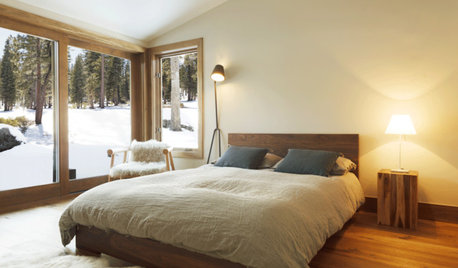
WINDOW TREATMENTSEasy Green: 9 Low-Cost Ways to Insulate Windows and Doors
Block drafts to boost both warmth and energy savings with these inexpensive but effective insulating strategies
Full Story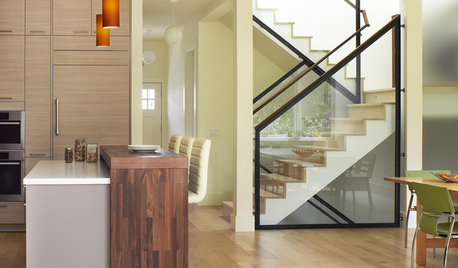
FLOORSIs Radiant Heating or Cooling Right for You?
Questions to ask before you go for one of these temperature systems in your floors or walls (yes, walls)
Full Story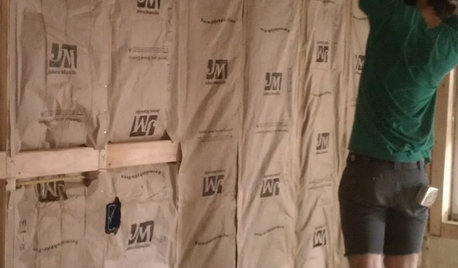
REMODELING GUIDESCool Your House (and Costs) With the Right Insulation
Insulation offers one of the best paybacks on your investment in your house. Here are some types to discuss with your contractor
Full Story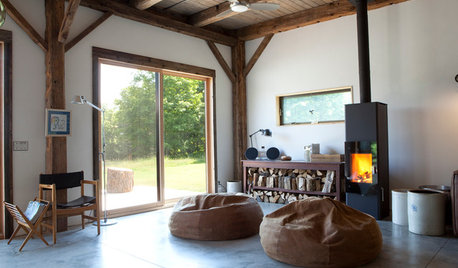
GREAT HOME PROJECTSHow to Add a Radiant Heat System
Enjoy comfy, consistent temperatures and maybe even energy savings with hydronic heating and cooling
Full Story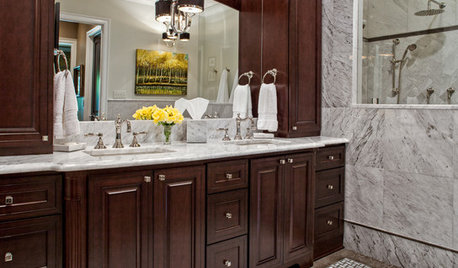
REMODELING GUIDESBathroom Workbook: How Much Does a Bathroom Remodel Cost?
Learn what features to expect for $3,000 to $100,000-plus, to help you plan your bathroom remodel
Full Story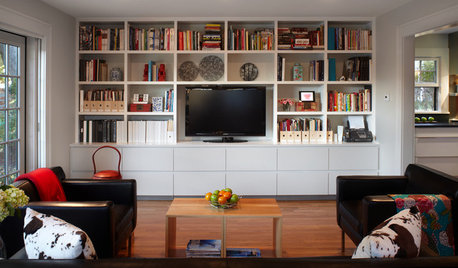
GREAT HOME PROJECTS25 Great Home Projects and What They Cost
Get the closet of your dreams, add a secret doorway and more. Learn the ins and outs of projects that will make your home better
Full Story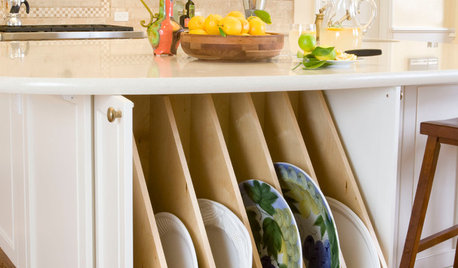
KITCHEN STORAGE13 Popular Kitchen Storage Ideas and What They Cost
Corner drawers, appliance garages, platter storage and in-counter knife slots are a few details you may not want to leave out
Full Story
MATERIALSMaterials Workshop: Polycarbonate — a Low-Cost Alternative to Glass
Looking for something lighter, stronger and less expensive than glass? Multiwall polycarbonate may be a good option
Full Story

lucillleOriginal Author