

Ancestry.com at the library
11 years ago
Featured Answer
Sort by:Oldest
Comments (12)
 11 years ago
- 11 years ago
Related Discussions
Genealogy
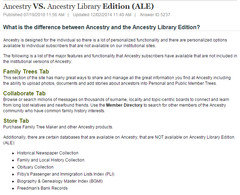
Comments (24)Old Fixer, although I use the FamilySearch.org web site, and have also used the LDS Family History Library as well as a local Family History Center, I do not have a tree uploaded to their web site. So, I cannot say whether or not "just anyone" can edit information on a tree that is on their site. I will look into that, though. I do know with certainty, however, that if you have a tree on Ancestry.com, you can mark it as Private. No one can see info that is on the tree unless you send them an invitation to see it. If you add photos or images of documents, etc., to a Private tree, small thumbnails will show up when other people do a search on a name, but if anyone clicks on the thumbnail to see a larger version, they will get an error message that the tree is private. You can also have a tree on Ancestry.com that is marked as Public. When a tree is Public, anyone can see information/photos, etc., for anyone who is deceased, or presumed to be deceased (e.g., they were born in 1884 and you don't have a death date, but it's easy to see that the person would not still be alive - they'd be 130 years old this year). If the person is still living, or presumed to still be living, all anyone can see is a shadow profile of either a male's head or a female's head. For the name it would say Living Fixer, so no one can even tell what the person's first name is (this example uses "Fixer" as the surname). And, even if a tree is marked Public, no one can change anything on it, unless you invite the person to be an editor. You can invite people to just view the tree (they would be invited with a "Guest" designation); or you can give them the ability to add to the tree (they would be invited with a "Contributor" designation); or you can invite them as an "Editor" with full ability to add/change/remove information/people. People who are invited as Guests and/or Contributors can be given the ability to view living persons, but that's not the default setting. You have to deliberately give them that ability. Anyone invited as an Editor automatically can see everything....See MoreHouse history - ancestry.com ?
Comments (6)I think it depends on where your house is. There are some city directories (with addresses in some directories) online at Ancestry, but it is more geared to focusing on human history than on old house history. As noted above the best source of accurate ownership history data is usually in your county or city deed record repository. There may be some states where the info may not be publicly available (Texas?), but in all other areas, that's where the mother-lode of data is. Although it may seem very confusing to search, at least at first, there is generally a pretty comprehensible organization to the files and often the office staff will be willing to give you a quick course. In most offices they will not do the searches for you, just show you how to use the data-bases and old ledger systems. Most areas only have computerized records going back a few years or decades. Anything older than that has to be located by using the grantor/grantee indices, then the individual deeds looked up in the ancient files. (Suggestion: plan on it taking way more time than you expect and wear easily-washed old clothes since the old records are often very dusty, or affected with red leather rot.) There is a very good book on "chaining" titles (doing a house history in general). I am away from home, but I can look it up for you if you'd like. There are different deed index systems around the country, but the principles are the same. The grantOR is the party selling the property and the grantEE is the one buying it. Most deeds (esp. early ones) are stuffed to the gills with long, seemingly repetitive words and have hefty boiler-plate preambles and closes. You'll quickly learn to focus on the main points: who, what, where, when, and how much - paid and number of acres sold. The Grantor (seller) is always the party of the FIRST part and the Grantee (buyer) is always the party of the SECOND part. There can be more than one person in any of these roles. And there can be more than one individual deed when there is more than one person in either of these roles, but especially when there are multiple sellers who for various reasons couldn't (wouldn't?) be gotten together to sign a single document. Some sellers only hold a certain percentage of the whole interest (e.g. if two brothers inherited property per stirpes, or equal shares, then each could only convey a half-interest; multiple generational heirs sometimes have tiny and uneven fractions of interest to convey.) When that happens it's not uncommon to find multiple partial deeds filed over long periods, many executed in far away places. There's another useful stream of info relating to any mortgages on the property, who gave them (generally the buyer, but could be someone who already owned the property, like the common HELOC of today) and who took them, i.e. the lender. (Don't be confused by the modern concept that you "get" a mortgage from a bank. It's always been, and still is, true that though the bank gives you the money, what is really happening in that case is that you really are giving/granting the bank an interest in the title of what you own in exchange for that money. That's why the borrower is the grantor in mortage matters. See also: Great Mortgage Meltdown 2009-2010.) That can be confusing because in the case of a purchase money mortgage the grantor of the mortgage is the buyer who is simultaneously the grantee in the deed transaction. Confused yet? Well, think about when the transaction involves a buyer and seller who are also entering into a loan agreement to cover the purchase price. In that case the "grantor" and "grantee" roles are both doubled, and reversed. You asked about the census records: in most cases they are not very searchable by address, which often is just a secondary census data category, and often in older areas the street or place names will have changed over time, rendering the search moot anyway. It may be better in well-developed cities with tighter control of space, but in rural or thinly settled areas addresses, at least as we use them today, were much more fungible. And many rural areas -like mine for instance in upstate NY - only got "real" street numbers as recently in the late 1990s when the 911 address systems came into vogue. Before that whatever address this farm may have had was geographical (west side of such and such road, beyond the old XXX place) or the rural delivery route (not street) box number. All that being said, I do use Ancestry quite a bit in my long-running research project on the farms in my town. But only to expand (or resolve confusing ownership history) by sussing out who the named buyers and sellers were - and with what relationship to each other, if any, - after I've pulled those names from the county deed (or probate) records. And there, census data (especially after the mid 1800's when realtionships began to be noted within households) is invaluable. Unfortunately there is a big gap in 1890, because those census documents were mostly destroyed for that year. Some states also did a census, especially in rural or farm areas, on fith year intervals, so that may be another source, usually held within the state records. I'd start with a simple buyer to seller search, working backward. If you get balked, remember each seller was also, once, a buyer. So if you can't find a particular person in one role, then look for him or her in the other role. This is helped by the fact that most deed books are arranged by role, in addition to name and/or period of time. This holds true unless a buyer later died owning the property, then the heirs would be sellers. That's generally where things get a bit sticky. Who were the heirs and what names did they, or their agents, use in the transaction as conveyors, grantors or sellers? Ancestry can help at this point by helping you figure out the decendents' names. And you can also get some of that info by checking the probate files where wills and estate dispositions are recorded. In many states you are entitled to see those records even if you're not an heir. I used to be shy about even asking that, but the clerks never batted an eye when I finally gathered my courage up to ask. In some areas, really old deed records have been transferred to the local historical society, which in my experience makes them somewhat less accessible than city or county clerks' offices which are open during most busines hours. Occasionally you'll find a deed room that's open in the evening, and often those hours are full of people doing exactly what you are. If you ask for help at those times, you'll almost certainly get a good steer to where (and how) to search. After you have some names, then I would take up Ancestry's try it for free for 30 days offer and see if you think it will be useful. For deed chain searching here in the US, you most likely won't need to purchase the expanded European records, so you can skip that extra fee, for now. Fair warning: this stuff is really addictive. If you get hooked, you'll have to give up your other hobbies. One other thing: if you find that purchase price info is not noted, that's not uncommon. Sometimes the deeds are coy about it. Look for tax stamp data on those deeds. Taxes were often based on the amount of money being paid. If that's the case, and you can find the tax rate, then you can figure back to purchase price. Have fun, and good luck!...See MoreWhat can you tell me about Ancestry.com?
Comments (11)I have a World Deluxe membership and have had it for 5 years. I think it costs $350.00 for the year, something like that.. I use it on a daily basis and oh my gosh yes.. it is very addictive. To me it is more then worth the money, the different things I have found on my family I would of never found otherwise. Ancestry automatically searches for records for each member you have in your tree and when they find something they thing belongs to that person you will see a green shaking leaf. The hints do not always belong to that person, you do have to be careful about that and not just add those records before checking them out carefully. There are public and private trees on Ancestry.com, you choose which you want yours to be. When doing research you can look at other people's trees with your family member in them.. you may come across a picture of your Great or Great Great Grandmother or Grandfather that you never knew existed. On Ancestry you will find census reports, stories, pictures, birth, death and marriage records and immigration records. This is all included in the World Deluxe membership. There is a cheaper membership but why do all that work and not be able to access their site completely? They have message boards where you can see if anyone else is researching the same surname you are. They have message boards for Surnames, States, Counties in each State and several others. You may be surprised at the descendants you meet. You can add your own photos to each person and write your own stories if you wish. You can also go to FindAGrave and add any tombstone photos you might find to each person. This is not a quick project.. not something you do overnight. I have spent about 5 years working on 2 trees, my family and my husband's family. I am now working on one for a friend and also one for my son in law's family. There are wonderful publishing projects on Ancestry also, you can have it printed out into a book which you can add pictures to, timelines and pedigree charts. You can also have some very neat pedigree charts printed out etc.. I downloaded my tree into a Family Tree Maker program once I was "almost" finished... now when I find something new, I add it into Famly Tree Maker.. From there I printed off pedigree charts and genealogy reports on each set of grandparents, going back 9 generations. I compiled all of thing including pictures into a book form. I can highly recommend Ancestry.com.. . . What you find is the story of your family and you may never know what is out there if you don't look... Debbie...See MoreAncestry.com adds Wills & Probate Documents
Comments (2)I've usually found that unless you know the Case Number, you're out of luck by mail. So I went down to the Courthouse & scrolled through the Index to locate exactly what I wanted Only court cases after 1950 had been indexed; everything prior going back to 1900 was handwritten in old leather-bound books, and the clerks sure weren't willing to do that job to find them. In the latter case, a half-hour search was not unusual....See More 11 years ago
 11 years ago
- 11 years ago
- 11 years ago
 11 years ago
- 11 years agolast modified: 11 years ago
- 11 years ago
 11 years ago

Related Stories
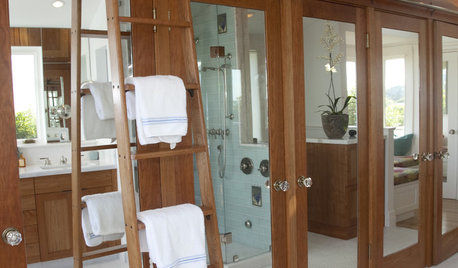
FURNITURE10 Ways Library Ladders Give Rooms a Lift
Yes, they're great in libraries. But library ladders also work wonders in bathrooms, pantries and many more spots around the home
Full Story
DENS AND LIBRARIESRoom of the Day: Princess the Snake Reigns in a Luxe Library
Sure, there are books. But in this library the custom snake habitat may be most worth checking out
Full Story
DENS AND LIBRARIESDesigner's Touch: 10 Luxurious Libraries
A reading space doesn't have to be huge to be grand. From over the top to under the stairs, these libraries will inspire your literary side
Full Story
DENS AND LIBRARIESHow to Care for Your Home Library
Increase your enjoyment of books with these ideas for storing, stacking and displaying them
Full Story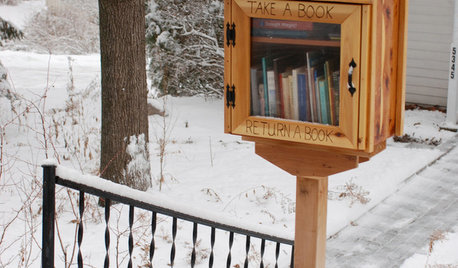
COMMUNITYBook It: Bring a Mini Library to Your Front Yard
Take a book, leave a book. An ingenious lending-library idea is sweeping the nation — see if it's right for your neighborhood
Full Story
COMMUNITYLittle Free Libraries Take Manhattan
Designers' modern mini libraries boost reading and community in New York City
Full Story
MORE ROOMS12 Libraries That Lightened Up
Stick dark and dusty back on the shelf and check out these airy, modern and unexpected spots for books instead
Full Story
LIFE'Not My Precious Books!' — Pain-Free Ways to Declutter Your Library
Have your books and neatness too, with these ideas for paring down and straightening up a beloved collection
Full Story
MORE ROOMSBeautiful Modern Home Libraries
Strong Lines Make a Statement in the Reading Room
Full Story
DENS AND LIBRARIESGuest Picks: 20 Must-Have Design Books for Your Library
These essential decorating tomes provide great inspiration and helpful information
Full StorySponsored

kathy3754