

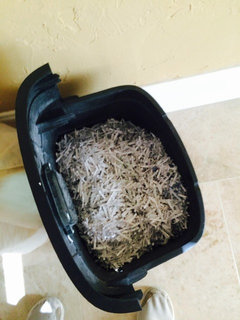
Question(s) about safely discarding papers
11 years ago
last modified: 11 years ago
Featured Answer
Sort by:Oldest
Comments (33)
 11 years ago
- 11 years ago
Related Discussions
Neptune fertillizer does not use Menhaden, but use discarded fish
Comments (1)Starting one of these down the page....See MoreNeptune fish fertilizer does not use Menhaden, but uses discarded
Comments (1)I was so glad to read this since I'm the one who brought up this concern, obviously before I had informed myself thoroughly. I apologize if I've misled anyone, but have to say I'm very happy to know that fish fertilizer is environmentally friendly, and this article was very informative. It's sad that apparently here too government driven by big business concerns has also hurt family businesses. Fishing for a living is extremely hard and often dangerous, and I admire the families who have made their living this way for generations. Ingrid...See Moremade my own "discarded sharps" container
Comments (12)In CA, it's against the law to dispose of medical sharps in the garbage. I hadn't thought about other types of sharps though. Talley Sue, I love your idea for a smaller container for sharps. I had a kidney disease cat for a number of years and used IV needles with her. They didn't accumulate very fast, so when I used even a small detergent bottle, it took up so much unnecessary space. Eventually I settled on using instant coffee containers with the pop-up lids. Caroline, if it's okay to discard them in the trash where you are, I don't know if it would be worthwhile to label them, but you could always do what I was told to do here for the hazardous waste people, which was to wrap the container with masking tape so it would be hard to open, and then label it with a red pen saying "medical sharps." When we use to turn in our cat's sharps at the local waste place, I was careful to label the container so there was no question what it was. Later, they made it so you had to put your container of sharps in the burn barrel yourself- I noticed that the choice of most people seems to be those plastic containers that foldgers ground coffee comes in- probably because of the size and red color. Either way, I was told to use opaque plastic because it's thicker than clear, and less likely that a sharp would work its way through....See MoreAnother Sourdough Question(s)
Comments (43)Primer: Pre-ferment is a method by which a small dough is made of yeast, flour and water, to develop the activity and flavor of the yeast, usually overnight. "Ferment" refers to the yeast activity in the final bread dough. Biga (Italian) and levain (French) are pre-ferments. Usually, however not exclusively, bigas are made with commercial yeast, and levains are made with sourdough starter or saved levain starter. Those distinctions refer to the origins of the words. Many bakers use the words interchangeably. If you're not sure, just say "pre-ferment" and you're covered. Similarly, banneton, a woven basket, usually lined with cloth (French) and brotform, a coiled basket, less often lined with cloth (German) are used interchangeably for both types. In English, you can say "bread form" or "dough basket". Many people say "proofing basket", but I don't care for the word "proof" as a synonym for "rise". I'm not old, but I remember proving cake yeast before dry yeast was stable, but fresh yeast could have died. The yeast was proven (i.e., "proofed"), when the biga rose. The rises of the main dough were a given unless something really bad happened. Nowadays, people just toss in dried yeast and expect it to rise, and it does, so they proof in the baskets. This is a persnickety quibble that has no real meaning to anyone but me. :) Hydration refers to the weight of water in the dough based on the amount of flour, and is usually expressed as a percentage. The flour is always 100%. If there are different flours in the dough, then they have partial percentages, e.g., 95% unbleached white flour and 5% whole wheat (a substitute for European style bread flour). Add them up and they equal 100% because the flour is always 100%. This allows one to discuss, clearly, the amount of water in the dough, which can be more useful than adjectives such as loose, wet, sticky, tight, tacky, etc. If you have 1000g total of flour in your dough, and your recipe calls for 68% hydration, you would use 680g of water. If you have 650g of white flour, 120g of whole wheat, and 30g of rye flour, for a total of 800g flour, 68% hydration would mean 544g of water. These percentages really only apply to what's in the bowl. When you do your stretch and folds on additional flour, you're changing the percentage. When you wet your hands to do them, you're also changing the percentage. So they make it easier to talk about baking, but every baker is still going to have slightly different results. Factor in environment--flour absorbs humidity from the air, and also releases it and dries out. It also has a fat component, though much less with white flour, especially bleached. (Put your white flour in a half full, air tight container for a year (i.e., trapping in some air so oxidation will take place), and even the bleached stuff will smell rancid when you open it up (personal experience talking).) If you oil your surfaces, hands, etc., a trace of oil can also be added, mostly negligible, but sometimes a few drops can make a big difference. With all of those factors, as well, the percentages refer to the basic recipe, and the rest is whatever works for you. Like S&P to taste. Experience is king. Repetition is important. Getting a feel for it is crucial....See More- 11 years ago
 11 years ago
 11 years ago
 11 years ago
 11 years ago
- 11 years agolast modified: 11 years ago
 11 years ago
 11 years ago
- 11 years ago
- 11 years ago
 11 years ago
- 11 years ago
 11 years ago
- 11 years ago
- 11 years ago
 11 years ago
- 11 years ago
- 11 years ago
 11 years ago
- 11 years ago
 11 years ago
- 11 years ago
- 11 years ago
 11 years ago
 11 years ago
- 11 years ago
- 11 years ago
- 11 years ago
- 11 years ago
- 11 years ago

Related Stories

ORGANIZINGPre-Storage Checklist: 10 Questions to Ask Yourself Before You Store
Wait, stop. Do you really need to keep that item you’re about to put into storage?
Full Story
REMODELING GUIDESConsidering a Fixer-Upper? 15 Questions to Ask First
Learn about the hidden costs and treasures of older homes to avoid budget surprises and accidentally tossing valuable features
Full Story
WORKING WITH PROS8 Questions to Ask Yourself Before Meeting With Your Designer
Thinking in advance about how you use your space will get your first design consultation off to its best start
Full Story
GREEN BUILDINGConsidering Concrete Floors? 3 Green-Minded Questions to Ask
Learn what’s in your concrete and about sustainability to make a healthy choice for your home and the earth
Full Story
GARDENING GUIDESNew Ways to Think About All That Mulch in the Garden
Before you go making a mountain out of a mulch hill, learn the facts about what your plants and soil really want
Full Story
HEALTHY HOMEWhat You Need to Know About Dust and How to Fight It
Breathe easier with these 10 tips for busting mites, dander and other microscopic undesirables
Full Story
FEEL-GOOD HOMEThe Question That Can Make You Love Your Home More
Change your relationship with your house for the better by focusing on the answer to something designers often ask
Full Story
WORKING WITH PROS9 Questions to Ask a Home Remodeler Before You Meet
Save time and effort by ruling out deal breakers with your contractor before an in-person session
Full Story
ORGANIZING4 Questions to Help You Organize Your Favorite Photos
Organize your keeper photos with a system that's just right for you, whether it's in the cloud or you can hold it in your hand
Full Story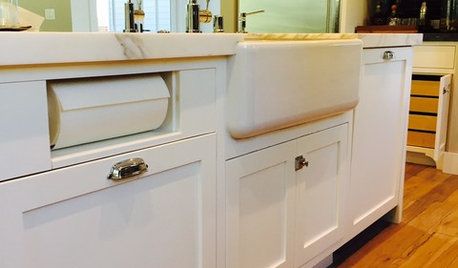
KITCHEN DESIGNKitchen Details: Out-of-Sight Paper Towel Holder
See how some homeowners are clearing the counter of clutter while keeping this necessity close at hand
Full Story

jemdandy