

Do day lillies benefit wildlife?
11 years ago
Featured Answer
Sort by:Oldest
Comments (14)
 11 years ago
 11 years ago
Related Discussions
wildlife pond
Comments (31)c2g, Vernal ponds, dewponds, etc are great in the right location, under the right conditions. Remember that most of the ones you see on the internet are rarely located near buildings, especially homes. Most of the time they are for livestock that churn up the bottom. They are rarely filled by hoses. In England, there is a lot of rain and a lot of clay. The bottom of a clay lined pond is thick. Try Googling Bentonite lined canals to see the construction. It is tricky. I'm glad you decided not to use it to tell the truth. To the unwary, it is a disaster waiting to happen. It takes practice and a lot of willingness to get coated with unbelievably sticky messes once it gets wet. We used to live in an underground house that was topped with it and then had 2 feet of earth on top of that so I had a lot of experience in twenty years. While it did what it was supposed to do, I lost more than one pair of shoes and several pairs of jeans to it. You could not wade into the pond you want to construct. I haven't ever seen a really good book on wildlife ponds. No two ponds are ever going to be alike. But then I wanted something for fishies too. my pond is 1000 gallons and three feet deep. The birds and critters usually take over my Skippy Filter (!00 gallons)for bathing and drinking. Since my pond will never be completed(even after 12+ years), that can change from year to year. I love to experiment.You won't want anything as elaborate as Joanne and Cliff's but parts of their ponds are perfect for what you want. Check out their many videos. Just don't get intimidated. For your pond, the first thing to consider is that the ground is flat. So as you dig, pile the dirt around the outside perimeter of the pond so the pond edges will be above grade.If you plan for a filter, the tank can be positioned there so it won't be obvious. Use the link to see the Skippy. It doesn't have to be that large for your use but the concept is the same no matter the size. I have seen so many variations it is amazing. They all do the same thing. I would go with the same material. Thinner, less weatherproof materials than a stock tank are just a waste of time and money. I made mine in an afternoon. The most difficult part was tying it to the roof of my car to get it home from the Farm and Fleet store. A fifty gallon tank would do well for your plans. Before you start cutting, think it through. You can always delay it if you are unsure. For your purposes you don't need a huge pump. Figure the amount of water in the pond and get a submersible pump that moves about twice that number of gallons in an hour. There are lots of people here to advise you on brands of pumps although they usually talk about the bigger volume pumps. If you like, you can design a low waterfall with this or not. I like the sound. For safety you should have a properly installed GFCI outlet. Extension cords are not recommended. Here is a link that might be useful: Skippy Stuff....See MoreHosta and Day Lillies
Comments (29)Coll, I asked about your daylilies last year when you posted a pix...ordered and planted Razzmatazz & Red Razzmatazz (Wanted to make sure I got the right one!)...and can't wait for them to bloom! Have buds but no blooms yet. I have nine new daylilies to plant. Most of them ordered from Gilbert Wild's sale. Ice Carnival is a white one that I read (somewhere) that supposed to bloom well in less than perfect lighting conditions so I'm going to try it with the hostas. Won't be getting any blooms from it this year though. I have a couple of others out there with the hostas on the sunny fringe that I'll give an evaluation of when they start to bloom. I tried both Stella & Happy Returns and neither were happy about it. At all. So know that both of those have to have a lot of sun. I also tried some oriental lilies--planted them last fall and none of them survived the winter/ spring thaw. Haven't given up on them...planted some more this spring....See MoreWildlife Gardening
Comments (9)Thanks! Yesterday, I ended up planting a couple more small pindo palms and another windmill palm and placed an order for 2x brazos blackberries (blackberry x raspberry x dewberry hybrid), 2x 'austin' dewberries, 2x black beauty mulberries, 1x methley plum, and 1x conadroia fig. I've been wanting a black mulberry for some time, but I didn't want want that got as big as a tree. These black beauty mulberries are said to be semi-dwarfing, getting a maximum of about 15'. Only one of them will be planted on my property. I bought two because I heard they were hard to propagate and wanted to give it to someone as a gift. As far as whether or not I'll be able to grow all of this stuff in this area, the jury is still out. Aronia and autumn olives are things I haven't really heard anyone ever growing in Florida before, and the pacific northwest blue elderberries probably won't do well here because of the huge climate difference between Florida and Washington, but I'm going to try anyway. Some of the things may live but not fruit due to not enough chill hours or even having too much shade in certain areas. A good example of something going wrong in the shade was when our family use to have a large persimmon tree, a tanenashi I believe, and when it got to around 20', its limbs started growing toward the sun, and one day, it had so much weight all on one side of the tree that the roots came out of the ground. It did fruit before that but somewhat sparsely. Just another note about getting lots of plants in two acres. I wasn't totally in to all of the small plants and flowers when we started landscaping this place, and I even chose a few wrong trees initially to plant and ended up pulling them up before they got too big. When I say I chose the wrong plants, I mean I realized that there was very limited prime (somewhat higher and better draining - clear from driveways, access, lawn mowers, - full-sun) space and wanted that space for "better" things. Ever since then, I've tried to figure out what would work best at all of the "other" spaces in the property. There are plants that may like low land with full sun, and then there are plants that like shade but don't like wet feet. Finding plants that would work in a low/shady area that I actually liked have been a challenge. Local nurseries generally haven't been much help either. They just say plant some bald cypress, red maples, or river birch and be done with it! The size plants grow have also been an issue even in the better areas of the yard. Thankfully, almost all of my fruit trees are semi-dwarf, and a few are real dwarfs, and they can be pruned down to a manageable size. I'd be lying if I said I always put plants in the perfect location though. It's part of having a limited space and trying to experiment and make use out of every part of it, see what will happen. It makes things interesting. It's disappointing when it doesn't work out, but it's great when it does!...See Morepoisonous native trees and wildlife
Comments (10)Mike, seeds of KCT are said to be poisonous to sheep and cattle. While not your concern exactly, that may lend guidance. Interestingly, this species is considered an ecological toilet bowl-swirler because all the mega-fauna thought to have once dispersed its rather large seeds are themselves extinct; Think such critters as woolly mammoths and so on! Strange situation. Now I'm no purist in my forest plantings myself. I have actually purposely made careful introductions of exotic tree species to my plantation and adjacent woods. So I'll skip the polemics, but I would be interested in hearing more about the existing forest stand, its composition, general condition, what, if any, advance regeneration may be going on. What I'm getting at here-and this relates to my opinions, not yours, so may be irrelevant-if there were say, lots of hemlock, white pine, cedar, any of several high-quality northern hardwoods, etc....I may ask myself why I'm trying to alter what's there. Just saying......but again, I myself am somewhat doing the same, although tending to move in the opposite direction. I'm not trying to bring more southerly species into my NE WI setting. That may make sense from the climate-change standpoint, but I bought the land I did because of the very mix of species present there-and because there was open land upon which I could do afforestation. That latter point was very important to me-I had to have open land to plant trees on, and this land directly abuts the forested part of the property. So I too risk altering the overall site. I like to think my ideas are good, and I'm sure you feel the same way about yours! For what it's worth, the Menominee Indian Reservation, which lies just a few miles west of our land, and which is often said to be the finest, most well-managed forestland east of the Mississippi, is now experimenting with, among other species, sycamore. So there's an idea more akin to your own.....the purposeful introduction of a more southerly species into the woods. I can't outright say that, or what you propose, is wrong. ;^)...See More 11 years agolast modified: 11 years ago
- 11 years ago
- 11 years ago
 11 years ago
 11 years ago
 11 years ago
- 11 years agolast modified: 11 years ago
- 11 years ago
- 11 years ago
- 11 years ago
- 11 years ago
Related Stories
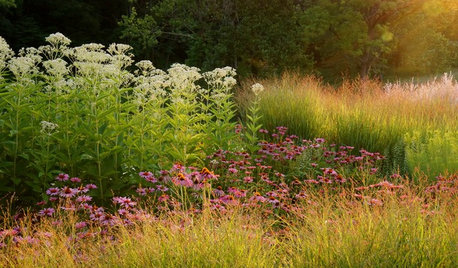
GARDENING FOR BUTTERFLIESGarden for Wildlife to Reap Rich Rewards
When you plant with animals and insects in mind, you make gardening easier, the planet healthier and yourself more present
Full Story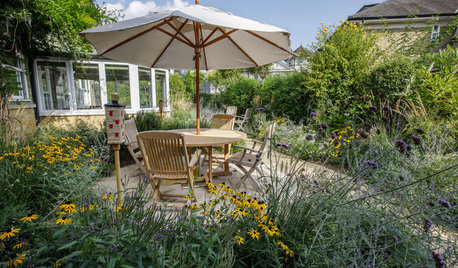
LANDSCAPE DESIGN4 Tips for Creating a Small Garden That Welcomes Wildlife
Win over birds, bees, butterflies and neighbors with these design strategies
Full Story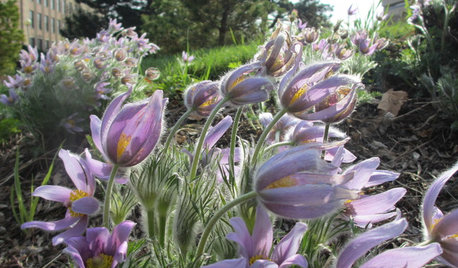
GARDENING GUIDES6 Plants That Beat Butterfly Bush for the Wildlife Draw
It's invasive, a nonnative and a poor insect magnet. Check out these better alternatives to butterfly bush in the garden
Full Story
GARDENING AND LANDSCAPINGBe a Citizen Scientist to Help Wildlife, Learn and Have Fun Too
Track butterflies, study birds, capture stars ... when you aid monitoring efforts, you’re lending Mother Nature a hand
Full Story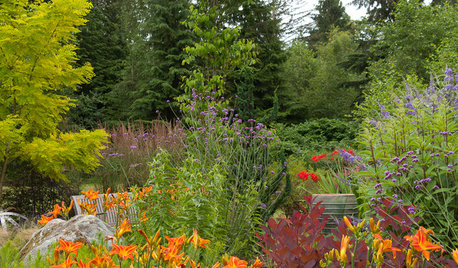
PLANTING IDEASGreat Garden Combo: Planting for Fiery Color and Beautiful Wildlife
Draw winged wonders while maintaining a strong design aesthetic to please human visitors to your garden year-round
Full Story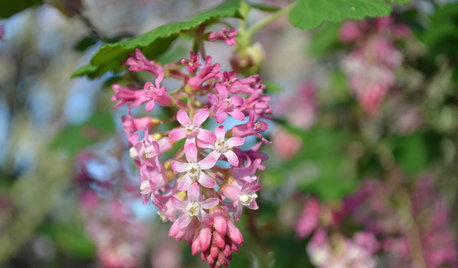
GARDENING GUIDESGreat Design Plant: Feed Wildlife With Flowering Currant
Blossoms and berries make this plant irresistible to birds, bees and other critters — and a treat for the eyes too
Full Story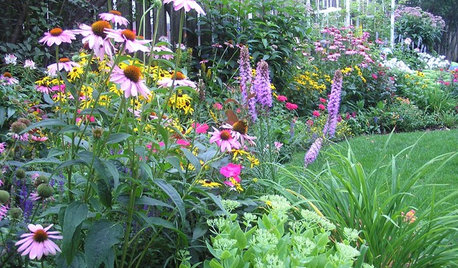
LANDSCAPE DESIGNTry Slow Gardening for Some Unexpected Benefits
Why set your garden on the fast track? Here's how to relax and enjoy it in an entirely new way
Full Story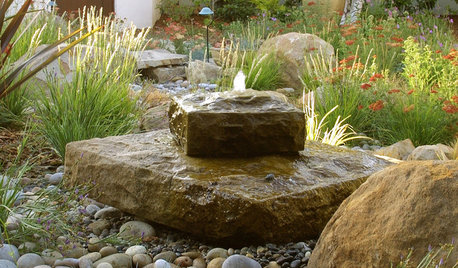
LANDSCAPE DESIGNThe Benefits of Wild Landscape Design
Wildness doesn’t have to mean disorder. Here are some things it brings to the garden and life
Full Story
FEEL-GOOD HOMESimple Pleasures: Get Cozy on a Cold Day
Some things are best when the weather is bad. Heat up some cocoa and join the discussion
Full Story
GARDENING AND LANDSCAPINGArbor Day Applause: Iconic Los Angeles Trees
Step aside, palm trees. California's native trees offer landscapes a huge variety of styles, personas and foliage
Full StorySponsored
More Discussions
edlincoln