

Check the date on posts! Very old posts come up cause we post on them
11 years ago
Featured Answer
Sort by:Oldest
Comments (8)
 11 years ago
 11 years ago
Related Discussions
A very old post that might be helpful when seeding
Comments (19)To overseed your existing lawn, you have to mow down the grass in order to give the seeds and seedlings a chance at survival. Your intention where the old lawn is concerned determines how you mow it down - gradually or all at once. The theory you refer to is scalping it all at once in effort to weaken/stress the existing lawn if you want to try to get rid of it without killing it off with that "R" word stuff. Then, you'll manage for the new grass after established to try to further stress the old grass. This is theoretical and is not expected to be 100 percent effective. However, if you want to overseed with as little damage to the existing lawn as possible, then mow it down gradually, not removing more than 1/3 at a time. Then lowering the height and raising it again should be a gradual process. 1. Get a soil test. Call your nearest county extension service for a test kit and sampling instructions. It will likely take two weeks for results. If you need to apply sulfur, lime, or any other amendment per test recommendation (that is not applied in Step 5), you can do it after seeding if you don't get results back in time. 2. Mow to within one and half inches, but mow it down gradually. Cut off 1/3 the grass blade and another 1/3 three or four days later. Repeat if necessary. 3. Rake it up 4. Core aerate or cheat and apply Nitron A-35 to relieve soil compaction. 5. Fertilize 6. Sow seeds (slit seeding is best) 7. Topdress 1/4 inch layer compost, peat moss, or clean straw (weed-free). (One cu. yard/1000 sqft). 8. water 15-20 minutes twice a day for two weeks water 20-30 minutes once a day for one week water 30-45 minutes once a day every other day for one week water 30-45 minutes once a day twice a week for one week move into deep irrigation, increasing the time to provide 1 inch of water all over and decreasing the frequency to just once a week. Starting off, the schedule supplies roughly 1/4 inch of water, then increases that amount while decreasing frequency of application at the same time. Like practically everything that concerns lawn care, this schedule is a general guideline and should be modified to accomodate your specific conditions. The lengths of time should be modified if you have an automatic sprinkler system since that will not take as long to provide adequate moisture. So, decrease amount of water (time) but maintain frequency as is. The tuna cans test is recommended. If it is still especially warm, you may want to irrigate 3 times a day (10-15 minutes if necessary) for that first couple weeks. Your objective is to keep the upper 1 inch of soil moist and not let the seeds dry out. 9. First mowing is when the new grass reaches two inches. However, the existing grass will be considerably taller, so you'll have to mow down gradually again to the point of mowing 1/3 off the new grass. You do want to get the new grass mowed early at this time in order to promote tillering. Then, you want to gradually raise the mowing height to desired length of 2.5 inches. Higher if you prefer....See MoreCan we still post pics within the post?
Comments (56)Brenda im so sorry you cant see it ,it is so funny. I will explain it a little bit. It is the music to Funky Town its a fast beat and it is a feeder camera catching chickadees and tufted titmouse at the feeder eating. But they put it to the music and speed it up and it looks like the birds are dancing and getting jiggy with it. The titmouse is the main character and the chickadee dances along and drums with his beak. Its really cute. And it is real pictures i think they put to video ,its not computer make believe. Its the titmouse being dominant over the feeder and the chickadee looking for danger and cracking seeds but it looks like they are dancing and drumming, very funny, I wish you could see it.-------bonnie...See MoreWhy do ancient posts keep coming up?
Comments (9)The date of the initial post is shown. It is there in the list of posts before you open it (at least in my view). And it is at the top next to the initial poster's name, just below the title of the post. i don't think this is solely a houzz issue, though perhaps it is worse now. One of my very early gardenweb posts was on a garden forum about ground cover and I had it set to email me follow ups. I got continued inquiries bumping that post to the top for years. I answered questions but eventually we moved away from that house and people kept asking how my ground cover was doing. I eventually turned off the notifications so for all I know it's still popping up a decade later. Some people hate it when an old post pops up, but others see it as a legitimate continuation of the conversation. When it's spammers, I think it is annoying. But when some one is asking how a kitchen countertop material has held up, it doesn't seem irrational to me to reply to an old post. It potentially notifies the orginal poster of your question and it allows others to give input too. I have seen posters scolded for not searching before they post many times. So some people may be posting to relevant old threads after searching to avoid being scolded Trying to sort out forum etiquette can feel like damned if you do and damned if you don't....See MoreLogan, if it was you with the old Pin oak we posted about
Comments (24)Sorry if I confused I meant southeastern US native ( the Live oak) so it IS native here. Most of the oaks planted in the US are native to the US. More than are in Europe and other locales. I have only 2 non US natives well 3 trees 2 English oaks and 1 Lebanon oak all from acorns. I hope I haven't forgot any. The Lebanon oak is a slow grower, but, I haven't given it any water since it has a taproot from growing from acorn, but we've had no drought. I love my English oaks, they can live 1,000 years in Europe, they were grown from acorns, so I don't know if that will help them in any way, but, I like knowing they could live at they least 600-800 years maybe, if nobody chops them down after I croak. I do have another 6-7 Compton oaks that could live that long (maybe) they are a newish hybrid the oldest are 200 years old. They could get pretty old they are a Live oak and overcup oak hybrid. There is a mature example in Williamsburg, Va...See More 11 years ago
 11 years ago
- 11 years ago
 11 years ago
 11 years agolast modified: 11 years ago

Related Stories

LIFEHouzz Call: Who'll Post the First Snow Photo of 2013?
If the weather's been flaky in your neck of the woods, please show us — and share how you stay warm at home
Full Story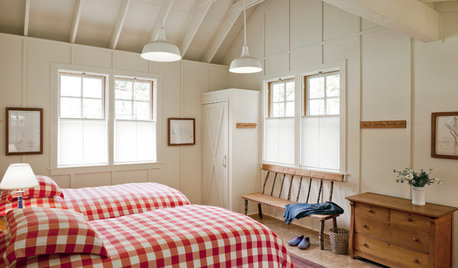
DECORATING GUIDESPattern Focus: Buffalo Check
This farmhouse-friendly pattern has a wide range of uses in the home
Full Story
REMODELING GUIDESCheck Out Our Sweepstakes Winners' 2-Room Makeover
The laundry room's organization needed ironing out. The guest bath didn't make a splash. See the makeovers a Kentucky couple won
Full Story
HOLIDAYSYour Post-Thanksgiving Game Plan
Once you’ve recovered from the big day, take these steps to make welcoming the next round of holiday guests easier
Full Story
MOST POPULARThe Polite House: On ‘No Shoes’ Rules and Breaking Up With Contractors
Emily Post’s great-great-granddaughter gives us advice on no-shoes policies and how to graciously decline a contractor’s bid
Full Story
ENTRYWAYSGrand Entry Elements: Newel Posts Past and Present
They once spoke to wealth and class, but newel posts today say more about individual style
Full Story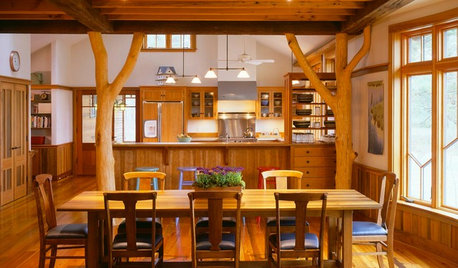
KITCHEN DESIGNOpening the Kitchen? Make the Most of That Support Post
Use a post to add architectural interest, create a focal point or just give your open kitchen some structure
Full Story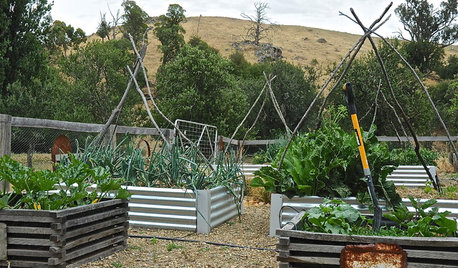
FARM YOUR YARD9 Ways to Change Up Your Vegetable Garden for the Coming Season
Try something new for edible plantings that are more productive than ever
Full Story
LIFEYou Said It: ‘Rather Than Remove Them, They Framed Them’
Design advice, inspiration and observations that struck a chord this week
Full Story
ARCHITECTUREWorld of Design: 10 Homes That Lap Up the Landscape Around Them
As building techniques develop, architects all over the globe are finding new ways — and new places — to integrate houses with nature
Full Story

justlinda