

Roundup and Roses. (And anything else for that matter)
20 years ago
Featured Answer
Sort by:Oldest
Comments (49)
 20 years ago
- 20 years ago
Related Discussions
anything I should know before buying an arbor for roses?
Comments (11)Just for information purposes, I went through a wooden arbor and one of those plastic coated over metal arbors before getting tired of seeing my roses laying on the ground after a few years. I wanted something reputed to be impervious to ground conditions (rust, rot and termites)and our "tornadoish" winds. I also was concerned about the arbor heating up. After research I finally chose a Copper Arbor. That's been 10 years ago, and so far no problems. Even under blizzard conditions, with the roses laden with a heavy coating of ice, the abor came through fine. Although I couldn't find what I wanted locally at the time I ordered from this company, which is still in business and gave me excellent service. You might want to check them out and investigate a copper arbor as a long term investment for your roses. Here is a link that might be useful: Garden Expressions-Copper Arbors....See MoreIs this a common view of how to apply Round-Up to rose beds?
Comments (23)I dunno how common this approach is, frankly. I have sprayed weeds in rose beds before but never like this!!! with such closely planted roses and just lifting up branches. Nope, only where there's lots of space between the roses, and use a garbage can lid between the spray and the rose, never directly under any part of the rose where the rose will touch it after you remove the garbage can lid, and never with one of those little quart sized sprayers that make you bend over all the time. My local rose society uses huge amounts of pre-emergent herbicides in the rose garden but not Roundup or any other post emergents. He is right about a couple things, if you get roundup on the rose just cut it off right away; and if a weed is tall and full grown like the grasses he shows, just pull them out don't bother spraying them. And the dye is a good idea, we do that at work so we can see where we've hit and where we've missed. But otherwise yikes! it's all over his hands - another good reason to use dye, you can be pretty surprised at where your herbicide shows up. Always always ALWAYS wear gloves with any kind of pesticide. and what a noisy neighborhood. I'd go nuts....See MoreNewly planted roses not doing anything- please help
Comments (27)Hi, Frank...Argh, I am reading thru and am very embarrassed about being called the "expert"... I am a "rose dummy" to the max. Karl is the true expert... but what I do know for sure! is that every single one of my roses except for 3 were planted with a lot! of what others would call either moderately bad transplants or a nightmare transplant... My tree rose actually survived 2 horrid transplants... Baby bands... with super dilute only once a week... if in 1 gallon pots about 1-1/2 qts... If planted in a very large pot 15-25 gallons or in the ground you can pour in as much as 3 qts. Note soil has to be loose with some hand-felt dryness, but spongy, NOT PARCHED... when you initially water... Takes about a month at the very least of this super dilute dosage... Once baby bands are about 1' high or! have very large full adult sized leaves, you can start increasing incrementally to a full dosage... Young root roses...healthy ones can start with super dilute once every 5 days...but next 5 days can start increasing incrementally. Once you return to full dosage you can feed as much as once a week. Some people only need to feed biweekly because they have super rich soil... I have poor surrounding soil away from the roses, so I feed once a week... I don't pot my young root roses so they receive a gallon of water/sea tea... Nursery roses and very green healthy bareroot roses can actually receive up to 1/2 dosage 1 gallon of sea tea/water...if they are healthy on their first 5 days......Since yours is already producing undersized buds I would do the 1/4 mix for a gallon sea/water. For really sick nursery roses/bareroots like ritug's I'd do the baby band mix for the 1st 10 days (feed once every 5 days), and then start the incremental increase (which is adding a tablespoon of sea tea)right away The sea tea normal dosage is 1 TBS. per quart so the "math" is thankfully! easy to calculate......See MoreRoses are easier than anything else so far... go figure
Comments (17)>My large (dying) camellia is Marie Bracey. (japonica). When I planted it, I planted it according to the nursery instructions, which were to dig a large hole and amend the soil with half camellia/azalia soil mix and half of the existing clay. Usually my local nursery is pretty good about plants... but I know they can't possibly know about every plant. That sounds really good to me, depending on what the camellia/azalea soil mix contains. At any rate, I'd seriously doubt that your soil mix is the basic problem. If the plant hasn't been watered, that's almost surely the problem, or a large part of it. (A stressed plant is more likely to come down with extra new problems too.) We have 6 Marie Braceys (aka Spellbound) here! We kind of like that variety, I guess you might say. :D Two were large blooming plants new this winter. Three are about 7 years old and planted in far too much shade. They were very slow to get going from their original 1 or 2 gallon size but still are exceptionally healthy without any disease problems at all that I've noticed. They just began to bloom this year. And one has been planted maybe 18-20 years and is quite large and bushy, even though it is not ideally sited (less than ideal amounts of sunlight and competing with too many tree roots for moisture). This long-planted large camellia has survived all droughts without enough water, while some azaleas and rhododendrons right next to it died from the lack of water. So Marie Bracey can for sure send its roots pretty deeply to make it through less than ideal rainfall/watering, but I'd guess that to have that happen takes either some luck with when heavy rain finally does fall--just in time--or a good watering strategy for encouraging deep roots. Just in time heavy rainfall is what must have happened here over several successive rainfalls. You can make use of a similar strategy with your own watering scheme by giving it successively slightly longer time spans between watering and making sure to water very deeply when you do water, so that as the water level falls, the roots are encouraged to grow deeper and deeper to get the moisture that's there. Yours didn't quite get either kind of treatment, so its roots weren't deep into the soil and prepared for the long drought you accidentally gave it. It's likely a protective measure that your Marie Bracey has gone through recently to stop sending its scarce moisture to all branches, but just sending necessary moisture to some branches in an effort to keep some parts of the plant alive--a better thing than having the whole thing die at once. You might look at it this way... The plant succeeded in what it was trying to do if any branches at all are still alive now. Hurrah! Just trim off those branches that died, and water the plant regularly and very well for a very long while to give it a chance to regain its strength, send out more roots, and look like a robust, leafy, healthy plant again. Eventually it would be a good idea to try the less-frequent deep watering strategy, though. Maybe wait until next spring or even the following spring to do that, depending on how long it takes for a full recovery? When you do get around to trying this, the roots will grow deeper looking for moisture and it ought to be better prepared to get through the summer heat with enough moisture to have a good bud set then. (It's amazingly how much better the bud set is when a camellia gets plenty of moisture when it is trying to set buds!) Marie Bracey is an old variety that has stood the test of time. We've never had any problems of any kind with ours, and they have been mostly completely neglected. Once yours gets back to adequate moisture, it ought to recover unless it's really too far gone. Only time will tell on that, but it's such a healthy variety overall it's certainly worth giving it every chance now. >I'm sure I need to do something to amend the ph some... I wonder if it would be better if it was planted a bit higher, in a berm or something. The other smaller camellia (Kramers Supreme Camellia) is near a drain, so I think it gets pretty good drainage there (and it's doing better than it's larger friend) Berms are great, and they look wonderful too, adding a three-dimensional effect. For future landscape planning, that's a great strategy, and makes your yard much more interesting to look at. I wouldn't rush to do anything about PH without getting a soil test done first, now that you know you've gotten a problem from the lack of water. Your PH might well need a little adjusting, but since you don't have other camellias dying in the same soil, there seems to be no big rush on perfecting PH. >Should I wait to see if the camellia recovers? Well, you know the old saying: "Don't fix what ain't broke!" Yes, wait! Just water. Don't fertilize. Don't spray anything near the plant, don't do anything except giving it water. If you have an easy way to provide a bit more dappled shade to some of the plant--a potted tree on its south side perhaps?--that wouldn't hurt either. If it were my plant, I'd give it until next March or April to show good signs of recovery before yanking it, unless its position is so prominent in your yard that you need that spot to look good again really soon. You might eventually decide to relocate the plant or to raise it some within the planting hole--or decide not to. Just make sure that the plant has recovered first before giving it any new stresses to have to weather; it has lost some or potentially most of its roots now to the lack of water and recovery is going to take a good bit of time. >what would IDEAL planting situation be? (ie what kind of soil amendments?) I don't really know the answer to that, and I'm not sure anyone does. So much depends on what kind of soil you are dealing with to begin with. Your county extension agent might have an idea about that for your area. (Or not. It might depend on what kind of plants he/she knows best?) It also depends on what components you have available in your area for a reasonable price, and what suits you. There is no single formula that is necessary for success. The general keys pointing toward the potential for good results with camellias, I think, are the combination's overall ability to drain reasonably well while holding a reasonable amount of moisture that still does have some aeration, the combination's overall acidity, and its overall proportion of organic materials (improves the chances for the first three, plus makes for lots of benefical soil microorganisms). If you are curious as to what we do here, well... We buy a truckload of sandy loam soil here every now and then so we usually have that available to use for amending our hard clay into something more crumbly but that will still hold itself into a clump if you squeeze on it. We use a fair amount of sandy loam in a clay mixture that is heavy on organics. We also have composted leaves in abundance to use and we use them abundantly. And at times we get free delivered hardwood mulching materials, so we mix in a fair amount of that too. Sometimes pine needles and pine bark. Plus we scoop lots of fresh hardwood leaves into the mix (helps to hold the soil in place for heavy rains, including on our berms). And usually we add some cottonseed meal and sphagnum peat moss too. Often we push in some leafy twigs as a final step after the camellia is planted to help hold the soil and those break down very gradually and nicely. We don't throw in the kitchen sink, but almost. ;) We use some cow poo, alfalfa, and bonemeal with the roses, but not with camellias. If you want to use manure or very much bonemeal with camellias, be sure to do things to adjust the PH downward some because very much of that will likely raise the PH to something that's too high. We also have some greensand, but haven't gotten around to using that except on the roses (and not much there either). You might well have good luck with fewer organics than we use, but we've had good luck with what we do and are likely to keep doing it. We never use commercial fertilizers of any kind anywhere in a planting hole or after a plant is planted. (Nor do we spray any inorganic chemicals of any kind. Camellias don't need themit to thrive and they all usually look somewhere between fabulously healthy to pretty good overall, even if they are not absolutely perfectly disease-free.) For fertilizing after planting, we use cottonseed meal, along with hardwood mulching and leaves that keep getting new layers added on top each year as the old layer decomposes. We also have two Kramer's Supremes, another old favorite variety. One is a well-established plant (planted at the same time as the oldest Marie Bracey and far too close to a tree) that has never had any problems at all, but hasn't bloomed well until this spring--when it went wild! And was wildly beautiful! (Last summer it had lots of rainfall when trying to make buds.) This variety grows more upright than Marie Bracey does but is also a very beautiful plant. It gets huge pretty quickly. We also bought one more (large, 7-gallon) Kramer's Supreme last winter and it's sited in a much better spot, with adequate sunlight and no tree root competition. I can't wait to see what it looks like in future years there. You are going to like this variety too. I always hope for fragrance and it does have a bit, but it's fairly faint. With as many camellias as you already do have growing successfully, you have more experience with camellias than I was assuming when writing earlier. I'd guess that you weren't even close to giving up on camellias, and probably thought my post a bit funny! Anyway, consider yourself REALLY encouraged now! :D Fingers crossed here that your Marie Bracey makes it. It's easy to see why it's also called "Spellbound" as its blooms are so breathtakingly beautiful. But if this one is too far gone, don't hestitate to replace it with another of the same variety. It's a great variety that you'll love having in many good growing years ahead. Best wishes, Mary...See More- 20 years ago
- 20 years ago
- 20 years ago
- 20 years ago
- 20 years ago
- 20 years ago
- 20 years ago
- 20 years ago
- 20 years ago
- 20 years ago
- 20 years ago
- 20 years ago
- 20 years ago
- 20 years ago
- 20 years ago
- 20 years ago
- 20 years ago
- 20 years ago
- 20 years ago
- 20 years ago
 20 years ago
- 20 years ago
- 20 years ago
- 20 years ago
- 20 years ago
- 20 years ago
- 20 years ago
- 20 years ago
- 20 years ago
- 20 years ago
- 20 years ago
- 20 years ago
- 20 years ago
- 20 years ago
- 20 years ago
- 20 years ago
- 20 years ago
- 20 years ago
- 20 years ago
- 20 years ago
- 10 years ago
 PRO8 years ago
- 6 years ago
- PRO5 years ago
 5 years agolast modified: 5 years ago
- 4 years ago


Related Stories
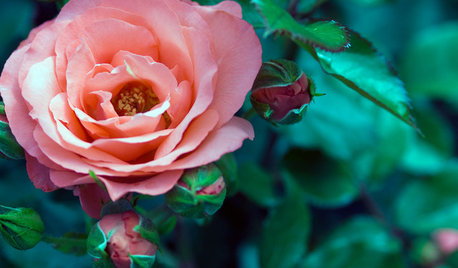
GARDENING GUIDESYour Complete Guide to Fall Rose Care
Cooler temperatures are on their way, and it’s time to get your rosebushes ready for fall
Full Story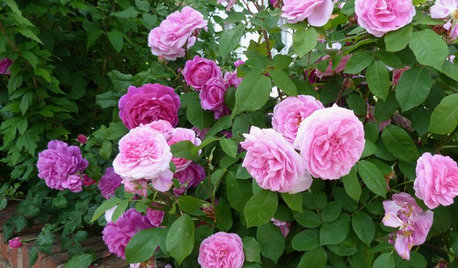
GARDENING GUIDESWhat Kind of Roses Should You Grow?
Want to add the beauty of roses to your garden? Find out which ones, from old-fashioned to modern, are right for you
Full Story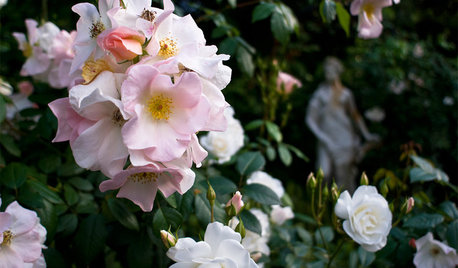
WINTER GARDENINGPruning Secrets for Exquisite Roses
Encourage gorgeous blooms year after year with this time-tested advice on how to prune your rosebush in winter for health and shape
Full StoryGARDENING GUIDESLearn the Secret to Bigger and Better Roses
Grow beautiful roses using both ordinary and unusual soil amendments
Full Story
FURNITURE11 Reasons to Love a Gray Sofa
See how a sofa in this neutral shade can take on anything you mix with it, from soft to sharp and everything in between
Full Story
KITCHEN COUNTERTOPSWhat Kitchen Countertop Colors Should You Choose?
Consider these popular colors and styles to get the look you want — no matter what material you use
Full Story
HOME TECHThe Inevitable Future of Drones Around Your Home
As Google joins the push for airborne deliveries, it seems only a matter of time before neighborhoods are buzzing with drones. Is that OK?
Full Story
SELLING YOUR HOUSEYour Home-Selling Guide for a Faster and Better Sale
Learn staging and curb appeal tricks, how to get the best photos and more in this roundup focusing on high-impact house-selling strategies
Full Story
DECORATING GUIDESWhat Goes With Floral Upholstery?
How to decorate around floral-print furniture so that everything comes up roses
Full Story
SMALL SPACES10 Tiny Kitchens Whose Usefulness You Won't Believe
Ingenious solutions from simple tricks to high design make this roundup of small kitchens an inspiring sight to see
Full StorySponsored
ibchaz