

Anybody else enjoy the 'doing nothing' aspect of retirement?
15 years ago
Featured Answer
Sort by:Oldest
Comments (7)
 15 years ago
- 15 years ago
Related Discussions
WANTED: Have lilac, but nothing else. Need so many things...
Comments (20)Wow, bejoy2, I'm sorry I missed you too, I'm not sure how we did but as another poster said, maybe we need name tags or labels. I had no idea how the plant swap is done, so I was pretty shy and wasn't sure who to introduce myself to. We wandered around for maybe an hour and a half, visiting with people and trying to get them to take our cookies. We were given so many plants that I'm not sure we could have fit much more in the car! Ok, that's not really true, I would have kept them in my lap if I had to. (grin) I was soaking wet anyway. Thanks for thinking of me, and offering to save things for me! I am so grateful for everyone's generosity and I hope the lilacs are useful to someone. We will bring more next time, and more sweets or something healthy even. I was sorry the humidity was so hard on the cookies! I hope they didn't get too limp. I have lots of things that I do remember the names of, and lots that I don't. Do any of you have ideas for how to deal with that? Like a grease pencil or something that will will write on pots in pouring rain & not wash off for a long time? Or a way to make tags on the spot? What pens do you like? What labeling devices? It seems like a grease pencil & plastic bags might have worked for all the stuff not in pots, but we would have needed an awful lot of bags, and it would be a shame to waste them. Maybe the stick-type labels, & rubber bands? Any thoughts? Thanks again. Laura...See MoreDoes anybody else open-kettle can?
Comments (38)> I don't imagine things are different in Canada, Zabby. Actually, there are some significant differences, which is why there's work for me on accounting texts here, most of which are adaptations of U.S. books. But the overriding principles we're arguing about are universal. > In the U.S. there are 7 sets of GAAPs. I don't know any accountants who talks of "sets of GAAPs" --- they're not like the ten commandments, but a large body of principles and customs. > However, "So the overall cost of my life doesn't go up if I start using that shovel to grow veggies." doesn't ring true in this case. We are not measuring the total cost of your life. We are trying to make a comparison between the costs of a home-canned jar of something with what it costs to buy that something. So, in this case, you have to include all those bits and pieces in order to compare like to like. Ah, but here is where I think your logic is truly faulty. As I said, accounting is a decision-making tool. It helps businesses make decisions about their finances, governments make decisions about how much tax to charge you, and people make decisions about what to do with their money, time, etc. (though of course it's not the only or even the most important factor in those decisions, as we have all agreed in the case of canning and gardening). So accounting helps you ask various questions and get answers that compare things. Now, you seem to be asking the question "How much does it cost a company, starting from building the factory, to make and sell a can of tomatoes, vs. how much it costs a person, starting with absolutely nothing, to make a can of tomatoes?" As an academic exercise, it may be interesting, but it's irrelevant to most real situations. The question I was talking about is the useful one: what is the overall extra cost (or savings) to my life is I can veggies instead of buying them? If I already own a shovel to grow my flowers with, that shovel has been already "paid for" out of my "growing flowers as a hobby" cost centre in my life. If I "charge" some of it to my canning cost centre, then I'm double expensing it --- a no-no according to GAAP in any country. > There's also another aspect we haven't begun to look at: Cost of possession. When you are buying things you generally buy for immediate needs, or maintain a very small inventory. Not necessarily. I know plenty of people who buy canned goods by the caseload from Costco or Price Club. But the general point is true that there is a cost of maintaining inventory --- though it can't be generalized to a particular percentage for most situations. It depends a great deal on how the inventory is managed and where it's kept. (That cost is much higher, for e.g., in places where space is expensive, or for goods that require special circumstances --- so the cost of possession was way higher for things I stored frozen in the city than for a canned good in my larger small-town home.) A much bigger often-uncounted cost by many people is the land --- I would have bought a home with a smaller yard if I hadn't known I wanted a veggie garden. So part of my mortgage every month should reasonably be costed to my veggies. On the other hand, the veggies I grew in Toronto were in my BF's backyard which he wasn't using anyway, so it would have been UNreasonable to apply the space cost there. It's comparable to, say, vacant land that a municipality donates to a company to help entice them to move to that municipality. SImilarly, one's labour time should be charged only if, realistically, one would have been making money if one wasn't canning. (In my case this is sometimes true.) If one does it for sheer joy, then it's comparable to volunteer labour. > The fact is, most opportunity costs are unrealistic. Sure, if you weren't canning you could spend that time on a ski trip. But would your _really_ make that trip? Probably not. Opportunity costs are hard to measure, because who can say for sure what one WOULD have done? But they are absolutely real, and companies that ignore them in their accounting make worse decisions. In the case of many people who regard canning as a hobby, if they weren't canning, tney'd be doing something else recreational, very possibly something that costs money. > Number one: You cannot can food less expensively than you can buy it. Well, the main difference between us probably really is that I think you're using a definition of "less expensively" that is irrelevant to the question most people trying to make this calculation are actually asking --- and I mean quite apart from including the whole "priceless experience" factor. One that I suspect would, in fact, be rejected by an auditor. Even under my definitions, mind you, I think many people, probably including me, don't save money by canning. But I think some people do. Sigh. I am tired of arguing this one, too, GL, and I don't actually have any expectation you will change your mind; the only reason I am bothering, is that actual cost, in a realistic, practical sense, DOES enter into it for some folks. (I have one friend, for example, who canned fruit during grad school to save money.) And for those people who might want or really need to economize in this way, it's not helpful to say categorically it can't be done, nor to claim that some supposed "rule" of accounting means they "have" to count certain things as costs that don't make sense in the real situation. It shows a misunderstanding (all too common) of what accounting actually means. > Number two: Who cares? We can for all sorts of great reasons, and actual cost hardly enters into it. For me it sure doesn't, I am 100% with you on that! And we do agree on the main thing that the experience and great product are the most important, for us. Z...See MoreAnybody else have to juggle bills with trying to save
Comments (12)In managing most businesses, if the manager doesn't pay the employees, they don't continue coming to work very long. Each of us above being a toddler has a business that we run on the side. Nice part is, our employees don't charge for their work. As a matter of fact, they pay us! Each of those employees is called a Dollar (if you're in the U.S., it's a Bill; in Canada, a Coin, which we call a "Loonie"). If a kid sends that dollar out to buy ice cream it works for him/her once - and s/he can enjoy the "fruits" of the employee's work. Same for Mom and Dad regarding food, rent, clothing (unless they live in a much warmer climate than in this area - Buffalo had over a foot of snow, yesterday!). For many people in this part of the world, a car is pretty well in the category of "necessity", as well, as we have pretty well organized society around the car: many built-up areas no longer have sidewalks. If one finds ways to hang on to some of those dollars, they'll work for that person as long as s/he hangs on to them, with one exception - if they stick them into the mattress. Banks like to tout their guarantee that when we leave money with them, they'll pay rent on it, and guarantee to pay back every dollar that we lent them. They never mention the other guarantee - that, apart from the rent on the loan, they won't pay us one dollar more, either. But, there's a problem: I say that, when we invest our dollars where we are guaranteed to get each back, that their number can't grow, either. And the value of each declines each year that we own it. I say that there's two rats that eat your cheese: the income tax people want to talk to you each year about all of your earnings in that year. And they want some of it, of course. In Canada, they quite different rates of tax on varying kinds of income. If, apart from the rent, the number of your invested dollars can't grow, you need to add some of those invested dollars to the asset each year so that your purchasing poweer doesn't shrink as the value of each of those dollars of your asset shrinks. That rat's called "inflation" and it has eroded the value of each of your saved dollars every year - since the 1930s. With the rates of interest that borrowers are willing to pay these days, when we take out some for tax, and more to add to the saved dollars, each of which will buy less each year, often times there isn't any left. Know what? The rats eat first! If there's any left, you get that. Recently, there's none left. Imagine - the bank (as borrower) makes more on your money than you do, quite a bit of the time! As a matter of fact, every borrower, whether bank, corporation or individual figures that s/he can make more on the borrowed money than it costs him/her ... or they wouldn't borrow, would they? Suppose you'd put $10,000. into the bank 15 years ago, on a 5-year certificate, and renewed it twice since. Now, when you receive that money (apart from the rent) they'll pay you precisely what they borrowed - $10,000. That $10,000. would have bought a decent car, 15 years ago. Not now: inflation cut its value substantially through those years. Did inflation hurt the bank? No, they rented that money out to someone else (actually, usually about 8 "someone"s), at a higher fee than they paid you. Suppose I borrowed that $10,000., 15 years ago, agreeing to pay the bank the interest only monthly, and did that. How much would I owe the bank now? Right - exactly $10,000.00. Which will buy a great deal less now than it would then. So I gained from inflation: the guy who put his money into the bank lost ... unless the interest covered it. Farmers like to stick one seed into the ground and have it grow into an ear of corn (maybe even a couple of ears). Similarly, I like to invest a substantial portion of my assets into situations where I expect them to grow, given a number of years - and mine go back varying lenths of time to about 40 years. Some grew nicely ... and several paid increasing amounts on the investment over the years. However, I haven't had to answer to the income tax people about that increase in value ... and won't, until I sell them (or die). Which gives me much of the benefit of the tax-deferral in the tax-deferred retirement accounts (but with far fewer restrictions). And when I cash them, I pay tax on the increase at half regular rate. Some didn't pay anything, or sporadically. Some of those assets grew in value, more than enough to cover the ongoing returns that they hadn't paid (and on which I'd have had to pay tax at the time). Some didn't pay ... and went down in value, into the bargain. As a wise person said, "You can't win 'em all!". An investment group of about 25 that has met monthly for around ten years, that I've attended for six or seven, calls those latter experiences "tuition". In the school of learning how to manage money more effectively. When did you last merit a free luch? Good wishes for learning how to make your income and assets work better for you than for the other guys. ole joyful P.S. Actually, many of us get a "free lunch" here at Gardenweb, and various other places - for we've learned a lot, and it hasn't cost us anything but time, and internet fees, that we pay anyway. Actually, a while ago, it cost the guys giving the advice - for one could read for free ... but the owners charged a fee for one to open his (her?) big fat yap. Quite an imposition for us former clergy! Wouldn't you agree? o j...See MoreEnjoying one of those retirement benefits, today!
Comments (14)Oh, yeah, forgot to say -- I joined a garden club in our town that always met on first Mondays, 1 PM to 3 PM. I had always wanted to do that. But I learned quickly that that type of group is not necessarily into gardening big time, it's mainly a ladies' social club. It was kinda clickish and I didn't really fit in, but I am still a member and try to go when I can. I did a program for them last year -- a slide show on the importance of watershed issues and native trees. Other clubs/groups in our area are: a Study Club that meets for a weekday luncheon and shares book reviews, the League of Women Voters (I love that), our local Chamber of Commerce, a ladies' charity group at my church, and a support group for parents of ADHD children (several of my kids and I have ADHD). All meet during the work week. I go sometimes, and that's enjoyable. I have been avoiding paying dues to things that are expensive, like the Chamber, but they tolerate me and still make me feel welcome. Some groups you can just tell them -- I am retired and can't afford the dues on my income, but would like to come to your programs occassionally. They'll have you as a "guest." Also, groups that need volunteers will welcome you if you put in some time on one of their projects. I did that with the Chamber, and that's why they "put up" with me!! -- Marie...See More- 15 years ago
- 15 years ago
- 15 years ago
- 15 years ago
Related Stories

DECORATING GUIDES12 Decorating Scenarios When You Should Do Nothing at All
By embracing the positives of negative space, you can strategically highlight key furnishings, give the eye a rest and create focal points
Full Story
HOUZZ TOURSWe Can Dream: Rural Retirement Home a Haven of Beauty and Tranquillity
A retired couple builds a spacious Japanese-inspired indoor-outdoor sanctuary to enjoy with extended family
Full Story
GARDENING AND LANDSCAPING10 Ways to Enjoy Your Outdoor Room More
Step up the comfiness and convenience of your porch, patio or yard to make time spent outdoors even better
Full Story
HOLIDAYSSimple Pleasures: Enjoy a Restful Boxing Day
Catch up with friends on December 26 without catching the stress bug by taking the easy route to entertaining at home
Full Story
FUN HOUZZHouzz Quiz: What Should You Do With a Basement?
Take our quiz to find out if you should turn your subterranean space into a London pub, a Lego lounge or something else
Full Story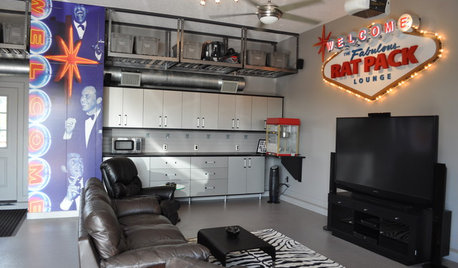
MAN SPACESWhy Men Really Do Need a Cave
Don't dismiss cars, bars and the kegerator — a man space of some kind is important for emotional well-being at home
Full Story
LAUNDRY ROOMSThe Cure for Houzz Envy: Laundry Room Touches Anyone Can Do
Make fluffing and folding more enjoyable by borrowing these ideas from beautifully designed laundry rooms
Full Story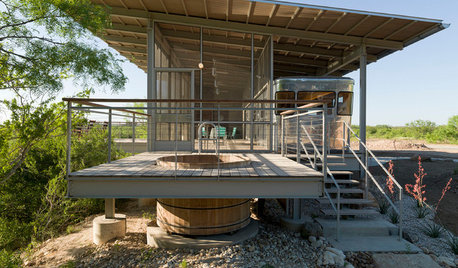
LIFERetirement Reinvention: Boomers Plot Their Next Big Move
Choosing a place to settle in for the golden years? You're not alone. Where boomers are going and what it might look like
Full Story
WORKING WITH PROS10 Things Decorators Want You to Know About What They Do
They do more than pick pretty colors. Here's what decorators can do for you — and how you can help them
Full Story
FEEL-GOOD HOMESimple Pleasures: Make Do and Mend
Experience the satisfaction of fixing, repurposing and creating things yourself around the home
Full StorySponsored
kmwtalk_gmail_com