

What goeswith low country boil?
18 years ago
Featured Answer
Sort by:Oldest
Comments (15)
 18 years ago
Related Discussions
Boiling water to sterilize & re-use potting mix?
Comments (22)It's pine bark, but it's hard to say by the picture if the size of the bark is appropriate. It looks like it's quite large. If you read the link Jodi left for you upthread, you probably realize that particle size and distribution is very important to how a container soil performs. Here is something I wrote to illustrate the importance of particle size/distribution: Obviously, I think the grower's soil choice when establishing a planting for the long term is the most important decision he/she will make. There is no question that the roots are the heart of the plant, and plant vitality is inextricably linked in a hard lock-up with root vitality. In order to get the best from your plants, you absolutely must have happy roots. If you start with a water-retentive medium, you cannot improve it's aeration or drainage characteristics by adding larger particulates. Sand, perlite, Turface, calcined DE ...... none of them will work. To visualize why sand and perlite can't change drainage/aeration, think of how well a pot full of BBs would drain (perlite), then think of how poorly a pot full of pudding would drain (bagged soil). Even mixing the pudding and perlite/BBs together 1:1 in a third pot yields a mix that retains the drainage characteristics and PWT height of the pudding. It's only after the perlite become the largest fraction of the mix (60-75%) that drainage & PWT height begins to improve. At that point, you're growing in perlite amended with a little potting soil. You cannot add coarse material to fine material and improve drainage or the ht of the PWT. Use the same example as above & replace the pudding with play sand or peat moss - same results. The benefit in adding perlite to heavy soils doesn't come from the fact that they drain better. The fine peat or pudding particles simply 'fill in' around the perlite, so drainage & the ht of the PWT remains the same. All perlite does in heavy soils is occupy space that would otherwise be full of water. Perlite simply reduces the amount of water a soil is capable of holding because it is not internally porous. IOW - all it does is take up space. If you want to profit from a soil that offers superior drainage and aeration, you need to build it into the soil from the start, by ensuring that the soil is primarily comprised of particles much larger than those in peat/compost/coir, which is why the recipes I suggest as starting points all direct readers to START with the foremost fraction of the soil being large particles, to ensure excellent aeration. From there, if you choose, you can add an appropriate volume of finer particles to increase water retention. You do not have that option with a soil that is already extremely water-retentive right out of the bag. I fully understand that many are happy with the results they get when using commercially prepared soils, and I'm not trying to get anyone to change anything. My intent is to make sure that those who are having trouble with issues related to soil, understand why the issues occur, that there are options, and what they are. Many use their current potting soils (like MG or used soils as a smaller fraction of a new media they put together specifically to improve drainage & aeration, so yes - you CAN use some of the soil you have as a fraction of a new soil, but keep in mind that you aren't going to rid yourself of the drainage/aeration and high PWT issues problems unless your soil is weighted heavily toward larger particles than your current soil is currently comprised of. When you add a little extra perlite and/or pine bark to a peat-based soil, you don't change the drainage characteristics, the height of the PWT, or aeration. You DO decrease the total volume of water the soil CAN hold, and that IS a plus, but that's about all you really accomplish. Add a LOT of (appropriate size) bark and perlite = job done. The physics of how water behaves in container soils doesn't change because someone might assure you it does. As surely as the cow is barred from jumping over the moon by the law of gravity, soils are bound by physical laws to exhibit rather specific and predictable characteristics based on their particle size and distribution (enter the pudding analogy into evidence). If you choose not to go with a soil that has a considerable fraction of larger particles, there are ways to help you deal with excess water retention when it occurs. There is a lot of good information about dealing with water retention if you follow the embedded link. When you get to where you're deciding about how you want to proceed with your soil, we can talk more specifically about tailoring a plan that best supports your methodology. Take care. Al...See MoreThis Country is (was) Full of Beans!
Comments (58)Andrew, your photo's and comments are great! I applaud your success in growing these varieties and sharing your experiences with us. It was fun to look back thru this and recall what has happened in my garden over the last 4 seasons. I have not made any real commitment to growing dry beans. The farthest step was to growing soybean. I grew a half-dozen soy varieties in 2008 and finally narrowed that down to only 1 in 2011. It may be that others have a wider choice but it seems often that I'm stuck with taking shotgun approaches and ending up with 1 or 2 varieties of anything, that work well in my garden. Certainly, hoping for success with soybeans required that approach. Dry kidney beans would likely have been an easier road. However, I look back on what I remember about Soldier beans that I talked about in that 1st post - they were far and away the most productive for me back there in the 1970's. Actually, I think you are taking these area differences into account, Andrew, in your land-race experiments. I bet you feel that your expected success in growing melons almost depends on crosses. I'm not sure how readily beans will cross but trying a lot of varieties and measuring production makes sense. It also makes sense to figuring out what you can best do with the produce once it arrives in the kitchen. Adzuki, I talked a little about above. Fail! They didn't mature well. I suspect that I would have had very, very little germination from the seed that I harvested that year. Now, I'm going back and reviewing those ideas for chicken pot pie. There's no reason for me not to be honing those skills over the next few weeks and I'm looking forward to it! Steve...See MoreCook's Country Corned Beef & Cabbage
Comments (17)DC, I do something similar with our corned beef. My husband is on a salt-restricted diet, but he & I dearly love corned beef. So when it's on sale for St. Patrick's Day, I get a hunk and soak it for two days, changing the water at least 2 times a day. Then I cook it in fresh water in my slow cooker. Once the water comes to a simmer/boil in the slow cooker, I change the water again. I know I'm losing flavor, but these are necessary steps for his health's sake. Yet in spite of all that water, the corned beef tastes pretty good -- much milder than regular but tasty nonetheless. So we can enjoy a corned beef & cabbage dinner and corned beef sandwiches for lunch the next day. And no swollen, painful feet or congested lungs from over indulging....See MoreI just boiled my towels....
Comments (35)Well, "smaller" is a relative word. I have both 5K and 6K (kilo) Miele machines and an Asko which is somewhere in between that. I do an extraordinary amount of wash and I've never found size limitations of the machines to be a problem. I regularly wash queen and king sized bedding, with the exception of no down comforters of any weight in king size (king sheets, mattress pads, cotton and wool blankets do just fine) and no heavy weight queen-sized down comforters. The few times per year I do those items, I go to a laundromat. I well remember on this forum before the XXL-sized FLs appeared how much effort was made to get people to understand that the dishwasher-sized true horizontal axis Euro FLs could take as much laundry as they can. I must have written down the recommendation to actually weigh your current laundry load dozens and dozens of times. I got the feeling that even if people did that, they still couldn't wrap their heads around the unfamiliar loading parameters of Euro Fls. Plus they seem to be operating under the common US compulsion to choose the extra-large sized option in most instances. And maybe we've gotten so overweight in this country that we need huge machines to wash our duds. I don't know. As for the temps: most people may not care if their machine go above 140-160F. (Heck, some people apparently wash all their stuff in cold water; fortunately these people are also usually dedicated dryer-users so at least some heat is applied!) But if you want really white cotton and linen fabrics without having to bleach the devil out of them (or use a lot of chemical additives) then being able to go much higher is a distinct benefit. It seems absurd, wasteful and, even, dangerous to me to be advise people to raise their water heater temp to heat all their household water that hot when they need it for only a few gallons per load on the few loads per week. A beefy on-board water heater seems like the ultimate in energy savings since most of these machines can be fed unheated water, and then only heat the very few gallons need per load. It seems like perfect energy titration: only what's needed and not an ounce nor a degree wasted. As always, YMMV. L...See More- 18 years ago
- 18 years ago
- 18 years ago
- 18 years ago
- 18 years ago
- 18 years ago
- 18 years ago
- 18 years ago
- 18 years ago
- 18 years ago
- 18 years ago
- 18 years ago
- 18 years ago
Related Stories
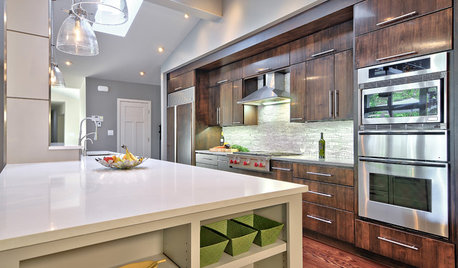
KITCHEN COUNTERTOPS7 Low-Maintenance Countertops for Your Dream Kitchen
Fingerprints, stains, resealing requirements ... who needs ’em? These countertop materials look great with little effort
Full Story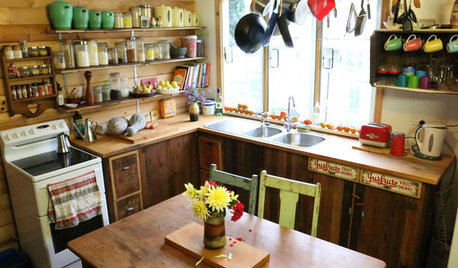
RUSTIC STYLEA Quirky Country Kitchen With a Story to Tell
Creative thinking goes a long way in this kitchen packed with love for family and old treasures
Full Story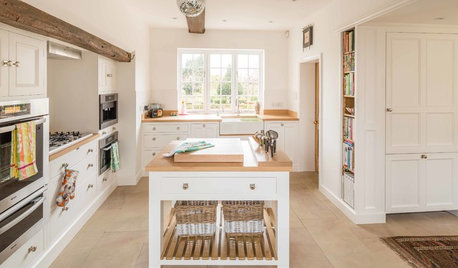
KITCHEN DESIGNKitchen of the Week: A Fresh Look for a Georgian Country Kitchen
Whitewash and understatement help turn the kitchen in this period home from a tricky-shaped room into a stylishly unified space
Full Story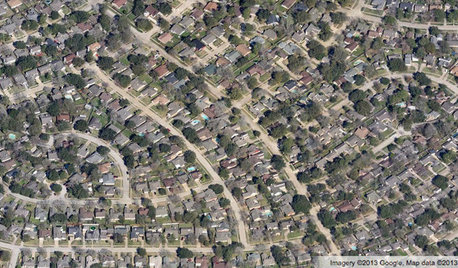
COMMUNITYGet a Bird's-Eye View of America's Housing Patterns
See the big picture of how suburban developments are changing the country's landscape, with aerial photos and ideas for the future
Full Story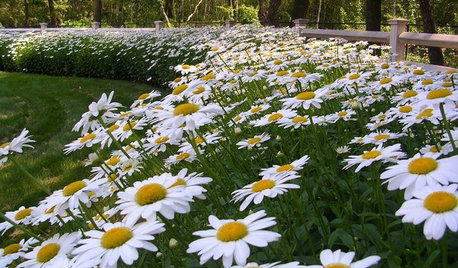
GARDENING GUIDESMix or Mass Daisies for Two Great Garden Looks
The classic daisy looks equally beautiful massed in borders or mixed throughout a naturalistic planting. Which look suits your style?
Full Story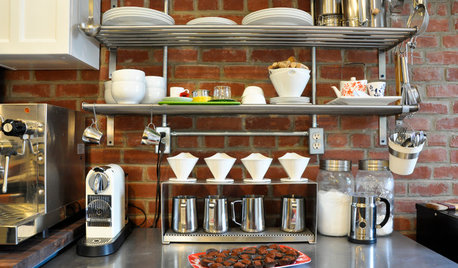
SHOP HOUZZHouzz Products: Set Up Your Dream Coffee Station
Wouldn’t it be nice to have your own café that never closes? With these tools and accessories from the Houzz Products section, you can
Full Story
LIFEHow Do You Make Your Tea and Coffee in the Morning?
A morning cup is a must for many, and preparation comes in many guises. We look at coffee and tea habits across the Houzz community
Full Story
SAVING WATER11 Ways to Save Water at Home
Whether you live in a drought-stricken area or just want to help preserve a precious resource, here are things you can do to use less water
Full Story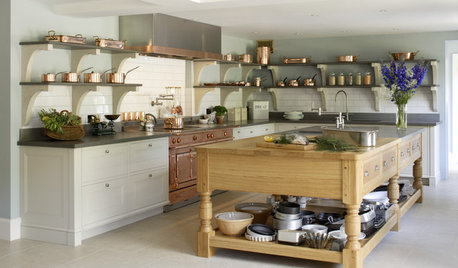
KITCHEN DESIGNA Modern Kitchen Inspired by Edwardian Style
Attention to detail and functionality make for a kitchen that is as beautiful to work in as it is to look at
Full Story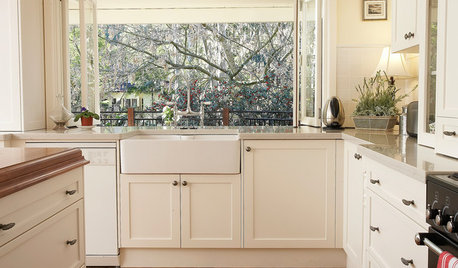
KITCHEN SINKSEverything You Need to Know About Farmhouse Sinks
They’re charming, homey, durable, elegant, functional and nostalgic. Those are just a few of the reasons they’re so popular
Full StorySponsored

lindac