

Thanks, MrsMarv, for the almond oil recommendation
18 years ago
Featured Answer
Sort by:Oldest
Comments (6)
 18 years ago
- 18 years ago
Related Discussions
Cutting back on Fats & Oils
Comments (31)"I've been eyeing his books. Primarily I'm interested in recipes. I watch his show ad nauseam when it's on and am not sure the books would contain additional information I would have to know. I think he is an excellent doctor and right on the mark." snookums, we love the recipes. One favorite is black bean "burgers" made with, among other things, mashed sweet potatoes. Another, which we're eating now and we make in a crock pot, is a fantastic mushroom chile. There are so many others. We use mostly the latest book at this point - or, to be technical about it, someone else here does, since I don't cook much :) - I think it's the first book that has a section of non-vegan recipes. That book is intended for people making a gradual transition to his diet/way of eating regimen. "I would love to get addicted to something healthy! After tasting some unsalted sunflower seeds, I picked up some that were roasted and salted in the All Naturals aisle. Wow. No need for so much salt!! Same with the organic granola bars. Sickening sweet and gummy. Ridiculous." We were at an art opening last night, and I was STARVING! We'd arrived late, and much of the food was gone. I took some carrot sticks, broccoli, cauliflower. I then made the mistake of taking some unidentified but interesting looking little something. Turns out it was a macaroon, and it was so sweet that I almost spit it out in front of everyone. I took a little wrapped sandwich but could not abide the taste of the turkey. It was so very, very salty. In fact, I couldn't even eat the wrap because of its own salt. Someone on the Fuhrman website made the very interesting observation that you come to like what you eat. What a seemingly simple observation! If you eat fast food every day, you will like it. If you drink diet soda regularly, you will like it. If you eat large salads with nut-based dressing or plain cooked kale, you will like those things. The key is to force yourself (if necessary) to eat things you don't like for a couple of weeks. After that, hard as it may be to believe, you will like those things, and you won't like the things you used to eat any more....See MoreBest (Healthy) Oil for Stir Fry?
Comments (7)I've been using coconut oils. They can be difficult shopping for though. The extracting and refining process can give different taste outcomes. It does handle some heat ok. For sauteing i have one that does not have a scent or coconut flavor. Barely a hint. Even the Carington Farm one is rather mild and is easily cancelled out with an herb, spice, or citrus. -i do like coconut but not its flavor with everything. So don't be turned off by the label. Some have zero coconut flavor and are very healthy for cooking. I also like that it is very stable and does not go rancid near as fast as most oils. For flavor, a good ev olive oil can't be beat. Finishing sauces, dressings. A mild olive oil, sometimes called 'light', i think has a higher heat tolerance and is an ok choice for a quick stir-fry, but as grainlady mentions, it does change with heat. Most oils change when heated. Especially the grain oils. And most nut/seed oils. (start studying oils and fats and you just might toss out your pans, and your oven, ha, and start nibbling raw, then pureeing raw to break down cell walls for better digestion... ; ) I tend to use grapeseed oil when the cast iron comes out for a fish bake... stovetop, then the oven. Not really a high heat dish. If i need a crisp, for crab cakes, cod cakes, corn cakes, etc i use a pat of butter with a bit of reg olive oil or grapeseed. (i should try the mild coconut) Come to think of it, we have not stir-fried in years. No real reason. I do have a winter thai dish that brings out the wok but not a true high heat fry. Maybe it is the oily heat flavor? I have been doing a high oven heat quick roasting of veggies. Seems to quickly 'bloom' the flavor and toast a bit. No oil. Then add to dishes and finish with a fresh sauce or dressing. Veggies are still fresh and crisp and no oily layer. Grainlady's knowledge of all things cooking and beyond is very impressive. My study is more abstract and surface but i do try and pay attention...i started studying oils, spices and herb oils when my husband kept insisting on buying a very expensive oil for itchy winter skin. So i have lots of oils and looked at skin absorbing properties, etc. And I make a good bug repellant for us and our pups. -He is much happier with my custom blend now and much cheaper! Almond, sesame, toasted sesame, avocado...all 'claim' on labels to be the best and healthiest for everything......See MoreLeast awful oil for baking?
Comments (51)I'm back...I made the plain yogurt cake on The Kitchn blog...made it exactly as she said and only added the grated rind of a lemon. Baked it 50 min. Used EEVO as that is all I had...not just plain OO. It was WONDERFUL. LIght and tasty and no oily taste at all. We had it last night and again this AM with sliced strawberries. I will be making it often. I will link to a piece on Livestrong about palm oil . And here is part of an article about coconut oil : "According to Dr. Barry Sears, who is an expert in lipids (fats), holds a doctorate in biochemistry and does extensive research in the field, coconut oil does have some advantages over other types of saturated fat in that it is rich in tocotrienols (vitamin E, an antioxidant), and because of the high amounts of saturated fat, it is stable for cooking. (Note that the tocotrienols degrade during cooking so this benefit is lost if you use coconut oil for cooking.) All in all, coconut oil may not be as unhealthy as many animal-derived saturated fats (butter, meat), but until more research is done, especially looking at the impact on heart disease risk, it is better to limit your intake to less than 10% of total calories per day and make sure that it replaces less healthy foods such as refined carbohydrates, sugar and high fat animal proteins instead of adding to them. And I agree with Sears that for controlling inflammation and obtaining optimal health, extra virgin olive oil is unquestionably your best choice." Certainly a lot of info. The bottom line is , if you take in too many calories vs how many you burn you will gain weight and potentially be unhealthy. Moderation in ALL things is best. You can't leave out any food group without suffering consequences. If you leave out meat you have to make up the difference with the proper amino acids in complementary proteins. It is not easy being a human with good nutrition these days :) c Here is a link that might be useful: Palm fruit/palm seed oil...the difference...See MoreElectric on demand tank vs oil furnace hot water?
Comments (14)I don't know what unit takes 3 -40a circuits or any costing several thousand dollars.Mine is rated at 120a, has two 60a breakers in the house subpanel, and two sets of four ganged 40a breakers in a separate subpanel for the unit. This is a single-family house, 3BR, 2 full baths, 2 half baths (one is in the garage). The house was built 4 years ago by a developer, I don't know what the tankless cost. I vaguely recall that sales literature I saw later for the unit involved indicated $1,025 retail. I've seen it run at full-capacity only during cold-snaps of near/below freezing temps that lasted a couple days which dropped the incoming water temp (well-water) pretty low, when I raised the set-point to 140°F for a specific hot-water task. Typically it runs as little as 7% of capacity to 66% or 70% ... but of course still needs a 120a circuit....See More- 18 years ago
- 18 years ago
- 18 years ago
Related Stories
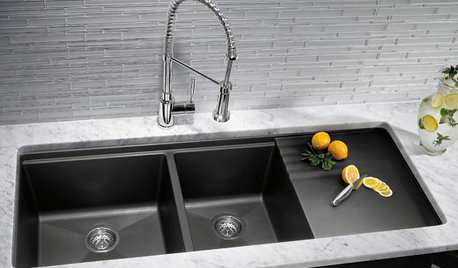
KITCHEN DESIGNKitchen Sinks: Granite Composite Offers Superior Durability
It beats out quartz composite for strength and scratch resistance. Could this kitchen sink material be right for you?
Full Story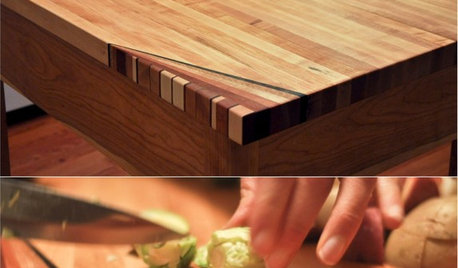
WOODWORKINGHow to Clean and Care for Your Butcher Block
Keep butcher block counters and boards looking sharp as a knife — and sanitized for safe food prep — with this advice from a pro woodworker
Full Story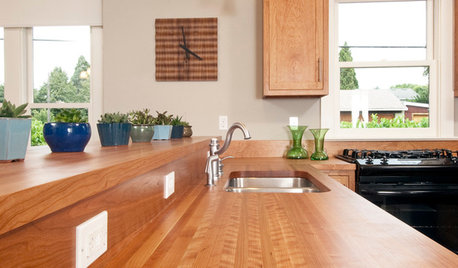
KITCHEN DESIGNWonderful Wood Countertops for Kitchen and Bath
Yes, you can enjoy beautifully warm wood counters near water sans worry (almost), with the right type of wood and sealer
Full Story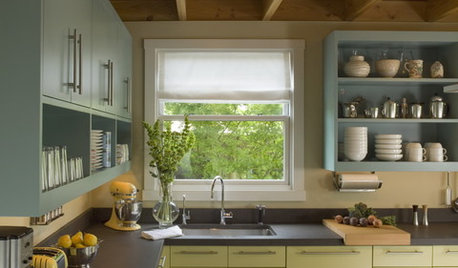
MOST POPULAR8 Great Kitchen Cabinet Color Palettes
Make your kitchen uniquely yours with painted cabinetry. Here's how (and what) to paint them
Full Story
SUMMER GARDENINGHow to Grow Basil
Bright color, quick growth and endless uses for cooking make this summer annual a winner in the garden or a pot
Full Story
COLOR11 Terrific Paint Color Matches for Wood Details
Pair your wood trim and cabinets with the right shade of wall paint to bring out the beauty in both
Full Story
GARDENING FOR BUTTERFLIESGardening for the Bees, and Why It’s a Good Thing
When you discover how hard bees work for our food supply, you may never garden without them in mind again
Full Story
KITCHEN DESIGN3 Steps to Choosing Kitchen Finishes Wisely
Lost your way in the field of options for countertop and cabinet finishes? This advice will put your kitchen renovation back on track
Full Story
WORKING WITH PROS17 Things Color Consultants Want You to Know
Dithering over potential palettes for your home? A color pro might be the way to go. Here's how it works
Full Story
KITCHEN COUNTERTOPS7 Low-Maintenance Countertops for Your Dream Kitchen
Fingerprints, stains, resealing requirements ... who needs ’em? These countertop materials look great with little effort
Full StorySponsored


doxiemom