

Uninterested Grandparents
21 years ago
Featured Answer
Sort by:Oldest
Comments (102)
 12 years agolast modified: 11 years ago
- 12 years agolast modified: 11 years ago
Related Discussions
Tips for gardening with kids
Comments (27)My own children have grown now, but I still plant a children's garden at our camp and have had other children visit my gardens. Play 1st. Instead of gathering tools as the 1st task out the door, go play ball or tag with them. That way the energy is expended playfully & they can attend to the garden more readily. Depending on their ages my kids played in the backyard alone while I was in the vegetable garden working. They'd come over to me when they were ready or when they were curious about my work. If kid inspired they worked better than when it became a chore to complete. You'll have to find out what works best with your kids. Appeal to the child's nature and sense of discovery. Give them a harvest basket to carry when empty, but you carry it when full if delicate vegetables or fruits. Alternatively, give them a basket of a few napkins & a lidded container of fresh water for a quick dunk/swish to eat strawberries in the garden. Give them a tool to use. If they're too sloppy with a trowel try a kitchen spoon or a fork. My parents bought my son a kid sized shovel. He preferred to dig out rocks with it rather than move soil I wanted to moved, but I had to let him do his own gardening, too. Use a ruler or yardstick to the growth of plants & record. Label a 1x1 stick & plant that in the garden as a visual measuring tool to compare. Fingernail polish lasts well, but permanent marker fades. Ask questions. Who can find the cucumber? How many cucumbers can you find that are finger size? Play hide & seek games. Hide animals or characters in the garden for them to find. You can also let them put the characters where they'd wish to find themselves the next garden visit. Give them their own space in the garden. We made a small fairy garden in a container with my great niece. Not fancy like what you see now, but some plants she found growing here then added some small plastic strawberry shortcake toys. I let her arrange it her way even though the presentation wasn't the way I'd do it. I think that's the key to give them an area to do what they want whether a corner by the compost bin or a container. Have a purpose for each garden visit & don't work on it all day long. Observation, planting, harvesting, watering, weeding or? They're not sure what to do 1st, so you direct them. When I was a beginning gardener I couldn't direct much because I was figuring it out, too. Discover together. Sometimes, I had to say 1st we'll play ...., then we'll work. Then I'd say what I needed done in the garden that day. Sometimes, I'd state our objective then when it was done we'd do a special activity. My kids learned that it was necessary to work the garden, but didn't have to do all of it all the time. It was especially helpful for my son to have work 1st then we'd go to the lake or park. He worked fast, so I had to supervise carefully, too. Be prepared for accidents. Children helping leads to some plant damage when they cut corners on rows or fall into plants. Teach them not to pull up plants to "see how they're doing." Give them a small cup & a bucket of water rather than a spray nozzle on the hose for watering. Try not to scold too much as they're learning, but helping them correct the mistakes that happen. Plant more than you need, but not more than you can tend. That way you have extra to cover the mistakes & some to give away. Kids love giving away their homegrown produce especially, if they don't like that particular vegetable or are tired of eating it. Have well marked beds & walking paths. Use raised beds or lay out stakes with string. Lay out mulch on paths or whatever you have available. Kids don't intuitively know to not step close to plants and may overstep to only squish your lettuce plant. I started doing raised mounded beds not only for the benefit to the plants, but so my kids knew where to step. I realized I liked the wide rows within the beds & the plants grew well. It was easier to water the beds & not the rows that way, too. Enjoy~...See MoreExciting 30 Days
Comments (23)What exciting news! 2 babies in little more than a month...AND a boy and a girl!! Congratulations! And congratulations to your son, ironically I am chair of the committee for our church which nominates deacons to be elected. Linda C...See MoreAn offer he can't refuse?
Comments (16)You all are so right, thank you for the advice, especially the cash offer. Yes I was thinking of waving thousands in front of his face (by selling my car and buying another one) just to get him to go, because money and drugs is all that matters to this man. He cares nothing for his parents, him self, and above all, his daughter. She has been a burden on him since day 1. However, after reading these posts, I see what you mean, he may take it as a payoff, which could backfire on me. Maui: I do NOT have full legal custody. In our decree it states I have "sole physical custody", meaning, DD will always LIVE with me in MY home. Then it states "joint legal custody", which goes onto state that the father will have a 50/50 say in her health care (even tho it states he will never, ever have to pay for ANY medical treatments or insurance coverage), her schooling (even tho it states he will never have to help with school fees) and "general upbringing". I do not want to keep DD from her paternal grandparents. I have VERY fond memories of MY paternal grandparents... my father was "there" but completely, totally uninterested in me (he still is and doesn't like us coming around). My dad's parents were my best friends... much like DD's paternal g-parents. I would never dream of denying her a love like that. Tami ... I cannot qualify for public assistance, no way in lleh!!! I make over $40k a year (NO college degree... just tenacity, ambition, and I LOVE TO WORK!), I own my own home, etc. To give all that up just to do this, would be ludicrous. Trust me I have thought about what it would be like to STOOP to his level; to not wanna work, to live either with my parents or in some crappy subsidized housing somewhere, and the thought makes me ill. DD and I have a great life and a very nice home, and when I accepted WIC for the first year of her life (I had to... her father moved out and I was left with a SLEW of his bills, and to keep my credit A+, I had to pay them so it left me kinda broke) I felt awful when I cashed in those vouchers. This is terrible but when I'd use those WIC vouchers, I would get trashy looks from the gals at the grocery. I was not some welfare-mom who was toting 9 kids and didn't know what birth control was, yet I got the looks. When my salary rose up and WIC was cancelled, I was relieved. Talley Sue (thanks for your long response btw): You aren't the first to call me "dense and worried" over this. I swear when he tried to take her last year it was the worst weekend of my life. I spent two days vomiting I was so upset over what "almost" happened. I KNOW I just need to do what I can do, meaning, keep up on the Child Support summons, and make sure his parents are "watching him", even tho they said they won't interfere with his "problems" any more... but I cannot help but to be worried. He doesn't have the stability to follow through on the idea of removing my custody or "legally" removing DD from me... but his parents are SO behind him and think I'm the anti-christ for keeping tabs on him. They used to really respect me and his mother was very friendly, but since his release from prison in October (during this free time he managed to knock up his second wife, who is a 20 year old girl with two kids by two different fathers...), they have been at odds with me. I pray every night that he does himself in. I know that is bad, to wish that upon someone, but I'd rather it be him then my DD or his parents or someone else. He is the one who deserves to worry and suffer... not DD or anyone else. Yer right Talley Sue, he will always be around, I fear. I know he wants to leave KY and he wants his 'freedom' away from everyone here who has 'harmed' him, but he cannot make it in this world without his mother's support. At least DD and I are very close. I make sure of that. Among all the disciplining and rules I set in my house, we have a very strong love and she listens to me like you'd not believe. I hope in time she will see just what her father is... do you think she WILL? As a teenager, or as an adult? Or even when she gets into grade school??? - darkeyedgirl...See MoreAnother wedding question(s)
Comments (54)Ah, weddings. My son is getting married in June and they've planned it as a late afternoon ceremony on the beach next to a lighthouse on the Eastern Shore, followed by a reception in a maritime museum on the same property. It's very appropriate for the couple; she is a Coast Guard academy grad who recently left the military for a job at a major cruise line and he is a federal law enforcement agent at a maritime national park. Her family is local to the MD area although the couple lives here in SoFla. Hopefully the weather will cooperate but if not she's going to move everyone into the assembly space. Very fond of my future DIL but it's an interesting experience being the grooms' parents; we've not been consulted or informed much about plans other than told if we ask. No wedding attendants, and evidently no desire for any variant of rehearsal dinner--I offered to host extended family for a nice private dinner or even do a cocktail reception the night before the wedding for all the guests but the kids haven't taken me up on it so I"m following the MIL 3-S mantra: show up, sit down and shut up :). I keep telling my (only) daughter that she better let me organize a big fat wedding someday LOL. And ardent feminist that she is, she keeps telling me not to count on it!...See More- 12 years agolast modified: 11 years ago
- 12 years agolast modified: 11 years ago
- 12 years agolast modified: 11 years ago
- 12 years agolast modified: 11 years ago
- 12 years agolast modified: 11 years ago
- 12 years agolast modified: 11 years ago
 12 years agolast modified: 11 years ago
- 12 years agolast modified: 11 years ago
 12 years agolast modified: 11 years ago
- 12 years agolast modified: 11 years ago
- 12 years agolast modified: 11 years ago
- 12 years agolast modified: 11 years ago
- 12 years agolast modified: 11 years ago
- 12 years agolast modified: 11 years ago
- 12 years agolast modified: 11 years ago
- 12 years agolast modified: 11 years ago
- 12 years agolast modified: 11 years ago
- 12 years agolast modified: 11 years ago
- 12 years agolast modified: 11 years ago
- 12 years agolast modified: 11 years ago
- 12 years agolast modified: 11 years ago
- 12 years agolast modified: 11 years ago
- 12 years agolast modified: 11 years ago
- 12 years agolast modified: 11 years ago
- 12 years agolast modified: 11 years ago
- 12 years agolast modified: 11 years ago
- 12 years agolast modified: 11 years ago
- 12 years agolast modified: 11 years ago
- 12 years agolast modified: 11 years ago
- 12 years agolast modified: 11 years ago
- 12 years agolast modified: 11 years ago
- 12 years agolast modified: 11 years ago
 12 years agolast modified: 11 years ago
- 12 years agolast modified: 11 years ago
 11 years ago
- 11 years ago
- 11 years ago
- 11 years ago
- 10 years ago
- 10 years ago
- 10 years ago
 10 years ago
- 10 years ago
- 10 years ago
- 10 years ago
 9 years ago
- 8 years ago
- 8 years ago
Related Stories

MOST POPULARHomeowners Give the Pink Sink Some Love
When it comes to pastel sinks in a vintage bath, some people love ’em and leave ’em. Would you?
Full Story
COMMUNITY15 Ways to Make Your Neighborhood Better
Does your community lack ... well, a sense of community? Here's how to strengthen that neighborly spirit
Full Story
DECORATING GUIDESHow to Get Authentic French Style in Your Home
Move over Shabby Chic and French Provincial. These myths and realities reveal the real look of French decor
Full Story
DECORATING GUIDESFeel Free to Break Some Decorating Rules
Ditch the dogma about color, style and matching, and watch your rooms come alive
Full Story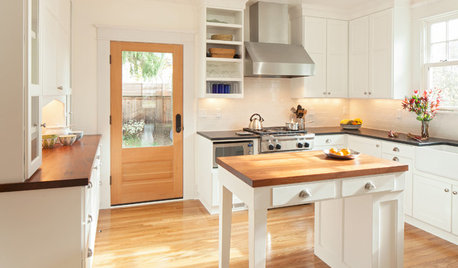
SELLING YOUR HOUSEHow to Stage Your Kitchen for a Home Sale
Attract buyers with a kitchen that’s clean, bright and welcoming — no expensive overhaul required
Full Story
ARCHITECTURERoots of Style: Midcentury Modern Design
Midcentury modern still charms with its linear forms and low-sloping roofs. Appreciate it now — such simplicity can be hard to replicate
Full Story
Jonesy