Houzz Logo Print
publickman

How do you remove pasta from a large pot?

15 years ago

I'm not asking for instructions, but I am curious how different people perform this task. I thought of the question because of the favorite burner thread. I use a very large stock pot for boiling pasta, and then I remove it with a large strainer with a long handle into individual pasta plates that have been heated in the sink with ladles of the hot pasta water. That is why I like having my high heat burner in the front and on the same side as the sink. I never serve pasta in regular plates (unless it is a side dish), and I never serve pasta in a serving bowl or plate. This is probably because there are just two of us. I used to boil pasta in a pot that had a strainer inside, and then I would just lift the strainer to get the pasta, but this often caused a lot of water to come out of the pot and spill all over the place. If I'm cooling linguini or fettucini, I often use tongs instead of a strainer to remove it. For a while, I tried pouring the entire pot into a colandar or strainer in the sink with the pasta plates beneath, but this got messy as well. The pastas I cook the most often are rotini, rotelli, and ravioli. I used to cook long skinny pasta more often, but I haven't lately. Occasionally I will put the pasta directly into the pan that has the sauce, but only if I know that the proportions will match exactly.

I'm wondering how set in their ways people are with this type of cooking. I used to be flexible, but once I figured out what worked best for me, I haven't gone back.

Lars

Comments (22)

  • 15 years ago

    I dump the whole pot into a strainer in the sink.

  • 15 years ago

    I do what you do, Lars, and pull the pasta out with a spider skimmer, into the pasta sauce. I figure I maintain enough of the pasta water that way, and the rest of it's available if I need it. I use tongs then to pull the pasta into pasta bowls. No more dumping or carrying big pots of boiling water for me!

  • Related Discussions

    lisa, what medium do you use in large pots with fruit trees?

    Q

    Comments (3)
    Hi Ache, I tend to play around with my potting mixes, but the basics are potting soil from Bushel Stop, pine bark chips, coconut husk chips and those clay balls that orchid folks use a lot. I like my potting mixes to drain rapidly, even though it means more hand watering for me. For Blueberries I use coarse peat moss and pine bark. I want "chunky" soil, not fine mixtures that pack down. When I don't have coconut husk chips on hand, I use bagged Orchid mixes added to standard potting soil. I usually have to add soil every year or so, and sometimes root prune the trees. I've not had much luck using plain old potting soil. It seems to break down too quickly and ends up too wet. Lisa
    ...See More

    Container growers - how do you keep your pots from blowing over?

    Q

    Comments (9)
    For those containers sitting on the ground I drive a stake into the ground next to them and tie the container and/or the plant support to that stake. Just like you would a cage in the garden. For those sitting on the deck they get tied off to the deck rails. Plus any of my indeterminate variety tomatoes are grown in such large containers that the weight of the container would be difficult to tip over. Dave
    ...See More

    Do you use a colander or tongs to drain pasta? (recipe included)

    Q

    Comments (32)
    I was cooking pasta with a friend this summer on holiday, and we were discussing all this stuff. He is of Italian heritage so considers cooking his birthright, LOL. He strongly disapproved of putting oil in the water or on the pasta after draining it. He said the sauce wouldn't "stick" as well with the oil. I believe in oil. I put a little oil and mix it into the drained pasta to prevent sticking. It helps to put it in the pasta water also. (I don't care what Alton Brown says about THAT!) My sauces have no problem adhering to the pasta afterwards. Viva La Pasta! (Lou, I have about 10 folded up post-it notes in my purse as we speak!)
    ...See More

    How do I remove large bathroom builder mirror

    Q

    Comments (9)
    Alternative. After taping the face. get a piece of wire, piano wire, etc. Thin and strong. Put it at the top of the mirror, between the mirror and the wall. Pulling left and right, you can "saw" the wire down gap between the mirror and the wall, cutting any adhesive. When you get a bit down, secure the top of the mirror to the wall so it doesn't flop over when you get to the bottom.
    ...See More
  • 15 years ago

    I do it like my Mom did it....I place the lid askew on the pot (it's always a large pot) and drain off the water into the sink.

    Whatever water is left becomes part of the sauce.

    I only use a colander when I want to run cold water over the pasta to stop the cooking process.

  • 15 years ago

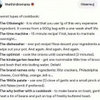
    If I'm just cooking long pasta for the two of us, I use a ladle like this:

    If I'm cooking a larger amount or short pasta, I pour the pasta and water into an appropriately sized colander in the sink.

    Lee

  • 15 years ago

    Depends on what I am cooking and how much.
    fusilli for 2 I use a small pot and dump into a strainer then quickly put it back into the pot...Spaghetti for a mob...I use the pot with the insert and pull it out.
    At church we have a wonderful device. a huge pot with 4 triangular strainer things that fit inside....each large enough to hold a pound of pasta. But it's a huge pot....takes 2 to carry it when it's full.
    Mostly I dump into a strainer or colunder....saving some cooking water in a 2 cup measure.
    Linda c

  • 15 years ago

    If I am making pasta in a stockpot, it has an insert that lifts out. As it does, water drains through the holes. For a small amount, the pasta/water is strained in a colander in the sink.

    I know what you are saying about finding the best way and sticking to it. Trouble for me is if a better way comes along, I usually don't catch it.

  • 15 years ago

    I always make pasta it a pot I can easily carry to the sink - my 4 qt pot is about the biggest I can ever use. I pour it all - water and pasta, into a colander and drain it back into the pot, drain the pot, then put butter on the pasta and pour the pasta back into the pot, mix it up real good and put it in a bowl.

  • 15 years ago

    Am I the only one who heats the plates first? DB thinks this is unnecessary, but I want to lose as little heat as possible, even though it is easy enough to reheat pasta in the MW if it has cooled. I will reheat pasta half-way through a meal if it has cooled below what is an acceptable temperature for me. I'm beginning to think I may have a few obsessive compulsive traits, although I don't normally think of myself that way.

    Lars

  • 15 years ago

    When it is the four of us I use a large stock pot for boiling the pasta. Drain off water in a colander that I put into the sink. The pasta is then divide into four pasta bowls to be fixed the way each person likes (youngest daughter likes just butter and pepper, no sauce. oldest daughter sauce and spicy sausage, no meatballs. You get the picture). When it is just the two of us I use a spider. Still use pasta bowls not plates. NancyLouise

  • 15 years ago

    Lars, no matter what I'm cooking, if the food is served hot, the plates are heated first. We used rimmed pasta plates and I heat those before serving the pasta.

    Lee

  • 15 years ago

    We always heat our plates around here too! (And stick them in the fridge when serving something cold.) If that's a bit OCD, I say, Bring it ON !

  • 15 years ago

    I thought the question was about draining pasta, not about heating plates. ;-)

    So I just answered that question.

  • 15 years ago

    sushipup....it's called a segue....it all related to cooking pasta, so it's all good.
    I don't always heat or chill plates. If I did I would have a stack of plates in the refrig and another in the oven warming.
    Linda C

  • 15 years ago

    Yes, I like the different topic. But I still don't get the idea of fishing out hot pasta from boiling water with another instrument. Dump into a colander, return to pot if you so wish. What am I missing?

    Yes, Jim insists on warmed plates, done in the oven. Warm plates are not used for pasta draining. ;-o

  • 15 years ago

    I put a colander in a shallow bowl, then pour out the pasta and water - that way I don't get whatever is on the bottom of the sink in my food when the water goes down the drain. I also use the pasta ladle,like Lee's photo, to serve it, only mine is plastic.

    What I'd really like is a spider like that Italian cook uses on her show (also called a wok strainer or skimmer, looks like a flat colander with a long handle). But - the prices for stainless steel ones start at $15 and go up to $40. I'd have to justify using it daily for that kind of money. Of course I could also use it for scalded tomatoes and peaches, or boiled eggs, or blanched veggies destined for the freezer, so I just may talk myself into buying one.

    When I boil pasta I sometimes drop in a couple of eggs so I have hard boiled eggs for that meal or another. Same when I boil potatoes for salad.

    Nancy

  • 15 years ago

    I bought one of those big pots with the strainer insert but I found it messy - or maybe it was just me. Anyway, I stopped using the insert and just dump it into a strainer into the sink. I've never found heating the bowls or plates necessary since both the pasta and the sauce are hot.

  • 15 years ago

    I didn't understand why this sounded so complicated till Nancy (nancedar) referred to "whatever is on the bottom of the sink." Yeah, me too. In the midst of dinner prep, there are likely some used utensils or food scraps there; if the drain should be blocked, the dirty water would rise up ... and into the colander. For that reason, I don't put the colander down. Grasping the pasta pot by a single handle, I hold the colander (in the air, over the sink) with one hand while pouring the contents of the pot with the other, in one easy motion.

    After the pasta is drained, it goes into a large serving bowl. The sauce--hot from the stove--is then added and mixed in. I don't warm the bowl or the plates.

    Sue

  • 15 years ago

    Nancedar, I call that spoon "the Holey Spoon of Antioch" :-) Don't know why, it started at a restaurant I worked at and it's kind of a spin-off from Monty Python.
    I pour my pasta into a colander or strainer in the bottom of the sink, which I have ensured is clear while the pasta is cooking. If the weather is cold I warm the plates but otherwise not.

  • 15 years ago

    I've got one of those pots with the strainer inserts, but it's got a lip that keeps the strainer in the top quarter area of the pan, so it's really more of a steamer than a strainer. It's totally useless for pasta. So far, it's only purpose has been to take up space.

    I dump the pasta into a colander in the sink. I find that much easier, being as short as I am, than trying to fish the pasta out of the tall pasta pot.

    If the plates are cold, I'll zap them in the microwave to heat them up. Otherwise I don't even notice or care. It's usually not that cold here to worry about it. However, today I did pre-heat my coffee cup, as it's pretty chilly here for a few days.

    Oh, and as for rinsing pasta, the other day I was watching Chopped, and one of the contestants did just that. He started his pasta too early. As a result it was done too early, so he rinsed it to stop the cooking. The judges all freaked out about that, as a no-no. They said it would rinse off the starch. Now, how come spending several minutes in boiling water doesn't do that anyway? I don't get what difference it makes. (Is it okay to ask that question here on this thread?)

    Sally

  • 15 years ago

    If I am cooking pasta for later use, I also rinse it off to stop the cooking, and I want it to be a couple of minutes underdone so that when I reheat it, it will be the correct consistency. I've seen plenty of people rinse off their pasta, and so I do not consider that a mistake.

    As for pouring the pasta from the large pot into a colandar in the sink - that is very awkward for me because I use such a large pot, and it is very heavy and unwieldy. I consider heating the pasta plates as part of removing the pasta because I use the pasta water to do that. I like to have a pot of hot water in case I might need to cook another batch of pasta, although that seldom happens. I also prefer to empty the pot after the water has cooled.

    I hadn't thought of cooling plates for cold dishes - although I do chill bowls for making cold mixtures or for whipping cream.

    Lars

  • 15 years ago

    Years ago I thought I had to have a large pot with the pasta insert. So I bought it and didn't like using it and put it away never to get it out again. I now cook pasta in a six quart pot. If it's large stuffed pasta for one or two I use a spider and skim it off. If it's any other type of pasta I remove two cups of the pasta water, pour most of the rest of the water down the drain, then dump the pasta and what little water is left into a colander in the sink. I rarely heat the plate or serving bowl since the sauce is usually hot.

  • 15 years ago

    I don't heat the plates - I don't need to. My pasta is hotter than normal the way I do it and the sauce is simmering. Plus it wouldn't make much sense since my plates are thin (Corelle) and would lose the heat quickly anyway.

    So, for spaghetti for instance, if I'm making a large batch I'll use a colander in the sink or use the strainer lid on the pot and dump it unless I need the water for something. Smaller sizes I use a 3 quart saucepan and either the strainer lid or colander and dump it, then the pasta goes back into the pan and back on the stove to steam out excess moisture. This is when I salt the pasta. I do not salt pasta water. You don't have control over how salty it gets. Salting the pasta now gives you complete control (or at least gives *me* complete control) and I stir it until the excess water is out and of course this is heating the pasta more and completes the cooking so I pull it before al dente. Then a scoop of sauce (and I enjoy a thicker - not watery meat sauce), and add meat additions if necessary (meatballs if separate, sausages or whatever) and stir them in, again and this step additionally heating everything, then onto the plate and onto the table piping hot. Since doing it this way, I find I use less sauce, less seasoning and truly enjoy it more as the pasta is seasoned and the sauce absorbs into the pasta better so there's flavor from the sauce too.

    No need for preheated plates this way either. Then of course top with cheese if desired, grab the garlic bread (sometimes if it's cooled, set it on top of the pasta to warm it - yes it's that hot!) and enjoy a fine meal of pasta.

    No more drippy wet, plate full of water for me with pasta!

Sponsored
SK Interiors
Average rating: 5 out of 5 stars55 Reviews
Loudoun County's Top Kitchen & Bath Designer I Best of Houzz 2014-2025