

Diseases in Goldfinches
17 years ago
Featured Answer
Sort by:Oldest
Comments (13)
 17 years ago
- 17 years ago
Related Discussions
How should I prepare soil for next spring?
Comments (15)This is a great post, dchall. I'd like to respond to a few points and get your thoughts. You said my problems are brought about by chemicals, but I'm not so sure. I only moved into this house two years ago, and this is my second summer with gardening the land. The lawn is a mess, which indicates it's been a long time since anyone used any kind of chemicals on it. The spot where I made the vegetable garden was virgin, although I did recently find out there used to be a large tree in the area that was dug out. I had it tilled fresh last spring, then planted. The only problems I had were birds (more on that in a minute) and the flea beetles. I did use one spray of Sevin on those beetles, and that took care of them. And it was a very light spray, but a spray nonetheless. (I'm learning, I'm learning!) If there were any other bugs, I never saw them, and I've always had the practice of walking through nearly every day looking for damage or problems. That's something my grandfather taught me. The birds, I didn't mention because I got a handle on them. Having always lived way out in the country/forest, I let my dogs and cats outside. So I've never known birds. (Other than bluejays...they were always around and very aggressive) Then I moved to town and now my pets aren't allowed outdoors. So I'm enjoying birds for the first time in my life. However, I have robins that sheared off my seedlings (the guy at the nursery said they do it to get nesting materials), but the other birds don't really bother my garden. I have a LOT of blackbirds, sparrows and grackles that I do not feed. And I feed my cardinal family, goldfinches and many, many hummingbirds. I also do a lot of flowers and flowering bushes and have never used a pesticide on flowers. (Never had to) Last year I strung a foil jungle throughout my garden to keep the birds (robins) out. This year i used vinyl netting, but next year I'll go back to the foil...it's easier in the long run. The point of that long ramble is that I have so many birds. Maybe they ate bugs, I don't know. And the other thing is that the only chemical used was last year's spray of Sevin (and that was only on a few eggplants, nothing else). Now, my neighbor does some flowers, and she might use pesticides. I did plant a lot of sunflowers, too. Partly just because I love them, but also did some in the veg. garden as companion plants for the cucumbers. (I don't think it worked, but I did get a nice crop of aphids on the sunflowers. I also got nice goldfinches which I've enjoyed) I need to back up...I did use chemical fertilizer (Miracle Grow), and some powdered coyote urine because I have a lot of wild rabbits. I'm only now learning about compost tea. Next point...I've decided NOT to use the horse manure, because these are all fancy racehorses (I live near a big racetrack) and Terri mentioned that they probably use steroids and things. So I'll have to settle for the poo of my neighbor's two pet rabbits. Back to the birds, I really considered getting a bat house, but I'm not sure it's legal in town. Plus would probably freak my neighbors all out. We have rabid bats sometimes. But I'd love to have some bats. (And even more, bat poop...it's supposed to be the best) But not a good idea around here. I'm very interested in the liquid seaweed you spray, or the milk. I've seen Paul James talk about using milk to control fungus as well. Would leafhoppers be considered sucking insects? I'm having trouble finding anything to use next year that takes care of them, and they did an enormous amount of damage to things this year. Neem oil is supposed to work, but to work, I would have had to sprayed my entire garden, including ground, with the Neem oil, and I was afraid it would harm too many beneficials. What are your thoughts on nematodes and releasing beneficials (mainly ladybugs)? Now to the tilling. Would you believe that last fall I did the no-till thing? My friend read about it somewhere, and I was all for it because I don't own a tiller and have to pay someone to come till. I already used newspapers as kind of a mulch to keep the weeds down, so I pulled everything up, put down layers of newspapers, topped it with a lot of leaves from the yard, then composted manure (that I bought at Wal Mart), then more leaves. What I did like about that is that I didn't have to really work the soil in the spring, or at least not like when you let it grow wild, and I had zero weeds. But it didn't decompose as much as i expected, and I kind of had a crispy crust I had to break through, then would come to a layer of undecomposed leaves. The crust was very much like the crust on a creme brulee, only made of crispy newspapers. I don't know if that's how it was supposed to be or not. Then I just kind of dug my rows out with a shovel and hand shovel, worked some composted manure into my rows, and planted. I've somewhat blamed my bug problem on that...is my logic wrong? My logic is that I sealed in all these bug eggs that might have been exposed and killed if I'd had tilled. I'm not opposed to not tilling, because I think the layered thing was easier than tilling, especially since I don't have a tiller and would have to borrow/rent one. I understand the logic of the anti till movement, and disturbing the soil and such, but maybe i want to disturb the bug eggs. And then there was the crispy crust....should I have just pulled all that up and tossed it? I didn't really know what to do in the spring. It was not what I expected. I expected a soil I could dig in, add some compost, work it in, then plant. But I had that crust and then a layer of leaves. (I used leaves because the instructions said either leaves or grass cuttings, and I have no grass cuttings in the fall because my lawn is not so good.) The books I was planning on getting: The Organic Gardener's Handbook of Natural Insect and Disease Control: A Complete Problem-Solving Guide to Keeping Your Garden and Yard Healthy Without Chemicals by Barbara Ellis and Great Garden Companions: A Companion-Planting System for a Beautiful, Chemical-Free Vegetable Garden by Sally Jean Cunningham...See MoreBirds and other mobile features in the garden 2014 #9
Comments (77)Molie: I would suggest a Great Blue Heron, perhaps a juvenile, for the darker bird. These are photos I took in August of a rather mangy looking Great Blue Heron preening in Ellisville Marsh. The dark crown is visible. Check out All About Birds - scroll down to the Field Marks section and then click on the arrow to see more photos. About five photos in is a juvenile. Claire Edit note: One thing that bothers me about the Black-crowned Night-Heron ID is the fact that they mostly hang around at night. According to All About Birds: "Black-crowned Night-Herons are common in wetlands across North America - you just may have to look a little harder than you do for most herons. True to their name, these birds do most of their feeding at night and spend much of the day hunched among leaves and branches at the water’s edge. Evening and dusk are good times to look for these rather stout, short-necked herons flying out to foraging grounds." This post was edited by claire on Thu, Sep 18, 14 at 15:06...See MoreProblem with neighbour's cat
Comments (26)Uh-huh. Clearly, no one (at least those willing to post it) share my opinion about a cat's fitness to endure the rigors of the great outdoors. I've lived on the same 3 acres for nearly 17 years now. In that time we've had 7 cats. One died of natural causes, one was "inherited" and she was it by car 1 1/2 yrs. after she was "moved in". She originally lived "next door" and her territory included the area across the road. Another was attacked by a fox and I took him to the vet.; it SUCKED but he was nearly 14, already showing signs of kidney failure (the boney spine and increased water intake) and I had him put down; it's important to note that the dogs that routinely patrolled the boundries had either died or become too infirm to maintain their "duties". The remaining 4 cats are still here, the eldest is 17. The elderly dogs have gone to the "happy hunting ground" and have been replaced by a very active young, neutered male dog. No deer sited nor any foxes heard in the past 2 years! Maybe they're there, may be not. I don't know for sure. But I know that our cats are in our home at night and we suffer minimal vole damage in our gardens. Deer do not browse our plantings, either....See MoreSick American Goldfinch?
Comments (3)Thanks, Claire. I know we're seeing fledges now, but not goldfinch. I love when they visit, though! You've reminded me to put out our new birdbath, so thanks for that!...See More- 17 years ago
- 17 years ago
- 17 years ago
- 17 years ago
- 17 years ago
- 17 years ago
- 17 years ago
- 17 years ago
- 2 years ago
- 2 years ago
Related Stories
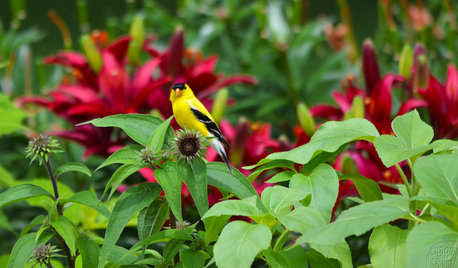
GARDENING GUIDESBackyard Birds: How to Care for American Goldfinches
The American goldfinch is a bright-in-the-summer visitor and one of the only vegetarian songbirds. Here's how to give them a healthy habitat
Full Story
GARDENING FOR BUTTERFLIESA Quick-Start Guide to Bird-Watching for Fun and Learning
Set out some seed and grab your field guide. Bird-watching is an easy, entertaining and educational activity for the whole family
Full Story
GARDENING GUIDES6 Plants That Beat Butterfly Bush for the Wildlife Draw
It's invasive, a nonnative and a poor insect magnet. Check out these better alternatives to butterfly bush in the garden
Full StoryGARDENING GUIDES13 North American Backyard Birds to Know
Find out about these enchanting native species and learn how to attract them to your yard
Full Story
GARDENING GUIDES6 Captivating Roses for an Alluringly Fragrant Garden
Perfume your garden with aromas from richly spicy to lightly sweet, without sacrificing an inch of color
Full Story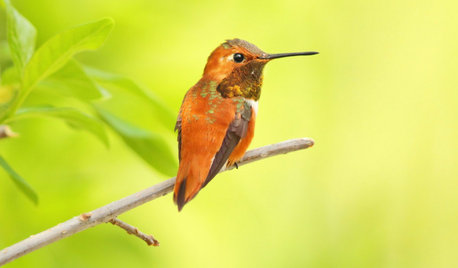
GARDENING GUIDESBackyard Birds: Invite Entertaining Hummingbirds Into Your Garden
Hummingbirds — unique to the Americas — zip through open landscapes seasonally or year-round. Here’s how to attract them
Full Story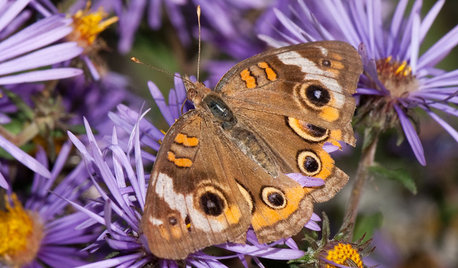
FALL GARDENINGGreat Design Plant: Symphyotrichum Novae-Angliae Ushers in Fall
With bold purple flowers easily accessible to pollinators, New England aster offers loads of interest in the autumn garden
Full Story
LANDSCAPE DESIGNGet Along With Less Lawn — Ideas to Save Water and Effort
Ditch the mower and lower your water bill while creating a feast for the eyes with diverse plantings and gathering places
Full Story
HOUSEKEEPINGDishwasher vs. Hand-Washing Debate Finally Solved — Sort Of
Readers in 8 countries weigh in on whether an appliance saves time, water and sanity or if washing by hand is the only saving grace
Full Story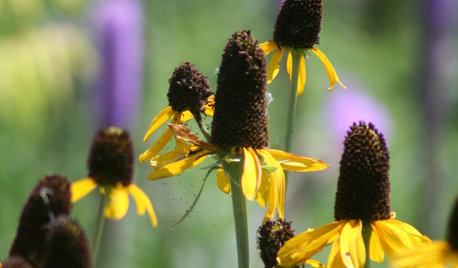
GARDENING FOR BUTTERFLIESGreat Design Plant: Giant Coneflower, a True Exclamation Point
Watch as towering stalks topped by yellow blossoms become a beacon for birds and insects in the midsummer garden
Full Story
More Discussions
laylaa