Houzz Logo Print
nicolenanette

Joe Pye

19 years ago

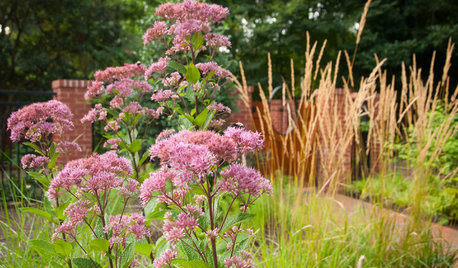
I had someone send me joe pye seeds 2 years ago and i have been afraid to sow them. I dont want them to take over the yard. Are they invasive. I dont mind them growing TALLL, but before i plant i would like to know some more. Mexican primose was a joke, for it was invasive.

Comments (18)

  • 19 years ago

    Where I am (Zone 6-7 border in suburban NY) they are a little bit aggressive but not invasive. They can get very tall and make nice flowers and nice winter "architecture". At my property they spread faster in the wet areas than in dry areas.

  • 19 years ago

    nicolenanette,

    I hope you'll forgive me for pointing out that some people out there like me, hope that people save the word "invasive" for plants that are actually harming wild areas. The word is often used, as you used it, to describe what I've heard called "garden thugs", or as Bob did "aggressive" plants. This is nit-picky I know, but when I consider planting something, I use a Google search with the Latin name and the word "invasive" to help determine if I expect the plant to be a problem here. It's easier not to read through extra hits, and even more important, I think sometimes people get scared off from planting a native in these situations due to confusion. I know there are parts of my yard where I need to avoid planting an aggressive native, but that I have other parts where it would work out well.

    That's also the only reason I'm posting this. I'm hoping you won't feel offended or discouraged from posting again--it's not meant that way at all.

    Lori

  • 19 years ago

    i am kind lost explain more. I had mexican primrose and that was invasive to me. I would love to learn the difference. Explain more.....you have my attention Lori.

    Here is a link that might be useful: nicoles website

  • 19 years ago

    The irony is that sometimes the pressure from the exotic plants is so great that you sometimes have to consider planting a native that is very aggressive (but shy of invasive) in order to have a native plant that survives the competition. If you have enough time to more actively manage your property this will be a less pressing concern since your plants will be getting more protection from you. Either way, I find it very refreshing to see gardeners such as yourselves who think and inquire before planting.

  • 19 years ago

    According to the USDA, an invasive plant causes, or is likely to cause, economic harm, environmental harm or harm to human health.

    And for comparison, an agressive plant, is a plant that can spread readily and may be difficult to control in certain situations.

    Joepyeweed, can be agressive in the right conditions; however its not invasive, and fairly easy to control. I haven't had any problems controlling it.

  • 19 years ago

    joepyeweed,

    Thanks for replying before I got a chance to. The part of the defintion I'm most interested in is "environmental harm".

    Lori

  • 19 years ago

    If you're worried about enviromental harm you may want to take a second look at your lawn.

  • 19 years ago

    nywoodsman, now I'm the one confused. When Lori says she's most interested in environmental harm, you say take a second look at your lawn. Could you elaborate more?

    Terry

  • 19 years ago

    I made have been indulging in a bit of hyperbole,in pointing out that the average lawn with all its attendant maintanece;the mowing,the fertilizing the application of,herbicides,and pesticides;is far more enviromental destrutive than a whole meadow of joepyeweed,and infinetly less appealing.I would worry about the joepyeweed taking over the lawn.

  • 19 years ago

    Invasive species do environmental harm by aggressively growing to the point that they significantly decrease diversity in habitats or ecosystems.

    An invasive species can take over a habitat, like a wetland or woodland, and degrade it to a point such that it can no longer support the wildlife that relied on that ecosystem.

    You can do a web search on the following plants and you should find plenty of information about the environmental damage that they do...
    purple loosestrife(lythrum salicaria)
    hydrilla (hydrilla verticillata Royle)
    eurasion milfiol (Myriophyllum spicatum)
    garlic mustard (alliaria potiolata)
    kudzu (pueraria lobata)

    There are plenty more species that qualify as invasive, those are just some of the notoriously famous ones.

    joepye is not invasive.

    Lawns are a monocultural turf that require mowing and additional inputs like fertilizers and extra water to be maintained in most of parts of this country. Lawns provide little habitat value compared to the inputs that they need to be maintained. A lawn, is more environmentally friendly than bare dirt; however, all in all, a traditional turf grass lawn is not the most environmentally vegetation that one can cultivate on their property.

  • 19 years ago

    I wish we could edit posts, the last sentence should read:

    "...a traditional turf grass lawn is not the most environmentally friendly vegetation that one can cultivate on their property."

    forgot a word... oops.

  • 19 years ago

    But, as to the question about Joe Pye Weed, I've got it in an area with average moisture, but well-drained, in nearly full sun. It doesn't spread, but it grows about 6-7' high and sometimes flops. Looks quite impressive in the summer when it's in bloom and, if it didn't flop, would look great in the fall-winter as well, with big seed heads. My guess is, it might seed itself fairly heavily, but I deadhead it by this time.

  • 19 years ago

    The flop is pretty common for native wildflowers when they are grown in a garden or landscape condition.

    Joepyeweed can be pruned back in late spring or early summer, before it blooms, to keep it from getting too tall. It will still bloom and it may even shrub out a bit when cut back.

    Sometimes I will stake mine. Sometimes I let if flop. I did notice this year that the flopped joepyeweed, sprouted new blooms along mid stem. Because hte top bloom was pointing to the ground and the midstem was now at the top of the plant, so it grew new flowers there.

  • 19 years ago

    I don't mind those that flop, really, since most are very stiff-stemmed and look tall and elegant. Now, my New England Aster is another story, about 5'-6' tall and bushy and I've never been able to stake it properly. Pinching in early or mid-summer would probably be a help there; if I can just remember and have the time to do it.

  • 19 years ago

    I do the same with NE aster. I tell myself each fall, that next year I am going to pinch those back. And then the following year, I watch them grow prolifically and I hate to prune them... and then in the fall, I regret it.

  • 19 years ago

    I bit the bullet this year and cut back my asters when they were really growing in June and am glad I did. I need to get up the nerve to do it with my Joe Pye which was 7' high this year (BTW never felt like this was agressive in my garden). I also need to cut back my "worlds tallest" shasta daisies. Do they grow to over 5' for other people? I bought 2 of these from Home Depot 3 years ago and they are agressive. I scoop out the edges of the clumps in the spring and now have them all over. Next spring I will give them away.

    Although it maybe splitting hairs drawing a sharp distinction between invasive and agressive plants, I agree that a distinction should be made. Invasive plants escape the garden and threaten native habitats, agressive plants crowd out others in the garden. The ajuga in my yard is agressive - the multiflora rose growing down the side of the hill I live on is invasive.

  • 19 years ago

    Oh, yeah, shasta daisy is very agressive. My neighbor planted some in his garden bed and the birds helped it grow in my native planting. I was able to control it by keeping it from going to seed.

  • 19 years ago

    When I had JPW in my suburban garden, I got very few volunteers, and I had probably 3 different varieties.

    Here, in the mountains of NC, they grow wild and do not seem to take over any of the areas I have seen them in. I have some in my yard and they are just individual clumps here and there. Aster always seemed to self-sow heavily for me.

    Jeanne

Sponsored
Grow Landscapes
Average rating: 4.5 out of 5 stars8 Reviews
Planning Your Outdoor Space in Loundon County?