Houzz Logo Print
caflowerluver

4.6 earthquake this morning

8 days ago

It's not the largest but it was the closest. Woke us up at 1:41 AM. The 1989 was the largest and was the one that scared the stuffing out of me. That one was 5 miles away. After 49 years maybe it is time to move. Except there are no safe places in California..

Comments (71)

  • 8 days ago

    I was not sad to leave earthquakes behind when I moved out of CA. Very disturbing.

    caflowerluver thanked Kendrah
  • 8 days ago

    San Francisco is at the northern tip of a peninsula. There are two freeways that carry traffic to and from the south, Hwys 101 and 280. 280 was one of many that were heavy damaged by the Loma Prieta quake and remained closed FOR YEARS. By '94, construction was still going on and it wasn't fully back in service. As a South Bay resident who often had to drive to SF for business, it was a mess. FOR YEARS. The same was true of the fallen structure in the East Bay where so many fatalities occured. It was YEARS before the destroy stretch of road was rebuilt.

    But life went on and people learned to deal with the inconveniences.

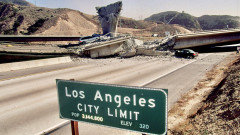
    As I recall, much of the Santa Mo Fwy (The 10) was fixed and service restored in less than 90 days.

    Hurricanes - Katrina, a storm for which warnings had been given, killed nearly 1400 people and wiped out much of New Orleans. Many areas have not been rebuilt.

    Sandy - Warnings were given. It resulted in 147 deaths and over 600,000 homes damaged or destroyed.

    Tornadoes - an average of 80 people are killed and 1500 injured each year in the US.


    The magnitude of the damage and loss of lives caused by earthquakes is a drop in the bucket by comparison. If you're dead, then a death toll of 1 is all that matters to you but these other natural disasters are much more significant and common than earthquakes.


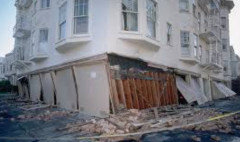
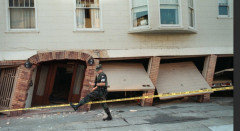
    " That quake also revealed the dangers posed by soft understory construction; i.e., carports under several story apartment buildings, "

    I disagree, Nancy. That happened all over the Marina District in SF in '89. Here are a few examples


    caflowerluver thanked Elmer J Fudd
  • Related Discussions

    Weekend Journal September 4-6, 2010

    Q

    Comments (5)
    West, I think it's against the law to throw them out, one must pass those tonkas along. (((wink, wink))) Great, well made, aren't they? Gabriell, I saw those when I was trying to figure out what to do with them. It seems like it was last year at some point and I saved the idea and the books just in case I felt like doing it sometime. I'm just sure I learned about it on GardenWeb; most likely on the junk forum. Amazing what people see when they look at objects. Wish I had that gene! I'd even give up 1/2 of my energy gene for it.
    ...See More

    Did you feel it? (southern CA earthquake this morning)

    Q

    Comments (5)
    We had a 3.8 earthquake in Westchester on July 25 at 3:18 AM, and I happened to be awake at the time. It wasn't much of a quake, although I felt it very sharply since I was so close to the epicenter, and it pushed our north wall out of place so that the front gate will no longer lock. The gate was wide open when I saw it in the morning, and we've had to adjust the hole where it is supposed to lock. It still needs a bit more work. Lars
    ...See More

    What's growing inside 4/6/11 ??

    Q

    Comments (19)
    Oh by the way, one of my flats of Alstroemeria wasn't doing anything at all so I put it back in the refrigerator for more cold stratification. (The other flat has 17 out of 48 seeds germinated) I'll let you know what happens. According to the Thompson and Morgan Seed Germination Database germination time is 30-365 days at 65-70 degrees covered 1/16 inch. There is also a special note that I'll cut-n-paste: ------------------------------------ 6. Alstroemeria; Bonsai; Clematis; Hardy Cyclamen; Eucalyptus; Flower Lawn; Helleborus; Hosta; Primula; Iris and similar. Sowing OCTOBER-FEBRUARY. Sow the seeds in John Innes seed compost, covering them with a thin layer of compost. After watering place the seed container outside against a North wall or in a cold frame, making sure they are protected against mice, and leave them there until the spring. The compost should be kept moist but not wet at all times, and if the seed containers are out in the open then some shelter has to be given against excessive rain. In the spring bring the seed containers into the greenhouse, or indoors on to a well lit but not sunny windowsill and keep the compost moist. This should trigger off germination. If the seeds do not germinate in the spring keep them in cool moist conditions throughout the summer. As each seed germinates we would recommend that you transplant it almost immediately into its own pot. Sowing MARCH-SEPTEMBER. Sow in John Innes seed compost, or something similar, and place each container in a polythene bag and put into the refrigerator (not the freezer compartment) for 2-3 weeks. After this time place the containers outside in a cold frame or plunge them up to the rims in a shady part of the garden border and cover with glass or clear plastic. Some of the seeds may germinate during the spring and summer and these should be transplanted when large enough to handle. The remainder of the seeds may lay dormant until next spring. ------------------------------------
    ...See More

    Unidentified Body of 4-6 yr old boy found in Maine

    Q

    Comments (15)
    Pesky; just looked Kyron up; he's a few years older then this little guy- looks like Kyron lost his baby teeth. What a horrible story. Dlm- I will never understand why people do what his mom did. It breaks my heart that he's probably with someone & he has no clue what's going on. The sneakers threw me over the edge too. How many little boys do you know that wore similar sneakers? The news conference video is pretty good except you can't hear the questions reporters asked. It sounds like they are going to try to match his DNA with people already on other sites to try to trace family DNA but they don't think it will be ok'd in a court. I hope that one day every newborn will have a chip implanted in them so that things like this will not be so hard.
    ...See More
  • 7 days ago

    I'm in the south bay and happened to be up. Thought oh earthquake and then nope, it's the dogs. Then went back to what I was doing. Then saw the alert on my phone. Oh, earthquake. Loma Prieta was intense, more of a rolling and a rumble where we were than a shake, but of course the media and rumors hyped it up. We didn't even have instant access to social media back then so at least there was that. It's truth that the areas with damage and casualties were due to the infrastructure and areas of heavy landfill. My chances of death or severe injury are far greater crossing the street than they are of dying in an earthquake.

    caflowerluver thanked wildchild2x2
  • 7 days ago

    I was talking with my sister just the other day and we talked about the natural disasters we experienced in our lifetimes.


    For the most part they were not personally impactful. My sister was traveling in Hawaii and got to see Kilauea (active volcano).


    My sister lived in PA during the last Earthquake in this area. It shook homes in our area, but my brother lived a mile from the epicenter and his area has some significant damage. His house was fine.


    At that time I lived in Southern California - experienced the rumbling house on many occasions, had one experience where my tile floor cracked all the way down the hallway, but never experienced any significant damage.


    We both live in PA now and grew up here - experience hurricanes, blizzards, ice storms and the infrequent tornado. We had one tornado that touched down in a nearby housing development that was bad - leveled much of the development. We knew people who lived in that development, so it touched our lives. Most of the tornados seem to run across the farmlands - hear about crop damage or a house or barn being damaged.


    Our area has a limestone base, so we also get sink holes. I do remember riding my bike as a kid and coming in to tell my parents about the big hole in the street right above our driveway. They were much more upset than I was - Dad put up orange cones while mom called the city . . . It was a sinkhole large enough for a car to fall into.


    Our hometown suffered a massive flood in 1972 during Hurricane Agnes. We lived on a hillside and the flood waters stopped just at then end of our yard. Many people we knew lost their homes and we spent much of that summer helping my mom help others impacted by the flood. In our downtown area you could see just the top of the McDonalds arches above the water. I was only 11 and I remember waking up and finding our house filled with strangers. Since our house was the first home you came to that was not flooded my parents opened up our home, my mom was cooking whatever we had in the cupboards and my two aunts were doing laundry and gathering clothing and blankets and towels so people who came in soaked to the bone could get a shower and clean clothes and a meal before heading off to a shelter.

    I do remember being upset - it was my birthday and no one wished me a happy birthday and my mom didn't bake a cake or have a special dinner - she forgot it was my birthday. Amazing how selfish we can be when we are children. I did feel bad for the people, but it didn't stop me from being upset that my mom forgot my birthday.


    As an adult living in Southern California is where I had the most fear - it wasn't the earthquakes, but the wildfires. I was near the Cleveland National Forest and during 3 of the fires I was one of the homes that got the reverse 911 call to prepare to evacuate. Somehow we were lucky enough that the fire never reached our home, but it was too close for comfort.

    I worked with Emergency Animal Rescue and went in front of the fires pulling horses and other animals out of the evacuation zones and worked for the Humane Society in 2003 when it had to be evacuated with all the animals that were housed there plus all the animals that had been dropped off earlier by people who were evacuating the area and all the burned and injured animals that front line fire fighters had passed on to us. I knew too many people who lost their homes, too many who lost pets and some who lost their lives in the wildfires.


    After the fires we next experienced the landslides where the fire had burned out the vegetation. I had one friend who's home made it through the fire, but then collapsed when it rained and the ground below it gave out and it slid down the side of the mountain.


    The only things we could think of that we hadn't experienced were a tsunami or avalanche.


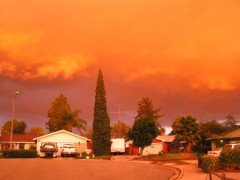
    This is a picture from my front yard during one of the wildfires.


    caflowerluver thanked Jennifer Hogan
  • 7 days ago

    “The only things we could think of that we hadn't experienced were a tsunami or avalanche.”

    Oh, there are more than that - ice storms, sandstorms, locust swarms, hailstorms, drought, heat waves, cold waves, blizzards, volcanic eruptions (think Mount Vesuvius) … you’ve barely scratched the apocalypse.

    caflowerluver thanked palisades_
  • 7 days ago

    Jennifer, in that fire photo, how close was the fire to your home?

    caflowerluver thanked Elmer J Fudd
  • 7 days ago

    Jennifer, I really think fire has to be the worst of all the things that can happen. Fire is so fierce and unpredictible. The devastation is overwhelming. I have been never been in a fire but I have been very close to where there has been a wildfire in a forest. Your rescue work is so important and had to be so sad to endure. Thank you for helping the animals.

    caflowerluver thanked murraysmom Zone 6a OH
  • 7 days ago

    Ahh, Donna, you wrecked my sleeping theory!

  • 7 days ago

    Jennifer , you summarized all the PA events I was going to mention. We were in the city watching my then six-year-old grandson run the Harrisburg Mile, and all the TV stations were covering it when suddenly they left in a hurry. Nearby, a tornado wiped out a large development of homes. Tornadoes are something we rarely, if ever, think about, but last week we had warnings and I always think back to that event. It CAN happen here.

    The Agnes flood of 1972 was also a once-in-a-lifetime flood. We had just moved into our brand new house, but it was on a hill, and we weren't touched. But the flood devastated much of the state with totals of 18 inches or more of rain.

    caflowerluver thanked lily316
  • 7 days ago

    @Elmer J Fudd I don't know exactly where the fire was at that moment, I hadn't gotten the prepare to evacuate call yet when I went out and took some pictures - had smoke in every direction - no blue sky and the huge orange blaze to the east. That fire got within a mile of our home. There was a separate fire burning to the south of us, but the firemen kept that one from jumping the freeway which was about 2 miles south of us. There was also a fire about 6 miles west of us and one 10 miles north.

    caflowerluver thanked Jennifer Hogan
  • 7 days ago

    Thanks for responding, I asked because the resolution of the photo makes it hard to see what's in the image, whether it's just smoke overhead or a burning hillside. Because I see a patch of blue just above the red structure, I'll conclude it's just smoke overhead.

    Where were you located? In the Alpine, CA area east and inland from San Diego?

    caflowerluver thanked Elmer J Fudd
  • 7 days ago

    @lily316 - If your grandson was running the Harrisburg Mile we are probably in the same vicinity. I am in Lebanon. Agnes was exceptionally devastating for our valley because along with the rain we had the Water Works Dam that broke and released the entire reservoir of water spilling into the valley.

    caflowerluver thanked Jennifer Hogan
  • 7 days ago

    @murraysmom Zone 6a OH - I was too close to too many fires, so those frighten me more than other types of disasters, but I look at the news when a tornado has flattened a community or a flood has destroyed a community or storms have ripped homes apart and my heart breaks for those who have lost their homes or loved ones.

    I have to admit, when I watched the fires in CA last year, even though I was 3000 miles away, my adrenalin spiked and I was a bit of a mess for a few days, not sleeping, restless. . . Not sure I will ever see fire and not be impacted.

  • 7 days ago

    @Elmer J Fudd


    I don’t remember how long it took to repair to the Santa Monica Freeway overpass at La Cienega. But everyone who lived a couple of miles from the repair zone knew — heard — that the crews were working 24 hour days, seven days a week. Besides the noise from grinding and hauling 10 lanes of concrete plus on and off ramps, the klieg lights allowing round-the-clock work were blinding. Huge bonus was promised if completion was ahead of schedule - this on top of expensive costs for the 24/7 reconstruction work.


    Plus the neighborhoods whose streets took the overflow of traffic from the closed freeway - buses, trucks, passenger cars - had a heck of a time until the reopening. Again, on one of the most traveled freeways in the entire USA., and residential neighborhoods were among the areas that had to absorb the redirected traffic.


    As far as soft understory problems, you are assuming that SF building codes were identical to those of LA.


    Those soft understory structures survived the Sylmar quake, but again the vertical thrusts of the Northridge quake caused damage where there had been none before.


    Worth noting that Northridge had a lower Richter rating than Sylmar, but much more extensive damage.

  • 7 days ago
    last modified: 7 days ago

    Nancy, I remember it well because it was years after Loma Prieta and the freeway segments in SF and across in Oakland were still not done. Please note, each of these freeway routes are similary busy. The 880 North approach that collapsed is the approach from populated areas to the south going to the Bay Bridge and beyond up the East Bay. The damaged 280 segment was one of only two freeways leading into SF from the south. These weren't back roads in podunik that people used for a Sunday drive.

    Here's a link easily found about the LA project:

    Freeway bridges repaired in 66 days, less than 3 months after quake

    Not only the type of quake but also the directional orientation of shock waves makes a difference as to why one building does fine while an identical one across the street with a different compass orientation doesn't.

    I commented about your saying, as I quoted before,

    " That quake also revealed the dangers posed by soft understory construction; i.e., carports under several story apartment buildings, "

    Which isn't true, because such damage was evident all over the Marina District in San Francisco in 1989. More than 60 miles away from the Loma Prieta epicenter. Another contributing factor for both this structural damage and some of the freeway collapses was liquefaction of the ground which magnified the shock wave effect. As wildchild correctly noted above.

    I think there was also damage to apartment buildings with open ground level carports/improperly braced first floors in the San Fernando quake in 1971. My understanding is that the building code doesn't permit that construction style any more.

  • 7 days ago
    last modified: 7 days ago

    @Elmer J Fudd

    ”Please note, each of these freeway routes are similary busy.”


    Not true.


    Not even close.


    https://ktla.com/news/local-news/4-l-a-freeways-make-list-of-roads-with-most-traffic-in-u-s/

    caflowerluver thanked nancy_in_venice_ca
  • 6 days ago
    last modified: 6 days ago

    Your stat isn't relevant to the conversation, it speaks to freeway segments most congested in 2021. Our exchange concerned traffic volume 30+ years earlier and the inconveniences caused by quake damage.

  • 5 days ago

    When I moved to San Diego I had a basenji and it took me a little while to figure out what was happening, but every time there was an earthquake she would get into my bathtub about 2 hours before the quake and stand there shivering and crying to the point that I would sit in the tub and just hold her. It wasn't until we had a few that I could feel that I put two and two together. She could feel the earthquakes hours before it actually happened.


    My sister was in PA and also owned 2 basenjis when there was the only earthquake that she had ever experienced in PA happened. When I talked to her on the phone she said her one dog has been driving her crazy - shaking and crying and looking for a place to hide, getting all clingy. . . But she didn't think it was because of the earthquake because the dog had been acting like this hours before the quake. I think she also had an earthquake predictor dog.


    I have wondered if it may be related to their breeding. Basenjis are an ancient breed and dissimilar to many other dogs (barkless, no dander, no dog odor, not food motivated, often described as cat like because they don't want to please their owners - want their owners to please them - much like a cat.)

  • 5 days ago

    Caflowerluver it sounds like it was a scary experience. I'm glad you are OK.

  • 5 days ago

    From what I read (National Geographic), dogs are among the animals that can sense early vibrations (P-waves) through their sensitive paws long before the actual happening (S-waves). Also their inner ears can sense the air vibrations from these waves as well. Better than any man made earthquake prediction apparatus. But animals are very fine tuned to their environment so many species exhibit similar alarming activities prior to a quake.

  • 5 days ago

    palisades, from what I've heard in the past (and checked on just now), this is speculation that up until now has not been demonstrated scientifically. One of the challenges to is have a base case to compare it to - an instance when animals get agitated (which they do) not followed by an earthquake.

    Also, there are apparently no known changes of the type speculated may be sensed. Changes that occur more than seconds or a few minutes before a quake are have not been well identified. That doesn't mean there aren't any, only that none have been detected. (And they've long been looked for).

    Here's a brief piece from the USGS (United States Geological Survey). For those who don't know, this is the premier federal agency doing scientific work on many different areas. It's where many (but not all) American experts of seismology and other related areas work, among others.


    Can Animals Predict an Earthquake

  • 5 days ago

    “this is speculation”

    No, those are well known observations. As your posted article concurs with what I posted.

    Until human technology gets better at detecting a quake in advance like the animals, then they can validate the animals’ abilities.

  • 5 days ago
    last modified: 5 days ago

    We must have read two different things.

    The piece I linked to, on the USGS website, when describing the work reported in a 2000 report " by a respected scientist " twice says "it's possible" there is a sensing. If it's possible there is, it's also possible there isn't. Translation= no evidence has yet been found to support the hypothesis. Scientific research is done on the front end to try to find affirmative relationships. If nothing is found, then the default is, that "there is no evidence to support the proposition....".

    I've always had dogs, and always had quakes. I've never seen this phenomenon. Does that support a conclusion it doesn't exist? No. I'm happy to say the question is open until more and definitive work is done.

    I don't pretend that how I would like things to be, exists because speculation hasn't been disproven. It works the other way around. Until there's something affirmative found to exist, there are no reasonable connections to assume.

  • 5 days ago

    @Elmer J Fudd


    The population of the LA area dwarves that of SF, and is well known, public transportation in the Bay Area was far advanced over that of LA in the era of the two respective quakes.


    So a much greater LA population forced to rely primarily on passenger vehicles for transportation, along a major east-west corridor with a substantial disruption between LA’s Westside and DTLA, and we are supposed to stretch believability to consider that the situations of freeway damage in SF and LA are analogous.


    No, still not even close in terms of disruption and inconvenience. The facts speak for themselves.*


    *Just the traffic on the Santa Monica Fwy generated by UCLA — both west and east bound — makes for a horrendous traffic situation in the surrounding areas. And to head off another tangent, UCLA is known for being a commuter school; all those large parking structures exist for a reason. At one time Lot 8 was the largest parking structure in the country.

  • 5 days ago

    Source: https://www.bbc.com/future/article/20220211-the-animals-that-predict-disasters. This is just part of the very interesting article:

    One of the most important investigations into how animals could predict disasters was carried out five years ago by a team led by Martin Wikelski from the Max Planck Institute of Animal Behavior in Germany. The study involved recording the movement patterns of different animals (cows, sheep and dogs) – a process known as biologging – on a farm in the earthquake-prone region of the Marches in central Italy. Collars with chips were attached to each animal, which sent movement data to a central computer every few minutes between October 2016 and April 2017.

    During this period, official statistics recorded over 18,000 quakes in the region, from tiny tremors measuring just 0.4 magnitude up to a dozen quakes notching 4 or above – including the devastating magnitude 6.6 magnitude Norcia earthquake.

    The researchers found evidence that the farm animals began to change their behaviour up to 20 hours before an earthquake. Whenever the monitored farm animals were collectively 50% more active for more than 45 minutes at a stretch, the researchers predicted an earthquake with a magnitude above 4.0. Seven out of eight strong earthquakes were correctly predicted in this way.

    "The closer the animals were to the epicentre of the impending shock, the earlier they changed their behaviour," Wikelski said in 2020 when the study was released. "This is exactly what you would expect when physical changes occur more frequently at the epicentre of the impending earthquake and become weaker with increasing distance."

    Another study carried out by Wikelski monitoring the movements of tagged goats on the volcanic slopes of Mount Etna in Sicily also found the animals seemed to have an advance sense of when Etna was going to burst into life.

    Over in South America, behavioural ecologist Rachel Grant – now at London South Bank University – has found similar results. She carried out biologging of animal movement patterns using motion-triggered cameras inside Yanachaga National Park in the Peruvian Andes over a period which included the magnitude 7.0 Contamana earthquake in 2011.

    "The number of animals recorded on the camera traps started to decrease about 23 days before the earthquake – with the decrease accelerating eight days prior to the earthquake," Grant said in her 2015 paper on the research. "On days 10, six, five, three and two prior to the earthquake – and on the day of the earthquake – no animal movements were recorded, which is highly unusual."

    Crucially, Grant also found evidence of what might be triggering the changes in local animal behaviour, in the shape of a series of strong perturbations in local atmospheric electric charges every two to four minutes, starting two weeks before the earthquake. A particularly large fluctuation was recorded around eight days before the Contamana earthquake – coinciding with the start of the second stage of the animals disappearing from view.

    Earthquakes are invariably preceded by a period when severe stresses arise in deep rock – stresses known to create electronic charges called "positive holes". These highly mobile electronic charge carriers can flow quickly from the crust to the Earth's surface, where they ionise air molecules above where they appear. Such ionisation has been noted prior to quakes across the globe. As these positive holes flow, they also generate ultra-low frequency electromagnetic waves, providing an additional signal that some animals may be able to pick up.

  • 5 days ago

    " No, still not even close in terms of disruption and inconvenience. The facts speak for themselves "

    I see no facts.

  • 5 days ago

    Of course animals are sensitive to things like earthquakes, flooding, storms. I saw something not too long ago about gorillas running up a mountain before flooding hit their part of the forest.

    And the basenjis? How can you say they don't feel afraid before an earthquake hits? Clearly there is examples right here of that happening. It's super annoying when personal experience is pooh-poohed.

    caflowerluver thanked murraysmom Zone 6a OH
  • 5 days ago

    I think we can all agree that we don’t use animals as a quake predictor due to the lack of scientific validation (even though the evidences are well observed in many species), and possibly ethical concerns? As for your dogs, elmer, not all dogs have the same heightened sensitivity like the basenjis, but even among them perhaps there are degrees of sensitivity in detection.

  • 5 days ago


  • 5 days ago


    “I must have had the wrong kind of dogs or the wrong earthquakes, eh?”

    Could be. But it proves the point that we don’t use animals as a quake predictor.

    I have yet to own a dog and to live in an earthquake zone, but my Japanese colleagues told me that their dogs, and cats could sense a quake coming.

    Oh don’t be mad at me. We can always disagree.

  • 5 days ago
    last modified: 5 days ago

    Not mad so long as you don't persist with wishing and hoping. Nothing is known and that's the state of play for now. Casual observations are not the same as research findings.

    If I shared with you just snippets of the vast number and types of superstitions and irrational beliefs I ran into when living overseas (Western Europe, not Asia), from otherwise sensible, college educated people, you'd be amazed.

  • 5 days ago

    But that is exactly what we are sharing.

  • 5 days ago

    Not mad so long as you don't persist with wishing and hoping.

    Don’t see any of that except your madness. We discussed, as you noted, about observations and speculation, to which I disagreed on the speculation part. Although I agreed on the lack of validation.

    Your experiences with your own dogs are as valid as others with their dogs. Why would you only consider your own experiences and get upset when other people have had different and opposite experiences?

  • 5 days ago

    A line is crossed when people with no knowledge outside a particular field try to inflate or equate the validity of their own beliefs, superstitions and random observations with scientific findings

    Don’t see any of that either, just sharing the observations and evidences, and our thoughts par the course. You have had your share too, so be cool and enjoy the rest of your Easter Sunday.

    “your semi-civil comment”

    ??? Not right, you supposed to say, “your fully-civil comment”.

  • 5 days ago

    I owned many dogs and worked in the humane industry for more than 25 years. My basenji was the only dog I encountered that consistently displayed this early predictions of earthquakes. She hated water, would not get in the bathtub voluntarily except prior to an earthquake. Within a few hours we had an earthquake with a magnitude close to 3. She didn't spend her life in the tub, didn't respond to the hundreds of 1.0 quakes. Most were big enough to be felt by me, some I didn't feel, but would look up after she stopped acting weird. Her behavior always stopped within minutes after the quake occurred. Not once did we fail to have an earthquake when she displayed this behavior. She did this for 9 years consistently prior to passing away.

    The fact that my sister's basenji displayed similar behavior prior to an earthquake was an interesting find, but since there was only one earthquake during her lifetime it wasn't the same as my dog doing over and over again year over year.


    @Elmer J Fudd - I don't really care if you believe me or not. I know what I witnessed.

    I don't think every dog is sensitive to earthquakes and I don't think science has exhausted the possibility that dogs could be used to predict earthquakes if they pick the right dogs.


    Not every dog can predict when their owner is going to have a seizure, but some do this instinctively, It isn't a trained behavior.

  • 5 days ago
    last modified: 5 days ago

    " Not every dog can predict when their owner is going to have a seizure, but some do this instinctively, It isn't a trained behavior "

    There are apparently different kinds of seizure service dogs. In any event, you have some work ahead of you because you need to contact sponsors of a number of websites that their information is incorrect. Sites like the Epilepsy Foundation as well as organizations that provide such service animals contain information that conflicts with what you've said.

    If you have any knowledge of scientific and/or statistical evaluation, your anecdotal comment is an n=1 situation. Invalid to draw a conclusion from.

  • 5 days ago

    Oh, for heaven's sake. Just stop.

    caflowerluver thanked Olychick
  • 4 days ago

    @Elmer J Fudd


    1. This article on the Epilepsy Foundation Website absolutely supports my position. https://www.epilepsy.com/stories/seizure-alert-dog-facts.


    They can train dogs to respond to a seizure, but they cannot train a dog to sense a seizure prior to the seizure. This is just something that happens.


    2. Anecdotal evidence is frequently the catalyst for scientific inquiry; the current lack of 'proof' may simply reflect that a formal study has not yet been conducted to validate these observations.


    Example: Based on my direct interactions with you and my observations of your public discussions, I have gathered sufficient evidence to form a hypothesis: you appear unable to concede a point or admit error. Since no study currently exists to refute this, your behavior remains the primary data point.


    You have a prime opportunity right now to provide the first piece of evidence to the contrary.


  • 4 days ago

    Back to the original topic - I was sitting in Tokyo’s Narita airport last Wednesday waiting for my flight back to the U.S. when we experienced a 5.0 earthquake. DH had dozed off in his chair and the shaking woke him. Initially he thought I had woken him up. 😀


    Of course, the Japanese are well accustomed to earthquakes and no one thought anything of it and business continued as usual.


  • 4 days ago

    New buildings are built with systems and structural components to resist and dissipate seismic movement rather than to remain rigid. I think this has been the case in Japan longer than in US states needing to be so concerned. One way this is done is to absorb and channel the ground movement intentionally into building movement. When in such a building, the movement experienced can be greater than what someone outside would feel.

    About a month after the Loma Prieta quake, I was in a newish department store (in a large mall). I was waiting in line to pay for my purchase when an aftershock hit. The building started bouncing up and down as if on a trampoline. It was uncomfortable and immediately worrisome. The counter person said, in a loud voice "There's no need for concern. Our building is built on springs and when there's a shock, it starts bouncing up and down. We're all safe because of that, it will be over in a moment".

  • 4 days ago

    I went to work in a building on the 19th floor in San Francisco in 1978. During the 5 years I worked there we had plenty of earthquakes. The building had those "springs" and so instead of shaking, it swayed. If you looked at coats hanging, they were swinging. It was an odd sensation but we felt safe.

  • 4 days ago

    If a seismic intensity of 5.0 or higher is predicted, Narita Airport’s early warning system will broadcast warnings throughout the terminals so people can seek cover. I remember the Great Kobe earthquake in early 1995 - it happened about a month after I flew from Osaka to Tokyo’s Narita Airport and then back to San Francisco. My last office building and apartment was about 15 miles from Kobe city. After the quake, about 6,000 people died and around 40,000 were injured despite strong building codes. But with the very high population density and the collapse of elevated expressways and railways, severe damage and casualties were unavoidable.

    Over there, for a foot rub type or mild quake (below 5), it’s basically business as usual. But if it’s stronger, sirens will sound, and there may also be tsunami warnings.

  • 4 days ago

    Interesting technology used for cushioning the effects of earthquakes in the Bay area.


    I‘ve been to Japan over 50 times and this was the first time I felt an earthquake. A few phone alerts did go off while we were in the airline lounge last week.


    I do recall the 1995 quake in Kobe and the destruction and loss of life.


    Palisades - were you in Japan at the time of the 1995 quake? I can’t imagine how terrifying that must have been.

  • 4 days ago

    Heritagehd07, no, I left Japan around a month before it happened - flew home before Christmas, so luckily I did not suffer. But I followed up with the news from co-workers over there, and on NHK news.

  • 4 days ago

    Earthquakes, wildfires, landslides, droughts. I'm not brave enough to live in California. I prefer to be nice and safe here in NYC ;-)

  • 4 days ago

    Japan seems to have more earthquakes than other parts of the Ring of Fire around the Pacific Ocean but its record of planning for and dealing with them is not enviable.

    From what I was able to find easily, much of the road and building damage (excluding old, frail buildings) in Kobe in 1995 resulted from liquefaction. Earthquakes cause reclaimed, landfill areas (with high moisture content) around the shores of bodies of water to turn to jello and lose the ability to support loads and resist movement. This is exactly what happened with the Cypress Structure collapse in Oakland and also the damage in the Marina District in SF in 1989. Anyone who knows the area realizes that there are a number of high rise buildings in SF and elevated roads and bridges between the epicenter and SF that were relatively undamaged while facing greater shaking forces. Much but not all of the SF Financial District, and Nob Hill for that matter with it's older large buildings, are built over bedrock.

  • 4 days ago
    last modified: 4 days ago

    Buildings in parts of the world not subject to quakes also need to consider natural forces, especially wind, that require them to be able to move, flex and deal with strong forces.

    Many buildings use not just springs but most have cross-bracing, redundant supports, and damper counterweights to handle external forces.

    An interesting building is the former Citicorp Center in New York City, at Lexington and 53rd. I've had business meetings there a number of times. Built in the 1970s, it has an unusual design: it stands on stilts placed mid-side rather than at the corners, leaving the first nine stories of the building open air but for the stilts. The occupied part of the building itself begins at the top of the stilts. .

    A Princeton undergrad student doing a term paper analyzed the structural engineering features of the building and ran into a problem - her calculations for stress forces were different from what the structural engineers had determined. If she was right, there was a significant flaw in the design and a risk of collapse from winds coming at particular angles. Figuring she'd made a mistake, she contacted the engineering firm and asked them to review her calcs to find what she had computed incorrectly.

    It turned out that she was correct - despite what they thought to have been careful analyses and various structural features - including a 400-ton damper on one of the upper levels, the student had indeed found a serious design flaw. A rush project was undertaken on a hush-hush basis to reinforce attachment points of the cross-bracing to provide the needed stability.

    Another interesting feature of the building is its two-story elevators: even-floor passengers board at ground level, odd-floor passengers at a lower level and in a lower compartment of the same elevator car. (Or it may be the other way around, it's been awhile) Both load simultaneously, and the elevator stops selectively, opening only the needed level’s doors at each floor. So you may find yourself stopping at the seventh floor because someone wants to get on or off from the compartment above, at the eighth floor. Your door remains closed, while people get on or off on the other level

    They may have changed this but it was the first time I'd encountered it.


    Design flaw found by student

  • 4 days ago

    Citicorp Center


    Interview with former Princeton student, telling about her project with the unexpected result


  • 4 days ago

    I recall from NHK news in the aftermath the 1995 Kobe earthquake, the intense seismic shaking from a shallow fault and fires were the main causes of the destruction. Intense shaking from a shallow earthquake is especially destructive because the energy reaches the surface with very little loss, resulting in high frequency and very violent motion. This was a key reason for the catastrophic damage in Kobe. Liquefaction played a significant role in damage, especially in waterfront and artificial ground areas. However liquefaction was the secondary effect.

  • 4 days ago
    last modified: 4 days ago

    Here's another search result, same answer:

    " Key factors contributing to the devastation:

    • Shallow and Direct Hit: The M7.3 earthquake struck only 17 km below ground and directly under the city, resulting in extreme intensity, particularly because the fault ruptured right beneath the urban area.
    • Geological Factors: Much of Kobe's industrial land was built on soft, reclaimed ground from Osaka Bay, which, when shaken, underwent severe soil liquefaction, causing buildings and infrastructure to lose stability.
    • Structural Failures: Many older, traditional wooden houses were not designed to withstand such violent shaking and collapsed, trapping residents. Furthermore, modern elevated highways and bridges, while built for earthquakes, failed due to design flaws, such as brittle, older steel, and concrete reinforcement.
    • Widespread Fires: Because the quake struck at 5:46 a.m. when residents were cooking breakfast, hundreds of fires broke out. These fires spread quickly, fed by broken gas lines, and were difficult to extinguish due to broken water pipes and debris-blocked roads."


    What I said was:

    " much of the road and building damage (excluding old, frail buildings) in Kobe in 1995 resulted from liquefaction. "