

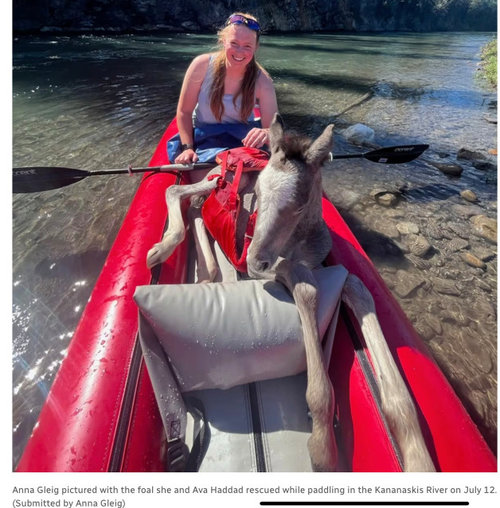
Great Story About a Rescued Foal
last year
last modified: last year
Featured Answer
Sort by:Oldest
Comments (8)
Related Discussions
Rescuing plants
Comments (2)Ginny thanks for sharing this story....See MorePart 2 Adventures of Gomer & Margie (Story Using TV Shows)
Comments (3)Haahahahaa! Karen this is SO funny. I'm bursting into laughter reading these posts again, and remembering writing and reading them at the time. Well done! And my favourite part about Martha Stewart dropping in with her dish towel parachute!!! WAY too funny!...See MoreI was thinking about a ''rescue adoption''...
Comments (42)Glad this is taking a better turn. I refrained from comment intially because I am both an adopter and a volunteer with rescue groups. Yep, we all have serious jobs and lives and fit this fostering and home visiting stuff into our evenings and week-ends. I don't think three weeks is excessive considering that in that time the application was reviewed, your references were likely checked, a home visit appt was scheduled and completed, and the application was approved. Two weeks would be ideal given that most of the visits happen on week-ends, but during busy times when volunteers are on vacation, three weeks doesn't sound like 'forever.' "It seems that in their eagerness to remind me that rescue dogs come with ''baggage'' and that I may want to adopt from a breeder if I'm concerned about health issues, they are less concerned about finding good homes for the dogs than their own agenda." I suspect that their 'agenda' is a permanent placement for the dog. Although you say that you would work with any dog with problems, your requests do raise red flags that would trigger any responsible volunteer to have the 'dogs change, dogs have issues' discussion with you or any applicant. It isn't 'personal'. What you probably ran into were experienced volunteers testing a bit (given your requests) to make sure that the dog wouldn't bounce again. Obviously, they found you sincere and a good potential home, so please forgive them for treating you like any other applicant. Many applicants are not experienced and many really do have unrealistic expectations that no dog can meet and see nothing wrong with returning animals if they don't magically and perfectly fit into the household. What strikes me oddly here is that they don't have photos of the dogs on a website. Maybe you could 'give back' (whether you do or do not adopt the pup you're interested in) by volunteering with the group and taking photos of the dogs for display on the groups website. By doing that you'd be helping many other dogs and many other applicants. Good luck, and do deep us posted....See MoreRe: True Story About 'Rare' Hypothyroidism in Dogs
Comments (11)Based upon what Prarie love wrote, at least some people do believe that hypothyroid-induced seizures are common. Being hypothyroid and having seizures are not necessarily related, though they certainly can be. Unfortunately being that most animals do not get regular annual (twice yearly for older pets) bloodwork when they are healthy, but most people will get bloodwork done when their pet has a seizure, it is often the case that low T4 is discovered right after an animal has a seizure. But the seizure itself can cause low T4, and once the animal's seizures are controlled the T4 returns to normal- or not if the animal is on phenobarbital. This is euthyroid sick syndrome- normally functioning thyroid that is temporarily suppressed due to another disease. Euthyroid sick syndrome can be caused by any disease, including a disease that causes seizures or the seizures themselves. It doesn't hurt to judiciously supplement thyroid hormone in an emergency while waiting for a full thyroid panel, which takes 1-2 weeks (having just gotten one for my dog) as long as you don't go overboard, as oversupplementing thyroid hormone can be cardiotoxic. But you are not really controlling the seizures, you are actually preventing further seizures. In other words, even if a dog's seizures are caused by hypothyroidism, giving thyroid hormone won't do anything to stop the current seizures (explaination follows). The full thyroid panel can sort out euthyroid sick syndrome from true hypothyroidism if it is done prior to starting phenobarb, usually. Some pets refuse to be classified, like my own dog. I did a LOT of reading on this lately because my pathologists were stumped when I asked how hypothyroidism, which causes decreased cellular activity, could possibly cause seziures, which are caused by increased cellular activity. I would have asked the neurologists, but they were in rounds and then left before I could catch them. But I did find the info myself, and it seems that hyperlipidemia (VERY high serum triglycerides and/or cholesterol) may lead to atherosclerosis and then ischemic encephalopathy (low oxygen to the brain) due to hemorrhage or thrombus, causing seizures or other CNS signs (called a stroke in people). There are many causes for hyperlipidemia, hypothyroidism is one. One study showed that dogs that had atherosclerosis were 51 times more likely to be hypothyroid than dogs who did not have artherosclerosis (they showed similar results for dogs with diabetes mellitus). Hyperlipidemia may also cause hypercoagulable syndrome where an animal throws clots, which can end up anywhere. Clinical signs are referrable to location of clot, so if a dog threw a clot into the brain, that would also cause ischemic encephalopathy and possible CNS signs or seizures. Of course, bloodwork would pick up hyperlipidemia (well, a complete panel would show both cholesterol and triglyceride levels; some in-house machines can't do this), so waiting for a thyroid panel just tells you why the hyperlipidemia is present. Because hyperlipidemia may have causes besides hypothyroidism, it is much more important to include cholesterol and triglycerides in a seizure work-up than to include thyroid testing. You can always go back for a cause of hyperlipidemia if needed. That said, you need to have a full thyroid panel done before a pet is placed on phenobarbital because that drug suppresses thyroid hormone in some animals. It does not always cause clinical disease and may not always need to be treated. Once on phenobarb, it is very difficult to impossible to sort out true hypothyroidism from phenobarb-induced thyroid suppression. Without clinical signs though, there doesn't seem to be a need for treatment. Atherosclerosis appears to be rare in dogs overall, but common in dogs with hypothyroidism and diabetes mellitus. The actual incidence is unknown because you need either MRI, CT, or a necropsy to diagnose it. Most people don't have access to MRI or CT for their pets either because of expense or because it isn't available. And most people refuse necropsy. The unfortunate part about atherosclerosis is that once it is in the brain, you can't get rid of it, even by treating the underlying cause. If you can get the animal to stop having seizures and if there isn't too much permanent damage and if you can treat the underlying cause, you may be able to prevent more seizures depending upon how much of the brain is affected by atherosclerosis. The damage is done, and you have to prevent further atherosclerosis by treating the disease. In some cases, the damage to the brain may be too great and the patient dies despite best efforts, even if the cause was "just" hypothyroidism. Controlling hypothyroidism would also prevent further seizures due to hypercoagulable states caused by hyperlipidemia, but the same "ifs" apply. This is why supplementing thyroid hormone when presented with a seizuring animal isn't really necessary, even if the seizures are caused by hypothyroidism. You do need to control the hypothyroidism, but that can wait until the animal stops seizing and you have at least a clue of whether or not the animal is actually hypothyroid. It appears that the reason hypothyroidism is a rare cause of seizures in dogs is that most cases of hypothyroidism are diagnosed and treated long before a patient develops clincally significant hyperlipidemia and subsequent atherosclerosis. It seems that mild hypothyroidism without clinical signs does not cause the a high degree of hyperlipidemia, so the risk of seizures in this case is very small. I guess if you ignore the clinical signs long enough and don't do screening bloodwork on a regular basis, a dog could have severe hypothyroidism and seizures. BTW, collies are prone to hyperlipidemia without hypothyroidism, so in the case of poor Shelby, testing cholesterol and triglycerides is much more important than thyroid testing. You have to know what is common in certain breeds and ages, otherwise you end up running every test in the book and that is a waste of time, money, and effort....See More last year


Related Stories

ECLECTIC HOMESHouzz Tour: Ancient and New Tell a Story in San Francisco
Chinese artifacts join 1970s art and much more in a highly personal, lovingly reincarnated 1896 home
Full Story
REMODELING GUIDESHouzz Readers Share Stories of How They Survived a Remodel
Learn Houzz users’ tips and tricks for living in or moving out of a home under renovation
Full Story
PETSDealing With Pet Messes: An Animal Lover's Story
Cat and dog hair, tracked-in mud, scratched floors ... see how one pet guardian learned to cope and to focus on the love
Full Story
KITCHEN DESIGNSoapstone Counters: A Love Story
Love means accepting — maybe even celebrating — imperfections. See if soapstone’s assets and imperfections will work for you
Full Story
LIFEIs Cabin Fever Real? Share Your Story
Are snow piles across the U.S. leading to masses of irritability and boredom? We want to hear your experience
Full Story
HOUZZ TV FAVORITESHouzz TV: Beyond the Ghost Stories of the Winchester Mystery House
Supernatural tales swirl around this perplexing Victorian mansion, but early home tech is the real marvel. See it for yourself
Full Story
DECORATING GUIDES21 Top Design Ideas From This Week’s Stories
We scoured through our articles from the past week to bring you some of the best tips and tricks for your next project
Full Story
FUN HOUZZ19 Stories of Unusual Remodeling Requests and Odd Situations
Pros share lighthearted — and sometimes cringey — tales of homeowners with preferences that are anything but ordinary
Full StoryHOUZZ PRODUCT NEWS19 Stories of Unusual Remodeling Requests and Odd Situations
Pros share lighthearted — and sometimes cringey — tales of homeowners with preferences that are anything but ordinary
Full Story
PETSWhat Chihuahuas Can Teach Us About Interior Design
Who knew these tiny dogs could be such a huge fount of design tips? Houzzers did
Full Story
roxsolidOriginal Author