

Michaels picking up Joann Fabrics products
last year
Featured Answer
Sort by:Oldest
Comments (24)
Related Discussions
More aggrevation from JoAnn Fabric Stores
Comments (11)There are many problems. Retail stores have long hired relied on part-time help. Thirty years ago, that worked better. Our local mall hired a lot of high school kids and Airmen's wives. Gas was under a buck a gallon. A Filet-O-Fish and a shake came in under a dollar, too. Many women didn't *have* to work, and worked because they wanted to, and if the job didn't work out, it wasn't a huge deal. Now, if someone is working, it's likely she needs the money. Many retail jobs are seasonal, so people quit when something better comes up. Or they find something in the off-season that isn't seasonal. Or they find that a seasonal job plus collecting unemployment in the off-season is more lucrative than looking for (and traveling to) another job. Gas is near four dollars a gallon, so if you're not scheduled for a full shift, you may feel as if some money is wasted. All this makes it hard to find good help these days. The managers are under the gun to make plan and come in under payroll- so the minimum number of people are scheduled. The problem isn't the the size of the cutting area, it's that there aren't enough people scheduled. Additionally, the number of people who still sew is rather small. Few people will apply for a job in a fabric store knowing nothing about sewing and crafts - and if they get hired, aren't going to be knowledgeable for a while. And to be honest, the work ethic isn't what it used to be, either. The managers are hiring the best people who walk through the door. Who did you contact in the head office? And does McCalls know of Joann's policy? Last time I felt strongly about something, I looked up the name of the president of the corporation, and sent the letter to him, by name. Personnel changes were made in five weeks....See MoreSome thoughts about picking a fabricator (stone or quartz)
Comments (6)"what do you mean by "horizontal lines" on the edges and sink cutouts? I can't visualize this in my head." A CNC (computer numerical control:) is a computer controlled router that can cut, shape, and polish the edges of stone. A typical tool set has 4 grits in metal bond shaping tools(100, 200, 400, 800) and three of four more that are resin bond polishing tools. (1000, 1500, 2000, 3000) The tooling, which are the parts which actually work the stone, are cylinders with various grits of diamond in a metal or resin matrix. To finish a sawn edge it is 1st shaped with a series of course tools made in the shape of the desired edge. As the tools pass along the edge the diamond grit leaves scratches in the stone. Subsequent tools of finer grit do not remove these scratches because there is no cross action. The edge ends up polished but the scratches from the coarse tools, which appear as horizontal lines, are still there. This effect can be minimized with proper set up and brand new tools do a better job than worn ones. A very high end shop will use the CNC to shape the edge but will finish off the edge by hand. A set of CNC tools is several thousand dollars so many shops use them well past the point where they are doing a good job. 10 years ago a CNC edge polish full of lines was considered poor quality. The advent of the big factory shops has lowered the bar for whats acceptable. In todays market most shops simply polish everything on the CNC and call it "good enough." Polishing to a finish on the CNC saves the fab shop several hours of hand labor on a typical kitchen. Most of the general public doesn't know the difference and, admittedly, it is often hard to see the lines given the lighting and viewing angle in most kitchens particularly on lighter colors. Unfortunately those lines can also be glaringly obvious in the right conditions or of the tooling was well worn. A tip off to a shop that finishes everything on the CNC is one that provides a variety of edge options for no upcharge. If the CNC is doing all the polishing there is little difference in the manufacturing time for a edge like an Ogee compared to a simple flat or 3/8" top radius....See MoreJoAnn Fabrics and masks
Comments (17)I dropped some off at the hospital today. I couldn't believe how empty the parking lot was. A lady came down and got them from me. I didn't even have to get out of my car. She was so excited and appeared to be wearing a homemade one herself. I've seen stories where they do wash and sanitize them. It would be fun, though, to see someone walking around town with one I made. Most had ties, but I have made a bunch were I cut the elastic 2" and insert one piece in each end of a 3" piece of double fold bias tape for the ear piece. I got almost twice as many that way. I'm offering them to some of my senior friends for when they have to leave the house and a couple of my friends who have battled cancer, too....See MoreJoanns? stay or be gone?
Comments (15)I remember Sofro Fabrics. It was one of the first to close when they all began to topple like dead trees. There were changes in the textile industry about that same time and that is the time when most textile mills here turned off the machines and left the building. Some parts of the world that had been textiles intensive just fell hard. It is my understanding that England had a healthy textiles industry that went down. Our own was already faltering by that time. I think that what happened to the textiles industry had a lot to do with the demise in home sewing. I am not sure at all just what brought about the changes and the demise, but I suspect that it had something to do with cheap overseas labor. It was not long that the industry stopped producing those old types of fabrics that we took for granted were going to be there in the store. It turned to synthetic knits and that god awful fleece. It is my opinion that they turned to producing the types of fabrics that suited the fast fashion industry for factory make clothing and left behind the market for better fabrics that many of us used to buy. What the factory needed was knits for cheap tshirts. There was very little fit of any kind involved and they needed no construction details such as bust darts or shoulder darts. Out sourcing cheap overseas labor gave us a standard for cheap clothes. Some things I would not even bother to sew, such as most t-shirts. I never did like sewing with knits, anyway. I still sew my pants and simple dresses to just how I like them and I am glad that I can do that. I will use mostly linen now because it is just about the only real fabric that is left to buy. But don't look for it a Joanns in any meaningful quantity or quality. One reason that you might have gotten the different responses from men and from women is likely that more women feel that they "own" the ability to sew, whereas most men don't. Men have no reason to pretend that they know anything about it, and, therefore, they have no reason to make apologies as to the fact that they are paying someone else to do it. I used to have a sewing business for home dec. I used feel the dismissiveness from some of my female customers as they wrote me off as the "sewing lady" and they viewed it as a lowly labor, although they could not do for themselves. I always dealt with the "lady of the house". My ability to sew something special for them was not a skill set that they had a real acknowledgement of. This was especially true of those who had more recently come from cultures where sewing is viewed as common labor. In some cultures there is someone who sews, just as there is someone who bakes the bread or does the laundry. Many cultures out source these labors to those in the community that provide those services, rather than doing them in their own homes. Yes, I remember So fro fabrics. At that time there was still Hancocks. Now there is nothing as far as I concerned....See More- last yearlast modified: last year
- last year
 last year
 last year
- last yearlast modified: last year
 last year
- last year
 last year
- last yearlast modified: last year
 last year
- last yearlast modified: last year
- last year
- last yearlast modified: last year




Related Stories
PRODUCT PICKSGuest Picks: 20 Outdoor Fabrics With Indoor Style
Dress up a patio with fabrics that can stand up to nature in a most stylish fashion
Full Story
PRODUCT PICKSGuest Picks: Drum Up Bohemian Chic Style
March to your own beat with rooms that celebrate casually global furnishings, fabrics and accessories
Full Story
PRODUCT PICKSGuest Picks: 20 Blue and White Fabrics Perfect for a Cottage
Dress your furniture or accessories in a classic color combo done up in pretty patterns
Full Story
PRODUCT PICKSGuest Picks: Whimsical Fabrics for Little Ones
Give a nursery, playroom or kids' bedroom a playful air with fabrics done up in bright colors and delightful prints
Full Story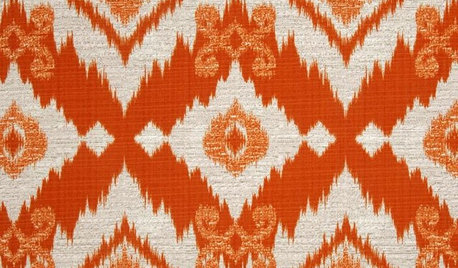
PRODUCT PICKSGuest Picks: Orange Fabrics for Year-Round Fanfare
Nothing punches up a room faster than pillows, drapes or upholstered furnishings in energizing orange — even after autumn
Full Story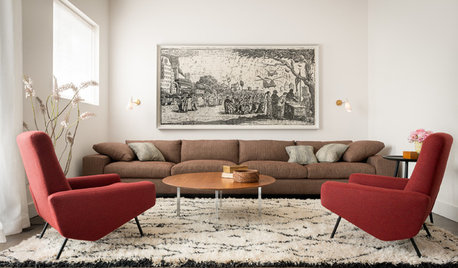
UPHOLSTERYFabric Focus: Cozy Up to Fall and Winter With Wool Decor
Environmentally friendly, durable and insulating, wool is an all-around good pick for home furnishings
Full Story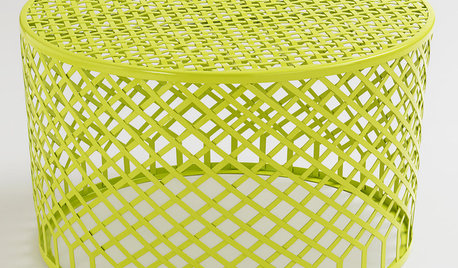
PRODUCT PICKSGuest Picks: Wake Up a Patio or Porch With Color
Punch up your outdoor rooms with colorful planters, outdoor furniture and accessories that welcome the start of warmer weather
Full Story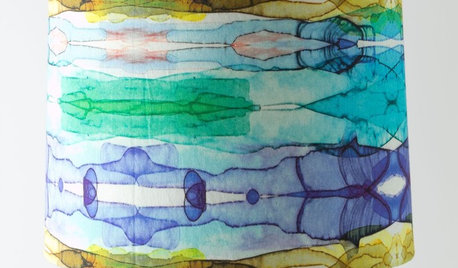
PRODUCT PICKSGuest Picks: Brush Up on Painterly Patterns
Use free-form stripes, vibrant florals and watercolor tones on furniture and accessories to evoke art around the home
Full Story
PRODUCT PICKSGuest Picks: 20 Showstopping Fabrics for Knockout Rooms
Go wild with your upholstery, headboards and bedding — these fabrics are worthy of designing an entire room around
Full Story
PRODUCT PICKSGuest Picks: Fire Up an Inspiring, Organized Desk
Dream big with desk accessories and organizers that motivate while they look great
Full Story
carolb_w_fl_coastal_9/10Original Author