

RIP Ruth Buzzi.
last year
last modified: last year
Featured Answer
Sort by:Oldest
Comments (13)
Related Discussions
Seeking advice and help with walkway garden.. pics.. long
Comments (8)If you have any plans to put in a more permanent walkway, I'd stick with a few annuals and perennials in the planting area until you decide what you are going to do. Any shrubs or more permanent plantings will get destroyed if you ever do any construction in that area. Usually the hardscape would be done first, plantings later. Spend some time lurking and reading old threads on the Perennials and Shrubs forums, and your regional forum. Also visit New to Gardening to learn some basics about soil, and gardening techniques that will ensure a reasonable level of success with your plantings. Go to the library and take out some books on gardening and design, and visit nurseries in your area to see what plants are available that do well in your climate. Read the tags on the plants, and takes notes. You can look the plants up later on the web to learn more about their characteristics and cultural requirements. Once you have your garden area prepared, experiment and have fun. Annuals will give you a lot of color all summer. Perennials will increase in size and return every year. Ordinarily, I would recommend some shrubs, but if you're going to make changes later to the walk, I'd hold off. Also, you'll need to know how much sun that area gets and what kind of soil you have. It will probably need a lot of amendments due to compaction from construction around the house and the habit builders have of taking away your topsoil and replacing it with crappy subsoil. The area under the deep overhang of the roof will not get any rain on it, so keep that in mind when planning for plants. Until you learn a bit about gardening and the plants you would like to grow, and gain some hands-on experience, your results may be disappointing. As you learn more, your taste may change, so start out slowly and don't try to do everything at once....See Morelove gardening on the cheap
Comments (26)Hi again Tyrell. :) You wrote: "Patrick, often people seem to read things into my words, and those of others, that just aren't there." "For example, you wrote" "Claiming any one method for introducing organic matter to the soil is superior to all others -- at all times, in all situations, for all people -- doesn't fit with my experience." "If you read my post, you'll see I never said anything remotely like this. People may infer I meant this, or even that I implied it, but the simple fact is, I didn't Say it. " Well, here are some words you did say Tyrell. :) From your first post on this thread, above: "Composting is just extra work with no benefits. The same materials people put in a compost pile, they could put right in their gardens in the first place, as mulch." From your second post on this thread, above: "You didn't specify, but I assume you mean my claim that there are no benefits to composting. Maybe I should have stated that a little differently, like 'there's nothing that composting will do for gardens that mulching won't do-quicker, better, and with less work.'" And from your post on another thread in the Frugal Gardening forum: (see Re: Compost From Thrown-Away Materials) "Well, I realized a few years ago that composting has no advantages over mulching, which is the way I've gardened for 34 years now." As a reasonable man talking with a reasonable man, I sincerely invite you to explain how your statements above are so remote from my statement that you quoted, above: "Claiming any one method for introducing organic matter to the soil is superior to all others -- at all times, in all situations, for all people -- doesn't fit with my experience." I genuinely wasn't trying to read into your words, Tyrell. Nor am I trying to set up a straw man here. The conclusion I reached (and spoke to just above) seems to me to follow directly from the words you wrote, also quoted above. To summarize: If composting is "just extra work with no benefits" or "there's nothing that composting will do for gardens that mulching won't do-quicker, better, and with less work" and "composting has no advantages over mulching" -- then, doesn't it necessarily follow for you that mulching is a superior method for introducing organic matter to the soil? At the very least, superior to composting. If you disagree, I cordially invite you to explain where and how and why. As I said, to me it seems to necessarily follow from your statements above. No unreasonable implication or straw man argument was (or is) meant here. I prefer to deal with facts- like composting does break down organic matter faster, and IMO that is not an advantage. If you start getting into "interpratation," it causes all kinds of problems. Well, it is a fact in my garden that sometimes mulching is the best way of introducing organic matter; and sometimes composting works best -- for me. :) Interpret that as you wish. Further, I disagree with your blanket statement that breaking down organic matter faster is not an advantage. Sometimes, in my experience, a faster breakdown is most certainly a welcome and greatly sought-after advantage. I'm willing to offer the reasons for my opinions if you would like to hear them. "Some comments on a few other things you wrote." "I take the filters (in coffee grounds you get) out of the garden and layer them in the compost heap" "But why do you do this?" I've already answered this question Tyrell, in the paragraph where it was written, the two paragraphs immediately following, and in the substance of what I wrote for the rest of that post. Please scroll up and re-read what I wrote and if it isn't clear to you then let me know, okay? :) "Something else you wrote" "For example, I don't like to put toilet paper rolls or coffee filters or small branches right on the garden surface. Partly because they don't look as good to me as compost or a fine mulch, partly because they seem to take longer to decompose." "On the last, faster decomposition just isn't a desirable thing, for the reasons I gave." Respectfully, I disagree with both your conclusion and with some of your reasoning. And as above, I'm willing to offer my reasons for my opinions, if you would like to hear them. "And this" "but I wonder if the greater surface area of the garden bed also results in greater losses of organic materials due to wind erosion?" "I would be highly doubtful of this? The finer, partly decomposed materials will always be near the bottom, right on top of the soil. The rougher material on top has never been moved in my garden by even the strongest winds in this area. Of course we don't get hurricanes or-until this year- tornadoes, but I think the garden would be the least of people's worries if those struck?" Indeed, a hurricane does usually re-arrange priorities -- and gardens. :) Wind erosion is certainly far less of a problem on soil surfaces covered with a mulch or compost layer. Equally so, water erosion. However, neither compost nor mulch are 100% effective barriers to the physical actions of wind or water. Physical erosion will happen, even if greatly slowed by a layer of organic matter. Further, I didn't state this point directly in my prior post, but it seems to me to directly follow from other statements I made. Decomposition -- in a mulch, lasagna bed, or compost heap -- is a chemical and biological process as well as a physical process. Biochemical forms of surface-layer erosion (most signifigantly the leaching of nitrogen down into the soil and nitrogen outgassing into the air) also happen with all three forms of decomposition. It seems obvious to me that the greater surface area and the lower density of a mulch piled right on the soil would tend to increase the biochemical erosion of nitrogen -- and of carbon. "And this" "Personally, I'd rather do the work of building, turning and screening the compost materials which I don't want to put directly in the garden," "That's your absolute right, Patrick, (though I might not 'defend to the death' your right to do it? lol) Heh. Not to worry. :) My garden is worth living for, not dying for. "...but I've had the experience, here in 'the real world,' of giving something from my garden to someone. They just looved the whatever, so I would ask why they didn't garden themselves. And more than once people have responded with something like, 'Oh, we would love to. But we only want to grow organically, and all that work composting, tilling, and weeding..' It really is a tragedy that many people know they Could, not Have To, but could garden without doing 'all that work.' I agree we should all try to help more people garden with less work. If you do a search on the Soil, Compost and Mulch forum here on GW for my prior posts, you'll see plenty of examples where I've given my time and efforts to helping people do more with less. And I do the same in my daily life, out here in the real world. :) "Finally you wrote" "Hope those opinions add more light than heat to this very interesting discussion. :)" "You seem like a reasonable person, and think I am, too." Thank you. I try to be, and I try to assume others are too. "I try to keep as open a mind as possible. I am constantly checking out books from the library on 'the latest' in gardening. I read one on Lasagna Gardening and two on Weedless Gardening just within the past year. (As soon as they start talking about tilling, though, they lose me.) If I could find a way to grow fruits and veggies that is easier, cheaper, and produces the same or better results as the mulch method, I would switch in a second." "So far I haven't." Fair enough, that's your experience and I wouldn't suggest you change what you do, if it works for you. It's your garden. :) I do respectfully disagree with your blanket claim there are no benefits or advantages to composting, over the composite or lasagna mulching processes you've described. As I wrote before: "Tyrell, I don't disagree with your style of adding organic matter to your garden -- I use it myself. Nor would I ever say someone needed to have a compost pile to make a garden, organic or non-organic." "I do think lasagna-style composting or mulching is not for everyone, nor is it right in every situation." All the best, -Patrick...See MoreThere really is
Comments (7)Beautiful! I love all of the different types of foliage you've got. They really look great together. Cute kitty too, of course. :) Thanks for the eye candy! Take care, Grant...See More2006 'AEN' Supplement Rose List, August 2006
Comments (1)Please use the latest listing. If you would like lists e-mailed to you, let me know your address. Thank You, Ron S...See More- last year
 last year
 last year
- last year


Related Stories

HOUZZ TOURSMy Houzz: Refined Comfort on a Florida Island
Relaxed coastal style gets a tailored touch in a cheerful, peaceful family home
Full Story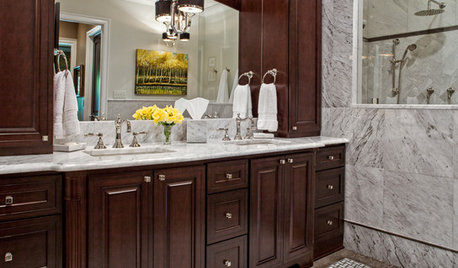
REMODELING GUIDESBathroom Workbook: How Much Does a Bathroom Remodel Cost?
Learn what features to expect for $3,000 to $100,000-plus, to help you plan your bathroom remodel
Full Story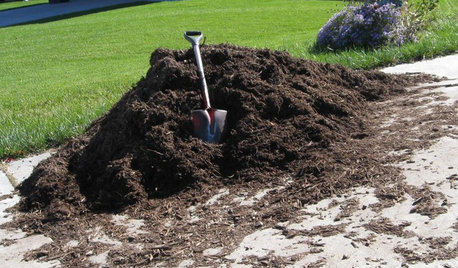
FRONT YARD IDEASBefore and After: Front Lawn to Prairie Garden
How they did it: Homeowners create a plan, stick to it and keep the neighbors (and wildlife) in mind
Full Story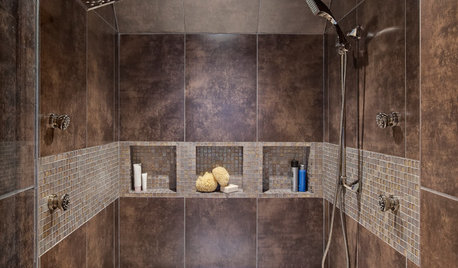
REMODELING GUIDESBathroom Remodel Insight: A Houzz Survey Reveals Homeowners’ Plans
Tub or shower? What finish for your fixtures? Find out what bathroom features are popular — and the differences by age group
Full Story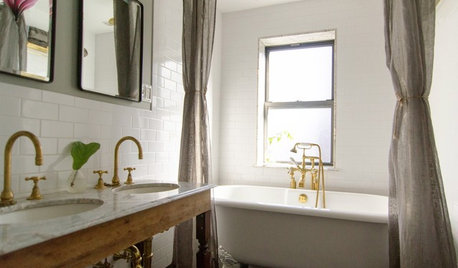
REMODELING GUIDESRoom of the Day: Brass Warms a Brownstone Bathroom
Forget trends. This owner chose unlacquered brass and repurposed pieces for love alone
Full Story
HOUSEKEEPINGHow to Clean Leather Furniture
Learn the best methods for keeping various kinds of leather upholstery in top condition
Full Story
BATHROOM DESIGN9 Surprising Considerations for a Bathroom Remodel
Don't even pick up a paint chip before you take these bathroom remodel aspects into account
Full Story
LANDSCAPE DESIGNUnify Your Garden With a Common Thread
Bring the areas of your garden together to give it a unique sense of place
Full Story
GREAT HOME PROJECTSHow to Replace Your Lawn With a Garden
New project for a new year: Lose the turfgrass for energy savings, wildlife friendliness and lower maintenance
Full Story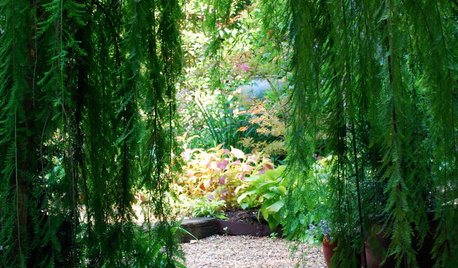
LANDSCAPE DESIGNTo Make Your Garden Memorable, Add a Hint of Mystery
An element of mystique — intriguing gates, an interplay of light and shadow, hidden views — can take your garden to the next level
Full Story

dedtired