

Random question--has anybody ever had mercury poisoning?
last year
Featured Answer
Sort by:Oldest
Comments (23)
 last yearlast modified: last year
Related Discussions
HD stepping up their game...
Comments (32)Re: the bee issue and neonicotinoids: the US Department of Agriculture Agricultural Research Service published a rather lengthy paper on Colony Collapse Disorder in January of this year. It's worth a read if you are interested. The long and short of it is that there appears to be no one single cause for the disorder but most likely a combination of factors. It is interesting to note that pesticides - specifically the neonics - are not rated very highly as a possible factor: "A survey of honey bee colonies revealed no consistent pattern in pesticide levels between healthy and CCD-affected colonies when pollen, bees, and beeswax were tested for the presence of 170 pesticides. The most commonly found pesticide in that study was coumaphos, which is used to treat honey bees for Varroa mites.............Several studies that reported a negative impact on honey bees by neonicotinoids relied on large, unrealistic doses and gave bees no other choice for pollen, and therefore did not reflect risk to honey bees under real world conditions. Nor have the studies demonstrated a direct connection or correlation to CCD." They go on to say that "there have been scientific findings that imply that neonicotinoids have sublethal effects on honey bees at approved doses and exposures. ARS scientists and other researchers are looking into whether such sublethal effects may correlate with CCD or other bee health problems and whether they could be a contributing cause of CCD" (emphasis mine). This is a discussion - much like the reality of global warming - that will have vigorous supporters on both sides. Do I believe what the ARS is telling us? Yes, I would trust them above a lot of other sources. Honey bees are critical to the agricultural industry and represent a multi-billion dollar impact. It is in their (and our) best interests to explore the problem as thoroughly as possible to determine the cause and arrive at a solution. I have much more faith in the veracity of the scientific community than I do with a lot of alarmist speculation based on junk science. Honey bee health and CCD...See MoreBob Carr's Color charts question
Comments (15)Hi I have read most of this stuff before too. It kind of overwhelms you. I agree that you can read it and think you know what they are talking about but none of it stays in there!!I was a chemist as well and really never liked all that memory stuff. Even memorizing all those amino acids in Biochem seemed like waste at the time.I think my problem is more the botany than the genetics. I just don't know enough about plants period to figure out how the color stuff works. Larry - Here's my summaryThe Mahieu stuff about brown is pretty limited. I can only find 2 brown daylilies on his site that he has registered - Hooded cobra and Death adder. It sounds like browns are very unstable and blacks are better to work with. The browns are combinations of fulvous orange pigments with blues and purples. They are very sensitive to the temperature. He does mention one good point and that is it is important to get a good waxy coating or something like that on dayliles that are subject to water spotting. The water soluble pigments that make red and purple are in the upper layer of the flower and are easily spotted if there isn't something else protecting them. Maybe this would help with color fading in the sun as well. Tom Rood discusses many good daylilies to breed with but doesn't really go into detail about why. He does mention more about some traits being dominat etc than other articles I have found. His hybridizng basics ie the mechanics- are very informative.Harts articles are very indepth. It is very humbling to be having difficulty understading his material for "non scientists". The article on pigments doesn't really offer much basic color information mostly how the pigments work. Grenn melon and yellow pigments are produced by the plastics - a thing in the cell. These plastids are not passed on by the pollen parent which is very interesting and I wil have to think for a while what that means for color breeding. These plastids are also not found in the upper layer of cells - the epidermis and so those pigments make up the under color of a flower. Does this mean a yellow flower has all those pigments in lower layers and there are no pigments in upper layers? Blue and red pigments are water soluble and exist in the cell sap( the liquid that fills the cell and that all the parts float around in). It is concentrated in the upper cell layers of the flower. A cross section of a petal will show these layers. The color that results from these pigments can be affected be anything that changes the pH of the cell sap. I can think of the soil - any other factors you can think of? That is why they look different in different gardens. As we all know these are the colors red and purple that fade in the sun the worst and that water spot. It makes sense if they are just below the surface. Somehow environmental factors affect the behavior of the different enzymes that control the formation of the various pigments. I am still not sure how that works. I have read other places about how the sun can affect ruffling by changing the cells in the lower layer of the flower segment more than the upper layer and thus ruffling or puckering happens. I guess the genetics for that to happen are already in the plant and the different climatic conditions just enhance the phenotypic result. These environtmental factors are just one of the things I have trouble understanding as it doesn't seem to happen in people that I can think of.One thing I did get out of Hart's genetics articles was the fact that no one is growing long enough crosses to ever get the recessive mutation that it is going to take to get a blue daylily. It makes sense to me. It is really going to be a freaky thing if it ever happens. Somehow the gene(s) that cause blue to appear in daylily eyes needs to be mutated so blue can appear in the rest of the petal. I don't really get how eyes happen anyways and are edges just a mutation along the line some where? It is very complicated. I have read that if enough people are working on it it will happen but maybe there will never be enough offspring of one cross to see the mutation. That part I understand. Hope some of this makes sense to you. I think I really need to get a good botany book and learn about plant cells. Then maybe I will understand how diamond dusting and velvety finishes can happen when the surface cells change shape. I really tried to take Botany first year but had a conflict and ended up with Microbiology. What a waste that was on me. Plants are really cool!!Resting my brain now!!Debbie...See MoreOverwhelmed newbie - could use some help and solidarity!
Comments (7)Thanks so much Jen - yes, it is most definitely A Big Job, especially for a newbie. I certainly have no history of having a green thumb, so I don't even know if things will actually grow for me, but I'm hoping that a lot of research, and a little luck may help me out some :) I will confess I had two college lads start the clearing in that back fence area - it really was 6ft high, we have no power tools (everything we've done has been with scissor-type hedge clippers and elbow grease!) and it was 90 degrees so I figured it was worth it! Once they managed to get it so it was simply "very very bad" it wasn't quite as daunting. And I made more progress today - my husband cleared and bagged everything I've torn down and that back patch is actually almost-entirely clear! Whoosh. I was encouraged enough that I threw down some Leafgro into the spot next to the gate in the pic above and transplanted some rather sad looking lilies which are over-shaded along the side of the house; we'll see if they make it! I'm going to sneak out later and get some Stella d'oros I saw at Lowes too - yeah, I prefer to buy from a nursery, but they were cheap and actually looked quite nice. It'll start filling the space, at least and it gave me a reason to mulch down the weeds in that little bit (plus I used some of the pile of stones I picked out of the "soil" - I use the term loosely - to make a little edge. I just needed to do ONE THING which had some kind of visual reward!). I'm still debating what to do to the right of the Rose of Sharon - I'm tempted to raise the bed on the left hand side and blend it in somehow, but what on earth do I know about building a wall?!?!? lol Anyway, I'm DEFINITELY interested in the swap - where is it? How does it work? (I'll search the archive as well since I'm sure this question has come up before, but any and all info welcomed :) Btw, I've been asking on the rose forum, but any other Bawlmor'uns have any opinions on disease-resistant roses for these here parts? I really love the old varieties and, as mentioned, am keen to cover those fences. I've been steered totwards New Dawn, Cecile Brunner cl and Brite Eyes (by the same guy who created the Knockouts), but other suggestions are definitely welcomed. As for any other perennials I can put in there (in particular things that would love to Cover The Fence). Also, I've heard that lavender is a bit tricky in this climate - is it possible to grow it as a perennial without lots of winter maintenance/protection etc? Thanks again so much - every time I've visited the Gardenweb forums I've been awed by the knowledge and kindness of the folks who post here, and this time is no exception! PS Oh, and if I'm sounding like I'm "trying to go fast" I'm not, really - I'm expecting this to take a while - I but I know already that my job will be keeping me busy AND taking me out of town in the spring, so I'm trying to get as much done in the autumn planting season when I have a little more time available. :)...See MoreSteel For Show, Steel For Go
Comments (62)My favorite line - "snowed in and out of booze". Anyway, I remember reading your intro post and the "face" I put on your kitchen was sort of take on plllog's second kitchen only with red cabinets and no round prep space or modern backsplash. If you go with metal counters, my vote is to let the surface develop it's own patina ala circuspeanut instead of forcing it. As for reconciling your differences with SWMBO - DH picked out most of our aesthetic details (with only slight nudging from myself) and I held firm on the layout issues....See More- last year
- last year
- last year
- last year
- last year
- last year
- last year
 last year


Related Stories

DOORS5 Questions to Ask Before Installing a Barn Door
Find out whether that barn door you love is the right solution for your space
Full Story
REMODELING GUIDESOne Guy Found a $175,000 Comic in His Wall. What Has Your Home Hidden?
Have you found a treasure, large or small, when remodeling your house? We want to see it!
Full Story
WORKING WITH PROS12 Questions Your Interior Designer Should Ask You
The best decorators aren’t dictators — and they’re not mind readers either. To understand your tastes, they need this essential info
Full Story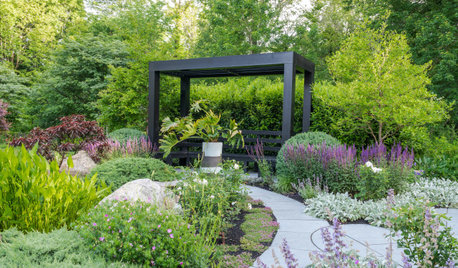
LANDSCAPE DESIGN10 Questions to Ask a Landscape Designer
Discover how to choose the best designer for your yard and avoid surprises down the line
Full Story
KITCHEN DESIGNA Cook’s 6 Tips for Buying Kitchen Appliances
An avid home chef answers tricky questions about choosing the right oven, stovetop, vent hood and more
Full Story
DECLUTTERINGLiving With Less: Do You Have Too Much Stuff?
To help her clients pare back, a professional organizer asks them 3 questions about the things they own
Full Story
FLOORSIs Radiant Heating or Cooling Right for You?
Questions to ask before you go for one of these temperature systems in your floors or walls (yes, walls)
Full Story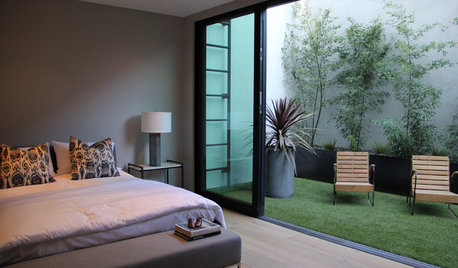
LANDSCAPE DESIGNIs It Time to Consider Fake Grass?
With more realistic-looking options than ever, synthetic turf can be a boon. Find the benefits and an installation how-to here
Full Story
MATERIALSWhat to Know About Luxury Vinyl Flooring
The flooring material has become increasingly popular. Here’s how to determine its quality and get it installed
Full Story
LANDSCAPE DESIGNHow to Select the Right Gravel for Your Garden
Answer these 7 questions to find the right gravel size, color and texture for your needs and landscape style
Full Story

dedtired