

Food Safety — what steps do you take to prevent food borne illness?
last year
Featured Answer
Sort by:Oldest
Comments (18)
Related Discussions
I have a non-preserving food safety question
Comments (11)Thank you, everyone! I forgot the second step of posting last night. This was my reply to Lindalou: No, it was not cold at all. Now I am hoping I don't get sick from what I already ate before I noticed the fridge problem. OR the swig of spoiled carrot juice that alerted me. Luckily there is very little immediately-perishable food in that fridge -- it is mostly seeds, lotions, produce, cheese, stuff like that. Oh, dang, the figs are probably moldy. >Some food borne illnesses can take weeks to incubate in your gut. Can you tell me more about these, so I know what to watch out for? Or just names and I can google :). -- After I went to bed, I remembered I had also eaten fish oil and clam juice out of there. Scary! I had some kind of histamine response last night -- burning pain all over-- which decreased some when I took a prescription dose anti-inflammatory. It's still with me now, though. The pain kept me awake most of the night. It's like what I get when I eat gluten, but without the other symptoms. But there was no gluten. My immune system just does not like something in that stew of microbial toxins I ingested with my meals yesterday :/. No barfing or other GI stuff though, which I guess is good. Today's project: Throw out, clean out, move frozen foods out, thaw fridge overnight and see if that cures it or if I need a new fridge....See MoreWhat food animal would you take to another planet?
Comments (37)I think the magic scientists who make the physiologies match could deal with the strings. As it is, most guitar strings are synthetic and/or metal. Harp strings are also made of nylon and/or metal. Piano strings are metal. Violin strings are also mostly synthetic and/or metal, though sheep's gut is still used sometimes for authentic historical sounds. The sticking point is the bow. Current synthetic bow filaments are too smooth and not as well liked as real horsehair, but that doesn't mean that they couldn't be made better. It's just not worthwhile to develop specially to imitate horsehair while horses are still being slaughtered in sufficient quantity to provide the real thing....See MoreAnother reminder of the importance of following food safety practices
Comments (6)When you cook for others, you are assuming a tremendous responsibility to protect them from food-borne illness. You are asking them to trust you to give them food that is safe to eat. If you don't know basic food safety, you shouldn't accept that responsibility and just cook for yourself. When I was in junior high school, the girls were required to take Home Economics, the boys took Shop. Because I had already been cooking for several years, I managed to get into both. The two things that stuck hard in my mind were washing dishes, pots, and pans, and making sure food was cooked thoroughly and then kept hot or properly refrigerated. I don't remember the teacher's name, but her favorite saying was, "Safety first, calories last."...See MoreFood Safety — what steps do you take to prevent food borne illness?
Comments (23)I'm fortunate that I nor my family members have contracted a foodborne illness (that I know of). I follow the standard guidelines, but I do intermingle my reusable bags between the grocery store, Target, farmers market, etc., without washing them nearly as often as I should. But any food that goes into a meal is adequately washed and prepared. I have a friend who works in food production, and, based on her descriptions, many recalls are due to minor human error and miscalculations that require entire recalls of products that aren't necessarily dangerous to us as consumers. This isn't to say there aren't some serious and potentially deadly threats in our food production....See More- last year
 last year
 last year
 last year
 last yearlast modified: last year
 last yearlast modified: last year
- last year
- last yearlast modified: last year
 9 months ago
- 9 months ago


Related Stories
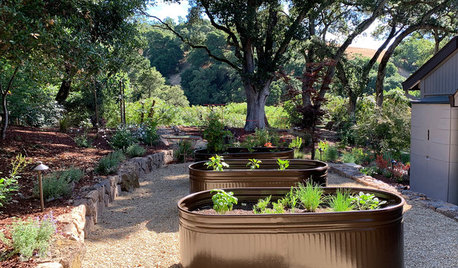
FARM YOUR YARD6 Things to Know Before You Start Growing Your Own Food
It takes time and practice, but growing edibles in the suburbs or city is possible with smart prep and patience
Full Story
HOUSEKEEPING9 Kitchen Organizing Tips to Help You Waste Less Food
Follow these simple steps to maximize your budget and turn your good intentions into good habits
Full Story
KITCHEN DESIGNHow to Waste Less Food
Here are 9 relatively painless ways to throw away less food and stretch your grocery dollars
Full Story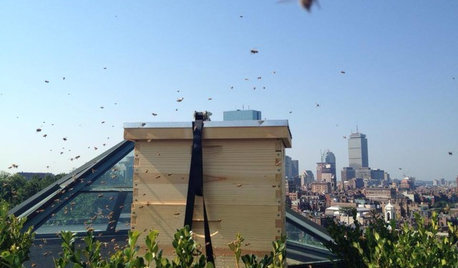
FARM YOUR YARDHello, Honey: Beekeeping Anywhere for Fun, Food and Good Deeds
We need pollinators, and they increasingly need us too. Here, why and how to be a bee friend
Full Story
MOST POPULAROrganizing? Don’t Forget the Essential First Step
Simplify the process of getting your home in order by taking it one step at a time. Here’s how to get on the right path
Full Story
REMODELING GUIDESKnow Your House: The Steps in Finishing a Basement
Learn what it takes to finish a basement before you consider converting it into a playroom, office, guest room or gym
Full Story
HOUSEKEEPING4 Tips to Help Prevent Winter Dryer Fires
Find out why dryer fires spike in the winter and how you can prevent them in your home
Full Story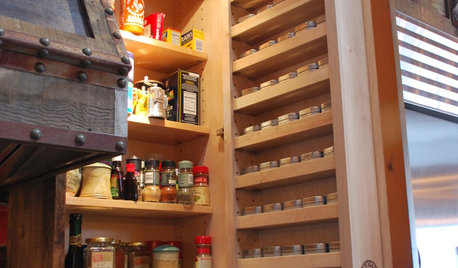
KITCHEN DESIGN7 Steps to Pantry Perfection
Learn from one homeowner’s plan to reorganize her pantry for real life
Full Story
COMMUNITYTogetherness Take 2: Is a Cohousing Community for You?
Missing that sense of connection? Consider the new breed of neighborhood with a communal bent
Full Story
LIFE10 Steps for Saying Goodbye to Sentimental Objects
Are keepsakes cluttering your space and your life? Consider this approach for letting go and moving on
Full Story

Islay Corbel