

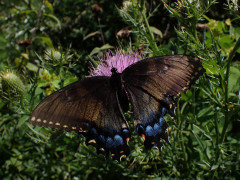
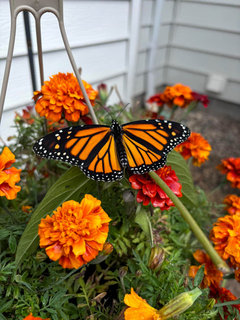
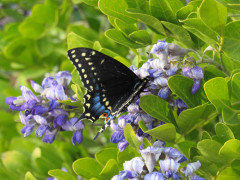
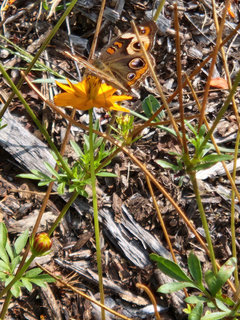
Have you seen any Monarch or Swallowtail Butterflies this year?
2 years ago
Featured Answer
Sort by:Oldest
Comments (23)
Related Discussions
I have Monarch & Black Swallowtail Cats . . Finally
Comments (5)Congrats Mary! Especially the Black Swallowtail cats. They seem to be at a premium this year. I gave up on the BSTs and ordered some from Edith. I've only seen two really early this year, and none since. Today I had Monarchs in my yard for the first time since I released the ones I raised. And I had a big, beautiful Cloudless sulphur hanging out around the garden. I don't know if there are any eggs, been too busy to check. Tomorrow I fly to Kentucky to see my two grandsons. I'm looking forward to the trip. Butterflies will have to wait until I get back home. A friend is cat sitting. ; ) Sandy...See MoreWhat host plants have you seen: Eastern Tiger Swallowtails use?
Comments (13)I have enjoyed reading all the posts on host plants. It has given me info for my garden. However, I have been wondering what you are going to do with all this information. It sounds like you are going to use it personally to create a BF habitat in your yard. On keeping trees small for BFs, I like to think of it as BF Bonsai. I love the look of the Tulip Poplar tree. It's a very nice large tree, so I wouldn't mind having one in my yard, which is close to an acre. If Hubby would agree, our yard would border on being wooded! But, he likes everything spaced out. Currently my tulip trees are in pots on the patio, as they are still very small. Amazingly, though, I had small cats on the first tree within weeks after I got it. If you are looking for a small tree to attract a great number of BFs, the wafer ash fits the bill. I don't know if it is hardy in your area, but it's definitely one I'm adding to my backyard. As for Wild Black Cherry, there is one behind me that is an absolutely ugly tree. WBC is definitely one of those trees that would need to be kept pruned and not allowed to go wild. Having said all that, I'd be very sad to see the tree cut down, as it attracts all sorts of BFs and birds. Looks aren't everything! I think most of us on the forum have learned what works by trial and error. I know I have. I've been BF gardening for at least 12 years, and have given up on lots of plants, and am still acquiring other plants. Each season, I add new BFs to my raised category. My Xerces Society Butterfly Gardening Book has been a constant source for plants for BFs. Before I had this forum or used the internet, I relied on that book to build my garden. According to XSBFG, tulip poplar, sweet-bay, wild black cherry, chokecherry, ashes, hop tree (wafer ash), American hornbeam, spicebush, lilac, birches and aspens are hosts. The last two are listed for the Papilio canadensis. One thing I enjoyed about reading the XSBFG book is the accounts of the gardeners and their experiences. The notion that one plant works in all situations is quickly dispelled in this book. The best way to find out the best host in your area is to start planting. Start with the one you really want and if it doesn't work, try another. OKSandy...See MoreWhat host plants have you seen: Spicebush Swallowtails use?
Comments (8)Jeff, thanks for catching my over-sight. Actually, Giant Swallowtails do come through my area, as according to a very reputable web-source. I suppose the only host that they can use here is Northern Pricklyash or the non-native introduction of Rue, which I won't grow because of its ill-health effects. I have a couple large Linder benzoin shrubs - never have I found a single cat on them; I occasionally see the Spicebush Butterfly around, however....See MoreWe need some Monarch or Giant Swallowtail eggs/cats, anyone?
Comments (18)Hi KSOhio; I am in the Dayton, Ohio area. KC and I have had lots of conversations about butterflies. I also conduct a multitude of surveys down here. The literature states that swamp milkweed (A. incarnata) is the preference over three other native Asclepias species (Oviposition preference and larval performance of North American monarch butterflies on four Asclepias species Deborah T. Ladner & Sonia Altizer). In Florida A. curassavica is preferred over A. incarnata. (Malcolm SB & Brower LP (1986) Selective oviposition by monarch butterflies (Danaus plexippus L.) in a mixed stand of Asclepias curassavica L. and A. incarnata). We find in practice that monarchs prefer A. incarnata to A. curassavica. It's just that currasavica is quick growing and can be managed easier at times because it is an annual. As to its preventing OE. Nope, we have fed it exclusively to Monarchs and gotten lots of OE. It might help the insect if a very low number of spores were consumed but I would not rely on it to prevent OE. Purchasing or importing Monarchs is a really bad idea. There are lots of reputable butterfly farms but some aren't. I volunteer at Cox Arboretum's butterfly house. We often get caterpillars from folks who have to go on vacation and "donate" their monarch caterpillar to us. The last batch was heavily infected with OE. Even so, your purchasing and raising Monarchs is not likely to help the population across the country or even in NW Ohio. The major issues for our monarchs in Ohio are as follows, 1) the condition and weather of the Mexican hibernation areas 2) the condition and weather of the first stopping over point along the gulf coast (the drought last year in Texas caused some of the lowest numbers yet) 3) the availability of nectar plants on migration (round-up ready crops have done a number on all butterflies as well as the suburbanization of farm lands). Be patient, get seed from local sources if possible and start plants this early spring and you will have all you need. In terms of the Giant Swallowtail. I would be interested in the citation for the white sapote. I have not found an article listing preferences for the GS. However, here is something to think about. You mentioned the hummingbird prefering local plants. This is very true of butterflies, with perhaps the exception of the Monarch (which makes sense since it migrates great distances). Sonia Altizer's study cites this; "Eastern tiger swallowtail butterflies (Papilio glaucus) sampled along a latitudinal gradient showed greater oviposition preference and larval performance on tree species that were relatively more abundant at their collection sites (Bossart & Scriber, 1995)." On this board we have noted that a butterfly growing in Miss Sherry's backyard may prefer something different to mine. So, I would definately think that GS's here would prefer local plants. Can you tell me why you think the GS is "dwindling"? If anything we have seen an increase. The GS is not a hardy overwintering butterfly. It can take cold temps but not well. So, with the change in our weather patterns, we are actually seeing more of them (see The Role of Environmental Factors In the Northeastern Range Expansion of Papilio cresephontes. Susan D. Finkbeiner, 2011). So, if you plant the right plants, I suspect you will attract them. Good luck, Elisabeth...See More 2 years agolast modified: 2 years agoKathsgrdn thanked carolb_w_fl_coastal_9/10
- 2 years ago
- 2 years ago






Related Stories

GARDENING FOR BUTTERFLIESBe a Butterfly Savior — Garden for the Monarchs
Keep hope, beauty and kindness alive in the landscape by providing a refuge for these threatened enchanters
Full Story
FALL GARDENINGWhat Monarch Butterflies Taught Me About Garden Design
Thinking like a butterfly leads to fresh perspectives in the garden and in life
Full Story
CALIFORNIA NATIVE PLANTSGreat Design Plant: Asclepias Is Attractive to Monarch Butterflies
Increase monarch butterfly populations in California by planting stunning native milkweeds
Full Story
FLOWERS AND PLANTSHelp Monarchs and Other Butterflies by Planting Common Milkweed
Summer-blooming Asclepias syriaca is an important larval host plant for the monarch butterfly and attracts a number of pollinating insects
Full Story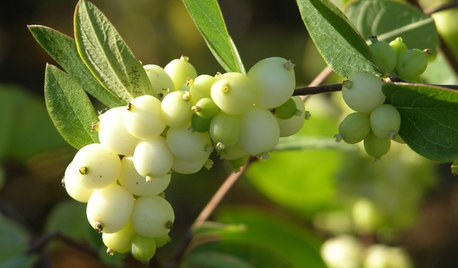
GARDENING GUIDESGreat Design Plant: Snowberry Pleases Year-Round
Bright spring foliage, pretty summer flowers, white berries in winter ... Symphoricarpos albus is a sight to behold in every season
Full Story
GARDENING GUIDES15 Ideas to Try in Your Garden This Year
These gardening stories were tops among Houzz readers. Which ideas might you try this year?
Full Story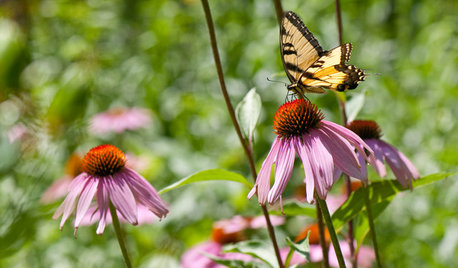
GARDENING GUIDESEntice Eastern Tiger Swallowtails With Summer Flowers
Grow nectar-rich native bloomers and larval host plants for these endearing butterflies
Full Story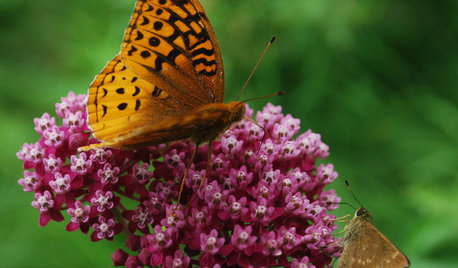
GARDENING GUIDESGreat Design Plant: Asclepias Incarnata for a Butterfly Garden
Beautiful swamp milkweed makes it easy to help monarchs and other pollinators in eastern U.S. gardens
Full Story
GARDENING GUIDESHelp Fuel the Monarch Migration With These 6 Prairie Plants
Try these nectar-rich beauties and help autumn monarchs
Full Story
GARDENING GUIDES8 Native Shrubs for Year-Round Bird Feeding
It’s not just about berries. These plants provide insects for birds and seasonal interest for gardeners
Full Story

User