

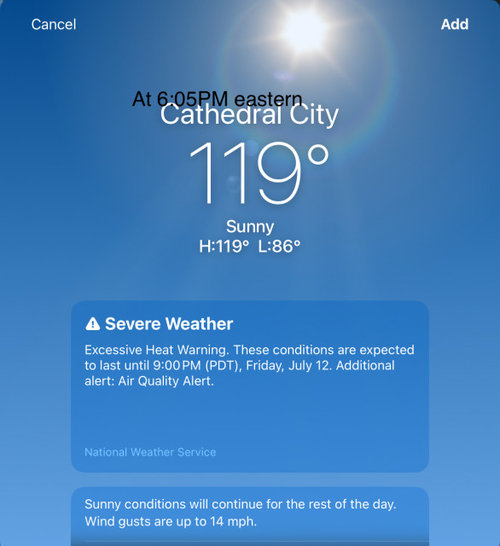
Lars — how are you doing with the heat?
2 years ago
last modified: 2 years ago
Featured Answer
Sort by:Oldest
Comments (25)
- 2 years ago
Related Discussions
How often do you water in the heat?
Comments (12)My soil isn't very good. Very sandy loam with lots of rocks. Drains very fast. Can compact to concrete like hardness (I know this only too well from my project to replace the front lawn with drought tolerant plants--oh my aching back!). Low fertility which may explain why rugosas like it so much. Just yesterday I moved 1 rose and planted 5 others. All holes drained well, but in one I had the hose turned on full blast using a watering wand, and the hole wouldn't fill up--the water was draining as fast as I put it in! I try to put into practice for my roses some of what I've learned in classes at the local botanic garden. Group plants together with similar water needs. Also plant in plant communities--the concept is the plants help each other in some way, whether it is by nourishing the soil with nitrogen-fixing capabilities, giving natural mulch from leaves, or providing shade--especially for roots but sometimes from above to block the worst of summer heat for those plants that need some protection. Not long after I planted Wild Edric, I gave him a friend in the form of a heat and sun loving drought tolerant salvia from South Africa called Salvia namaensis. This salvia is very bushy and grows fairly fast. It provides WE's roots with shade for much of the day. Needs zero fertilizer and very little water yet blooms most of the year. How much of a difference this has made for Wild Edric I don't know, but neither plant seems to require much water and they both look great. I have been experimenting with putting various other low water plants, especially California natives adjacent to my roses. And many do get their roots shaded by various neighbors. Sometimes I use drought tolerant grasses such as Bouteloua gracilis and others that also provide food for wildlife and snacks for my dogs. Sort of mutually beneficial gardening with a minimum of intervention needed on my part, kind of mini ecosystems. I have lots of bees, birds, and butterflies in my garden as they can find food and shelter there year round. A nitrogen fixer that you might like is Olneya Tesota (Desert Ironwood). It has lavender sweet pea like flowers and is a nurse plant in desert areas. Can go for periods without much water or handles moderate garden watering just fine (but frequent summer water will kill it). Very slow growing however. Melissa Here is a link that might be useful: Olneya Tesota, Desert Ironwood...See Morehow do you heat your greenhouse?
Comments (17)An electric space heater works great as long as it is one of those with a thermostat that will shut off when it reaches a certain temp. It should be sitting on something like a paver so it's stable and won't topple over. But if it should topple over it needs to be the type that automatically shuts off. Also, if you're using a heater, you need a fan to move the warm air around. Otherwise your hot air builds up in a hot channel, pooling at the highest point directly above the heater, and plants farther away from it will still freeze. I use three fans, the largest one is mounted near the ceiling peak opposite the heater and blows directly at the heater. This forces the warm air to circulate all around the GH. Four feet below it is a small oscillating fan that keeps air moving in constant random patterns. On the floor I have another small oscillating fan that keeps the coldest air in the GH from settling down low. My GH is only 10' x 12' so keeping it at a steady temp and moisture setting isn't very hard. If it was larger I'd probably use more fans. Generally though, it's not necessary to keep the temp any higher than just above freezing for most plants to thrive through the winter. The only ones you'd want to keep warmer than that would be seedlings and very tender tropicals. I have astigmatism, that's why my pics are all tilted, but you can see the swamp cooler and the heater mounted directly above it in this one. Cheryl...See MoreHow do you heat taco shells?
Comments (5)If I have a crunchy taco - which is rare, I love to fry the tortilla in a pan on the stove. It's pretty much the ONLY thing I fry - try to stay away from fried foods. But this is soooooo good. I fry one side, then flip it over and bend it into taco shell shape with tongs and finish frying. Drain on paper towel then load it up. Yum Yum!...See MoreHow do you heat
Comments (53)jemdandy, I hope you get that 41 year old furnace inspected periodically. What goes wrong with a hot air furnace is that heat exchangers ultimately crack or develop holes. When that happens, carbon monoxide is released into the house with the warm air. At 41 years, you've gotten more than your money's worth. Getting something more efficient will pay for itself with piece of mind and cheaper operating costs. Furnaces with such a low efficiency as the antique you have aren't sold anymore. I'm really surprised to hear of how many of you burn wood for heat. It's a lot of work and not very good for the environment. And, as others have mentioned, not very good for human health with the nasty stuff that gets released into the air for others to breath. Yes, watchme, the nanny state. I remember many winter night times in the South Bay when the air was so acrid from wood burning that lungs and eyes would burn. Thank goodness for Spare the Air monitoring and federal EPA rules for new wood burning stoves. It's too bad old equipment is grandfathered. PS - properly maintained and inspected natural gas furnaces are MUCH safer to use as a heating source than wood burning devices. If you live in a wood burning area and know a fireman, ask him how frequently they respond to chimney and vent fires from wood burning stoves and inserts. The answer may shock you, it's pretty common. Propane is a little less safe than natural gas and is much more prone to explosion because it's heaver than air....See More- 2 years ago
 2 years ago
 2 years agolast modified: 2 years ago
- 2 years ago
- 2 years ago
- 2 years ago
 2 years ago
 2 years ago
- 2 years ago
- 2 years ago




Related Stories
PRODUCT PICKSGuest Picks: How Do You Spell Urban Heat Relief?
Turn even a small balcony into a summer oasis with retreat-conjuring plants, furniture and accessories
Full Story
FEEL-GOOD HOMEThe Anti-To-Do List: 10 Things You Don’t Need to Be Doing
Aren’t you busy enough? Give yourself a break and consider letting these tasks go
Full Story
WORKING WITH PROSWhat Do Landscape Architects Do?
There are many misconceptions about what landscape architects do. Learn what they bring to a project
Full Story
GARDENING GUIDESTexas Gardener: What to Do in June
Don't be discouraged by the dry summer heat — hardy plants, container gardens and smart watering can help landscapes thrive
Full Story0
GARDENING GUIDESTexas Gardener: What to Do in July
Beat the heat with sun-loving blooms, pest control, good lawn care and sun protection. Pick up the pace for planting and planning
Full Story
GARDENING GUIDESKeep Your Cool in the Garden — Here’s What to Do in August
Don’t let summer’s heat go to your head. These U.S. gardening guides will help you make sensible choices for all of your plantings
Full Story
GARDENING GUIDESRocky Mountain Gardener: What to Do in June
Join the edible-garden club, deadhead spring-blooming plants around the landscape and make sure to fit in an inspiring garden tour
Full Story
GARDENING GUIDESRocky Mountain Gardener: What to Do in July
Keep the party going all summer long with smart watering methods and fertilizer. Get ready for next year and order bulbs now
Full Story0



lily316