

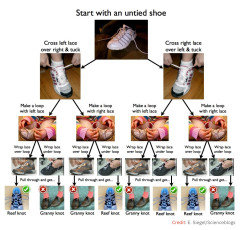
I found this an interesting noodler...tying shoelaces properly
3 years ago
Featured Answer
Sort by:Oldest
Comments (26)
 3 years agolast modified: 3 years ago
 3 years ago
Related Discussions
Interesting Objects Found While Digging
Comments (37)Our house is almost 100 years old, and at one time was the hub of a large farm. Haven't found too much interesting stuff: mostly junk and trash from the people I bought the house from. Last fall, while clearing burdock from behind the garage, I discovered that the sellers left me an unexpected surprise: a landfill. I don't know how long they used it for, but it is recent (there are plastic garbage bags, metal cans, plastic bottles, etc...), large, exposed (covered only by weeds and grass) and only 100' from our back door. It's also going to cost $5,000 or more to get it removed and cleaned up. In this town we have a great transfer station at the town hall where you can dump almost anything, as well as having access to sand, dirt, gravel, shreaded wood(mulch). All for free to town residents. Yet these lazy slobs chose to dump household garbage in their own back yard, and invited rats to over-run the garage and move into the house. Amazing how ignorant people can be....See MoreAn interesting site I've just found...
Comments (6)Personally, I really dislike those garbage to energy incinerators. It sounds smart, but it doesn't seem to work so well. Generally the things consume vast quantities of waste, and much of what they require to burn well is plastic and paper, things which are normally recyclable, but when the local council have to feed their waste to energy plant there's little incentive to promote recycling. If they were to achieve any successful levels of recycling the plant's fuel supply would dry up and the little remaining would be mostly comprised of random inflamable materials such as used electrical goods. You'll notice when looking at recycling statistics that areas with these plants have little or no recycling provision. These plants are just turning valuable raw materials like paper and plastic that can be used again and again in to a pile of toxic ash, thus we must chop down more trees and pump up more oil, all with various environmental and energy costs to replace what has been incinerated. Plus, the toxic ash still has to be disposed of, although I also dislike the term 'disposed' as really nothing is disposed of, rather it's dumped in to the environment. Landfills are the global equivalent of dumping our weekly rubbish in to a pit in the back garden and pretending it's vanished. It's not gone, it's in the way polluting the environment and costing us tax money to maintain the site. The only sustainable option is to keep reusing materials so that they're never landfilled. I really do believe that a closed cycle for almost all, if not 100% of consumer waste is possible. If packaging was limited to just glass, paper, metal and polyethylene (it's 100% recyclable with no loss of quality, unlike other plastics) then we could recycle just about everything. More re-usable containers would help as well, rather than the use once packaging everything seems to be provided in. If companies passed on some of their savings to consumers who bought back their containers for re-filling, then I'm sure it would become a common way to save money at the store. Equally importantly, I believe that large scale re-using of packaging would save vast amounts of energy, plus recycling where needed tends to use far less energy as the materials are allready refined and processed. I'm convinced that the end energy savings would far surpass the energy extracted from incincerating all waste in one of these plants. Waste to energy isn't a good solution to the mountain of waste we produce, places like germany are now averaging around 80% recycling, and potentially the percentage could be higher if the materials used in packaging were better regulated for recyclable content....See Moreinteresting TWP facts I just found
Comments (7)I'm sorry sweet, I appreciate the article but you took the wrong information from it and came to incorrect conclusions. Sealer 101.. The pigmentation itself is not fading it is being dispersed over greater area. The carrier (alkyd/oil base) takes a long time to come to final cure therefore it continues to "spread" the pigmentation deeper and deeper into the wood fibers. This happens not just with TWP but with any oil based product. How deep it dives is dependant upon the type of driers and resins used. This is what makes TWP a good quality product. It has the ability to carry deep into the wood and condition it with mositurizing oil. This is why I tout oil based products over water borne products. There is, of course, a point of diminishing return. The wood will only absorb so much oil and so much pigment before the product starts "layering". Applied as directed by the manufacturer the finish remains as an enhancement to the wood. It will expand and contract in harmony with the wood and allow mositure evaporation. When you pile on coats, every subsequent coat becomes not a part of the wood but a top coating. There may be some bonding of the resins that intially creates what seems like a desirable finish (John describes it as a sheen) but this is merely a top finish that is now susceptible to craking, flaking and peeling. Again, TWP by its very nature has parrafins that never really cure 100% so John has been lucky thus far and the finish has remained semi-pliable. At some point, this chemistry is going to break down. Not if...when. Perhaps it won't happens if the product is applied on regular maintenance schedule but waiting just a bit too long and it will start peeling. Once it does, the finish is ruined. Understanding stauration points, Sweet, you can easily understand how layering pigmentation will cause darkening. Take a crayon and shade in a box on a piece of paper. The first layer of wax will bond to the paper and the color will be as labeled. Go over that color again and the color will darken a bit. Go over that same box again and again and what happens? Not only is the color significantly darker, the top coats of wax are flaking and if you pick up the paper and shake it or cause stress to it, some of that wax will come right off. Understanding the science of why the Hyatt Method works and why it is destined for failure is what scares me. Now as nature erodes some of that oil and the top bond is broken (evidenced by readily apparent and dramatic color shift) the wood after a full year will be ready to accept more oil. This is when R-A-D comes in. It helps to make the wood readily accept the finish by actually breaking the bond of the former finish and removing some of it. Have you ever heard of "the moisture test" which is basically placing five or six drops of water onto a finish and seeing if it beads? Any oil/based sealer manufacturer will tell you, if the water beads at the surface, you cannot apply another coat of sealer. You either have to perform stripping or wait longer fro Mother Nature to do her thing. Hope this helps clarify things. One final note.. You have to understand the millions of dolars thrown at R&D by these sealer manufacturers yet stil they come out with crap that does not hold up for more than 12-18 months at best. If the technique to superior longevity was as simple as piling on layers with no increasing odds for premature finish failure, wouldn't it stand to reason that they would suggest it?...See MoreHow to properly feed vegetables in big containers with NPK fertilizer?
Comments (14)It is hard to keep veggies happy in containers when growing organically. In order to create the microherd of bacteria needed to break down organic fertilizers into usable components, what has worked best for me is to carry large chunks of half-rotted wood, along with lots of leaf mold, twigs, sticks, and compost, from our woodland (only after we are very, very cold and the snakes are 'down' for the season, which hardly happened at all last year because the winter stayed so warm). I add tons of half-rotted wood, leaf mold, twigs, sticks and compost to the bottom halves of the containers and then fill them up the rest of the way with a soil-less mix made for containers. Think of it as a hugelkultur in a container, and the need for space for all the half-rotted wood is one of the reasons I use the largest containers I can find. I don't have to add new wood every year as it breaks down at different rates depending on how rotted it was when I gathered it, but I do enrich the soil in the containers from the top down by continually adding new layers of mulch from the top. Adding wood is generally frowned upon by most gardening folks as it ties up nitrogen as it breaks down, but in our incredibly hot and often humid climate, I don't have much trouble with that. Maybe I am adding enough nitrogen to compensate, or maybe it is because the wood is already partially rotted, but my results from the organic containers speak for themselves. I get tons of veggies, herbs, flowers, and some fruit (strawberries) from the containers, and get higher yields now than I did before I started adding woodland 'trash' to my containers. Nothing has improved the performance of plants in large containers more than putting those hugelkultur ingredients at the bottoms of the pots. I've done it for about a decade. I mostly use grass-clippings from our lawn mixed with chopped/shredded autumn leaves as mulch, and sometimes I add layers of compost right in with the mulch. If I have rotted bales of hay, I break them open and 'steal' the black compost from the center of them to use too. All the mulch ingredients break down pretty quickly here in our extreme summer heat, so sometimes I am adding new layers every week or every other week. My mulch isn't a semi-permanent mulch like bark chips, it is a living mulch that is decomposing literally every day (and very quickly) to feed the soil so the soil can feed the plants. The soil in my containers usually has more earthworms and other soil-dwelling critters than the soil in my raised garden beds that have been amended every year since 1999, and the soil in my raised beds has plenty of earthworms and other soil-dwelling creatures. How long any ingredients last in the containers is highly variable depending on the weather. You get different results (in terms of longevity of the woodland trash/hugelkultur material) in a mild, wet summer in a year with 40-50" of rain than you get in a hot summer in a year with 20-25" of rain. Everything breaks down a lot more quickly in wet summers, keeping in mind that what I call a mild summer (for us here in southcentral OK) still has highs in the upper 90s and lower 100s, but a hot summer will have highs in the 100s thru 115s. There are more and more organic fertilizers available in local stores (for me, local extends as far south as Mike's Garden Center in Southlake, TX, because Mike's carries tons of organic products) every year. Even Wal-Mart had a great selection of multiple brands of organic fertilizers this past year. I use a wide variety, but Espoma is and has been one of my favorites for about a decade. When I started using it, I could only get it by ordering it online and having it shipped, so I'd order a year's worth at one time. Then, Mike's started carrying it, and then TSC and Home Depot, and now even Wal-Mart has the Espoma Line. Espoma also has introduced liquid fertilizers that are organic, so that's one more tool in our arsenal. You also can mix together ingredients to make your own organic fertilizer. There's a simple recipe for doing this in the article linked below. Organic Gardening in Containers (Article from Mother Earth News) I also have used a ton of liquid organic fertilizers over the years, including liquid fish emulsion, liquid seaweed, combination products that combine liquid fish emulsion and liquid fish, compost tea, alfalfa tea, molasses tea (and dry molasses as a biostimulant) and even Garrett Juice (which is an enhanced compost tea product). I don't use manure or manure tea at all any more. The constant watering needed for containers daily when the temperatures are in the upper 90s to 100s for three months on end (only three months if we're lucky!) leaches out nutrients quickly, so you have to fertilize often to make up for that leaching of nutrients. It took me about a decade of trial-and-error after moving here to find the right mix of woodland trash and soil-less mix that would hold moisture, break down fast enough to feed the plants, but not break down so quickly that the wood was gone before the end of the summer. I started out with little pieces of rotted wood in the early years, but quickly learned I needed huge pieces (like pieces of wood the size of a human head, or a half-rotted log so big it would barely fit into the molasses feed tub) that would last through the season. There's an old saying that 'heat eats compost' because of how rapidly the high heat/humidity here break down organic materials, and I found that to be very true. I have found it easier to keep the very large containers happy if I put them on drip irrigation driplines. You can set them on a timer, but I don't, since I'm home all day. When the temperature is going well over 100 degrees daily, I water them early in the day if needed, and then late in the day. If the temperatures are 108-110+, I sometimes have to water them in the middle of the day, particularly with indeterminate tomato plants. Thankfully, this has been a relatively easy year for container gardening since the highest temperature we had this summer was only around 106 or 107, and compared to most summers, it was only for a relatively few number of days. Because of our extreme summer heat, which in the worst summers can run from May until October or November, I have set up all my containers in an area where they get morning sun and then afternoon shade. Everything produces better that way than when I had the containers in full sun. In our climate, in the hottest parts of the summer, full sun is too much. I keep shade cloth handy to shade tomato and pepper plants growing in raised beds in the fenced garden from full-sun all day once the worst of the summer heat sets in. By placing the containers at the shady end of the garden, I don't have to shade the containers. I let the shade from the pecan tree that sits west of my garden do that shading for me....See More- 3 years ago
 3 years ago
- 3 years ago
- 3 years ago
 3 years ago
 3 years ago
 3 years ago
- 3 years agolast modified: 3 years ago
- 3 years ago
- 3 years ago
- 3 years agolast modified: 3 years ago
 3 years agolast modified: 3 years ago
- 3 years ago
- 3 years ago
- 3 years ago
- 3 years ago
- 3 years ago
- 3 years ago
- 3 years ago
- 3 years agolast modified: 3 years ago
- 3 years ago
- 3 years agolast modified: 3 years ago





Related Stories

REMODELING GUIDESOne Guy Found a $175,000 Comic in His Wall. What Has Your Home Hidden?
Have you found a treasure, large or small, when remodeling your house? We want to see it!
Full Story
DECORATING GUIDESThe Dumbest Decorating Decisions I’ve Ever Made
Caution: Do not try these at home
Full Story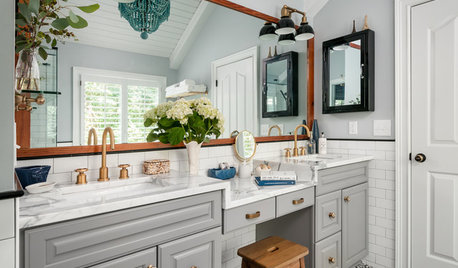
BATHROOM MAKEOVERSWhat I Learned From My Master Bathroom Renovation
Houzz writer Becky Harris lived through her own remodel recently. She shares what it was like and gives her top tips
Full Story
KITCHEN COUNTERTOPSWhy I Chose Quartz Countertops in My Kitchen Remodel
Budget, style and family needs all were taken into account in this important design decision
Full Story
THE POLITE HOUSEThe Polite House: Can I Put a Remodel Project on Our Wedding Registry?
Find out how to ask guests for less traditional wedding gifts
Full Story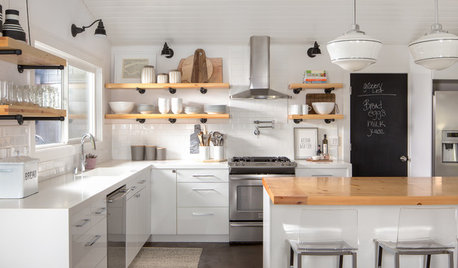
KITCHEN CABINETSWhy I Combined Open Shelves and Cabinets in My Kitchen Remodel
A designer and her builder husband opt for two styles of storage. She offers advice, how-tos and cost info
Full Story
TRANSITIONAL HOMESHouzz Tour: Texas Home That’s Elegant and Dog-Friendly
A designer found on Houzz ties together large rooms with shimmering metallics, abstract art and durable furnishings
Full Story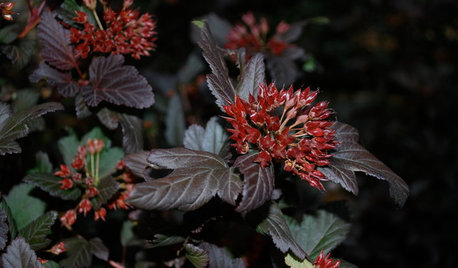
LANDSCAPE DESIGNGreat Design Plant: Sun-Loving Ninebark Puts on a Color Show
This tall, dark and handsome native shrub is equally at home in jeans and boots or in a suit and tie
Full Story
NEW THIS WEEKNew This Week: 4 Contemporary Kitchens With Wood Cabinets
See how different woods and wood grains create warmth and visual interest
Full Story
FURNITUREOld Furniture: Clean, Reupholster or Replace It?
A veteran upholstery cleaner weighs in on the options for found, inherited and thrift store furniture
Full Story
User