

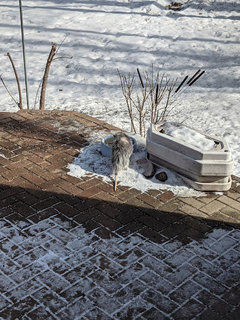
‘America’s Most Misunderstood Marsupial’ — Article in The Atlantic
4 years ago

Featured Answer
Sort by:Oldest
Comments (14)
Related Discussions
Mimosa wish
Comments (20)I would say Chinese privet are pretty invasive. I've seen them takeover the entire borderline of a clearing like a wild hedge. The only bright side is that it is also considered a medicinal TCM herb, that is under modern scientific study now. ---------- "Privet fruit (ligustrum) is a shrub native to China and eastern Asia, but is now grown ornamentally in the United States. Used for a wide range of conditions, privet fruit is a tonic for the liver and kidneys. It helps to lower liver enzymes, inhibits degeneration and reduces necrosis of liver cells. It raises the white blood cell count, and can rapidly reduce jaundice. Privet fruit has gained a reputation as a powerful immune enhancing herb. In a study done in the United States, supported by the National Institutes of Health, privet fruit was found to prevent breakdown of the immune system when cancer patients were given chemotherapy and radiation therapy. Subsequent studies around the world have supported this action. It is now used clinically for this purpose in Japan and China. It is often combined with Lycium fruit or astragalus. The major constituent in privet fruit is ligustrin (oleanolic acid). Studies in China suggest that privet fruit stimulates the immune system, decreases inflammation and protects the liver. At regular doses, privet fruit has practically no toxicity." ---------- "The fruits are used as a tonic, and said to invigorate to the yin, brighten the eyes, calm the viscera, and drive out "the hundred diseases" of traditional Chinese medicine. Fruits are added to combination herbal formulas for several disorders, including hepatitis, kidney problems, tinnitis, and vertigo. Chinese practitioners claim that ligustrum has several anti-aging effects -- that it reverses graying hair and restores firmness to the skin and youthfulness to the body." http://ip.aaas.org/tekindex.nsf/2a9c4e44835b04ea85256a7200577a64/d2e6e7693094a8db85256adb0064b89b/Body/M1?OpenElement ---------- "Chinese privet has been used in traditional Chinese medicine for over 1,000 years. The fruit is antibacterial, antiseptic, antitumour, cardiotonic, diuretic and tonic. It is taken internally in the treatment of complaints associated with weak kidney and liver energy such as menopausal problems (especially premature menopause), blurred vision, cataracts, tinnitus, rheumatic pains, palpitations, backache and insomnia. Modern research has shown that the plant increases the white blood cell count and is of value when used to prevent bone marrow loss in cancer chemotherapy patients, it also has potential in the treatment of AIDS. Extracts of the plant show antitumour activity. Good results have also been achieved when the fruit has been used in treating respiratory tract infections, hypertension, Parkinson's disease and hepatitis. The fruit is harvested when fully ripe and is dried for later use. It is often decocted with other herbs in the treatment of a wide variety of ailments and also as a general tonic. Some caution is advised in their use, since the fruits are toxic when eaten in quantity. The leaves are anodyne, diaphoretic, febrifuge, pectoral and vulnerary. The bark of the stems is diaphoretic." http://www.naturalmedicinalherbs.net/herbs/l/ligustrum-lucidum=chinese-privet.php ---------- "Modern research has shown that the plant increases the white blood cell count and is of value when used to prevent bone marrow loss in cancer chemotherapy patients, it also has potential in the treatment of AIDS. Extracts of the plant show antitumour activity. Good results have also been achieved when the fruit has been used in treating respiratory tract infections, hypertension, Parkinson's disease and hepatitis. The fruit is harvested when fully ripe and is dried for later use. It is often decocted with other herbs in the treatment of a wide variety of ailments and also as a general tonic. Some caution is advised in their use, since the fruits are toxic when eaten in quantity. The leaves are anodyne, diaphoretic, febrifuge, pectoral and vulnerary. The bark of the stems is diaphoretic." http://www.wilderness-survival.net/forums/showthread.php?13171-Chinese-Privet-%28Ligustrum-sinense%29&s=ff7f9b7e5d27b525b6befba68d8d1171&p=242467&viewfull=1#post242467 ---------- It appears that the berries are traditionally dried and then decocted before use. And dosage is limited to avoid toxicity. So, probably not something you'd want to eat raw or in quantity.. Here is a link that might be useful: PRIVET FRUIT - LIGUSTRUM...See More'Everything What's Wrong of Possums'
Comments (3)Everything What's Wrong with People...........I could write that one. Don't have time right now, but the person knows nothing about possums. Some of the good things about possums....they eat mice, roaches, slugs, snails, ticks, carrion....darned near everything. Mostly they don't live in holes in the ground or dig. They live under brush piles or in or under old buildings. They don't carry rabies, distemper or parvo. They can carry a parasite that causes a paralytic disease in horses, but so do birds and other animals. You can tell how concerned about it I am....not at all. They are 70 million years old....living dinosaurs. The only marsupial in North America. Babies are born after only 13 days gestation....born as literal embryos. Travel from birth canal to pouch, attach to a teat. A mama possum has 13 teats. I have handled thousands of possums and only found one with 13 babies. Average is 7. Sometimes 10. Rarely. Mother drips milk....they do not nurse like most mammals. Orphans have to be fed by stomach tube. They have high calcium requirements...my possums eat yogurt every night and things like chicken necks. (Insects and snails are very high in calcium). Very, very rarely will a wild possum bite you if you pick it up. Most pick them up by their tails. I don't. I pick them up under their stomach, like I would a cat. Not by the skin on their neck....they don't have loose skin. The only possums that have ever bitten me were injured or had been terrorized by people or dogs, or ones I have raised. They have 50 sharp teeth. I get bitten fairly often. I must be used to whatever bacteria they have in their mouths, because I never get infected from it. It hurts and is almost healed the next day. I used to get all the possums trapped by the Houston pound....around 500 a year. Some had been left in traps and they had chewed the wire until they wore their jaws down until you could see the teeth sitting on the jawbone. That takes 6 months to heal. A long time in the life of a possum, because a wild possum seldom lives more than a year, year and a half. Even in captivity, they have short life spans. A four year old possum would be about like a 100 yr old person. Very geriatric. The only possums that I see that even have fleas are those that came from living in town and lived somewhere like under a house or some place with a lot of cats that were infested with fleas. Very seldom does one have fleas. If they do, I treat it with frontline. I worm them with an injectible cattle wormer. I could write more....but I will just say that the last thing I ever wanted to do was rehab any animal. I dread spring every year because the shelters send me baby possums to raise. I could quit but there is no one to take my place. Every year someone sends me a possum that was raised by a human and not fed right and they have metabolic bone disorder....short, clubby legs, can't walk. Deformed heads. It is awful. I put them down or send them to the wildlife center to be put down. I have kept a couple that didn't have it really bad, but they were non releasable. I like possums. They are one of my favorite animals. I feel like I have a lot in common with them. We are both misunderstood scavengers....See MorePlants thru international flights?
Comments (24)https://www.aphis.usda.gov/aphis/ourfocus/planthealth/import-information/permits/plants-and-plant-products-permits/plants-for-planting/ct_plants4planting_faqs Q. Do I need a permit to bring back plants from my travels abroad? A. If you bring back 12 or fewer articles of admissible plants that have no special restrictions, you do not need a permit. However, you do need a phytosanitary certificate from the country of origin. Q. How much does a permit cost? A. PPQ currently charges no fees for permits, except for the General Permit to Engage in the Business of Importing, Exporting, or Re-Exporting Terrestrial Plants listed on the Convention on International Trade in Endangered Species of Wild Fauna and Flora (CITES). The fee is for this permit $70.00. User fees for other types of permits will be implemented sometime in the future....See MoreIt's Groundhog Day
Comments (48)A few years ago I was in a feed store looking at traps for G hogs. One custumer told me that they have a way of dealing with groundhogs (GH) that begin destroying plants or digging. She did not want to elaborate, but clearly she shot and killed them. A lot of people feel forced to do this. Here is why people choose to shoot them. They can destroy a lot of plantings — flowers or vegetables (that represent a sizable investment in money, time and labor and a lot of people count on gardens to supplement groceries. They can be very tough to trap. They are wary. Even if and when you trap them, your choices are limited. Wildlife regulations usually prohibit releasing them on property that is not your own. You can destro the critter once it’s trapped, but there are few easy, humane ways to do this. Submerging the trap into a deep barrel of water is not kind to the critter as it will suffer as it deowns over several minutes. So, in many places, people use their 22. There’s plenty of space for them in the woods, but GHs don’t do woods. They like open spaces with hedgerows, or developed land where homeowners have made food gathering easy — gardens, vegetables, annuals, perennials. I have videos of GH dining on tall garden phlox and milkweed. If it would just eat weeds, and not plantings, and did not dig up the drip line areas of our home’s foundation, I might feel less annoyed. One year every single butternut sqaush was ”sampled.” If someone is charging a dear price to remove critters, they should check and tend their own traps or arrange a discount with a homeowner if they expect the residents to help him out. I was told by wildlife people that relocating critters is not necessarily a kindly solution. It stresses the animal to suddenly be dumped into another animal’s territory. It has none of its own burrows of food supply and may have left young behind. I don’t see any easy solutions. There are no shortages of GH (woodchucks)....See More- 4 years ago
 4 years ago




Related Stories
FLOWERS AND PLANTSEvoke the Mid-Atlantic’s Indigenous Landscape With These 7 Vines
Use these natives to fill gaps, create a shady cover or add a vertical element
Full Story
REGIONAL GARDEN GUIDESDelight in Summer’s Garden Glories — Here’s What to Do in June
Wherever you live in the United States, these guides can help you make the most of your summer garden
Full Story
GARDENING GUIDESGreat Design Plant: Anemone Canadensis Adds Pizzazz to Water’s Edges
Plant Canadian anemone along pond, lake or stream edges for a splash of white flowers in late spring
Full Story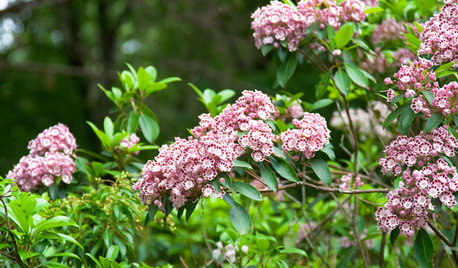
FLOWERS AND PLANTSKalmia Latifolia’s Origami-Like Flowers Shine in the Shade
This shade-tolerant shrub, also known as mountain laurel or calico shrub, thrives in East Coast woodland gardens
Full Story
SPRING GARDENINGEnjoy the Peak of Spring Gardening — Here’s What to Do in May
Bid the frost farewell and treasure the blooms. No matter what U.S. region you’re in, one of these guides will help your garden flourish
Full Story
MOST POPULARArchitectural Icon: The World’s First Bauhaus House
The Haus am Horn in Weimar is the first architectural example from the famed school, and the only one in the German city where Bauhaus began
Full Story
MOST POPULARSpring Gardens Are Blooming — Here’s What to Do in April
Get the guide you need for gardening in your U.S. region, with tasks, climate-appropriate plantings and more
Full Story
SPRING GARDENINGSpring Gardens Are Waking — Here’s What to Do in March
Excitement fills the air when gardens come back to life. These guides will help you make the most of yours
Full Story
MOST POPULAREnjoy Your Summer Garden — Here’s What to Do in July
Our July gardening guides take the guesswork out of summer watering, pruning and planting. See our tips for your U.S. region
Full Story
MOST POPULARWhat’s Your Neutral: Beige or Gray?
A designer shares 10 tips for using the neutral shade that works best for you
Full Story

tsugajunkie z5 SE WI ♱