

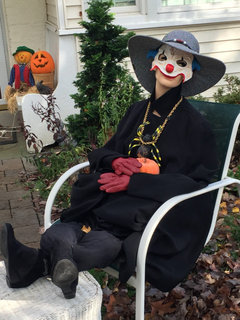
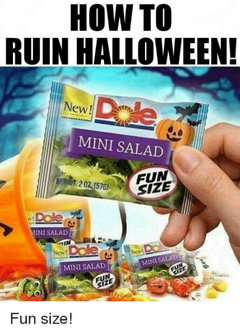
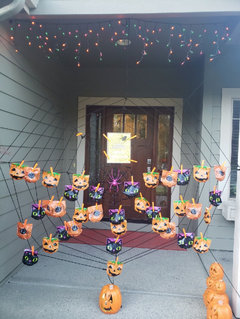
Gettin' readyi for Trick or Treat
4 years ago
Featured Answer
Sort by:Oldest
Comments (51)
 4 years agolast modified: 4 years agoschoolhouse_gwagain thanked LoneJack Zn 6a, KC
Related Discussions
new lawn full of crabgrass
Comments (26)I'm just a novice with only 8 months experience, but crabgrass is one weed I almost never pull. Being an annual, it will die on its own after dropping thousands of seeds in late summer / early fall. So instead of pulling it, what I like doing is spraying the tops of crabgrass patches with 5 percent white distilled vinegar. The vinegar will destroy the seedheads and, I think I've found in almost all cases, will prevent the seed heads from returning for the rest of the season. But keep an eye on it to be sure. I was able to get rid of a big 5-foot by 2-foot patch of crabgrass exactly that way, and smaller patches too. As the weeks passed, I then noticed healthy grass growing in those ground areas where the once-vibrant crabgrass had initially shaded over; the crabgrass patches were receding in a big way. I had tried pulling and mowing crabgrass seedheads, only to see the seedheads re-grow after a short amount of time. The vinegar did the permanent trick though. I didn't see re-growth of seedheads after spraying with vinegar. Even a single crabgrass plant occupies a large amount of space in the soil, so if you pull the plant, all you're left with is bare soil. Bare soil is a blessing for every other weed seed species that's occupying that spot of soil--and it amazed me to see how many tons of dormant weed seeds are lurking in every inch of bare soil--they're just waiting for the sun to smile on them - Lol And some of them are far worse than crabgrass. I think it's better to have crabgrass to deal with than the perennial warm-season quack grass, or the annual cool-season henbit. Much harder to reign in those weeds I think. And they *love* bare soil....See Moreticks, ticks and more ticks
Comments (41)USDA Studies: Ivermectin for Tick Control http://www.ncbi.nlm.nih.gov/entrez/query.fcgi?cmd=Retrieve&db=PubMed&list_uids=8667385&dopt=Abstract Knipling-Bushland U.S. Livestock Insects Research Laboratory, USDA-ARS, Kerrville, TX 78028-9184, USA. Whole-kernel corn was treated with 10 mg ivermectin per 0.45 kg corn and fed at rate of approximately .45 kg/deer per day to white-tailed deer confined in the treatment pasture, whereas deer in an adjacent control pasture received a similar ration of untreated corn. Treatments were dispensed from February through September of 1992 and 1993, and free-living populations of lone star ticks. Amblyomma americanum (L.), were monitored in both pastures using dry-ice traps to quantify nymphs and adults and flip-cloths to assay the relative abundance of larval masses. Control values that were calculated for all ticks collected in both pastures during 1993 showed 83.4% fewer adults, 92.4% fewer nymphs and 100.0% fewer larval masses in the treatment versus control pasture. Serum ivermectin concentrations in treated deer averaged 21.7 and 28.3 ppb during 1992 and 1993, respectively. These values compared favorably with the goal concentration of 30.0 ppb which was anticipated under ideal conditions. This study demonstrates that a freely consumed, systemically active acaricidal bait ingested by white-tailed deer under nearly wild conditions can significantly reduce the abundance of all stages of free-living lone star ticks. http://www.ars.usda.gov/research/publications/publications.htm?SEQ_NO_115=115671 The effectiveness of the endectocide, ivermectin administered daily to cattle infested with all life stages of B. microplus was evaluated. Cattle were treated at dose rates of 25 and 50 mcg of ivermectin per kg of body weight for a period of 21 days. While both ivermectin treatment doses were highly effective (>99% control), the 50 mcg/kg/d dose was more effective than the 25 mcg/kg/d dose against all life stages of the tick. The presence of ivermectin in the blood of the cattle caused high mortality in the ticks, as well as producing dramatic adverse effects in the reproductive capability of the ticks that were able to survive and detach from the cattle. Based on the results of this study, the potential for use of ivermectin and other acaricides with similar chemistries is encouraging. The use of these types of acaricides applied by different delivery systems, such as long-term boluses or medicated feed systems has great promise for future applicability in the Boophilus eradication program.... ...overall control achieved at both doses of ivermectin was >99% against all parasitic stages, the 50 mcg/kg/d dose was more effective (P http://www.afpmb.org/pubs/misc/researchreview2004/4b-Pound.ppt http://live.psu.edu/story/19217 Deer-free areas may be haven for ticks, disease Wednesday, August 30, 2006 -------------------------------------------------------------------------------- University Park, Pa. -- Excluding deer could be a counterproductive strategy for controlling tick-borne infections, because the absence of deer from small areas may lead to an increase in ticks, rapidly turning the area into a potential disease hotspot, according to a team of U.S. and Italian researchers. "Deer are referred to as dilution hosts or dead-end hosts," says Sarah Perkins, a postdoctoral researcher at Penn Stateâs Center for Infectious Disease Dynamics. "They get bitten by ticks but never get infected with tick-borne pathogens, such as the bacteria causing Lyme disease." However, deer are critical to adult female ticks in the last stages of their three-part lifecycle. Ticks use them for a final blood meal before dropping off to produce thousands of eggs, Perkins explains. Currently, health officials believe that removing deer from the equation could disrupt the tick lifecycle and leave fewer ticks to feed on rodents, which, unlike deer, can transfer a range of tick-borne pathogens. Ultimately the tick-borne disease will fade out. However, previous field studies show that removing deer sometimes leads to higher tick densities and sometimes lower, and the outcome seems dependent on the size of area from which deer are excluded. "Very few studies have looked at how removing the deer affects the intensity of tick bites on rodents, and how it relates to the size of the area from where the deer are excluded," explains Perkins, whose findings are published in the current issue of the journal Ecology. Researchers first collected data from published information on tick densities in deer excluded areas ranging in size from roughly 2.5 acres to 18 acres. Next, over a six-month period, they captured rodents from a 2.5-acre deer excluded area in the Italian Alps in a known hotspot for tick-borne encephalitis -- a disease passed to humans through the bite of an infected tick. "From previous studies we found that tick densities decreased in (geographically) large areas and increased dramatically in smaller areas," suggesting that there is a threshold area - from where deer are excluded - for tick populations to either increase or decrease, notes the Penn State researcher. Statistical analyses of ticks on the captured rodents indicated that compared to the control areas, the deer-excluded areas hosted a significantly higher number of nymph and adult female ticks, as well as a high prevalence of tick-borne encephalitis. Because tick-borne encephalitis is transmitted only between ticks feeding on these rodents, the findings suggest how small deer-free areas could quickly turn into a disease hotspot. "This goes somewhat against conventional wisdom. When you remove deer, it does not always reduce the tick population," says Perkins. "If you were to exclude deer from hundreds of acres, tick numbers will fall. But in an area less than 2.5 acres, you are more likely to increase tick density and probably create tick-borne hotspots." Researchers say the study demonstrates how the strategy of keeping deer away may work only for large areas but is likely to amplify tick populations in smaller areas. Fragmented patches of forest and small parks that are off-limits to deer could also turn into a disease reservoir, they caution. "We need to be cautious about keeping deer away from small areas, even peopleâs backyards, as it might only lead to more ticks that are infected with tick-borne pathogens," says Perkins. She adds that forest areas deer consistently avoid also have the potential of turning into a haven for tick-borne disease. Other authors of the paper include Isabella M. Cattadori, postdoctoral scholar, and Peter J. Hudson, the Willaman Professor of Biology, both at Penn State University, and Valentina Tagliapietra and Annapaola P. Rizzoli, Centro di Ecologia Alpina, Italy. A grant from the Autonomous Province of Trento, Italy, supported this work. The Penn State Center for Infectious Disease Dynamics is at http://www.cidd.psu.edu/. Contact Amit Avasthi axa47@psu.edu http://live.psu.edu 814-865-9481 Contact Vicki Fong vfong@psu.edu http://live.psu.edu 814-865-9481 The Pennsylvania State University © 2006 http://www.wildlifeprotein.com/index.cfm/fa/categories.main/parentcat/16705...See MoreUPDATE: Spooktacular Halloween Swap (part 2)
Comments (150)I haven't grown many pumpkins for eating. I have grown a basic sugar pie pumpkin they are ok. As I understand it, New England Pie, Baby Pam, Fairytale and Cinderella Pumpkins are all very good. And all on my want list. :) So far this year, the Blue Hubbard is my ultimate favorite. YUM. It is like sweet potato, but better. I'd like to use those for breads and pies. Also, tonight we cut into a butternut we grew and it was the ORANGEST butternut I have ever seen and it was the best tasting too....See Moresmoking around pets... do you?
Comments (44)JenC, I'm not sure why you'd want to keep your windows open in cold weather and pay extra in your bills for the air purifiers when you could just go outside to smoke. If you live on the 6th floor, then you will smoke less if you make a no smoking rule in your house (because it's much easier to smoke more if you don't have to put your jacket on, walk down stairs, go outside, and walk back upstairs!). Whether your house "smells" like smoke or not, you are subjecting your animals to second hand smoke. If it makes you feel better to say that you use all those gadgets and that your house is "cold", then so be it. But I think you know that it's not the right thing to do. I don't think anyone here should make judgements against smokers (like I've seen in earlier posts on this thread), because that is someone's choice and their right, just like alcohol or basically ANY bad habit. However, don't impose this choice you made onto your animals. They are helpless and cannot tell you to stop smoking around them....See More 4 years agolast modified: 4 years agoschoolhouse_gwagain thanked carolb_w_fl_coastal_9/10
- 4 years ago
- 4 years ago
- 4 years ago
 4 years agolast modified: 4 years agoschoolhouse_gwagain thanked terezosa / terriks
 4 years ago
 4 years ago
 4 years ago
- 4 years ago












Related Stories
HOUSEKEEPINGDon't Touch Another Stain Before You Read This
Even an innocent swipe with water may cause permanent damage. Here's what to know about how rugs and fabrics react
Full Story
chloebud