

Watermelon season ahead
5 years ago
Featured Answer
Sort by:Oldest
Comments (20)
Related Discussions
Planning ahead for new garden: crop rotation question (picture)
Comments (14)emmie9999, try corn if you want to and have some extra room (particularly if you expand your beds). I live in the country in PA, with lots of corn around. There's a farmstand a half-mile up the road that always has great corn, but I still grow some of my own, just becauase it feels good to look out and see a little patch of corn in my garden. (But I've got a pretty big garden, so I'm not so worried about the space.) This year I'm increasing the fun factor by experimenting with a couple of open-pollinated heirloom varieties along with a regular supersweet hybrid type. You can plant a small patch of corn, but then it helps to hand-pollinate it to get good ears. When the silks show up, cut off some bits of the tassles from the top and dust it over the silks. CAVEAT: I haven't tried that yet, but I read somewhere here that it works well. I'm going to try it this year. Last year I had one very small patch of late summer corn that didn't pollinate well -- I didn't know about hand-pollinating then. A lot of my gardening is just aimed at getting fresh veggies, but a lot of it is also just for fun. I grow some dried beans, for instance. From the perspective of food, it doesn't make any sense, since you can buy a pound of dried beans in the market for about 80 cents. But I grow old heirloom varieties, like Steuben and Amish Knuttle, which you can't get in the market. I don't have room to plant enough to get more than about 1-2 pounds of dried beans per variety, but the beans are pretty and it's just fun. With green beans, you might consider pole beans. You get a much larger harvest from a small amount of garden space. You also can harvest a lot of it standing up. And the teepees look lovely -- I make mine out of 7- or 8-foot lengths of bamboo. One of the downsides is that you can't use row covers (at least not easily), if you're planning on using covers. You also have to make sure the teepees don't shade something else in the garden. One last downside to teepees is that occasionally a good wind will make them start leaning, especially in the early summer before the beans are strong enough to anchor them. Have fun and good luck with your garden....See MoreI can't get ahead... plans for next year
Comments (23)I have bad soil, half your garden size, and it greatly improved for things not effected by juglone, squash, corn, melons, etc. You wouldn't believe the size difference of the year before, so I'll always compost or at least throw leaves all over garden area. All you have to do is dump bags of leaves about a foot or two high over the whole garden area, maybe mow them to speed up decomposition, and you will have given your garden lots of great leaf mold, plus you already have your manure. I think the manure could be new because it can age all year before you throw it down. I wouldn't waste the manure until about a month or 2 before planting, or maybe even half at the end of the year, save the other half at the beginning, but some in the middle of the year too. I've got beds for next year, waiting to put them in, but I'm waiting for the leaves to fall and looking into local pastures for manure. I couldn't give advice on weeds being I'm going to plant some good weeds over the area until the beds are in. Try ragweed, dandelion with the flowers pruned off, yellow dock, and a few other deep rooted types of weeds that bring nutrients to the top of the soil. They will make good compost....See MoreLooking ahead, brine question
Comments (1)Because your dealing with small cukes, and they should be very fresh when they are being brined, it would be more effective to make several smaller batches, or try to gauge the output and pick as many that you can that are a suitable size all at once, the brine them. Cukes usually grow very fast and an inch of growth overnight is not uncommon. You could probably refrigerate a bunch, but once they are stored and dealyed from being brines, they will become softer. I usually pick cukes almost every day and find that I have quite a lot of them within a single day. I use the Mrs. Wages dill pickle mix as it has the necessary salt and also contains dill flavor, far more intense compared to just adding fresh dill. also, if your doing dill pickles, a good crop of garlic can also be grown, as well as many dill plants/ Last year, I didn't plant dill, and any that did grow was from dropped seeds from the previous year. By the time they were flowering and forming green swelled seed heads, the cukes were also ready to pick. My half sours are still stored in the fridge and I will get a few every once in a while. Adding a continous supply of cukes to an already percolating brine is not good. You can't tell which ones were there the longest in the brine. Adding more after a day or two seems to change the natural fermentation of the cukes. For a larger supply of cukes, plant more seeds....See MoreYay! Fibally ripe watermelon! Anyone else grow watermelon in zone 5?
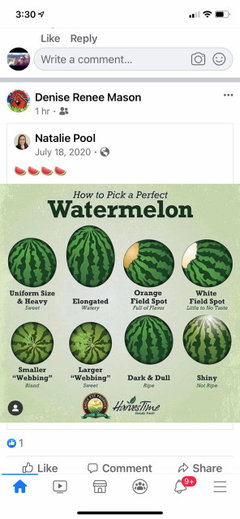
Comments (11)keen101, > Make sure all chance of frost has passed and that the soil has warmed to around 65 degrees. If the soil is cooler than that, it will affect the germination rate of the seeds. I noticed that if it's too cool when they're planted, fewer (if any) seeds sprout, even when it warms up afterward (although somehow seeds can overwinter and still sprout), when it comes to direct-seeding anyhow. Germination in my unheated greenhouse is great for most varieties, as long as it's not too low below freezing outside for the nightly lows. Watermelon generally germinates better than just about anything in the greenhouse (same for okra). I don't start my seeds indoors anymore. I start them in a 6'x5'x3' Strong Camel greenhouse and then transplant them in the spring. My area isn't as cold as most parts of Idaho in the growing season. We get about four months of hot weather (the last part of May, all of June, July, and August, and maybe half of September are generally quite hot and very dry, especially from late June to mid August, sans when we have thunderstorms in early August or so; early May and late September or onward are generally cooler, and sometimes rainy, though; the frost-free growing season is generally from about May 10th to October 10th, but it varies, of course). Things like Armenian cucumbers, and muskmelons, which love the heat do very well here. I don't have problems germinating watermelons, as long as it's warm enough when I direct-seed them. Direct-seeding can work, here, but I seem to get much better results (as in larger fruit) if the plants are a certain maturity before I transplant them (even if I have to transplant them late). The plants get plenty of light in the greenhouse. We get a lot of sun in my region, if there's no shade. Cold and other outdoor conditions can indeed damage young watermelons. I do believe they should probably be transplanted later than tomatoes (although I need to test that in more contexts). I think it's more due to the fact that they're young than that it's cold, though, but cold seems like it's probably a factor, if not a big factor. Watermelon leaves seem to prefer the kind of light they grew with. If you change that light, it seems to stunt the plant to a degree. This probably isn't going to be a noticeable issue with young plants, since I think young leaves are adaptable, but once they get to a certain size, it seems to be a major issue. I have a hypothesis that removing old leaves (not on young seedlings, but on older plants) can help them quite a bit (and can get around the issues people have with starting watermelons too early, wherein they think it's a taproot issue instead). I plan to test that, this year. I probably won't transplant any watermelons until the end of May or so, this year (in previous years, I tried to do it as soon as possible under milk jugs—I think it's probably a better idea just to wait until milk jugs aren't necessary, even though it seems like you're losing time. Fortunately, we have lots of pollinators here. Our neighbors have beehives. I don't see many at all on the tomatoes, but they seem to like the Russian Sage, cantaloupes, sunflowers, squash, and stuff. They're often on the watermelon, too. I don't know that we have issues with few fruits getting pollinated (although we could probably get more), but some watermelons seem to have incomplete pollination, especially if they're first-year watermelons. I mean, the seeds on the blossom end are often not developed. This can result in smaller, less tasty, fruits. Acclimatization seems to help avoid this, whether or not fruits get larger in following years. I'm not sure that it's the fault of the pollinators; it might be something about the climate. With the exception of Red-seeded Citron and maybe Sugar Baby, I've actually had *much* better results if I water watermelons with an oscillating sprinkler or a shower nozzle than if I just water at the base of the plant. It's interesting how results differ. My main challenges with watermelon have been these: * Fruit size tends to be smaller more often * Spider mites (they're everywhere, I've pretty much resigned myself to adapting the plants to deal with them) * Foliar anthracnose and/or alternaria (theseseem to go hand in hand with the spider mites) * Weeds (particularly tall, weedy grasses) I didn't know you were in more similar circumstances, living in the city limits. I guess I assumed there! Sorry. That's cool. I planted the tomatoes about a foot apart when I did about 105 varieties in 2017. I didn't cage any of them. I made sure to separate the smaller plants I knew about from those that would smother them (due to lots of smothering experience in 2015 and 2016). I had them in a long strip of land instead of something closer to a square-shaped piece of land as I had done with about a hundred varieties in 2016 spaced somewhat further apart (and the long strip made for a better and easier harvest, I think, since more plants were on the border, without tomatoes on all sides). I had watermelons, muskmelons, okra, and a few other things in the square-shaped piece of land in 2017. I'll probably put at least tomatoes and other stuff there, this year, and watermelons in a new spot that hasn't been gardened on much, if at all, before. I'm pretty good at making things fit (not just with plants), if I'm allowed to do it. If it were up to me, I'd want to line the western fence in the backyard with 18-gallon moving totes for plant containers, since mostly just weeds grow there anyway. Stuff I've tried growing in the ground directly next to the fence tends to be smaller than usual. I could probably fit 50-60 of them there, all in a line, and lay a drip irrigation hose over them or something. I could grow a lot of peppers. But, that's me dreaming. I'm not the only one who lives here, and I'm not allowed to do whatever I want, even though I've managed to do some pretty interesting (IMO) things. If I had a big field, and could manage to water it, I'd probably grow tens of thousands of watermelon/muskmelon plants and literally every tomato variety I could find, at least three times (including F2+ hybrids). I'd probably let all the tomatoes reseed, too, as well as plant more, both saved and otherwise, the next year. I really wonder what would have happened had I encouraged all the volunteers these last two years instead of trying to pull them up. They were growing like weeds. I was pulling them up most of the season, last year. They were pretty easy to pull up, but there were lots of them, and they kept coming. I eventually stopped, and some of them set fruit. Letting loads of varieties reseed sounds like it could make for some interesting breeding over time. If I were just breeding, rather than trying to get a harvest, I'd probably direct-seed a lot of them, too, for some reasons....See More 5 years agolast modified: 5 years ago
- 5 years ago
 5 years agolast modified: 5 years agolucillle thanked Zalco/bring back Sophie!







Related Stories
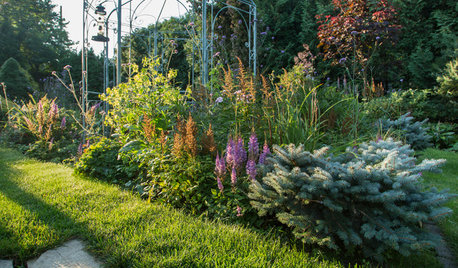
INSPIRING GARDENSMy Houzz: A Canadian Garden Is Well-Prepared for the Cold Weather Ahead
Through trial and error over 3 decades, a retired schoolteacher-turned-hobby gardener creates an idyllic garden retreat
Full Story
HOLIDAYSYour Checklist for Entertaining Season
Follow this guide to set the scene and your table for the holidays
Full Story
HOLIDAYS5 Ways to Avoid Holiday Season Burnout
You can enjoy the traditions and activities that matter to you and let go of the rest
Full Story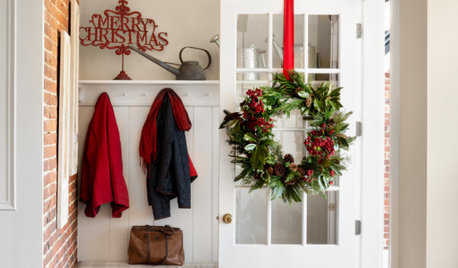
HOLIDAYSYour Complete Holiday Season Planner
Use this checklist to stay organized as you get ready for Thanksgiving, Hanukkah, Christmas, Kwanzaa and New Year’s
Full Story
LIFEHow to Recharge Your Soul During the Change of Seasons
Sit down, breathe deeply and spend a little extra time making your home a place of calming comfort
Full Story
WINTER GARDENINGMake the Most of Your Garden During the Quiet Season
Discover 9 ways to make your winter garden more beautiful, functional and inviting to wildlife
Full Story
DECORATING GUIDESSummer Style: 20 Fresh Ways to Bring in the Season
From surfboards and seashells to mason jars and hammocks, keep that laid-back vibe going through summer and beyond
Full Story
FURNITUREOn Trend: 8 Furniture Pieces Ahead of the Curve
Sinuous curves put a positive spin on negative space in these modern chair and table designs
Full Story
HOLIDAYS10 Things to Do Early for an Easier Holiday Season
Make a gift list and check supplies twice, then ensure that the house looks nice, and buy travel tickets if you’re leaving town
Full Story

raee_gw zone 5b-6a Ohio