

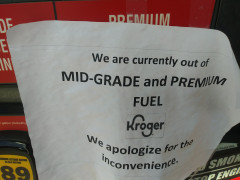
Pipeline hacked...shortages yet?
5 years ago
Featured Answer
Sort by:Oldest
Comments (63)
 5 years ago
 5 years agolast modified: 5 years ago
Related Discussions
A little more info, for those interested.
Comments (13)Can gentically engineered foods help feed the hungry? Are anti-GMO activists and over-zealous environmentalists standing in the way of the hungry being fed? The hope that GMO foods might bring solutions to malnutrition and world hunger was never more dramatically illustrated than when Time magazine ran a cover story titled "Grains of Hope." The article joyfully announced the development of a genetically engineered "golden rice." This new strain of GM rice has genes from viruses and daffodils spliced into its genetic instructions. The result is a form of rice that is a golden-yellow color (much like daffodil flowers), and that produces beta-carotene, which the human body normally converts into Vitamin A. Nearly a million children die every year because they are weakened by Vitamin A deficiencies and an additional 350,000 go blind. Golden rice, said Time, will be a godsend for the half of humanity that depends on rice for its major staple. Merely eating this rice could prevent blindness and death. The development of golden rice was, it seemed, compelling and inspiring evidence that GM crops are the answer to malnutrition and hunger. Time quoted former U.S. President Jimmy Carter: "Responsible biotechnology is not the enemy, starvation is." Shortly after the Time cover story, Monsanto and other biotechnology companies launched a $50 million marketing campaign, including $32 million in TV and print advertising. The ads, complete with soft focus fields and smiling children, said that "biotech foods could help end world hunger." Other ad campaigns have followed. One Monsanto ad tells the public: "Biotechnology is one of tomorrow's tools in our hands today. Slowing its acceptance is a luxury our hungry world cannot afford." Within a few months, the biotech industry had spent far more on these ads than it had on developing golden rice. Their purpose? "Unless I'm missing something," wrote Michael Pollan in The New York Times Magazine, "the aim of this audacious new advertising campaign is to impale people like me -- well-off first-worlders dubious about genetically engineered food -- on the horns of a moral dilemma ... If we don't get over our queasiness about eating genetically modified food, kids in the third world will go blind." The implication of the ads is that lifesaving food is being held hostage by anti-science activists. In the years since Time proclaimed the promises of golden rice, however, we've learned a few things. For one thing, we've learned that golden rice will not grow in the kinds of soil that it must to be of value to the world's hungry. To grow properly, it requires heavy use of fertilizers and pesticides -- expensive inputs unaffordable to the very people that the variety is supposed to help. And we've also learned that golden rice requires large amounts of water -- water that might not be available in precisely those areas where Vitamin A deficiency is a problem, and where farmers cannot afford costly irrigation projects. And one more thing -- it turns out that golden rice doesn't work, even in theory. Malnourished people are not able to absorb Vitamin A in this form. And even if they could, they'd have to eat an awful lot of the stuff. An 11-year-old boy would have to eat 27 bowls of golden rice a day in order to satisfy his minimum requirement for the vitamin. I'm sure that given enough time and enough money, some viable genetically modified (GM) crops could be developed that contain more nutrients or have higher yields. But I'm not sure that even if that were to happen, it would actually benefit the world's poor. Monsanto and the other biotech companies aren't developing these seeds with the intention of giving them away. If people can't afford to buy GM seeds, or if they can't afford the fertilizers, pesticides and water the seeds require, they'll be left out. Poverty is at the root of the problem of hunger. As Peter Rosset, director of Food First, reminds us, "People do not have Vitamin A deficiency because rice contains too little Vitamin A, but because their diet has been reduced to rice and almost nothing else." And what, pray tell, has reduced these people to such poverty and their diets to such meager fare? In the words of the British writer George Monbiot: The world has a surplus of food, but still people go hungry. They go hungry because they cannot afford to buy it. They cannot afford to buy it because the sources of wealth and the means of production have been captured and in some cases monopolized by landowners and corporations. The purpose of the biotech industry is to capture and monopolize the sources of wealth and the means of production ... GM technology permits companies to ensure that everything we eat is owned by them. They can patent the seeds and the processes which give rise to them. They can make sure that crops can't be grown without their patented chemicals. They can prevent seeds from reproducing themselves. By buying up competing seed companies and closing them down, they can capture the food market, the biggest and most diverse market of all. No one in her right mind would welcome this, so the corporations must persuade us to focus on something else ... We are told that ... by refusing to eat GM products, we are threatening the developing world with starvation, an argument that is, shall we say, imaginative ... With rare exceptions, genetically engineered crops are being created not because they're productive or because they address real human needs, but because they're patentable. The biotech companies have invested billions of dollars because they sense in this technology the potential for enormous profit and the means to gain control over the world's food supply. Their goal is not to help subsistence farmers feed themselves. Their goal is maximum profit. While Monsanto would like us to believe they are seeking to alleviate world hunger, there is actually a very dark side to the company's efforts. For countless centuries farmers have fed humanity by saving the seed from one years crop to plant the following year. But Monsanto, the company that claims its motives are to help feed the hungry, has developed what it calls a "Technology Protection System" that renders seeds sterile. Commonly known as "terminator technology" and developed with taxpayer funding by the USDA and Delta & Pine Land Company (an affiliate of Monsanto), the process genetically alters seeds so that their offspring will be sterile for all time. If employed, this technology would ensure that farmers cannot save their own seeds, but would have to come back to Monsanto year after year to purchase new ones. Critics refer to these genetically engineered seeds as suicide seeds. "By peddling suicide seeds, the biotechnology multinationals will lock the world's poorest farmers into a new form of genetic serfdom," says Emma Must of the World Development Movement. "Currently 80 percent of crops in developing countries are grown using farm-saved seed. Being unable to save seeds from sterile crops could mean the difference between surviving and going under." To Monsanto and other GMO companies, the terminator and other seed sterilizing technologies are simply business ventures that are designed to enhance profits. In this case, there is not even the implication of benefit to consumers. I wish I could speak more highly of GM foods and their potential. But the technology is now held tightly in the hands of corporations whose motives are, I'm afraid, very different from what they would have us believe. Despite the PR, Monsanto's goal is not to make hunger history. It's to control the staple crops that feed the world. Will GMOs help end world hunger? I don't think so. John Robbins is the author of many bestsellers including "The Food Revolution: How Your Diet Can Help Save Your Life and Our World," the classic "Diet For A New America" and "The New Good Life: Living Better Than Ever in an Age of Less." He is the recipient of the Rachel Carson Award, the Albert Schweitzer Humanitarian Award, the Peace Abbey's Courage of Conscience Award and Green America's Lifetime Achievement Award. To learn more about his work, visit www.johnrobbins.info This Blogger's Books from The New Good Life: Living Better Than Ever in an Age of Less by John Robbins Food Revolution, The: How Your Diet Can Help Save Your Life and Our World by John Robbins Many supporters of GMO seeds, are Monsanto supporters. Who is in charge of the USDA-Agricultural Research Service ? I believe it was Tom Vilsack,who is now a member of the cabnit our current Secretary.Who is Tom Vilsack?Google him and find out. Our Supreme Court Justice,Clarence Thomas,,,Used to Work for who> Monsanto.and several top positions in the Food and Drug Administration,and the Department of Agriculture,all filled with former Monsanto Lobbyist, do you really want to believe any thing these people say? I can post more articall s,but I will not, enough has been said,if you are interested at all, in what you, your children,and grandchildren are eating, do your research,,make up your own mind,in the mean time,keep saving your seeds.You might want to google, how many seed saving banks are left here in the U.S., compared to how many there used to be, and why. cAROL...See MoreSome Observations and Two Pictures
Comments (8)Cool picture. I love the Buckeyes. They are gorgeous cats and BFs. The rest of the story on my buckeyes I found on the dwarf snapdragons (which I sent you some seed, MissSherry), is that they obliterated the snapdragons, seeds and all. Of the original 24+ cats, about 14 pupated. I still have a few chrys that haven't eclosed yet. I didn't have enough food for all the cats, so I moved some out on my very small plantain that I just started this summer. I tried to find some other snaps, but they wouldn't eat them. I think that some of the seed fell to the soil and hopefully, will come back up next year. The original plants were so decimated that they died. I continue to see a lot of the BE BFs on the lantana and zinnias. Sandy...See MoreAustralia going Dry?
Comments (17)Drought Lands Doubled By LiveScience Staff posted: 11 January, 2005 9:45 a.m. ET The amount of land ravaged by droughts has more than doubled over the last 30 years, and the key factor, according to a recent analysis, appears to be the rise in global temperatures. Scientists at the National Center for Atmospheric Research (NCAR) studied the widespread drying trends in Europe, Asia, Canada, western and southern Africa, and eastern Australia. They found that the fraction of the Earth experiencing very dry conditions rose from about 10-15 percent in the early 1970s to about 30 percent in 2002. The researchers claim that almost half of this drastic change is due to global warming as opposed to a decrease in rainfall or snowfall. In fact, the average global precipitation has increased slightly over the past few decades. "Global climate models predict increased drying over most land areas during their warm season, as carbon dioxide and other greenhouse gases increase," said Aiguo Dai, lead author. "Our analyses suggest that this drying may have already begun." Warmer temperatures cause more evaporation drying out certain areas, while drenching others in rain and snow. Evidence of the latter is the United States, which has become wetter overall especially between the Rocky Mountains and Mississippi River over the last 50 years, says Dai. Other parts of the world showing a moistening trend include Argentina and parts of western Australia. "Droughts and floods are extreme climate events that are likely to change more rapidly than the average climate," Dai said. "Because they are among the world's costliest natural disasters and affect a very large number of people each year, it is important to monitor them and perhaps predict their variability." Dai will present the new findings on Jan. 12 at the American Meteorological Society's annual meeting in San Diego. The work also appears in the December issue of the Journal of Hydrometeorology....See MoreSomething to tide you over: out of control window box
Comments (9)Everything is growing like crazy in our area because we've had so much rain. That includes the weeds. I have those bright green ipomea in a small planter and they are absolutely booming. When you dig it out in the fall you may find a sweet potato in there. The front of your house looks lovely. I love your little iron fence. I do enjoy the window boxes on the streets you mentioned. I think Clinton is my favorite, at least one side of it. My parents lived at 20th and Delancey when I was born, a very long time ago. I have vague memories of being there and always take stroll down that block when I'm in the area....See More 5 years ago
 5 years ago
 5 years ago
- 5 years agolast modified: 5 years ago
 5 years ago
- 5 years ago
 5 years agolast modified: 5 years ago
- 5 years ago
- 5 years ago
- 5 years ago
- 5 years ago
 5 years ago
- 5 years ago
 5 years agolast modified: 5 years ago
- 5 years ago
- 5 years ago
- 5 years agolast modified: 5 years ago
- 5 years ago
- 5 years ago
 5 years agolast modified: 5 years ago
- 5 years ago
 5 years ago
 5 years agolast modified: 5 years ago
- 5 years ago
- 5 years ago
 5 years ago
- 5 years ago
- 5 years ago
- 5 years agolast modified: 5 years ago
- 5 years ago
- 5 years ago
- 5 years ago
- 5 years ago
- 5 years ago
- 5 years ago
- 5 years ago
 5 years ago
- 5 years ago
- 5 years agolast modified: 5 years ago
- 5 years ago
- 5 years ago
- 5 years agolast modified: 5 years ago
- 5 years ago
- 5 years ago
- 5 years ago
- 5 years ago
- 5 years agolast modified: 5 years ago

Related Stories

INDUSTRY RESEARCHData Watch: As Labor Shortages Grow, So Do Project Wait Times
Houzz research finds average project wait times ranging from 3.5 weeks in St. Louis to 13.2 weeks in Boston
Full Story
MOST POPULARHow to Remodel the Laundry Room
Use this step-by-step guide to figure out what you want and how to make it happen
Full Story
LATEST NEWS FOR PROFESSIONALSHow the Coronavirus Is Affecting Design and Remodeling Pros
Pros are seeing changes in their businesses as clients are affected by work and school closures
Full Story
EARTH DAYThe Case for Losing the Traditional Lawn
Work less, help the environment and foster connections by just saying no to typical turf
Full Story
KITCHEN CABINETSPainted vs. Stained Kitchen Cabinets
Wondering whether to go for natural wood or a painted finish for your cabinets? These pros and cons can help
Full Story
BATHROOM DESIGNConvert Your Tub Space to a Shower — the Planning Phase
Step 1 in swapping your tub for a sleek new shower: Get all the remodel details down on paper
Full Story
LIFETrue Confessions of a House Stalker
Letting go when a new owner dares to change a beloved house's look can be downright difficult. Has this ever happened to you?
Full Story
KITCHEN STORAGEWalk-In Pantries vs. Cabinet Pantries
We explore the pros and cons of these popular kitchen storage options
Full Story
GREEN BUILDINGHow to Harvest Rainwater for Your Garden
Conserve a vital resource and save money by collecting stormwater for irrigation in a barrel or tank
Full Story
RESILIENCEMakers of Home Remodeling Products Say They’re Ready to Ship
Tile, countertop, lighting and flooring firms we spoke with say they’re prepared to meet demand despite the pandemic
Full Story


krystalmoon2009