

Multivitamin for elderly man?
5 years ago
Featured Answer
Sort by:Oldest
Comments (43)
 5 years ago
 5 years ago
Related Discussions
Sweet Elderly Neighbor Not So Sweet
Comments (54)Gardenweb.com was excellent. Houzz bought it and changed it to this Post+Comment sillyness, buried it in their marketing site, and made it easier for people to accidentally resurrect dead posts. I'm not suggesting people didn't manage to resurrect dead posts in the old site. It was just much rarer and usually done by a bot that generally got fixed. It sometimes seems that anything that works well just must get damaged by some change. It seems any change to just about anything is almost always a change for the worse....See MoreElderly care & when to say enough
Comments (42)Our aging crisis: the need for a dignified death - September 14, 2013 : 6:14pm In his final published work, “Mortality,” written while succumbing to esophageal cancer, Christopher Hitchens captures in one sentence the unavoidable truth of the dying process: “I don’t have a body, I am a body.” No one understands this truism quite as well as journalist Katy Butler, who witnessed the prolonged process of dying that her once-formidable, war-veteran father underwent after suffering a stroke in 2001, devolving into dementia and then finally dying from pneumonia seven years later. As doctors pushed life-support surgeries, new medications and cutting-edge interventions, Butler and her mother didn’t pray for a cure. Instead, they wished for his death, all of which is chronicled in her troubling investigative memoir “Knocking on Heaven’s Door.” The “end-of-life crisis,” or as Butler calls it “the caregiver crisis,” has hit epidemic levels as the number of Americans over 85 doubled to 6 million since 1990. Baby boomers, like Butler, must now wrangle with what to do with sick elderly parents, asking questions of themselves they probably thought would never be fathomable: What can be done when a person lives too long? And has science gone too far in its mission to ward off death? Through her experiences with her father, Butler is unwavering in her answers. “Our optimistic science-worshiping culture wants to medicalize aging and make it nothing more than a collection of specific diseases that medicine can prevent or fix,” she writes. “But no matter what deal we make with the devil, nature outwits us. Dying can be postponed, but aging cannot be cured.” These are bitter pills to swallow and many might fall in the trap of citing Dr. Kevorkian, death panels, and agism in health care as reasons why these end-of-life conversations should never start. But Butler argues that this very fear, our culture’s unwillingness “to engage with death until it is in our faces,” is what has gotten us so deep in trouble in the first place. For example, 75 percent of elderly patients would rather die in their homes, yet 44 percent of them will die in hospitals, she writes. Last-ditch defibrillators, surgeries for incurable cancers and chemotherapy that only buys a few days continue to be the norm; while what she calls “Slow Medicine” �" home and palliative care �" remains on the fringes and is rarely covered by Medicare. Meanwhile, about a third of Medicare patients will have surgery in the last year of their life and a tenth will have a surgery done in the last month of life, she writes �" costing us an estimated $158 billion to $226 billion in medical overtreatment costs. But what is perhaps worse is the emotional and traumatic toll continual care for a dying relative takes on the survivors, which is the true core of her book. When Jeffrey, Butler’s hyper-intelligent Wesleyan history-professor dad, who lost his left arm while fighting in Italy during World War II, suffered a stroke at the age of 79, he was reduced to something much, much less: “With the memories, mind and reading comprehension of a highly educated 80-year-old; the spoken speech of a 4-or 5-year-old; and the physical dependence of a boy of 6.” He could comprehend his shortcomings, and it made him “miserable,” she writes. At one point, he even commented that he had “lived too long.” The stroke devastated not one, but two lives. “The day before [the stroke], my mother was a talented amateur artist and photographer, a woman of intimidating energy, and a spectacular housewife . . . After the stroke, she cared for my father the way she cared for my brothers and me when we were 3 or 4.” At 77, her mother had become one of the 29 million “unpaid, politically powerless, and culturally invisible family caregivers,” while Butler herself joined the 24 million baby boomers now tending to sick parents. When it became necessary for Jeffrey to undergo hernia surgery, his cardiologist suggested that they implant a pacemaker. The family agreed, unaware of the downsides of what was such an (they would only later find) unnecessary preventative treatment. Now, Jeffrey’s heart would tick on, long past his time should have been up. “Not having a pacemaker would not have guaranteed my father a quick or easy death,” she writes. “But having a pacemaker deprived him of his best chance for one.” Despite the surgery �" or perhaps because of it �" Jeffrey quickly got worse. Like about one third of those over 80, he suffered from dementia. His eyesight went, then his mobility. He began misspelling words. Then he began to see things that weren’t there. He became bladder and bowel incontinent. “I woke up some morning in a fury. Why had his doctors not let nature take its course? If the pacemaker had never been implanted, I thought, my father might well have been out of his misery, and so would my mother and me,” Butler writes. The family begged his cardiologist to turn off the pacemaker, but he refused. Other cardiologists refused, as well. In 2008, Butler’s father contracted pneumonia. Knowing that sending him to the hospital would only prolong his suffering with “life-saving” procedures, they avoided calling 911. He eventually became sick enough to be accepted into hospice care, where he finally died. Here is a link that might be useful: Our aging crisis: the need for a dignified death...See MoreThe "active elderly" thread got me wondering...
Comments (37)A long time ago, I read an interview with Carol Channing, in which she claimed to be a Christian Scientist and didn't believe in "age, as a number". I liked that idea...mostly because I could never remember how old I was.....that is an indicator of how important age has always been to me, I think....and I must have been in my 50;s then. I don't think I really began to 'think' about age as a number to remember until I was in my 70's...or, now in those 80's. Maybe 'age' has become an "excuse" "(for me) now days.........something to think about.....hmmmmm....See MoreElderly parents almost scammed
Comments (47)Sadly, this just happened to my 83 year old parents on Friday morning and they called to tell me about yesterday after the scammer tried a second attempt. I am so stunned that they fell for this scam and are now out $4000. They were told to get $4000 in Visa gift cards immediately as their grandson "Tommy" was set to appear before a judge at 11:00am, so they went to Best Buy and purchased several cards. The "officer" that called even said that they may be questioned why they are buying so many cards, but to tell Best Buy it is for a friend you are helping out. The officer told them he would be calling them at 10:30am to get the card info. He called right on time and my mom read the numbers and pins on all the cards. She asked if she could talk to her grandson and they put "Tommy" on the phone who kept begging my parents not to call his wife or parents. Apparently he had been in jail for 2 days. My mom said it sounded just like "Tommy" and he even called her "Nana". Second attempt happened yesterday morning when the officer called them again saying that "Tommy's" bail was increased and he needed another $4000. This time my dad wised up and asked to speak to "Tommy". It took about 10 minutes for "Tommy" to come to the phone and my dad asked what is your sister's name (he doesn't have a sister). Tommy kept laughing saying "oh come on you know what her name is, why are you playing these games with me." This went on for a few minutes and "Tommy" hung up. My dad then called the real "Tommy" who was home with his wife and quite stunned by what my dad proceeded to tell him. It makes me sick as I write this, I can't believe my parents fell for it because they know about all these scams, we talk about them quite often and this incident is so not my parents. FYI, "Tommy" is my son and has never been in trouble with the law. My parents feel so embarrassed and upset about what happened, so there was no lecturing from me. I feel bad for them....See More 5 years ago
 5 years ago
 5 years ago
 5 years ago
- 5 years ago
 5 years agolast modified: 5 years ago
- 5 years ago
 5 years ago
- 5 years ago
- 5 years ago
- 5 years ago
- 5 years ago
- 5 years agolast modified: 5 years ago
 PRO5 years ago
 5 years agolast modified: 5 years ago
- 5 years ago
- 5 years ago
 5 years agolast modified: 5 years ago
- 5 years agolast modified: 5 years ago
- 5 years ago
 5 years agolast modified: 5 years ago
- 5 years agolast modified: 5 years ago
- 5 years ago
- 5 years ago
- 5 years ago
- 5 years ago
- 5 years ago
- 5 years ago
- 5 years ago
- 5 years ago
- 5 years ago
- 5 years agolast modified: 5 years ago
- 5 years ago
- 5 years ago
- 5 years ago
- 5 years ago
- 5 years ago
- 5 years agolast modified: 5 years ago
- 5 years agolast modified: 5 years ago
- 5 years ago


Related Stories
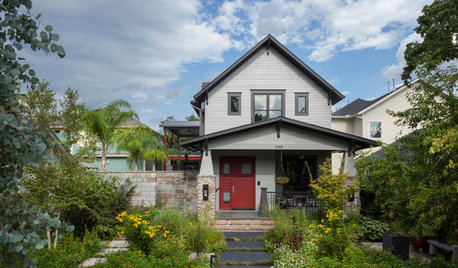
ARCHITECTUREHouzz Tour: Modern Plays Nice in a Historic Houston Neighborhood
Subtle modern details make this new home stand out from its elderly neighbors without disrespecting them
Full Story
LIFEWhat I Learned About Moving a Loved One to a Retirement Home
Setting up an elderly family member’s apartment in an assisted-care facility is a labor of love for this Houzz writer
Full Story
VALENTINE’S DAYThe Real Importance of Valentine’s Day
Even small traditions celebrating love can carry through an entire life
Full Story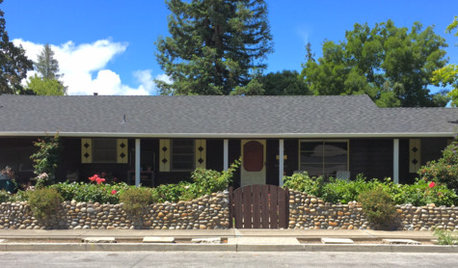
COMMUNITYGood Neighbors Make Her Street Feel More Like Home
A local historian, a burglary stopper and the world’s greatest grandparents have enriched this writer’s life
Full Story
ECLECTIC HOMESMy Houzz: Dreamy, Organic Style in a Tampa Cottage
Plentiful white paint and timeworn treasures create a light and natural feel in a 1940 Florida home
Full Story
ORGANIZINGDo It for the Kids! A Few Routines Help a Home Run More Smoothly
Not a Naturally Organized person? These tips can help you tackle the onslaught of papers, meals, laundry — and even help you find your keys
Full Story
DECORATING GUIDESFeel Free to Break Some Decorating Rules
Ditch the dogma about color, style and matching, and watch your rooms come alive
Full Story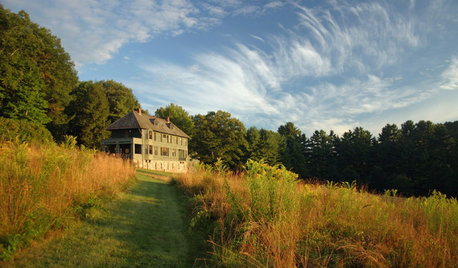
EVENTSSee the Vermont House Where Rudyard Kipling Wrote ‘The Jungle Book’
The author penned many works here, including his children’s classic, which Disney has remade into a movie
Full Story
BACKYARD STUDIOSSee Why This Architect's Office Has a Built-In Safety Net
A Maine backyard studio gets high marks for energy efficiency, and its safety-net hangout adds low-tech fun
Full Story
DECLUTTERINGEscape the Inheritance Trap: What to Do With Sentimental Pieces
Too meaningful to toss but too hideous, precious or unusual to display? These ideas can help
Full StorySponsored

Customized Award-Winning Interior Design Solutions in Franklin Cnty OH

raee_gw zone 5b-6a Ohio