

Tomato products
5 years ago
Featured Answer
Sort by:Oldest
Comments (31)
 5 years ago
Related Discussions
Large scale cherry tomato production?
Comments (4)Yes they are widely out there. The tomato shortage after the frost in Florida 2 years ago, led to the price rising. The whole nation depended on greenhouse produced crops. Many of these crops were raised hydroponicly due to the large increase in efficiency per space. I professionally consult on commercial hydroponic systems that would blow your mind. Chris higgins Www.hydro-unlimited.com Here is a link that might be useful: Hydro unlimited: Hydroponic Store & Information Resource...See MoreOutrageous tomato production
Comments (2)To address the fun part of your original thread, what could one of raise on one acre? Well, if you have ideal soil and all the water you need, you should be able to plant between 4,000 and 8,0000 plants per acre. Commercially grown field plants probably average 5-10 lbs. per plant (doesn't sound like a lot, does it?), So, with 4,000 plants and 5 lbs. per plant, you'd have 20,000 lbs. of tomatoes. Or, if you had 8,000 plants and 10 lbs. per plant, you'd get 80,000 lbs. You probably could increase the number of pounds per plant if you drastically overwatered, but you'd just be producing big, watery bags of skin with little flavor. Of course, what people get in the real world is very different from theoretical numbers on paper. I think the average in the tomato world nowadays with tightly controlled irrigation/fertigation, is probably 40 tons per acre in an average field in an average good year. Ironically, a commercial grower doesn't want to grow too many....or, at least, they don't want to grow so many that they aren't worth much. It's the old law of supply and demand. If there is a huge oversupply of tomatoes at any given time, the price per pound will drop substantially and it costs more to harvest the tomatoes that you will be paid for growing them. Most commercial growers grow under contract and one of the stipulations is that only X amount of tomatoes will be harvested per year, no matter how many are on the plants. This prevents a 'tomato glut' that can bankrupt farmers by driving prices down through the floor. This year, by the way, was 'a perfect storm' (in a good way) for growers in some parts of California and one farm is reporting 93 tons per acre on some of its acreage. However, they all have not been harvested and will not be harvested because of contractual stipulations. If you are a small market grower, you want to strive for the largest EARLY crop possible. Tomato-starved people will pay a lot for tomatoes in late May and early June, and then as the summer goes on and the harvest increases, the price per pound drops substantially. So, if I wanted to make money raising tomatoes, I'd go for the early yields. However, growing tomatoes is VERY labor intensive and I doubt 1 or 2 people could keep up with one acre of tomato plants even if that was all they did, 15-20 hours per day. When I have grown 300-400 tomato plants in the past, they took every spare second I had to give to them...and they needed more time than I had....See MorePulling suckers and then stopping and effect on Tomato production
Comments (20)We've go many different topics injected into this tread now that it is difficult to get it back on track and deal with the original question. newbgardener - it is much better for all concerned if you start your own threads rather than posting more questions on an existing thread. Especially when the questions - such as containers - aren't related to the current threads topic. It isn't fair to the original poster to pull his discussion off course, ok? So sticking with the original questions - I would like them to start to focus on tomato production. What is the best way for me to do this? Should I keep pulling suckers or should I stop and let the suckers grow? Yes, stop pulling the suckers and let them grow. Your plants are now plenty tall enough to accomplish what the goals of Sq. Foot gardening are. In fact you could have stopped at 3 feet in height which is where most quit removing them. Your only limitation now is the method of support you are using as they will get top-heavy. You were somewhat mis-informed from the beginning on how and why to do this with Sq. Foot gardening but that is a whole other discussion that involves many other factors. And does it vary by plant type? I have multiple varieties of tomatoes - Beefsteaks, Big Boys, Cherrys, Grapes, 100s. Yes it does. Determinate varieties are never pruned, you never remove the suckers (which are not 'suckers' anyway but fruit producing lateral branches). Indeterminate varieties (need to know the name of the cherry and grapes to know if they are determinate or indeterminate) such as all the others you list may be pruned but doing so will cost you fruit production. Experienced Sq. Foot gardeners are will to sacrifice some of that production by doing a limited amount of pruning . It is not done so they "can be taller". It is done so that they can 1) use stakes instead of cages, 2) plant more varieties and more plants in a limited amount of space, and 3) reduce shading of the lower growing vegetables. And yes I do some Sq. Foot gardening in addition to my normal gardens and have for many years. I was under the impression that it actually would increase production if you get 2/3 the production per plant but have space for 2 plants instead of just one. No. Misunderstanding. First because you don't get the equivalent of 2/3 production, more like half. But it does allow you to get 1/2 the production of 2 different varieties in the same amount of space. See the difference? If you plant 2 plants of the same variety then you gain nothing. So it is your choice - prune and lose production or don't prune and plant less plants but get full production - but you can't have both. k3c4forlife - does that answer your questions? Dave...See MoreMaximum paste tomato productivity
Comments (14)I rechecked the original #s and they may have erred on the 73.8 because when you divide the total # of fruits for 2 plants (192) and multiply by 8.14oz and divide by 16oz in a pound you get 97.68; divide by 2 = 48.84lbs per plant. For the tests, here's what they did: Transplant production One hundred Heirloom tomato cultivars were seeded in the greenhouse facilities on April 3,2002. Seedlings were grown in 50 cell plastic trays. Plants were transplanted into the field on June 5, 2002 and watered in with a nutrient starter solution. (20-20-20@100ppm/N) Plot Establishment Plot was disked with the herbicide Treflan 0.9 lbs. aia, ppi on May 28. The trial was planted on black plastic mulch-covered beds with trickle irrigation lines beneath. Evaluation had ten rows, each one hundred feet long, spaced 6 feet apart, on center. Plots consisted of two plants of each cultivar, planted 2 feet apart with 6 feet between each cultivars. Plants were supported during the growing season by five foot tall, #10 reinforced concrete wire caging. For extra support, each two cages were then staked together using wooden stakes, which were then secured together with cable ties. No additional fertilization was used through out the growing season. Plot Maintenance Preventative insect pest management strategies were used with the application of Baythroid at 2.3oz/A on 7/30 and 8/27. Preventative fungicide treatments consisted of Flint at 4oz/A on 7/30 and Quadris at 5.60z/A on 8/27. Irrigation was provided as needed through drip irrigation. Data Collection Fruits were harvested one time a week from July 2 through October 6. At harvest, fruits were counted and weighed. Four Ph and Brix readings were taken, beginning August 31. Results and Discussions Overall tomato cultivars performance was extremely favorable under the hot, dry growing season of 2002. Results are shown in Table1. Most cultivars continued with fruit production and plant growth until frost (October 14). A few cultivars experienced inherent radial and concentric cracking as well as some cat facing but overall fruit quality was exceptional. Trial experienced little pressure from pests or disease. *UI Kane County Master Gardener; Sr. Research Specialist, Food Crops, Dept of NRES ........................... The weight of each fruit would have to be off by over 2 oz to get #s near the 73.8, thats still possible, however the description for Ernie's said fruit were 8-16oz each I think. The same trial for Joe's Plum & Opalka gave these #s: Joe's Plum: 45.5 fruit/plant, 25.3lbs/plant, 8.91oz avg fruit size, 6.13 Brix. Opalka: 37.5 fruit/plant, 11.5lbs/plant, 4.88oz avg fruit size, 6.35 Brix....See More 5 years agolast modified: 5 years ago
 5 years ago
- 5 years ago
 5 years ago
- 5 years ago
- 5 years ago
- 5 years ago
 5 years ago
 5 years ago
 5 years ago
 5 years ago
- 5 years agolast modified: 5 years ago
 5 years ago
 5 years agolast modified: 5 years ago
 5 years ago
- 5 years agolast modified: 5 years ago
- 5 years ago
 5 years agolast modified: 5 years ago
- 5 years ago
- 5 years ago
 5 years ago
- 5 years ago
- 5 years ago
- 5 years ago
- 5 years agolast modified: 5 years ago
- 5 years ago
- 5 years ago
- 5 years ago


Related Stories
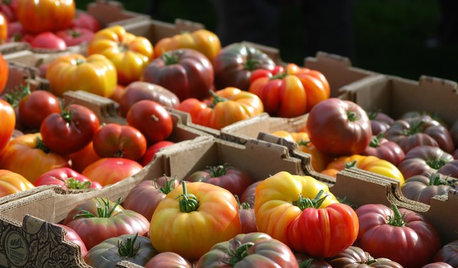
SUMMER GARDENINGNew Heirloom Tomato Hybrids Offer the Best of Both Worlds
These crosses combine great heirloom tomato flavor with increased productivity and disease resistance
Full Story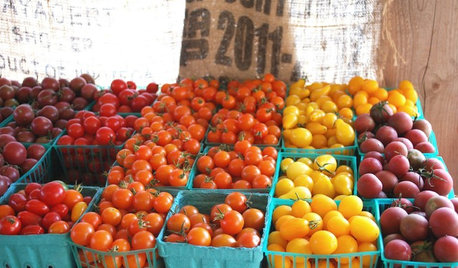
EDIBLE GARDENSThe Most Productive Fruits, Veggies and Herbs to Plant Right Now
These crops offer the best bang for the buck, earning their keep with plentiful harvests
Full Story
FARM YOUR YARDHow to Set Up a Productive and Beautiful Edible Garden
These 8 design strategies will help you design a hardworking kitchen garden that’s as gorgeous as your ornamental beds
Full Story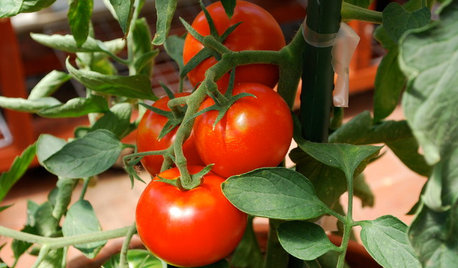
GARDENING 101How to Grow Tomatoes in Pots
Don’t have much space for a garden? All you need is a sunny spot and a large container to grow this favorite summer crop
Full Story
EDIBLE GARDENSSummer Crops: How to Grow Tomatoes
Plant tomato seedlings in spring for one of the best tastes of summer, fresh from your backyard
Full Story
GARDENING GUIDES10 Ways to Make Your Garden More Productive
Maximize your garden’s growth and output by building healthy soil, expanding growing space and collecting rainwater
Full Story
HOUZZ TV LIVEHouzz Editors Look at a Pro’s Top Kitchen Storage Products
In this video, we dive into 6 smart storage solutions from professional home organizer Patricia Lee
Full Story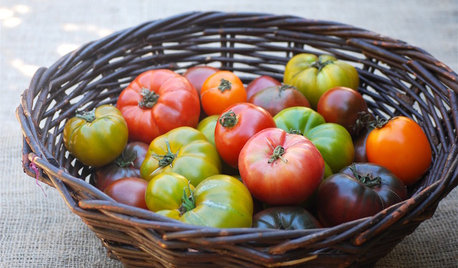
EDIBLE GARDENS10 Delicious Heirloom Tomatoes to Grow This Summer
Irresistible heirlooms offer outstanding flavor and variety. Choose from a rainbow of colors in all shapes and sizes
Full Story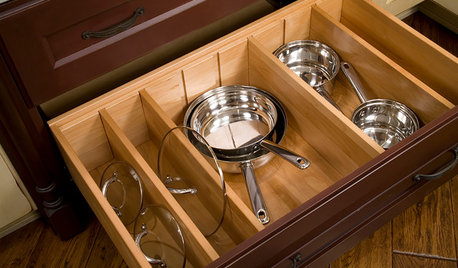
MOST POPULARA Professional Organizer Shares Her Top 6 Storage Products
Drawer dividers and undersink trash cans are among a pro’s go-tos for getting organized in the kitchen and elsewhere
Full Story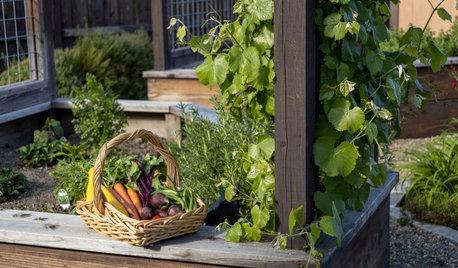
GARDENING 101What to Do in Your Edible Garden After the Summer Harvest
Set up your veggie garden to be productive and healthy year after year with this fall checklist
Full Story

mdln