

Can you find the ghost hidden among the skeletons?
6 years ago

Featured Answer
Sort by:Oldest
Comments (39)
 6 years ago
Related Discussions
Ghost orchid idea...
Comments (33)Third post - AJ Hicks Orchid Seedbank Project I sure do hate to sound like an ignorant git, but there's one thing for sure: P. lindenii grows like a weed in flask. Stick them on almost any kind of media, and they grow as fast as anything else I've ever seen. Not fussy at all. The only problem with them is that one must transfer them to fresh media about every 12-14 months as the flasks dehydrate. Left to get too try, the nutrients get too concentrated and they go into protocorm multiplication rather than growth. Sigma P-1056 does just fine. Now, when de-flasked... phew. That's a whole 'nother mess. About 15 years ago, I acquired two very small seedlings that had been stuck to small slabs of wood; my greenhouse at the time had almost no humidity, but they survived for over a year. Then I went off to college, and they got sold with just about everything else I could bear to part with. They weren't doing well at the time, that's for sure. There's obviously something going on in flask that isn't happening when they are deflasked. The most obvious culprit is humidity; leafless orchids being what they are, there's virtually no ability to store water. If this were the only factor, there shouldn't be a problem. However, the Okefenokee is a region that has very high humidity, along with a diurnal temperature swing that (probably) deposits dew every morning. The same way some desert plants (and many epiphytic orchids) rely upon the morning dew, perhaps this is essential for lindenii. This still doesn't solve the problem; I am sure there are growers who have acquired lindenii seedlings that perished horribly despite 100% humidity. Moreover, as this species seems to tolerate *some* dry days, along with the fact that some growers and naturalists report that this plant enjoys the occasional sunny, bright day (where the roots aren't sopping wet) may be very important. People also focus on nutrient availability. I'm not going out on a limb when I say that, growing on pond apples like they do, there's not a lot of nutrients available. Focusing on how much fertilizer we can dump on these guys is, right now, not a critical issue. However, the *availability* may be. I know nothing about pond apple, but do know that many elements are only available in limited pH ranges. I suspect that pond apple and other preferred hosts of lindenii differ in the pH of their bark. Perhaps they are more alkaline; I don't know. Anyone have anything intelligent on this? A number of people claim that mycorrhizal symbionts are important to the health of this species. I doubt this. Other species that rely strongly upon a mycorrhizal symbiont perish very quickly when their symbionts experience problems. I hate making blanket statements like this, but I don't think lindenii dies fast enough for it to be a myco problem. Moreover, allied species (such as Dendrophylax funalis, which has even been crossed with P. lindenii) show no such "requirement." This is a lame statement to make without proffering better evidence, but it's my gut feeling. Until we get evidence either way (which would require some field work by one of those symbiont pros, which won't happen any time soon), we'll probably never know. Until such time as we find a larger facility, we will be unable to experiment with the P. lindenii seedlings we have on hand. However, if I had the resources, the determination, and the time, I would recommend construction of a simple environmental chamber with the following considerations: The chamber would be constructed with an ultrasonic humidifier core (the same type as sold for terrariums) that creates the "fog" humidity. This would be on a timer set to click on for about 1/2 to 1 hour every day, right before the artificial lights kick on. Second timer kicks on to provide 12-14 hours of illumination from fluorescent tubes, approximately 8 to 14" away. Two hours after the lights kick on, a small muffin fan (the sort used to cool computers) would kick on, just long enough to dry out the surface of the bark (maybe 15-20 minutes). Cycle repeats each day. Wish I had the time. Cheers, -AJHicks Orchid Seedbank Project Fourth Post- Nicholas Plummer In 1999 or 2000, I split a flask of Mick Fournier's Dendrophylax (Polyrrhiza) lindenii with another local grower. I still have four of the plants. They are definitely the slowest growing of any orchid that I've tried, and they seem to have stalled out with roots about 3" long. At this rate, I do not think they will ever bloom. The Caribbean species like D. fawcetti and D. funalis seem to be better suited to cultivation. One person who has seen them growing in the wild told me that they typically grow fairly close to the water line, and he thinks they tend to remain constantly wet due to capillary action. Another person told me that when he has seen them, they usually seem to have the growing point against the tree trunk, so that new roots emerge underneath the older roots. My usual inclination when mounting orchids is to orient the growing tip of the stem away from the mount, but it does appear that at least a couple of my surviving plants are in the reverse orientation. Nick Fifth post- Russell Clusman is a photographer (among other things who lives in Miami) Oak Hill Gardens successfully flasks and mounts Dendrophylax lindenii (ghost orchid) of which I have seen their flowering plants at the Miami Fruit and Spice Park orchid sale and show. Greg who works at Oak Hills' greenhouse may be a good resource to consult. They mount them on cork slabs and branches and grow them in the drier end of the greenhouse where they receive a lot of light and good humidity but no overwatering. I have heard that Ron Coleman has raised and flowered a ghost at his greenhouse in Arizona so he may be another source. I spend a lot of time in the Fakahatchee Strand (FSSP) and we are in the process of data collection. The info we record is as follows: 1) type of host tree 2) height from base 3) number of live roots and condition (robust vs good vs sorry) 4) dbh -diameter of tree @ breast height 5) average water depth below specimen 6) compass orientation on tree (north,s,e,w side of tree) 7) # of old flower spikes 8) length of longest root. We have recorded well over 300 subjects and info pertinent to your email is as follows: 1) 85% are found on Popash (Fraxinus caroliniana) 2) most are 5.5-6.5 ft high on host 3) most have a 16-24 inch average annual water depth below them. We have recorded data on a small group of very young subjects and to date we have a ½" growth rate per year and not on last years growth but on the new roots that emerge. Subjectively speaking, in the Fakahatchee they are generally found on the outskirts of deeper water areas (> 24") and very rarely do we find them growing just above the waterline and it is my opinion by observation that they do not stay constantly wet but they do need high humidity. I do agree that new roots emerge from the bottom of the central hub. Successful pollination in the FSSP is infrequent and had "heard" that a plant may need at least 2 open flowers or several plants with open flowers in close proximity to produce a pod. I have attempted to grow them over the last 6 years but to date have been unsuccessful. Had one growing for 2 years but then it croaked (my fault). Russ Sixth Post- AJ Hicks, Orchid Seedbank Project At 11:49 AM 2/5/2007, you wrote: >Polyrrhiza lindenii is a native American orchid that may or may not have >been successfully cultivated beyond the flask. I have never tried. I >know Mick Fournier of HBI claims to grow them. For sometime I have seen >on the Oak Hill Gardens' website that they sell Polyrrhiza lindenii >mounted. Has anyone on this list ever bought one mounted? The story behind P. lindenii is a long and painful one. I will give only the briefest possible notes here. The species germinates and grows readily in flask. It goes on to multiply rapidly in the absence of exogenous hormones (!), producing large numbers of propagules when "fed" with fresh medium. On fresh, "hot" meduim, it will proliferate; as the medium ages, the proliferation reduces dramatically, forming larger plants with well-formed roots. As the medium ages more, the roots stop growing. If moved to fresh medium, they undergo more proliferation and growth. It is unknown if such plants can flower. When propagated to bajeezus and back, sympodial orchids in meristem culture frequently result in "mules," failing to flower. However, this can be a function of excess concentrations of applied hormones; as noted above, P. lindenii does fine without them. (This seems to be common to at least some other leafless orchids, including Dendrophylax salleii; other Vandaeae seem to do the same thing under certain circumstances, so it is consistent with both the morphology and phyllogeny of the leafless orchids- there's probably something to this, but nothing that's going to lead to a Nobel anytime soon.) As a result, it is possible to maintain P. lindenii in near-perpetual cultivation (I have some containers with plants that have been maintained for >7 years now, subcultured as needed), "laying" golden eggs, i.e.: more undifferentiated protocormic material. >I have always >wondered if the roots are actually growing on the mount showing at least >a limited time of successful cultivation outside the flask or are the >plants freshly mounted. "We got another order for Polyrrhiza lindenii. >Deflask one, mount it and ship it." Also if Polyrrhiza lindenii is not >being successfully cultivated outside the flasks, one has to wonder >where are all the seeds are coming from? So- the bit above explains the seeds. The other aspect- maintenance of plants on grapevine, i.e.: Oak Hill- is pretty straightforward. I know this as I've twice met and discussed the aspects of the plants at Oak Hill with Herman Pigors, the man who runs the show. They, too, note proliferation of maintained cultures, which were reportedly started from seed collected from plants in cultivation there at Oak Hill. They de-flask and wire to grapevine; I didn't ask as to how long they are maintained prior to sale, but one would suppose they sell fast, and are therefore not established very long. At the very least, I think it safe to say that Herman is not flying to the Florida swamps, seeking out capsule-bearing wild plants, nicking the capsules and returning to Illinois. This I would put to a distant second to the other theory, which is precisely the same as above except instead of flying, he teleports. >I think Sam's idea of having a list of native American orchid species >and their propagation status is a good one that the NOC should take up. >Maybe the conservation committee? It would help to see where we are with >ex situ conservation of native orchids and hopefully help buyers of >native American orchid species be more successful with the orchids they >purchase. As AJ, Jerry and Wayne have pointed out having orchids in ex >situ is important for increasing the knowledge base for propagation and >in general and for possible reintroduction into the wild. This is ex >situ conservation. It'd be nice to have a database, but it won't happen. 1) Propagators are too busy. 2) Propagation status is in constant flux (for an 'available plants' database). I may have Species X right now, but I may not in 6 months. Most greenhouses don't have a catalog good for more than a short period of time; propagators are even worse. 3) Propagators won't give up secrets (for a 'propagation techniques' database). I'd settle for a list of vendors for which someone with a head on their shoulders can vouch. "Been there. Saw the lab. Guy's legit." But that won't happen either as those who are denied the list would just sue and shut the thing down. Trust but verify, but damn the diggers altogether. -AJHicks Chandler, AZ The End Thanks Calvin for the tip....See MoreFind the hidden creature (easy and hard)
Comments (27)jasdip, there's an on line free website called lunapic.com where you can upload a photo, edit it and then save it. If you have powerpoint or apple's version keynote, you can import the pic and then add a shape like a circle or arrow and then upload again. I found the first one, and think I see the 2nd one......See MoreHidden pictures......Find the car!
Comments (36)Yes, please, Annie. We just got home from the hospital, and I'm getting set up to start work this evening....See MoreHidden Animal. Find the Wolf
Comments (13)Wow, that is very subtle. I had to look at it for awhile before seeing it, especially the head. Thanks....See More 6 years ago
 6 years ago
 6 years ago
- 6 years ago
 6 years ago
- 6 years ago
 6 years ago
 6 years ago
 6 years ago
- 6 years ago
- 6 years ago
 6 years ago
- 6 years ago
 6 years ago
 6 years ago
- 6 years ago
 6 years ago
- 6 years ago
 6 years ago
- 6 years ago
 6 years ago
- 6 years ago
- 6 years ago
 6 years ago
 6 years ago
- 6 years ago
 6 years ago
 6 years ago
- 6 years ago
- 6 years agolast modified: 6 years ago
- 6 years ago
 6 years ago
 6 years ago
 6 years ago
- 6 years ago
 6 years agolast modified: 6 years ago
Related Stories

LATEST NEWS FOR PROFESSIONALSThe Hidden Benefits of Not Taking the Job
Find out how prospective clients who aren’t right for your business can be a valuable resource
Full Story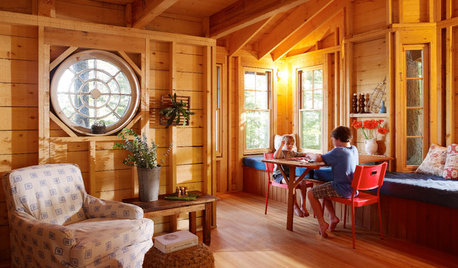
GUESTHOUSESA Hideaway for All Ages Perched Among the Trees in Maine
A modern Adirondack ‘treehouse’ is designed as a place for playing games, reading, sleeping over and enjoying forest views
Full Story
HOUZZ TOURSMy Houzz: An Opposite-Tastes Couple Finds a Happy Medium
Cherished antiques rub elbows with contemporary furnishings in this intimate-feeling open-plan Chicago condo
Full Story
LANDSCAPE DESIGNWhat Kind of Gardener Are You? Find Your Archetype
Pick from our descriptions to create a garden that matches your personality and tells your story
Full Story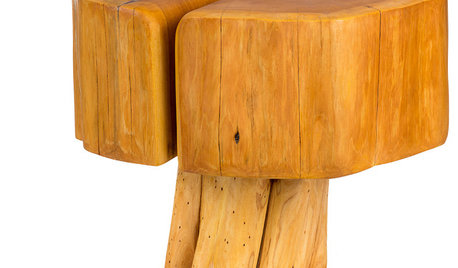
PRODUCT PICKSGuest Picks: Beautiful Things You Can Feel Good About Buying
Upcycled, ecofriendly or just made responsibly, these home accessories and furniture pieces will keep your conscience clear
Full Story
FUN HOUZZDoes Your Home Have a Hidden Message?
If you have ever left or found a message during a construction project, we want to see it!
Full Story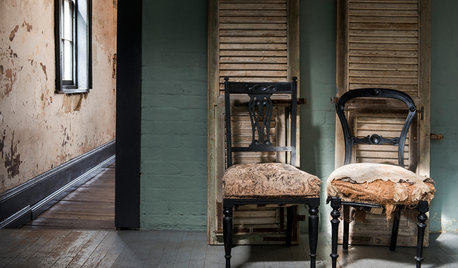
REMODELING GUIDESThe Hidden Problems in Old Houses
Before snatching up an old home, get to know what you’re in for by understanding the potential horrors that lurk below the surface
Full Story
PETSWhat Chihuahuas Can Teach Us About Interior Design
Who knew these tiny dogs could be such a huge fount of design tips? Houzzers did
Full Story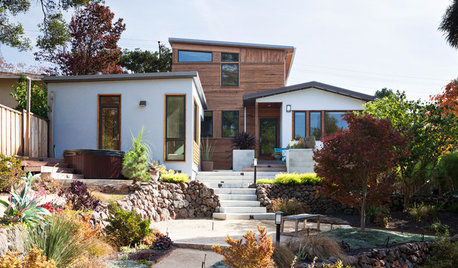
HOUZZ TOURSHouzz Tour: Finding the Flow in Berkeley
A bigger kitchen, a better connection to the outdoors and a new second story put a bay-view home in a California state of mind
Full Story
DECLUTTERING10 Decluttering Projects You Can Do in 15 Minutes or Less
Try these ideas to get organized at home one small step at a time
Full Story
jemdandy