Houzz Logo Print
ediej1209

Another dumb bread question

I am just not sure what I am doing wrong. I make bread, the dough rises nicely. I make loaves and they rise also nicely to about 1" or so above the pans. I put them in the oven and between the time I put them in and the time I take them out they go "poof" down to at least even with the pans and sometimes s little more. And it is not just one recipe, it happens with at least 3 different ones. Is there a trick I don't know about to keep this from happening?

Comments (38)

  • 6 years ago

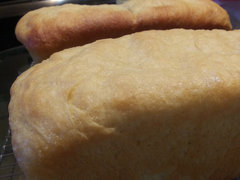
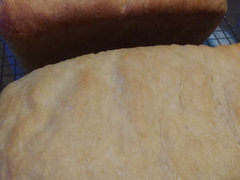
    Here are today's loaves

    From the side

    From the top


  • 6 years ago

    You are letting them rise too long before going into the oven. What size are your pans? how long is the bread rising? how hot is your kitchen?

    ediej1209 AL Zn 7 thanked aziline
  • Related Discussions

    Another newbie (DUMB) question

    Q

    Comments (6)
    Hi Ann, There are no dumb questions. There might be a dumb answer every now and then! ;0) Betsy's right about both. You certainly can cross evergreen and dormant daylilies but there is no way to predict the foliage habit of the seedlings, unless you have lots of experience with the parents already. It just depends on which genes dominate. Sometimes siblings will have different habits. For instance, Tim Bell's SISTER OF PRAISE and SYMPATHY OF PRAISE are sibs, but have opposite foliage habit. The hybridizer must evaluate their seedlings over a period of time in which the foliage habit will be determined. Sometimes the habit will change depending on where the plant is grown. That's probably why the term semi-evergreen was coined. The plant acts like an evergreen in the south and a dormant in the north. Hope this helps, Ed
    ...See More

    Dumb question (another one) for tile gods & gurus

    Q

    Comments (6)
    Does the edge of the insert that will be exposed look ok? Or will it look dull/unfinished? If it looks ok, then go for it. I just did a shower with a pewter-colored band that sticks out from the ceramic I used on the rest of the shower. I'll caulk the little step-up from one to the other, but they won't interfere with someone showering. On a floor, it would be a different story. BTW, I am neither god nor guru, just a gal who's on her 4th bathroom remodel in a year and a half.
    ...See More

    another bunch of dumb puppy questions

    Q

    Comments (2)
    My one year old english bulldog has weekly puppy play dates with another Eng. Bully.They bark at each other all the time. Tootsie likes to run up onto chairs or tables and Lulu sits on the ground barking at her to come play. they're talking. They actually get quite vocal. And their playing looks rough to me with all the biting but you can see they are enjoying themselves. They run around the yard chasing each other. Lulu goes and gets tootsies toys and drop them in front of her to get her attention. They were even playing tug of war today with the rope. I think as a dog owner you can recognize when your dog is playing or when she is getting mad.
    ...See More

    Another 'dumb question - enter at your own risk' kind of post

    Q

    Comments (6)
    Whatever....... I like my dinner rolls separated....other people like them to touch... I use a baking sheet or sometimes even a muffin tin...but when I cook them for those who want them to touch, I sometimes use a 9 by 13 pan. Really doesn't matter. Linda C
    ...See More
  • 6 years ago

    My kitchen is not very warm. I put a hot bowl of water into the oven (not turned on) to use as my dough riser. I have standard bread pans, I think maybe 5"X9"? First rise for this recipe is an hour and then the directions say after making the loaves to let rise 30 - 50 minutes until 1" above tops of pans, which is what I did. I do have to admit after the first rising the dough was more than doubled. It almost overflowed the bowl. Thanks!

  • 6 years ago

    I agree that overproofing is probably the problem. So, don’t let them get to that 1 inch. Try for 1/2 inch or 3/4 inch. Also, is your dough too moist? Overly wet dough doesn’t have the structure to rise above the pans and keep its shape. Or possibly the gluten hasn’t been developed enough to keep the structure.

    I’d try lessening the rising time a bit first and see how that works. At the same time, be sure you’re getting the gluten development necessary for good bread structure. If that doesn’t work, try lessening the liquid one tablespoon at a time.

    I know its’ disappointing, but your bread looks good enough to eat. And that’s the most important thing.

    ediej1209 AL Zn 7 thanked shambo
  • 6 years ago

    I agree with the others, but will add that this is an unusual recipe. Although times are often suggested, that's a guideline, and extremely iffy. Your first rise, with a large measure of commercial yeast (at least a teaspoon) and white flour, should be to double the volume. If you're not sure of eyeballing the volume, try a straight-ish sided glass vessel, like a large measuring jug, and put the top edge of a piece of masking tape at about the top of your dough ball, which would be between the low point at the sides and the high point of the dome. I

    Your shaped rise for most bread will be about 1 1/2 times the shaped dough size. If there has been a huge exhalation of the gases, it might need to go to 2x. The formula measuring over the top of the pan is even more subjective because the volume of your dough ball may differ depending on many factors, and its relationship to the pan is even more variable. Better to compare it to itself than an outside variable. "Standard" works fine for the answer to "what size pan should I use?", but 8" pans are also standard. What's not standard is the flare of the sides and the dimensions of the bottom, would wouldn't make a difference to using it, but could for measuring that inch (which, btw, sounds over risen on the face of it).

    Another problem you might be having is thermal. Your dough might be complaining about being taken out of the cozy oven while you're heating it then going back and getting hot again. I don't think this is likely, but it's possible, because it's the air bubbles that give the rise, and if the air in them gets cool, they can contract. Maybe better to have a longer rise in the cooler kitchen? On a trivet or pad, so the mass of the counter isn't a source of chill.

    There are ways of strengthening the gluten, but using less water is the easiest. :)

    ediej1209 AL Zn 7 thanked plllog
  • 6 years ago

    I do a second rise, for total of 3. I know directions usually instruct you not to overwork dough before forming loaves, but I find kneading it a bit helps make it stretchier, so it holds its shape better.

    Your loaves look a little rough, maybe you're not rolling them tight enough? I make mine nice and tight and make sure the surface is very smooth, and smack the top once it's in the pan to settle it in well. I let the final rise go for about 40 minutes, then start heating the oven, and slash with a razor blade just before putting it in. I bake @ 375F for 25 minutes.

    ediej1209 AL Zn 7 thanked carolb_w_fl_coastal_9/10
  • 6 years ago

    Lots of great advice!!

    Your bread pans are on the larger end. And your oven is probably getting warmer than you think during the final rise. I'd leave it on the counter and watch it rise next time. Look for it to rise a bit and give it a poke. If you can't make a dent wait longer. If it stays sunk in then it's over risen. If it gently pushes back out a bit you are just right :)

    Only other thing is did you rotate the pans? It's good to turn them 180 degrees and swap places while baking. I ask since the one has a pretty dark edge compared to the others.

    ediej1209 AL Zn 7 thanked aziline
  • 6 years ago
    last modified: 6 years ago

    If you have a convection oven, it is not really necessary to rotate the pans, although when I use my Pullman pan, I do set it on its side after 30 minutes of baking at 375°, bake for 5 minutes, and then set it on its other side for 5 more minutes. Then I check the temperature, and by then it is usually over 200°, and so I put it on a rack to cool.

    Lately I've been flattening my dough after the first rise and do a bit more kneading to get it to a very tight shape. Like Carol, I flatten the shaped loaf into the pan and let it rise about 45 minutes before baking it.

    What oven temperature are you using? I preheat mine to 400 and then turn it down to 375 when I put the pan inside.

    If you really want to control the shape of the loaf, use a Pullman pan and make pain de mie. This is the best bread for sandwiches, I think.

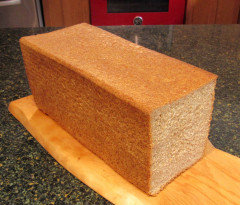
    100% whole wheat, made with wheat berries ground in a Vitamix.

    ediej1209 AL Zn 7 thanked Lars
  • 6 years ago

    Lots to think about! Thank you all so much. I've only really been seriously baking bread this last few months and there's so much yet to learn.

  • 6 years ago

    Nice thing about bread, you can consume your product.

    Honestly, your loaves look nice. I tend to let mine over rise too, especially my no knead bread. They don't get near the oven bloom ...

    AZ's poke and dent suggestion sounds like excellent advice.


    ediej1209 AL Zn 7 thanked bragu_DSM 5
  • 6 years ago

    I think that you are letting them rise too quickly and too much and that maybe you need a smaller pan. You might also reduced the amount to yeast that you use and go for a longer and slower rise.

    Sure they are still good.

    ediej1209 AL Zn 7 thanked User
  • 6 years ago

    They are too dense to make good sandwiches or even toast. I cubed one up, tossed with olive oil, herbs & Parm, and made a big pan of croutons. They are a little crunchy but will be good in soups.

  • 6 years ago

    That does seem to indicate that they collapsed. Are you always using the same recipe?

    And perhaps you might try making the dough a little bit firmer by adding more flour?

    ediej1209 AL Zn 7 thanked carolb_w_fl_coastal_9/10
  • 6 years ago

    It happens with 2 or 3 recipes. I can make good dinner rolls just not loaves. Go figure.

  • 6 years ago

    What flour are you using? Some pooh pooh it, but I find the flour makes a huge difference.

    ediej1209 AL Zn 7 thanked plllog
  • 6 years ago

    how long are you letting the dough rise the first time?

    ediej1209 AL Zn 7 thanked aziline
  • 6 years ago
    last modified: 6 years ago

    Edie, mine do that sometimes too, they'll sag or get a crease in the middle. I too have made croutons out of them, and a lot of bread crumbs!

    I think it might be the first rise, when I let go too long, I tend to let it more than double, sometimes when I remember to look at it, the lid is rising off the container!

    Try doing a shorter first rise.

    ediej1209 AL Zn 7 thanked Jasdip
  • 6 years ago

    I used 3 cups bread flour, 1/2 cup Semolina, 1/2 cup Durum and 2 cups AP. I had thought the Semolina/Durum would give better structure.

    First rise was an hour, 2nd was about 50 minutes. First rise was well mire than double so that is probably the culprit?

  • 6 years ago

    Here's what I do to make my homestyle bread:

    I make a single loaf, and I leave out about a cup or so of the flour for the first rise, so it's more of a thick batter, beaten very well, and I set that to rise 1 - 1 1/2 hour, then stir it down and add the rest of the flour to make a rather soft dough and knead very well right in the bowl, then let that rise for another 1 - 1 1/2 hour, then add a bit more flour and knead lightly and form my loaf , let that rise and bake as described above. I butter the pan thickly so the crust gets soft and yummy.

    ediej1209 AL Zn 7 thanked carolb_w_fl_coastal_9/10
  • 6 years ago

    This may not apply to your situation, but will share my similar situation. We have started baking bread since COVID and have been making and baking in the Zojirushi bread machine. We have been using the same recipe for an oatmeal bread. Some times it was fine, other times it would rise nicely and then collapse. In the troubleshooting section of my bread machine book it says it is caused by too much yeast, too much liquid or not enough flour. I started weighing the flour and we don't have the issue any more.

    ediej1209 AL Zn 7 thanked lizbeth-gardener
  • 6 years ago

    You can do multiple rises and will actually help the bread. Also an hour isn't very long. I'd leave it on the counter and give it at least 90 minutes. If it gets too high, punch it down and let it rise again. Semolina and durum are the same thing as far as I understand them. Is the grind on the durum finer than the semolina?

    Is there any oil/butter, milk, or eggs in it? If there isn't then it is a bread that is much different than rolls you make. Eggs even help the dough rise.

    You may also need to knead/develop the dough more. You can use stretch and fold technique to develop gently over time if you don't have a mixer. sourdoughhome.com has a great walk-through for it

    ediej1209 AL Zn 7 thanked aziline
  • 6 years ago

    Someone with more knowledge of different flours might be able to help. But with 1/2 cup each Semolina and Durum and 2 cups of AP to balance the 3 cups of bread flour, perhaps there’s not enough gluten in the final mix to develop a stable structure. Just a thought.

    ediej1209 AL Zn 7 thanked shambo
  • 6 years ago

    The Semolina is like a fine cornmeal texture but the durum is like regular flour only yellow. There is 1/4 cup of oil in this recipe. In the other 2 recipes I use there is no egg or oil.

    I would give my eyeteeth to have somewhere to keep a kitchen scale.

  • 6 years ago

    Edie, keep your teeth! You can have a good digital scale for the size of a classic brass winged corkscrew. It folds. Use your own bowl.

    https://www.amazon.com/Joseph-40071-TriScale-Compact-Folding/dp/B0091QO41U/ref=sr_1_1?dchild=1&keywords=joseph+joseph+folding+scale&qid=1597642570&sr=8-1

    It's much easier to figure out the hydration level if you can bake by weight. With experience, you can do it by feel, but until you get there, measuring is good. :)

    Fat retards the rise, The oil isn't likely the problem. I think there's less fat in semolina than normal. I don't know if that would counterbalance the oil but neither is likely to be a culprit.

    Overrising the first rise could be the issue if the gluten is weak and tears as it's overrisen. Not likely, though.

    Technically, "semolina" refers to the endosperm, the core of the wheatberry. Usually, the bags we buy in stores in the USA that say "semolina" are durum wheat. Durum literally means hard, and is a specific kind of hard wheat, popularly grown in Italy. It is available in different textures. Durum usually has a high amount of protein, around 13% or more, which is in the same range as bread flour (12-14%). I don't know much about the gluten it has, though in my limited experience with it, it handles drier and more brittle than regular flour. AP is a mixture of hard (higher protein) and soft (lower protein) wheat. Each company has its own protein content, which is in the 10-12% range.

    What kind of AP are you using? You can make bread with all AP. Mixing it with bread flour, just weakens the bread flour, however. What brands of flour are you using? That could be the culprit for this recipe.

    I don't know what's wrong, but you might need to knead more to develop the gluten better, and watch the rise so it doesn't go wild. You can also try making a single loaf until you get it right. Sometimes a smaller amount of dough is more cooperative.

    I also agree with the others who suggested reducing the yeast for a slower rise time. Gluten will develop with time even without kneading--that's the idea behind no knead bread. I've never had a perfect outcome with 100% no knead, though stretch and fold versions work well. More kneading with a slower rise could help your gluten development.

    One thing to keep in mind. It's very common for new recipes to produce bricks. Bread is really easy to bake...once you have it down. But bread recipes are really difficult. There are so many differences between flours, yeast quality, ovens, etc., that you should think of your recipe more as a guideline. Kneading by hand, even mixing with your hands, teaches your hands what to do. Adjusting a single element, loaf by loaf, lets you get to what you want.

    Keep at it. You'll get there.


    ediej1209 AL Zn 7 thanked plllog
  • 6 years ago

    edie, perhaps you should try using only a good AP flour and not bread flour and see where that takes you. It is my understanding that bread flour is best used for a loaf like a French bread or a bread where you want a hard crust and to keep its shape in a free form.

    By my estimation, you are using a goodly amount of flour for what I am assuming will make two loaves.

    Perhaps you are making a dough that is too dense to begin with.

    I have been baking and cooking for over 50 years and even though I just draw from those years out of my own head, I do know that I rarely go over 5 cups of flour at the most for two loaves. Especially you say that your bread is dense and I think you said it was wet. That, to me, indicates that your dough may be quite heavy.

    I bought some bread flour a couple of times just to see what difference it made. For the bread that I was baking, I saw no advantage. I have always used KingArthur AP flour and KingArthur whole wheat.

    I would recommend that you try a good non bleached flour instead of bread flour for your loaves.


    ediej1209 AL Zn 7 thanked User
  • 6 years ago

    All my flours are KAF. plllog, thank you so much for the link! I really appreciate it and will get one ordered ASAP. And I really do thank everyone who has taken the time to help me figure this out. I will try again, hopefully tomorrow, and use less four and yeast with more kneading and a slower rise. Fingers crossed!

  • 6 years ago

    You're very welcome, Edie!

    KAF flours run heavy. The quantity of protein for gluten formation is not your problem. All that heavy flour, however, might be part of the problem. It may need more kneading and resting time. If the recipe wasn't originally for bread flour it may also mean you have literally too much weight. While standard white AP flour, not compacted, runs about 120g per cup, but unbleached flour with more protein, like KAF AP, can run as much as 130g per cup. The bread flour even more (the only difference between AP and bread flour of the same type is protein content). The new scale will be a big help! There's still some variation in weight for how much moisture has been absorbed by the flour, but weight is much easier to work with.


    ediej1209 AL Zn 7 thanked plllog
  • 6 years ago

    ps Amazon says I should have my new scale Wednesday so I am going to wait until then to bake more so I can weigh the flour.

  • 6 years ago

    P.S. I always add a Tbs or 2 of olive oil to my bread dough - or melted butter for dinner rolls. I use basically the same recipe for all my yeasted breads, just altering the type of fat, liquid and amount/type of sweetening.

    Or does it count as a different recipe if flour/liquid/salt/yeast proportions are the same?

    ediej1209 AL Zn 7 thanked carolb_w_fl_coastal_9/10
  • 6 years ago

    Carol, I'd call that "variations". Different would be no fat at all. :)

    Edie, excellent news on the scale. Before you start baking, however, you have to figure out where you're starting from. With a pen and paper for recording (or a device if you don't mind getting flour on it), I'd measure a cup of each of your flours you usual way, weight the flour and record it. Then I'd sift the cup of flour into the measuring cup and see if that makes a difference in the amount by volume. If so, weigh the sifted cup. Then the art comes in: You have to figure out how much your cup of flour should weigh viz-a-viz the recipe.

    I also encourage you to try some different recipes which were written by weight.

    ediej1209 AL Zn 7 thanked plllog
  • 6 years ago

    ^^^^ Is all of that really necessary? I just looked up the weight for a cup of the flour I was using and went with that.

    ediej1209 AL Zn 7 thanked lizbeth-gardener
  • 6 years ago

    Different flours have different weights--and unless the recipe was written with both weight and volume measures, taken in real baking (not converted by an editor), we don't know what the weight of flour for this recipe would be. The unbleached AP I use weighs about 131g per dip/level cup. Knowing how much your flour weighs can be helpful, and it doesn't always match up with published lists. Converting a recipe by a rule of thumb doesn't always work. 120g per cup can work, but doesn't always. Similarly, there are some recipes that many people have trouble with which come out perfectly the first time for others. The best way to have control, IMHO, is to be precise about your ingredients and measures. I spent much of the Spring learning how my new flours worked in different kinds of baking...because they're different!

    There can be genius in just going for it. Sometimes you get something great that you'd never have done without the leap. Sometimes you don't.

    ediej1209 AL Zn 7 thanked plllog
  • 6 years ago

    A scale in a home kitchen works exactly the same way as it does in a commercial kitchen. It's a lot more accurate for baking than volume. If your bread comes out right, which some can eyeball, and others can just feel the weight in the bowl, that's great. But that's also experience and acquired skills. When one is confronted with failures, being able to have a more accurate knowledge of what one is doing is extremely helpful in learning where things went wrong.

    ediej1209 AL Zn 7 thanked plllog
  • 6 years ago

    I have a small kitchen scale, but I rarely use it.

    I just use measuring cups and judge by the texture/consistency of the dough whether I need more flour or liquid. Experience makes a difference, and the small amount of flour or liquid is never enough to affect the results. I find bread dough can be very forgiving, since the more you handle it, the more you develop the gluten.

    What really makes a difference, IMPE, is the freshness and activity of the yeast.

    ediej1209 AL Zn 7 thanked carolb_w_fl_coastal_9/10
  • 6 years ago

    since March 16 when we went into quarantine, I have made and given away somewhere more than 500 loaves of bread. I am pretty experienced at bread baking!

    I will tell you that the time of the initial rise has nothing to do with your collapsing bread. I never time a rise, but go by the volume of the dough.
    You tell about the flour...but what else is in the bread? How do you mix it? how do you shape it?

    Often a bread that collapses has not enough flour and is more of a batter bread, too wet and not enough structure to hold a rise. And it appears not to have any oven spring.....are you preheating the oven? Long enough?

    ediej1209 AL Zn 7 thanked lindac92
  • 6 years ago

    Are you using bread flour? If not, a little added gluten can't hurt. I am a chronic over riser, but I'm getting better. Kneading helps. Shaping tightly helps. Baking in a closed dutch oven also helps. You can even do that with a bread pan if your dutch oven is large enough. Oven spring depends on fast transfer of oven heat into bread dough. The steam created in a closed dutch oven helps with that.

    ediej1209 AL Zn 7 thanked l pinkmountain
  • 6 years ago

    Adding that baking at a little higher temperature for the first ten minutes also helps with "oven spring." I've been able to bake better bread now that I bake at a higher temp. At the very least, 400 then dialed down to 375. I bake at 425 in my dutch oven and then dial down to 400 after ten minutes. Some do higher but I find the slightly lower temperatures more forgiving of my multitude of sins as far as the very end of the baking. I often take out of the pan for 5 or 10 min. to make sure the whole loaf is evenly browned. Yesterday I noticed the bottom of my loaf was slightly less brown due to sitting on my cast iron baking stone, so I flipped it for 5 min.

    ediej1209 AL Zn 7 thanked l pinkmountain