

Cornmeal question
6 years ago
last modified: 6 years ago
Featured Answer
Sort by:Oldest
Comments (23)
Related Discussions
Milk, Baking Soda or Cornmeal
Comments (9)Nope, you don't need a bin at all. Just make sure you turn it often because so much greens in the compost pile and no browns can cause odor. Actually, a better idea is let the grass clippings turn brown first to prevent them from becoming anerbic and smelling. If it does begin to smell, give it a sprinkle with the water hose. You need to keep it moist anyway. To help add some browns, wood shavings is a good addition. If there's a saw mill, a hay barn, or a construction site near you, ask if you can sweep the floor for them LOL. Hey, it's funny but free. If you have some wood but no shavings, make a small bonfire now and then to burn it and then add the ashes. You want unpainted wood though. Is there an ocean near you? Ground up some seashells. You'll be surprised how much you find around you that aren't in your own backyard. There are also lots of things from inside the house you can add to the pile like used tea bags, brewed coffee grounds w/ the filter, egg shells (crush them), almost anything you would put down the garbage disposal can go into the compost pile. Most people I talked to don't put meats in it but some do. Do you eat corn off the cob? Throw the cob when you're done. Hair, dryer lint, and even an old ragged cotton tshirt. believe it or not. My only concern is that the grass disease. You'll want to make the compost heats up really good to take care of that. There is much, much more to learn on composting on the Soil, Mulch, & Compost Forum. Really great folks over there just like here. I mentioned never using Scott's fertilizer without regard for whether you necessarily have that brand product. I only meant any store-bought fertilizer by whatever name. Instead use grains to fertilize the lawn. Alfalf meal, soybean meal, etc. or processed sewer waste. Apply grains at 10-20 lbs per 1000 square feet. You likely need to find a feed store near you. Wish I lived in France, South of France to be exact....See MoreQuestion about Cornmeal
Comments (7)Cracked corn may be used in place of corn meal. It's all corn, equally effective, and easier to spread. The down side is that it remains visible on the lawn a few days so the birds and squirrels are attracted. You may also have a few corn plants sprout but they are easily mowed down or pulled by hand. Bill Hill...See MoreCornmeal for Brown Patch Disease Works
Comments (58)I don't need to restate anything I've already said in the seven years since this topic was started. What year is this? 2016? Okay I've used cornmeal on my lawn every year for the past 14 years and it's worked for me. Your mileage may vary. It does not seem to work against red thread, rust, or whatever the fungus is caused by 2 weeks of saturation rainfall. But it does work against the disease caused by blocking off the air to certain grasses. Here's the entirety of kimmsr's link text. I had previously reported that cornmeal was being tested for use as a fungicide, siting a study by researchers at Texas A&M Research Station in Stephenville, TX that was highlighted by Howard Garrett, the Dirt Doctor. I tried it around a couple of tomato plants, but the results were very disappointing. The cornmeal first caked and later turned moldy - not an auspicious experiment. I was then notified by someone at Cooperative Extension in Washington State that the initial testing was for a specific problem under specific conditions, not for a general purpose fungicide. Even then, the cornmeal did not show any promise. It would have been nice if something as available and safe as cornmeal turned out to be effective to, but that is not the case. Cornmeal is not an effective fungicide. -Marie IannottiGardening Expert The Stephenville experiment was done in the 1990s. The specific problem and specific conditions were a variety of assorted fungal diseases on peanut plants. The suggestion was made that by using ordinary corn meal against a variety of diseases (which are common in all gardens), that a farmer would get the same effect as crop rotation. What that means is by using the corn meal a farmer would not have to rotate his crops every year, and he could plant peanuts year after year. That is a huge bonus for a peanut farmer. The paragraph on corn meal was buried in a very long list of possible attacks against disease in peanuts. Doing an experiment once is not considered to be scientifically relevant. Why it was not continued or picked up by other researches is beyond comprehension...unless someone with deeper pockets did not want the research done. TAMU was well known as deeply anti-organic in the 1990s and 2000s. From what I've seen the 2010s are only marginally better than previous decades. As Betty said in her original post corn meal worked for her. It worked for me, too, 14 times. I believe it was working for Ms Iannotti, too, but she did not recognize it as working. She said the corn meal turned moldy. That mold she was seeing, assuming it was the blue-green trichoderma, is exactly the fungus that works against her diseased plants. By not knowing what she was doing, she missed an opportunity to learn something....See MoreDoes cornmeal work on Pills?
Comments (2)Pill bugs like to eat decomposing cellulose, like in paper, cardboard, leaves, sawdust, etc. I don't think cornmeal will have any effect on them at all. I put a half dozen or so pill bugs in my bin hoping to get a population going, and they all eventually escaped and died on the floor. Several years ago I had a bin in my garage. I had a large pill bug population in that bin. They overran the bin, but many of them also escaped. My guess is that if what you have is pill bugs, they will contribute to the breaking down of your bedding until they all decide to escape. Pill bugs don't breed as often as worms, but they breed in large numbers when they do. If you still have pill bugs after 6 months or so, they will probably be permanent guests, and you will find dead pill bugs all over the floor....See More- 6 years ago
 6 years ago
 6 years ago
- 6 years agolast modified: 6 years ago
- 6 years ago
- 6 years ago
- 6 years agolast modified: 6 years ago
- 6 years ago
 6 years ago
- 6 years ago
- 6 years ago
 6 years ago
- 6 years ago
- 6 years ago
 6 years ago
- 6 years ago
- 6 years ago
- 6 years ago
- 6 years ago

Related Stories
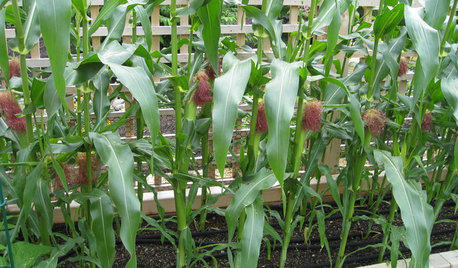
SUMMER FRUITS AND VEGETABLESHow to Grow Your Own Fresh, Sweet Corn
Here's how to plant and care for your own mini cornfield
Full Story
KITCHEN DESIGN7 Steps to Pantry Perfection
Learn from one homeowner’s plan to reorganize her pantry for real life
Full Story
SELLING YOUR HOUSE10 Low-Cost Tweaks to Help Your Home Sell
Put these inexpensive but invaluable fixes on your to-do list before you put your home on the market
Full Story
EDIBLE GARDENSNatural Ways to Get Rid of Weeds in Your Garden
Use these techniques to help prevent the spread of weeds and to learn about your soil
Full Story
BOOKSLaura Ingalls Wilder’s Little House in the Ozarks
A new streaming series based on the author’s classic books premieres soon. See the farmhouse where she lived and wrote
Full Story
FEEL-GOOD HOME12 Very Useful Things I've Learned From Designers
These simple ideas can make life at home more efficient and enjoyable
Full Story
COLOR7 Sophisticated Blues for Your Kitchen Cabinets
Complement a white or neutral room with cabinetry in deep navy, blue mist, cobalt, teal, turquoise and more
Full Story
GREAT HOME PROJECTSHow to Get a Pizza Oven for the Patio
New project for a new year: Light a fire under plans for an outdoor oven and claim the best pizza in town
Full Story
Houzz Call: What Gives You the Creeps at Home?
Halloween horror got nothing on your basement, attic or closet? Show us that scary spot you steer clear of
Full Story
KITCHEN DESIGN16 Scrumptious Eat-In Kitchens and What They Want You to Serve
Whether apple-pie cheerful or champagne sophisticated, these eat-in kitchens offer ideas to salivate over
Full Story
sheilajoyce_gw