

Stock Market Worries
6 years ago
Featured Answer
Sort by:Oldest
Comments (49)
Related Discussions
Do svgs int rates, stock market change house financing?
Comments (3)There's usually major volatility around the market as it works through the bottom, so it would often be well to be making ongoing commitments periodically as one felt that the bottom was being developed. Not getting bent out of shape as the values went down again, figuring that, after while, there'd be recovery in quality companies, and the more commitments that one had made on a regular basis through a prolonged bottom, the larger would be the amount eligible for increased value as the market moved ahead again. But I'm not expecting a major move ahead soon, as I think that our difficulties are much deeper than in earlier recessions. If I'd suggested to you, five years ago, that there might be a possibility, in a few years, of GM being at risk of going bankrupt ... you'd have laughed me out of town! And it seems to me that a number of our problems aren't just cyclical ... they're structural: many of these disappearing jobs aren't going to reappear later ... at least, not in our portion of the global economy. Although several here disagree with me, my feeling is that I'd like to get the debt on the house paid off - to be out of debt. But I'd want to have a substantial cushion available in case of emergency, especially in these times of major economic uncertainty, with so many layoffs taking place. Having lived in 22 locations during my 80 years, I've never owned a home, so never had a mortgage. That said - I frequently lack that emergency fund, myself, of 3 - 6 - 9 months' or a year's income in case of major immediate emergency. But I have a credit card, which I almost always pay off in full prior to due date, and a Line of Credit at the bank, fully secured by stocks and mutual funds, which I can draw on to pay off that emergency loan that I'd put on the card. The Line of Credit bore no initiation fee, and there's none for inactivity, either. Would your lender be willing to offer you a Line of Credit, using stock or mutual funds' certificates (could be part of your emergency fund, if you know for sure that your lender will give you an LoC) along with using the equity in your house, while you still had a substantial amount owing on your mortgage? I don't like to borrow for consumption purposes, but I may borrow to invest in quality assets (whatever they may be!), as I have something of ongoing value to show to offset the loan that I owe. If I do borrow for consumption, I want that on a different LoC, as interest on investment loans is deductible ... that for consumption purposes usually is not. Good wishes for making a decision which will please you on an ongoing basis as you choose which path to follow. ole joyful...See MoreAlternatives to Stock Market?
Comments (15)Greetings everyone. Some folks may find some useful advice in the posts above. All that I said in the previous post still applies. The guy whose system I spoke of, whose Canadian system, using solid stocks, takes about 2 hours per year to operate, as one can choose a basket of 10, or 5, or 4 stocks and several of the chosen stocks, usually about 6 to 10 of the list of 10, continue unchanged, year to year. The system has a growth rate averaged over 20 years of about 14% ... at low (for Canadian residents) tax rate on current income, plus much of the gain stored up over a number of years till one sells, then there's a tax advantage on the gain, in Canada. But if one puts one's asset into the bank, where it produces interest ... one must pay part of the interest to the income tax people ... and interest is taxed at top rate. The borrowing agency guarantees that the number of dollars that you lent them won't shrink: the parallel guarantee that they never mention is the number of those invested dollars won't grow, either. So folks who put those grow-proof dollars into the bank must put some of the interest with the principal to maintain purchasing power, to counteract inflation. I expect my stocks to increase in value, at least partially offsetting the inflationary costs. I'd rather buy (part of) the bank! Not only have my bank shares' values grown, directly, over those years ... ... the dividend rate grew from a nickel or a dime, 41 years ago, to $3.48 annual rate, last year. Taxed at a low rate in earlier years, but the tax rate on that kind of income dropped again, last year. As that mutual fund manager said, "I like to buy a Dollar ... for 60 cents". I agree - but I'll buy it myself, saving the management fees that he charges. I'm sad that so many investors, when stock prices fall ... rush to the exits, instead of getting ready to buy more, and buying them. Further ... had some of you U.S. guys chosen to buy some Canadian money to have bought those stocks 5 - 6 - 7 years ago, 65 - 69 - 75 cents U.S. would have bought you CAD$1.00. If you were to choose to sell those stocks now (and I don't know why you would) every CAD$1.00 now does not buy only 69 cents U.S. ... but within a couple of cents either way of $1.00. Which would have meant an additional 1/3 - 1/2 growth of your invested asset. In addition to the growth over those years. I've written recently of a guy's mixed Canadian and U.S. system that, running for 16 years, has produced 5 year growth rates averaging 16 - 36% (a difference of 20) ... and 10-year growth rates averaging 19.6 - 29.3% (a difference of 10): note the lower rate of volatiity over the ten-year periods, please. The longer you leave quality stocks ... the better they do. Remember how the skilled advisors say to invest your dollars in good stocks, watch them a little in case the company gets crippled, but don't sweat blood if a $20.00 stock goes down $1.00 ...or $2.00 ... or $3.00 or more. If it's a quality stock, it'll likely recover. In fact, while the market is dropping, remember what a mutual fund manager told a group of us sales people almost 25 years ago ... "I like to buy a Dollar for 60 cents". During a substantial drop in the market, recruit some extra money in addition to the regular investment program that you follow. As you don't know when the bottom will appear, invest some funds from time to time, in a regular fashion. Would you rather buy coffee that's worth $1.00/lb. usually ... ... for $1.20 ... ... or, after a drop in the market - for 80 cents. As long as the quality is there, I like the last scenario the best. How unfortunate that so many investors buy a stock for a Dollar ... and when the market goes down, they get upset, angry and scared ... and sell for 60 cents! Good wishes for learning more about how the markets work, every month and every year. It's a hobby that pays well. Maybe use mutual funds for a while in the early years of your investing program, for diversity, but later learn how to buy various stocks from time to time, building your own diversity? The fees that you pay to regular mutual fund managers are substantial - comparable to the rate of income tax that you pay. And, if you put the money into the bank in "guaranteed" financial products, you must take some of current ernings to add to the principal to keep the purchasing power of your dollars even. When you put $20,000. into the bank 15 years ago, the bank would pay you (rather slim) interest every year, as agreed. If you need your $20,000. now and go to collect it, they'll pay you exactly $20,000. - which would have bought a nice car, 15 years ago ... but not now - cars are more expensive, as are most things. So, you must pay income tax on the current income, and at the top rate, by the way. You must put part of it with the principal to maintain purchasing power. I don't like earning interest! Good wishes to you and yours. And teach your kids about how money works, O.K? Please! They'll use that information every day of their lives! ole joyful...See MoreDiscussion and strategies re current stock market drop
Comments (18)patti 47?? (who doesn't look a day over 36), I've been called a "dope", at times. Does that count? Susan on, What kind of stuff does your financial advisor sell? Does s/he recommend financial investments that s/he doesn't sell? As you are reasonably young, do you carry mainly equity-based assets? Mainly mutual funds, stocks, or what? If you carry some mutual funds or stocks, have you considered having some of the certificates issued for ones that you plan to own for a numbr of years, your core assets, to use as collateral if you make a loan to buy a vehicle, etc? If you ask your credit union, bank or other lender, I'll bet that they'll offer a lower interest rate if you use such assets as collateral, in addition to the car. Are you achieving major tax reductions on current investment income? Quite a bit of deferral of tax load? Quite a few RRSPs? Have you read some of my materials referring to some of my reservations about using them, especially for younger investors? If you carry substantial RRSP assets, is a portion of them of the self-directed kind, and, if so, and of substantial size, does your carrier manage them without an annual admin. fee? I enjoyed that for a number of years (got into such a plan under an earlier carrier that was bought out). But when rolling over the RRSP into a RRIF, the later carrier told me there'd be an annual fee. When I returned a while later saying that I'd found some other carriers that would manage the fund with no fee ... they found a means by which they could do that, as well. I didn't feel it necessary to reveal to him that I found the offer made by the others less attractive. As Grandma used to say, "One should tell the truth ... but it isn't necesssary to shoot one's mouth off and tell all that one knows". (A bit of a free-style rendering of Grandma's words, here). (My hope here is that you answer these questions within your own mind/family, not to me [it isn't my business, unless you choose to make it so], or here in public). Good wishes, everyone, for increasing your knowledge of how money works, over the years. ole joyful P.S.: Commentary on RRSPs: http://ths.gardenweb.com/forums/load/saving/msg011934521024.html?4 o j P.P.S.: Investment portfolio 16 years: 5-year growth rates 16.58% - 36.61% (difference slightly over 20%); 10-year growth rates 19.67% - 29.37% (difference slightly under 10%): http://ths.gardenweb.com/forums/load/finance/msg0206395613737.html?1 o j...See MoreNo one's mentioned the stock market.......
Comments (24)The stock market is not for the weak of heart! LOL I've had stocks for over 40 yrs. and watched it go up and watched it go down. Most of our stock was bought b/c of the dividends they paid--and a lot are utilities. We're always gonna need utilities. People will quit buying a lot of things, but they're not gonna give up their utilities. Sure, I'd love to see it soar like an eagle--but it's a gamble. You just don't put all your eggs in one basket--we've got some CDs paying almost nothing, but they are there. My Daddy, who was a brilliant investor, would be out buying. Right now. Today. My DH sells metal detectors and his business has soared. These folks are finding gold in the lakes in East Texas that are so low, and other places. A lady last week had found thousands of $$$ worth of gold--so much that she upgraded her detector. Maybe we should be doing that!! The market falling isn't gonna turn my electricity off, or take food out of my mouth. You just gotta ride it out. And maybe buy some stuff!!...See More 6 years ago
- 6 years agolast modified: 6 years ago
- 6 years ago
 6 years ago
- 6 years ago
- 6 years ago
 6 years ago
- 6 years ago
 6 years agolast modified: 6 years ago
 6 years ago
- 6 years agolast modified: 6 years ago
 6 years ago
- 6 years agolast modified: 6 years ago
- 6 years ago
- 6 years agolast modified: 6 years ago
- 6 years ago
- 6 years ago
- 6 years ago
- 6 years agolast modified: 6 years ago
- 6 years agolast modified: 6 years ago
- 6 years ago
- 6 years agolast modified: 6 years ago
- 6 years ago
- 6 years ago
- 6 years ago
- 6 years ago
- 6 years ago
- 6 years ago
- 6 years ago
- 6 years agolast modified: 6 years ago
- 6 years ago
- 6 years agolast modified: 6 years ago
- 6 years agolast modified: 6 years ago


Related Stories

INSIDE HOUZZData Watch: Confidence Rising, but Labor Shortages Worry Many Pros
The latest Houzz Renovation Barometer report shows industry pros are rosy about the market while still struggling to find skilled workers
Full Story
HOLIDAYSStocking Tales to Welcome Christmas Home
Readers share their stocking traditions, from the sentimental to the pragmatic
Full Story
PRODUCT PICKSGuest Picks: The Well-Stocked Starter Kitchen
We’ve got all the kitchen basics and tableware you need (or that recent grad needs) to make cooking a joy
Full Story
MOVINGTips for Winning a Bidding War in a Hot Home Market
Cash isn’t always king in a bidding war. Get the home you want without blowing your budget, using these Realtor-tested strategies
Full Story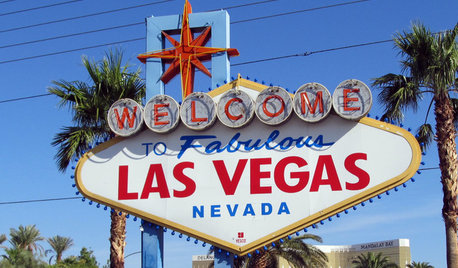
LATEST NEWS FOR PROFESSIONALSHow to Make the Most of Las Vegas Summer Market
Here’s what to pack for your trip — and how to spend your time once you get there
Full Story
ORGANIZINGChecklists for a Well-Stocked Home
Thank-you notes, first-aid kit, clear glass vases ... It’s easy to go with the flow when you’ve got the items you need at hand
Full Story
DECORATING GUIDESWhat to Look for at the Flea Market Now
Find a Great Old Clock, Camera, Portrait, Chair or Globe and It's Your Lucky Day
Full Story
COTTAGE STYLEDecorating a Cottage? Think Flea Market Style
Hit up swap meets and junk shops for furniture that’s comfortable, beautiful and full of stories
Full Story
ACCESSORIESHow to Really Score at the Flea Market
To snag the best deals from arrival to departure, follow these tried and true guidelines from an insider
Full Story
DECORATING GUIDESHot Looks From the Spring 2013 High Point Market
Get an eyeful of some of the colors, textures, materials and more taking a big stand at North Carolina's huge furnishings trade show
Full Story
User