

Medicare Part D: Which drug plan are you happy with?
6 years ago
Featured Answer
Sort by:Oldest
Comments (13)
Related Discussions
Choosing 2011 Medicare Supplement + Part D Plans
Comments (10)You really might want to consider the former employer's pharmacy plan - but where I'm a bit confused... if your husband goes for the pharmacy plan for drug coverage and that proves satisfactory - why would there be a need for a switch to the Medicare Part D in 2012? He would, in effect, be dropping his creditable coverage and that creditable status doesn't carry over to a new plan (ie Medicare Part D because they don't care what you might have had), and would be subject to the forever penalty. Creditable is just comparing what you have against whatever else is out there. An actuarial firm determines that your plan offers Rx coverage that is equal to or better than Medicare Part D. Should be easy enough for him to get the boiler plate notice of "creditable" insurance for drugs from his former employer to keep in his files if he goes with what they're offering. In fact, it's a requirement that the notice be sent each year. It's an unimpressive few sheets of paper stating simply: The Society (I'm retired from the Nat'l Geographic Society) is required to issue this annual notice to participants. Then it goes on to explain Medicare Part D, why I don't need it, why I can't be covered for drugs under more than one plan, and what happens if I drop what I have for something else. I still think that the Medicare Part D penalty is imposed whenever it is not signed up for when you initially become Medicare eligible at 65. Guess I would check with the former employer - HR there should be on top of what they offer. And I'd call Medicare too - or your closest SS office. I found the people at our Social Security office really helpful - on the phone and in person....See MoreOn Medicare? Know You MUST Buy Part D?
Comments (36)Here is a good read taken from the link below. The Penalty Can Add Up! How much the late enrollment penalty will cost you depends on how long you did not have creditable prescription drug coverage. The late enrollment penalty is calculated by multiplying 1% of the "national base beneficiary premium" ($32.34 in 2011) times the number of full, uncovered months that you were eligible but didn't join a Medicare drug plan and went without other creditable prescription drug coverage. The final amount is then rounded to the nearest $.10 and added to your monthly premium. Since the "national base beneficiary premium" may increase each year, the penalty amount may also increase every year. You may have to pay this penalty for as long as you have a Medicare drug plan. Example 1: Mrs. Jones did not join a Part D plan when she was first eligible (by May 15, 2006). She joined a Medicare drug plan during the 2009 enrollment period (November 15,December 31, 2009), for an effective enrollment date of January 1, 2010. Since Mrs. Jones did not join when she was first eligible and went without other creditable drug coverage for 43 months (June 2007,December 2010), she will be charged a monthly penalty of $13.90 in 2011 ($32.34 x.01 = $.3234 x 43 = $13.90) in addition to her plan's monthly premium. If Mrs. Jones continues with her Part D drug plan for the next five years, her penalty will cost her over $800.00 Example 1: Mr. Smith did not join a Part D plan when he was first eligible (by January 15, 2010). He joined a Medicare drug plan during the 2010 enrollment period (November 15,December 31, 2010), for an effective enrollment date of January 1, 2011. Since Mr. Smith did not join when he was first eligible and went without other creditable drug coverage for 11 months (February 2010-December 2010), he will be charged a monthly penalty of $3.60 in 2011 ($32.34 x.01 = $.3234 x 11 = $3.0) in addition to his plan's monthly premium. If Mr. Smith continues with his Part D drug plan for the next five years, his penalty will cost him over $200.00 That's food for thought. Good post Molly. Here is a link that might be useful: Medicare Part D Late Enrollment Penalty...See MoreWhich supplemental Medicare plan do you have?
Comments (29)Just thought I would report back that I looked into Bankers Fidelity and for me it is $205 a month for Plan F and $141 for Plan G. Plan F is an "issue age plan" and G is an "obtained age plan". I called the company and a very annoying local insurance agent called me back. Actually she seemed to know her stuff but her manner was annoying. I think AARP is going to be hard to beat. I downloaded and printed a booklet called Choosing a Medigap Policy and it is very helpful. It makes things clear and has great advice about what to ask an insurance agent if you choose to buy from one. It's on the medicare.gov site. Maybe my research will help the next person and it certainly helps me to bounce these questions off all of you!...See MoreWhen Will Medicare Post 2021 Part D Plans?
Comments (21)You are required to have a Part D plan if you have Medicare. You will be penalized later if you haven't signed up for Part D coverage when you are eligible for it. If you have few meds or very inexpensive ones, take the plan with the cheapest premium. DH often goes a whole year without using half of a plan's scary-big 'deductible' (over $400 in recent years, and most plans have them). ALWAYS search the Part D plan offerings for the coming year, and check with the insurer to be certain the information on the Medicare.gov site is correct -- regarding the premium and the cost of each drug. "Mistakes are made," early on as the companies are submitting their information to Medicare. Other nations control the price of prescription medications without this nonsense of Part D insurance. They only people who benefit from the US system are the insurers and the pharmaceutical companies. Ours is also the only nation to permit advertising of prescription drugs. (Not certain if New Zealand still does this, but they were the only other one.) I have yet to find mail order to be less expensive than a local pharmacy by more than a few dollars....See More- 6 years ago
- 6 years ago
 6 years ago
 6 years ago
- 6 years ago
- 6 years ago


Related Stories

ARCHITECTUREOpen Plan Not Your Thing? Try ‘Broken Plan’
This modern spin on open-plan living offers greater privacy while retaining a sense of flow
Full Story
DECLUTTERINGWhen Simplifying, Which Papers to Keep and Which to Toss?
Find out which records you can get rid of when you are decluttering or moving to a smaller home
Full Story
CONTAINER GARDENSHappy Houseplants, Happy People
Potted plants add life and beauty to a room. Learn easy ways to keep them healthy
Full Story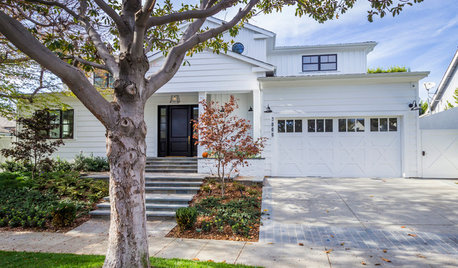
TRANSITIONAL HOMESHouzz Tour: Part Traditional, Part Modern and All Family Friendly
With clean lines, vintage touches and durable surfaces everywhere, this Los Angeles home balances tastes and needs beautifully
Full Story
DECORATING GUIDESHouzz Call: Share Your 'Happy Accidents'
If any of your home decorating successes have happened by chance, we'd like to hear about it
Full Story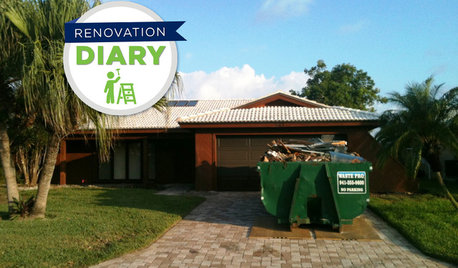
REMODELING GUIDESPlan Your Home Remodel: The Construction Phase
Renovation Diary, Part 3: The Dumpster arrives, and a little designing on the fly comes in handy
Full Story
HOUSEKEEPING7-Day Plan: Get a Spotless, Beautifully Organized Dining Room
Give us a week and we’ll give you a dining room you’ll be happy to use for a special occasion or every day
Full Story
HOME INNOVATIONSHouzz Tour: Meet a Home Made With Minivan Parts
Sawn-off car roofs for the siding, windows popped out of van doors ... this California home is as resourceful as it is beautiful
Full Story
GARDENING GUIDESWhat Are Your Spring Gardening Plans?
Tearing out the lawn? Planting edibles? Starting from scratch? Tell us what you plan to change in your garden this year
Full Story
KITCHEN DESIGN10 Tips for Planning a Galley Kitchen
Follow these guidelines to make your galley kitchen layout work better for you
Full Story


ravencajun Zone 8b TX