

Blueberry pancakes.....or so I thought
7 years ago
last modified: 7 years ago
Featured Answer
Sort by:Oldest
Comments (21)
Related Discussions
how can I tell which blueberry variety I have?
Comments (6)Unless you get a DNA test, there's absolutely no way you'll ever figure out what you have. Sure, I can tell a Bluecrop from a Blueray (if they're planted beside each other and I know those are my two choices), but there are so many varieties of blueberries it's just not easy to look at a bush and name the variety. Well, Star, a southern highbush variety, has a very distinctive calyx end on the fruit, thus the name Star. Even though one sees a lot of posts on these forums about blueberries doing better with cross pollination, it's not necessary for good producion. The great majority of commercial plantings are in large (10+ acre) blocks of single varieties. Research shows that not all varieties even benefit from cross pollination. Even those that do benefit from cross pollination still produce adequate crops. Your problem is likely due to an environmental factor (too high pH, not enough water, etc) as Don suggested. Also, Don's question of whether the problem is that they're not blooming or not setting fruit is important. It may just be that you have very low bee populations in your area. Blueberries do require bees for pollination. If you post some pictures of your plants, we might be able to help more! Also, blueberries need a lot more water than other plants. They have extremely shallow root systems (often all of the roots are in the upper 12") and no root hairs, so are not very good at taking up water....See MoreI'd rather not kill my blueberries - so how do I plant?
Comments (23)Here's my take on the agricultural sulphur/ferrous sulphate and iron chelate. Agricultural or elemental sulphur will provide more acidifying power per pound of material applied, however the soil microbes have to convert it from the sulphur form to oxides of sulphur, which can then act to acidify the soil. It takes time for the acidification to work and it will occur over a period of time, you have to get the sulphur into the ground for the microbes to attack, and the effect will be a bit longer acting. The larger the sulphur particles you spread, the slower the process. Elemental sulphur is relatively cheap so is often used agriculturally. We generally use sulphur strictly as a fertilizer to replace what the crops are removing from the soil, being leached away, or tied up into mineralized compounds, plus it is relatively low volume. As a fertilizer, we often apply it at 30 lbs/acre. Another option is to use gypsum, calcium sulphate, which is commonly used to treat highly alkaline/saline soils as it is quite cheap, acidifying, and provides additional calcium. (In moister climates where soils are more acidic, they do the opposite, applying lime -- calcium carbonate-- to raise the pH). When applying gypsum, we would apply it on the order of 1000-2000 lbs/acre or more. With ferrous sulphate, you have moved up a step in cost but you are providing sulphate ions (or is it anions?) that will provide the acidifying effect, and because it is already converted to a soluble and ionic form, it will work quite quickly. At the same time, you are providing free iron that the plants can take up and the acidifying effect of the sulphate slows the process of tying the iron up in the soil. Many soils, particularly in alkaline areas, have plenty of iron, but it is tied up in the soil and unavailable to plants, and that is the situation here. We have a lot of red soils, the red coming from oxidized iron (rust). There is no deficiency of iron but it is mineralized and unavailable. Combine that with a pH of around 8 or higher and there are a lot of plants that will die of iron deficiency. Conifers, golden willows (lost a row of them in the cemetery to that, and nearly lost the spruce trees), petunias, raspberries, and even kentucky blue grass where the lawn is only sprinkler irrigated, for example. With iron chelate, you have a form of iron that is more available to plants, however it is relatively much more expensive. The chelate can be absorbed into the leaves if used as a foliar spray, though too strong a solution will burn. Because it can be pretty well directly absorbed by the plants, it can have an almost immediate effect on new growth. I've seen it recommended to water the ground with the iron chelate, but I think it tends to get tied up in the alkaline soil fairly quickly (I think the chelate breaks down fairly quickly, then the high pH ties up the iron again, and you need large quantities which become quite expensive. I had always had recommendations from the extension service to use iron chelate for iron deficiency, but later I was advised to use the ferrous sulphate by a professor for the combined free iron/acidifying properties. When I used the iron chelate, I never had much in the way of results unless I sprayed weekly at least, and that just doesn't happen with me. With the ferrous sulphate, I could spread it once and see lasting effects for anywhere from the remainder of the summer to several years. Part of my lawn is watered with a sprinkler using well water which is very high in lime. Gradually it turns yellow and thin with iron chlorosis. Fertilizing with nitrogen had no effect. Add some ferrous sulphate and in a week it was turning green, growing like it was badly overfertilized, and the stand thickens up. One year my supplier stopped carrying the ferrous sulphate but had ferrous gluconate and said it was much easier to use and worked the same--so I wondered but tried it. Think I still have most of the bag. It showed no effect on the plants, smelled like molasses and had no irritating dust so I found a new supplier for the ferrous sulphate (I'm not going to apply it if I don't get results). I don't fully remember my chemistry from school, acids/bases, oxidizers/reducers, strong vs. weak acids & bases & the chemical reactions that take place when these chemicals are placed in solution and I'm sure there are those out there that can more than adequately cover the subject (not that I'd want to learn it all over again, though!) I mainly try to cover some of the principles and describe what has worked from experience. Plus, I've never tried to grow blueberries as trying to provide an acid environment in my soil seems like too high a maintenance. Overall, what is being dealt with here is that in drier climates, the soils tend to have a large reservoir of lime and an alkaline pH. Acid loving plants may not need acid to live, however they consume quantities of minerals which are mineralized and unavailable at high pH, but become readily available at lower pH and blueberries have adapted to soils where these minerals are readily available. Trying to lower the pH of the soil to create an acid one suitable for blueberries is very hard, because to make the soil acid you have to essentially eliminate the alkaline lime in the soil, and it will take tons of amendments to do that. To compensate, you remove the soil, replace it with organic matter which is naturally acidic, then work to counteract the ongoing process of your climate and geology from turning the new acidic, organic soil back into an alkaline, mineralized soil and add a few of the more important nutrients the plants need so that they are readily available, even if the pH is a little higher than the plant desires. One last caveat--in acidic soils, NEVER add ferrous sulphate for an iron deficiency. You don't need more acid (unless you actually want a more acidic soil). Use iron chelate or the ferrous gluconate. Sorry this is much too long, but hopefully it explains the basis of my thoughts so you can judge for yourselves what is best in your situation....See MoreI would not of thought....
Comments (20)Hi Konrad...about two/three weeks ago I visited the cherry orchard at Berwyn, Alberta (Zone 2) and picked my winter supply...they were absolutely loaded...I mean absolutely LOADED. This year in the Peace River Country it has been very hot and very dry...and obviously they love those conditions. The orchard is located in an exposed field...no windbreaks but there is an irrigation system installed...the orchard is at least ten years old and is the "true" testament of what is a hardy cherry variety. I believe there are at least 6 varieties in the orchard and we picked Crimson Passion cherries exclusively this year...under the conditions at the time, I detected a slightly sweeter flavor with these compared to the other varieties. Also, the cherries were large this year...so the pitting went well. By the way, the orchardist (J Stuart) doesn't think much of the Evans cherry...I could see why...winter/spring kill and very few berries... I was impressed at how his other varieties have grown in mass in two years...wasn't there last year as it was a poor crop...but they are still what I consider "shrubs", not "trees"...presently about 5 ft tall and likely not to get much taller. That possibly proves that cherry plants don't have to be large to produce huge crops...as a matter of fact, it appears that may be a hindrance in our climate...(Evans are the tallest variety that I have seen so far)...would your observations lead you to a similar conclusion?...See MoreI just received blueberry bush I wasn't expecting so soon, help!
Comments (5)it takes weeks, even months for sulfur to take effect... and, what's more, here in fla it needs to be reapplied frequently (at least once a year). my bed went from 5.5 to 7 in a year. with just two plants, i would, were i you, consider 1) going to a nursery and buying a huge tree pot; 2) fill it to the top with pine nuggets; 3) dump in a mix of compost and peat--filling in the space among the nuggets (you'll be surprised how much will fit in there); 4) plant the blueberries together in the same pot....See More 7 years ago





Related Stories

EVENTSMaker Faire: Pancake Printers, an Electric Giraffe and So Much More
Passionate makers bring their latest wares to an annual festival where creativity meets tech
Full Story
PETSSo You're Thinking About Getting a Dog
Prepare yourself for the realities of training, cost and the impact that lovable pooch might have on your house
Full Story
DECORATING GUIDESThe Dumbest Decorating Decisions I’ve Ever Made
Caution: Do not try these at home
Full Story
FEEL-GOOD HOME12 Very Useful Things I've Learned From Designers
These simple ideas can make life at home more efficient and enjoyable
Full Story
EDIBLE GARDENSSummer Crop: How to Grow Blueberries
Plant blueberries in spring or fall for garden beauty through three seasons — and a sweet superfood in summer
Full Story
GARDENING GUIDESGreat Design Plant: Grow Blueberries for Their Fruit and More
Eastern gardeners should consider growing blueberry plants for their delicious fruits, bee-friendly spring blooms and brilliant fall foliage
Full Story
CONTAINER GARDENSPatio-Perfect Berry Bushes Like You’ve Never Seen
Small enough for pots but offering abundant fruit, these remarkable bred berries are a boon for gardeners short on space
Full Story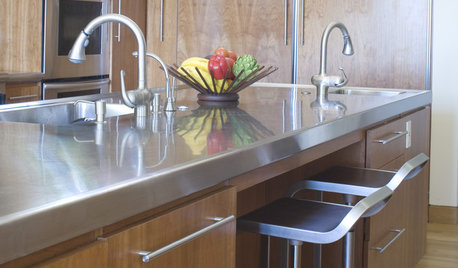
KITCHEN DESIGNDesign an Easy-Clean Kitchen
"You cook and I'll clean" might no longer be a fair trade with these ideas for low-maintenance kitchen countertops, cabinets and floors
Full Story
Guest Picks: Summer Cottage Breakfast Table
Wake up to a thoughtfully set table for a simple morning meal by the lake
Full Story
GARDENING GUIDESNew Ways to Think About All That Mulch in the Garden
Before you go making a mountain out of a mulch hill, learn the facts about what your plants and soil really want
Full Story

cooper8828