

Huge Instant Pot Cheesecake Failure
7 years ago
Featured Answer
Sort by:Oldest
Comments (34)
 7 years ago
Related Discussions
Vegetable failure, rosy opportunity.
Comments (15)Elemire, you have hundreds of roses - how small can your garden be? Interesting how different attitudes exist side by side - I truly want to scream every time I hear 'grow your own'. Vegetable plug plants have taken over from petunias and lobelia, even in supermarkets (although you would have to be desperate to consider buying any of those plants after a couple of days sitting in overheated stores, ignored by all). Of course, it is a massive con. I can see why people would buy half-hardy bedding plants such as aforementioned petunias - they can be a bit tricky from seed and need a fair bit of light and heat to get going...but lettuce! spring onions! The idea of the potager, growing vegetables and flowers and herbs together, to look decorative and have a useful function, has been pushed mercilessly. Everywhere, we see little 'raised bed' kits (just lengths of timber and a few stakes for ridiculous prices) while folk are trying to create some long-lost bucolic simple life, return to nature scenario. More than once, I have seen lettuces laid out like bedding plants, then unharvested because it would mean leaving unsightly gaps. The truth is, to grow vegetables well, they do need to be apart from long-term ornamentals and they do look quite dull for most of the year. This is why vegetable gardens were often relegated to some far corner of an estate. I do intend to carry on growing some vegetables but only those which we eat, are reliable, can be stored and are relatively trouble-free. So, no more brassicas, no more french beans or sweetcorn (I fail to grow this successionally so we always end up with 3 dozen corn plants, all ready at the same time) no more weird and wonderful stuff (okra, asparagus peas, scorzonera and salsify, radicchio, aubergines or oriental greens)No more ground-swallowing potatoes apart from a few earlies. Fruit, and plenty of it, from now on....and a lot more roses....See Morejunk organic potting soil
Comments (41)Damping off is complicated because it is a collection of diseases and not just one disease, but some of them have a definite soil connection because they are soil-borne. They still have to have the 'just right' (maybe I should say 'just wrong') combination of certain conditions to develop. When we use the term damping off, we are referring to a large group including Phytopthera root rot, Pythium root rot, Rhizoctonia root rot, black root rot, white mold (Sclerotinia spp.), Gray mold (Botrytis), Fusarium, cylindrocladium, and more. Some of these are soil-borne, hence the potting soil connection, while others are seed-borne. Some are found in native soil and are transferred to soilless mixes by folks using tools, flats, pots, six-packs, watering cans, trowels, etc. that were used outside and not sterilized before used in seed-starting. Each of the group of damping-off diseases develops in somewhat different conditions. Some are more common in colder conditions and some are more common in warmer conditions. Some only affect seeds, some only affect cuttings. Some are pre-emergent and kill seed before you see any plant part emerge from the soil. These kind can penetrate the seed coat as soon as moisture penetrates it and then kills the radicle almost immediately. Some are post-emergent and kill seedlings that seem perfectly healthy one day and then are dead the next day. Pythium root rot, for example, occurs in wet, cold, poorly-drained soils and is often a direct-result of overwatering. On the other hand, Rhizoctonia root rot occurs in warm to hot temperatures in soil that is only moderately moist so your plants might get it if they are in a room that gets too hot and not because you've overwatered. That is why the right air temps are important when starting seeds. Some of the damping off fungi types only start in very specific pH ranges. Black root rot isn't found on plants in growing mediums with a pH below 4.5 or above 5.5 because it only grows in a pH of 4.5-5.5, or it may be 5.4, I don't remember now. The sterile seed-starting mix/soil-less potting soil connection has a lot to do with pH but also with soil drainage as well. Sterile seed-starting mixes generally have a pH around 5.5 and this important because most damping off diseases start at a significantly higher pH than that. If you are watering with a higher pH water, then over time the pH of the seed-starting mix goes higher and that increases the chances of damping off since the pH climbs a little time every time you water. That's one reason peat moss is a key component of commercial seed-starting mixes...because is is at the lower end of the pH scale. You can take a lot of measures to lessen the likelihood of damping off, but the most important one is to have a well-drained soilless mix and to never ever use native soil unless you've sterilized it. I always sterilize all my flats, etc. and use a sterile seedless mix. I have used potting soil to start seeds and had no problem with it, but I start hundreds and hundreds of seeds a year and want it all to go smoothly and on-schedule, so I tend to stick with sterile mixes to lessen the chances of having problems. Proper air circulation is very important and the plants need good air circulation 24/7. Proper room temperature is key. Soaking seeds in a bleach soak (1 T. bleach/quart of water) for 15 minutes is commonly recommended to lessen the chances of losing your seedlings to a soil-borne fungi from the damping off 'family'. Planting seeds at the proper depth (no deeper than 4 times the seed's thickness) lessens the chance of damping off. However, you can do everything right and have damping off and do everything wrong and not have it because life and gardening just work that way. Chamomile tea and cinnamon are two common folk remedies for damping off, and there are several others. There also are some commercial fungicides than can be used as a soil drench, although I know very little about them since I don't use them, Some of the fungi that cause various forms of damping off can live indefinitely in soil while others have a more limited life span. Pythium spp. can survive several years, whicle black root rot can live only about 10 years and Pythium an Rhizoctonia rots can live indefitely. That's just about everything I know about damping off except this....the heavier and more dense the potting mixture the more likely it is to occur. And, even though we think of damping off as a disease primarily of young seedlings, in some parts of the country, it will attack some pretty good-sized plants. I've seen it attack toamto plants (but not mine and not here in OK or TX) that have been in the ground a month or two and which have gained substantial size. No matter what you do, sometimes damping off just happens. Dawn...See MoreThanksgiving successes and failures
Comments (26)BF and I had our TG dinner the weekend before, so ate leftovers on the actual day. I sure LOVED that! We got a free turkey and it was just one of those injected ones and I just roasted it and it came out good. I rubbed it with Mrs. Dash garlic herb salt free seasoning and stuffed it with apples. The only thing that was a problem is neither my meat thermometer or the pop up one on the turkey seemed to work because it was overcooked but not registering the right temp., so I dunno. My thermometer never seems to be accurate so I really have to find a better one. The white meat on the breast was a tad dry, as per usual but frankly I think it was good enough, that is pretty much the nature of white meat anyway. We got a lot for sandwiches which I ate on my homeade ricotta caraway bread-yum. I made sweet potatoes with pineapple glaze, a dish I had forgotten about and I think I will make it again. Easy peasy, not too cloying sweet but not bland either. Just added a small can of pineapple tidbits to a dish of diced fresh sweet potatoes, a TBLSP or so of brown sugar, a bit of butter and some candied ginger, and then baked it with the turkey for about an hour. Delish. I finally found a stuffing I like. It was over the top rich and fattening but since I only make this type of thing once a year, worth the splurge. It was an Italian style dressing and I got the recipe from chef Fabio Viviani, which sounds like a made up name to me but I actually enjoy his show and some of the recipes. What I like about this dressing was it has almost no sage and I am not a sage fan! I used a mix of spicy fake sausage and some all natural pork and rice sausage that I get, instead of the italian sausage that the recipe calls for. Ingredients 8 cup(s) French baguette or Italian pane rustica, cut into 1-inch cubes 2 tablespoon(s) unsalted butter 1 cup(s) diced yellow onion 2 cup(s) chopped cremini mushrooms 1 teaspoon(s) dried basil, crushed 4 tablespoon(s) Bertolli Extra Virgin Olive Oil, divided 3 sweet Italian sausages, casings removed 1 cup(s) shredded provolone cheese (I used a mix of shredded Italian cheese and that was it, way less) 1/3 cup(s) grated Parmesan or Pecorino Romano cheese - (See note above, I did not use all the cheese called for in the recipe, way over the top) 1 cup(s) sour cream (I only used about 1/3 cup) 1 cup(s) store-bought or homemade beef broth (I used vegetable broth) Directions Preheat the oven to 375 degrees F. Add bread to a large mixing bowl and set aside. Melt butter in a large skillet over medium heat. Add the onions and mushrooms. Season with salt, pepper, and dried basil. Increase the heat to medium-high and cook for 8-10 minutes until the moisture is evaporated and the onions and mushrooms are lightly browned. Add the mushroom and onion mixture to the bowl with the bread and allow to cool slightly. In the meantime, in the same pan, heat 2 tablespoons of the olive oil over medium-high heat. Add the sausage, breaking it up with a wooden spoon into small pieces and cook until browned, about 10 minutes. Remove from the heat and allow to cool. (I used already cooked sausage) Into the bowl with the bread, mushrooms and onions, add the provolone and Parmesan cheeses, sour cream, remaining 2 tablespoons of olive oil and beef broth. Add the cooled sausage and stir to fully combine. Pour the stuffing into a 9- by 13-inch baking pan and bake, uncovered, for 30 minutes until brown and crispy. To serve, spoon the stuffing into a serving bowl. Here is a link that might be useful: Chef Fabio Viviani's sausage mushroom stuffing...See MoreDoes anybody have an Instant Pot?
Comments (29)We just got one ... I am unimpressed. Yet another gadget my SO thought would solve all problems and solves none. It's FRICKING HUGE! ... can't fit where the appliances it supposedly is replacing are stored. It makes lousy oatmeal - far slower than my stovetop method and gluey textured. And the lid can't be tossed in the dishwasher like a pot lid. It won't replace the rice cooker, because if I'm Instant-Potting some meat and want rice, I'll need rice cooker too. it's also slower than the rice cooker because it needs to build pressure and depressurize....See More- 7 years agolast modified: 7 years ago
 7 years ago
- 7 years ago
 7 years ago
- 7 years ago
- 7 years ago
- 7 years ago
- 7 years ago
- 7 years ago
- 7 years agolast modified: 7 years ago
- 7 years ago
- 7 years ago
- 7 years ago
- 7 years ago
 7 years ago
 7 years ago
- 7 years agolast modified: 7 years ago
- 7 years ago
- 7 years ago
- 7 years agolast modified: 7 years ago
- 7 years ago
- 7 years agolast modified: 7 years ago
- 7 years agolast modified: 7 years ago
- 7 years ago
- 7 years ago
 7 years ago
- 7 years agolast modified: 7 years ago
- 7 years ago
- 7 years agolast modified: 7 years ago
- 7 years ago
- 7 years ago
- 7 years ago


Related Stories
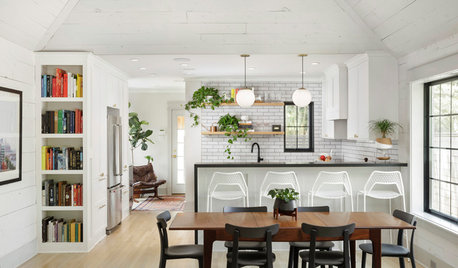
CONTAINER GARDENSHappy Houseplants, Happy People
Potted plants add life and beauty to a room. Learn easy ways to keep them healthy
Full Story
ACCESSORIESTo Chop or Not to Chop?
Karate-chopped pillows pop up in design photos all the time — to the delight of some, the dismay of others. Here's why
Full Story
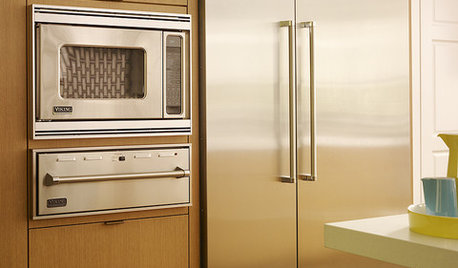
KITCHEN DESIGNA Cook’s 6 Tips for Buying Kitchen Appliances
An avid home chef answers tricky questions about choosing the right oven, stovetop, vent hood and more
Full Story
MOST POPULAR8 Little Remodeling Touches That Make a Big Difference
Make your life easier while making your home nicer, with these design details you'll really appreciate
Full Story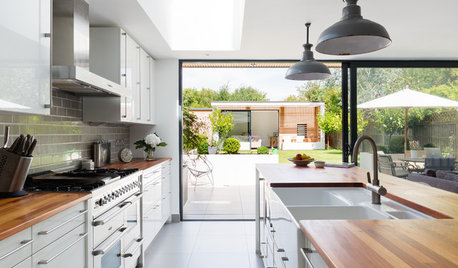
KITCHEN DESIGNA Designer Shares Her Kitchen-Remodel Wish List
As part of a whole-house renovation, she’s making her dream list of kitchen amenities. What are your must-have features?
Full Story
DECORATING GUIDESFrom Queasy Colors to Killer Tables: Your Worst Decorating Mistakes
Houzzers spill the beans about buying blunders, painting problems and DIY disasters
Full Story
REMODELING GUIDESHow to Survive a Kitchen Remodel
Washing mugs in the tub and getting hooked on Pop-Tarts. Here’s what to expect if you stay at home during construction
Full Story
BOOKSCan Tidying Up Result in Life-Changing Magic?
Organizing phenom Marie Kondo promises big results — if you embrace enormous changes and tough choices
Full Story
KITCHEN DESIGNJump-Start Your Kitchen With These Minimalist Essentials
These kitchen tools will get you started on your path to culinary success or delicious downsizing
Full Story
annie1992