How do I back page? (I give up trying to type more!) I'm in Firefox
8 years ago
Featured Answer
Sort by:Oldest
Comments (11)
- 8 years ago
Related Discussions
What can I plant NOW? I'm a black thumb... gave up last year, try
Comments (3)I wouldn't give up and I would try not to get too discouraged. After all, the last two years have had horrendous heat and long periods of drought that have left even life-long gardeners who've gardened successfully for decades shaking their heads and wondering if things possibly could get any worse. Sometimes you can do everything right and things just don't work out. Gardening is not an instant gratification type of activity. To get the results you want, you have to be as persistent as the most persistent of plants, like bermuda grass or ragweed. Plants sometimes die, seeds don't sprout, a neighbor's herbicide drifts through the air and kills your plants....hail smashes your seedlings that you've grown from seed and carefully nurtured or maybe a tornado hits or hail falls...or pests eat your seeds or deer and rabbits devour your plants and the birds and squirrels eat your nut and fruit crops, etc. There are no guarantees and even the folks with the greenest thumbs around lose their share of plants. It happens. I never decide that a plant "won't" or "can't" grow here at our place until I personally have grown it and killed it three times. Even then, I sometimes come back a couple of years later and try again, feeling like the plant that won't/can't grow for me is just a riddle to be explored and solved. The key is to learn from each experience and adjust your processes accordingly. That is how we humans (sometimes ever so slowly) turn our black thumbs into green thumbs. If you have trouble keeping purchased plants in containers alive, you should examine your watering practices. Most people who have this sort of issue are watering their plants too much, a phenomenon known as "loving your plants to death". If you feel like you may be watering too much, purchase a little hand-held moisture meter. You can find them in big box stores, especially in spring time, often near the seeds and seed-starting supplies. You stick the probe of the moisture meter into the soil and you do not water if it shows the soil is moist. Or, use the good old finger method....stick your finger 2 or 3" down into the soil in the container and do not water if you feel moist soil. Sometimes new gardeners over-water because they touch the surface of the soil and it is dry. The plant roots are not on the surface...they are down deeper....so that is the area you need to check for moisture. If your plants are fine while in containers, but die after being put into the ground, examine closely the timing of their planting. Even plants raised from seed in containers or purchased from a store have a time that is best for them to be put into the ground. If you are transplanting them at a time that is either too early and too cold, or too late and too hot for each type of plant, that may be the problem. With seeds, are you wanting a list of some you can start indoors now in flats? Or outdoors in the ground? Let me know and I'll suggest some that meet your needs. When attempting to grow anything, it all starts with the soil. I cannot emphasize that strongly enough. If you are having trouble getting new plants to grow outdoors in the ground, something likely is wrong with the soil. My best guess is that you either have very sandy or silty soil that is low in nutrients and doesn't hold moisture well, so that whatever you plant is too hungry and too dry to grow, or you have heavy clay soil that is dense and compacted and won't allow root growth. Either of these types of soil can be fixed. You also might merely have sandy or silty soil that is highly compacted, which is almost as bad as clay, but much each easier to fix in terms of drainage but harder to fix in terms of nutrition. That fact that you have some established plants growing tells you that something will grow in your soil. However, many ornamentals grown from bulbs and seeds need a looser, more friable soil than shrubs and trees will grow in. At our house, we have many trees and shrubs growing in our dense, heavily-compacted red clay, but I'd never attempt to grow any sort of flowering ornamental in that soil without first doing massive amounts of amendment. Turning the soil you have into the soil you want so that you can grow the plants you want can take time. With the dense red clay soil in front of our house, I amended it for seven years and planted only annual flowers there until I felt it was well-amended enough for me to plant shrubs into it. It was sort of ridiculous to spend that long, but I saw what that clay was like when the house was being constructed and it wasn't pretty. I lost plenty of annual flowers in that area over the years...in wet years some kinds died, in dry years other ones did, but as the soil got better and better every year, less and less died. When the soil finally arrived at the place that I knew it was 'fixed' and ready for anything I wanted to plant there within reason, I planted shrubs, perennials and annuals and, nowadays, I can plant pretty much anything I choose in that location, as long as I choose plants that tolerate our summer heat and drought. Seven years is a long time to experiment and a long time to work to fix soil, but it paid off. I could have fixed it faster and planted in one year, but I was dealing with establishing several different planting areas on different parts of the property and I wanted to fix the soil right so I never had to come back and replace shrubs and trees because they wouldn't grow where they were planted (and I haven't had to do that either). To me, the fact that the trees and shrubs in this area survived the last two drought years with almost no irrigation is evidence that the slow, steady, long-term approach to soil improvement paid off. Please note that I am not saying it will take you seven years to turn the soil you have into the soil you want--just that with the worst soil on our property, that is how long it took me. If you haven't already done the soil jar test for soil texture and composition that I'm going to link below, I'd suggest it is a good starting point. I did this test for the soil in every separate area of our property where I intended to plant something during our first few years here. Our soil varies strongly, changing at times every few feet, so just because I have dense red clay in one spot doesn't mean I have it everywhere. In some spots I found some pretty nice clay with some sand mixed with it, and in other spots I found hideous sandy-stuff which drained so quickly that everything I planted in it the first 3 or 4 years died within its first year. That was another area that required massive soil amendment to make it hold enough moisture to sustain plant life in the summer months. Once you know what sort of soil you have, you can figure out what to do to make it more receptive to good plant growth. As for relatively fool-proof plants, I have a list of plants about which I say "they won't die and you cannot kill them". The list varies, though, depending on what sort of soil you have. Generally cannas, which traditionally are grown from tubers (but now can be grown from seed that will give you blooms a few months after you sow the seed) are on this list, although they can die in the winter in dense, slow-draining soil that holds too much moisture. Morning glories are another plant that is easy from seed, but they'll need a fence or trellis to climb. It may not be your soil. It may be watering practices or something else, or it may be an issue of timing. Zinnias grow great in warm weather, but the seed or even young seedlings can rot and die if planted too early into cold soil, for example. The fact that your lantana died makes me think you might have dense clay that drains slowly. I can grow lantana here only in areas with well-drained soil, and mine still don't get as big as my friends' lantanas get in their really sandy, really well-draining soil, but then, they have issues with tomatoes not growing in that soil because it drains too fast and is prone to nematodes, while tomatoes grow like mad in my amended clay. We all have soil types in which some things will thrive but others will not. The trick is to match up the type of soil you have with the type of plants that grow in it. My brother had white limestone caliche clay soil in Texas and you wouldn't have thought much would grow in it, but we worked and found trees, shrubs and flowers that did well in it. To grow fruit and veggies, we had to remove thousands of rocks and haul in a purchased topsoil/compost mix, but after that, he could grow anything. So, I'm confident that you can find something that will grow in the soil you have, and if you have to amend it to make that possible, then that's what you have to do. Some "die-hard" plants that have grown well for me in the years when I was amending soil and improving it for future years included daffodils, cannas, daylilies, hollyhocks, coral honeysuckle, alliums, dutch iris, dutch hyacinths, verbena bonariensis, four o'clocks, scabiosa, zinnias, morning glories, chamomile (a delightfully-scented herb with small white daisy-like flowers), Texas hummingbird sage, cosmos, malva sylvestris 'Zebrina', and pink evening primrose (horrifically invasive in good soil, but will grow in any soil on our property no matter how poor it is so I planted a lot of it in the early years here), poppies, Laura Bush petunias (not a standard petunia, a petunia derived from native petunias, making it heat-tolerant), and larkspur. All of these are easily grown when directly sown and for, most of them reseed and come back every year on their own with no help from me at all. Be sure you are sowing the seeds properly. Some tiny seeds need to be surface sowed and lightly pressed into the soil and left uncovered because they need light to sprout. I mist those lightly with a hand-held misting bottle because watering them with a hose will wash the seeds away before they can sprout. I also try to sow them and get them to sprout when heavy rain is not forecast because heavy rainfall can wash away the tiny seeds before they sprout. Some of the things you listed with which you experienced poor results really don't care much for our climate. I love the appearance of foxgloves, but they are not well-suited to our hot summers, for example. Elephant ears are tropicals and can fail if planted while soil is still too cold. With everything that's given you trouble, I can think of a reason that you might have had problems, but without knowing for sure exactly what the conditions were at the time they were planted or transplanted, I'd just be guessing. Please keep trying and do not give up. Instead of trying dozens of different plants from seed in a given season, pick out 5 or 6 that you really want to grow, and focus on succeeding with them. Then, every year, add a few more that are new to you. The orange daisies that you planted are a clue about what will grow for you, but to figure it out, you need to know what they are. Since you say they smell bad, I'm wondering if you're talking about marigolds. Marigolds are pretty easy to grow and often reseed themselves. I grow French marigolds, but don't usually plant the larger African marigolds. When I have a problem area where nothing seems to thrive, I deliberately plant something there that is known to be highly invasive....like mint. I'll buy a mint plant and put it in that spot and see how it goes. If mint won't grow there, I try sowing pink evening primrose or larkspur seed there.. There's almost nowhere on our property where I cannot grow either mint or pink evening primrose as both wlll grow in sand/siltyy fast-draining soil (though mint may not survive summer drought in really fast-draining soil unless you water it a lot) and both tolerate dense clay, though the pink evening primrose tolerate it better than the mint will. Poppies and larkspur perform great in my red clay, even unimproved red clay, in all but the wettest of years. In a very wet year, though, they rot off right above the ground. Sometimes we just want to grow something that we love, even though our soil may not be suitable for that plant. I love Texas bluebonnets and have tried and tried and tried to grow them here. The issue is that our clay soil tends to stay too wet in winter for them, except in the driest of winters, and our sandy-silty soil where I grow some flowers is too shady for them. I have had luck with them only in the area right alongside the gravel driveway, where they thrive in the gravel. In dry years we have a lot of them in bloom in April and May, and in wet years, there's a lot less and sometimes practically none. I've accepted I'll never have a wildflower meadow full of Texas bluebonnets, but I'll never give up on having at least a few of them in bloom every year. This is our fifthteenth year here and it is the first time that we have more bluebonnet plants sprouting alongside the driveway than I can count. Some years we've had so few that I could count them on the fingers of two hands. Last year, I counted 86 plants. This year, I stopped counting at 120. Still, if we were to start having a lot of rain that kept their area waterlogged, some or even all of them would drown and rot before they could bloom. That just makes me appreciate them all the more in the year when the weather and soil allow them to live long enough to bloom and set seed. If growing from seed is vexing, buy the kinds of plants you want to grow in six-packs in the spring months when they are easy to find and relatively inexpensive. Transplant them and nurture them. Once you've succeeded in keeping them alive from purchased transplants, then the following year, try growing them from seed. Many perennials are slow to grow from seed and often require cold scarification or even more complicated cold-wet or alternating-temperature scarification in order to get the seed from sprout. These are great candidates for winter sowing (see the wintersowing forum or wintersown.org for info on winter sowing) or you can just purchase them as transplants. When I want to try a perennial I haven't grown here before, I usually buy one transplant and plant it as a test plant. If it does well, then the following year I either buy more or raise them from seed. There are many beautiful perennials that grow very well in many parts of the country with cooler, milder weather but are very difficult if not impossible to grow here in our climate and soils. To find perennials that grow well here, look for the Proven Winners plant labels in nurseries or garden centers. You can google Oklahoma Proven Winners to find the website with these plants to get ideas for what to look for. One more thing. Be sure you are not using a weed and feed product on your lawn areas. The herbicides in those products, if they get into your flower-growing areas, can kill your flowers or prevent them from growing in the first place. Dawn Here is a link that might be useful: Soil Jar Test...See MoreI'm giving up on my English Garden dream
Comments (46)a. the tall skinnny evergreen might be sky pencil holly b. salvia greggii & knockouts (already mentioned) are perfect, i think, for those areas - both are relatively zero-maintenance - you'd only have to "climb up there" once a year c. i agree with the comment that the stonework/concrete will increase the ambient heat - native & drought-tolerant is the way to go if you want low-maintenance d. i've got some purple heart, if you want some - they do spread, but not in an invasive way - they're native to mexico & can handle the heat e. there's someone on our forum who describes their style as "native texas cottage" or something similar - who is that? not exactly an english garden counterpart, but similar - is it the orderly, geometric, trimmed "english garden" that you like, or the overflowing, miss marple "english garden" that you prefer? - that would help us make texas-friendly suggestions f. your structure would look wonderful with a local native flowering vine - have you already told us what part of texas? - that would also go a long way in lowering the ambient temp...See MoreBuyers backed out and I'm trying not to be sad :-(
Comments (25)Thank you everyone. I read your replies last night before going to bed and that was the first time I shed tears over this whole thing. We need to keep our perspective because we don't NEED to sell this house. So all the never ending projects are done and now all we have to do is maintain and enjoy this house. I think we're going to have a party just because. Allison0704 "I can't believe you are selling - saw your post on house thread. I can't believe we are considering moving either." I know, I guess we get the itch on the same schedule! (Allison and I were building our homes at the same time, back in 2006.) lukkiirish "As an ex-realtor, my RE experience has me guessing that this buyer would have been a real PIA anyway." Well, he is a lawyer. ;-) kswl2 "I don't believe home sales are governed by fate, or any kind of divine or otherwise cosmic direction, so the phrase "it wasn't meant to be" is meaningless to me. There is a known cause and effect here, one over which you had no control. It's a shame they backed out, better luck with the next prospect!" I tend to agree with you unless I'm the one on the receiving end of those phrases. They sure mean a lot when I'm down in the dumps! The control part is what we are having a hard time with the most. The buyer relays info to his agent, the agent relays to our agent, then our agent relays to us. There's bound to be a loss of communication down the line. Plus, add in the HOA secretary, HOA president & HOA ACC - lots of people involved and talking to the buyer. Who knows what was really said. MtnRdRedux "LOL, KSWL does not mince words." No she doesn't. That's her best feature! "...useless, self-pitying carrying on and wild, fruitless speculation..." I read this to DH and he wants to know if you were hiding behind a bush in our backyard, while we talked for two hours on our back porch! Wild, fruitless speculation indeed! arkansas_girl "It seems as if, unless these people could find a place that already had the building they need in the back yard, they will not find anything that will give them an approval on a phantom building?" Apparently, they have given up. Their agent said that they have their eye on some commercial property for the workshop and then will buy a house separately. That seems very odd to me. Also seems that their agent might bank a little more if this were the case . . ....See MoreI give up. I'm out of here.
Comments (12)NGA has many good features. Periodically, a plant is posted for evaluation, and people are generally frank. Of course, there are certain hybridizers on the site, so one treads gingerly with their plants. (Some have such national reputation though, they can easily withstand some reservations expressed about particular cultivars.) The NGA database is very valuable, with lots of photos of each plant. The biggest problem I have is that all the pics on the forum go under a monthly heading, such as "June Blooms." There is a swift progression from one poster to another, so there isn't much room for comment, and generally people just post pics without comment. Long headings are also viewer-unfriendly when a few people dominate or the post gets cluttered with idle chatter. Pictures are also smaller and really need clicking for clarity of detail....See More- 8 years ago
- 8 years ago
- 8 years ago
- 8 years ago
- 8 years ago
- 8 years ago
- 8 years agolast modified: 8 years ago
- 8 years ago
Related Stories

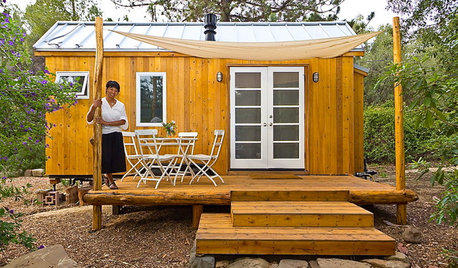
LIFEYou Said It: ‘Just Because I’m Tiny Doesn’t Mean I Don’t Go Big’
Changing things up with space, color and paint dominated the design conversations this week
Full Story
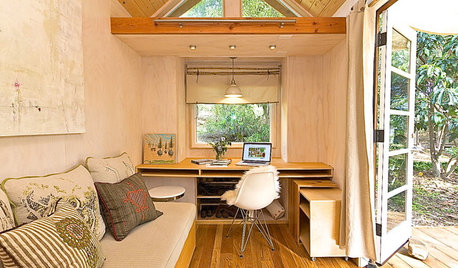
LIFEYou Said It: ‘I’m Never Leaving’ and More Houzz Quotables
Design advice, inspiration and observations that struck a chord this week
Full Story

FUN HOUZZEverything I Need to Know About Decorating I Learned from Downton Abbey
Mind your manors with these 10 decorating tips from the PBS series, returning on January 5
Full Story

INSIDE HOUZZInside Houzz: Updates to the Houzz App for iPhone and iPad
With a redesign and new features, the Houzz app is better than ever
Full Story
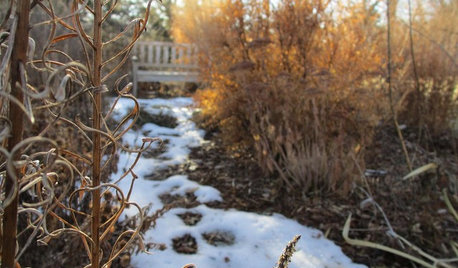
WINTER GARDENING6 Reasons I’m Not Looking Forward to Spring
Not kicking up your heels anticipating rushes of spring color and garden catalogs? You’re not alone
Full Story

I. DIE. The Rachel Zoe Project Is Back
As Season 4 premiers we visit some fashion-forward rooms this tastemaker would appreciate
Full Story
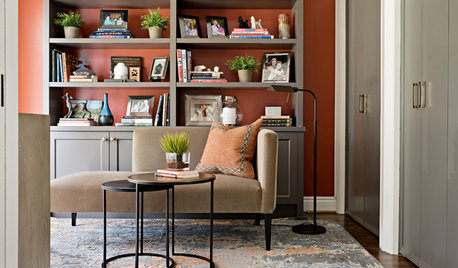
LIFE10 Things Around My Home That I’m Thankful For
A designer shares the comforts big and small that she is grateful for
Full Story

CLOSETSGuest Picks: I'm Dreaming of a Wide Walk-In
20 organizing ideas to get the most out of a small closet
Full Story
REMODELING GUIDESDesign Dilemma: How Do I Modernize My Cedar Walls?
8 Ways to Give Wood Walls a More Contemporary Look
Full Story
DECORATING GUIDESThe Dumbest Decorating Decisions I’ve Ever Made
Caution: Do not try these at home
Full StorySponsored
Customized Award-Winning Interior Design Solutions in Franklin Cnty OH
rob333 (zone 7b)