Houzz Logo Print
garysut

Cooking a roast? Start it frozen!

If you have to cook by the directions "on the box" then this may be for you.

First: Get over this idea that meats have to be cooked at high temperatures. It is too much of a gamble. Why cook a roast at 300+ when you want an internal temperature of 130d or so for beef? 160 for poultry?

On a whim I did this first with chicken legs, then with turkey thighs and when that turned as a success, I then tried it with a whole turkey breast, then on a pork roast. All results were incredibly good.

I take the frozen meat and broil it in the oven or on a grill about 15 minutes. Once the outside is of the texture you want then cook it at 200d until it reaches the desired internal temperature.

Yes, it takes longer but a reasonable cook can adjust for this. Do not worry, once you reach the desired temperature then you have a large window of time to bring the rest of the meal together.

Tasking it out at a lower temperature expecting it to continue cooking at the center will not be as effective because you are not clobbering the outer part with a high temperature. When done, turn off the oven and let it cool slowly.

I now plan to do a 7lb spoon roast and eventually a whole turkey each of which will be seasoned before freezing.


Comments (40)

  • 8 years ago

    How do you keep it from going mushy?

  • 8 years ago

    No matter how I cook a roast, I have never seen one get "mushy". The meat will eventually get to the usual temperature as suggested by any recipe.

    Can you explain your thought?


  • Related Discussions

    Domed lid roasting pan... how do I cook in it?

    Q

    Comments (1)
    How big a roast? What kind of roast? What temp? Pre-heated or cold-start? For example, 50 minutes at 325 won't do much. Another example -- when I do a 4-5lb. potroast, I leave it in there for four hours. There are MANY variables to "roasting". Can you tell us more about what you're doing and what you'd like to do? Cookbooks and internet sites are jam-packed with instructions for producing successful roasts of all kinds. I suspect there's nothing at all wrong with your roasting pan.
    ...See More

    Roasting Frozen Vegetables

    Q

    Comments (14)
    I think that if you have frozen vegetables on hand, you might as well try to roast them as cook them any other way -- I would thaw them and blot off as much water as possible, then toss with olive oil and kosher salt and roast at high heat. What have you got to lose, if you've already got the frozen vegetables? I still buy frozen peas and corn, though -- and chopped spinach for recipes.
    ...See More

    How many times can beef roast be frozen?

    Q

    Comments (11)
    Power tools, eh? LOL I agree with foodona, too many blades have various coatings on them. Not to mention I'd have to kill somebody if meat got sucked into the vents on the tool. I used to get 60# chucks and cut them down. What I do is let the large meat thaw some, in the fridge of course, then when the outside three or four inches have thawed but the big core is still quite frozen, I cut it in two or three pieces. It's much easier when some of the meat has thawed. You can get some purchase on the meat with the knife and it still goes through the frozen part. A good big knife works best. I use my 14" chefs knife, but any chefs knife you have should do a good job. Holding the meat with a clean kitchen towel helps too. If you want to try a power tool to help, perhaps the electric knife. I do agree that asking the butcher who did the job originally would be the easiest. Also in future letting him know nothing bigger than ten pounds, five pounds or whatever your preference is, would be appreciated.
    ...See More

    Ideas for Pre-Cooked Frozen Meals for my Elderly One-Armed MIL

    Q

    Comments (23)
    Thank you so much for the ideas and support! It turns out she has two dorm-sized fridge/freezers (one has her TV on top and I didn't notice it, lol) so she has more storage space than I'd thought. She lives nearby so DH sees her often (stops on his way home from work) but is more than willing to stop by on his way to work with food at least once a week. So far I'm using Rubbermaid-type freezer containers, the same I've always sent home leftovers in, as she has her own dishes. DH's car just had some $$$ repairs so there's no money for buying separate dishes right now - DH says the food's more important than the presentation, and his mom is very practical. So far I've got 2 containers of pasta with beefed-up marinara, 2 meals of brisket with homemade baked beans and new potatoes and 2 bowls of from-scratch, from-fresh chicken soup. It's a start. I don't think the budget would allow it (gonna be a tight holiday season) but do you think she could possibly work a bread machine? I've never used one so have no idea how difficult they are to use. If she could operate it, I may suggest it to my SIL. I'm thinking a small electric skillet and/or a small toaster/convection oven might be useful, if she has the space (and if they would be permitted).
    ...See More
  • 8 years ago
    last modified: 8 years ago

    Home freezing and quickly thawing meats breaks down the cell walls and can lead to mushiness.

  • 8 years ago

    At 200d, it is a slow thaw but even for a fast that, I have never known this to happen. This may be something to consider but I have my doubts. In what meat have you seen this?

    I would think that freezing alone would do the most cell damage.

  • 8 years ago

    Hey whatever works for you.

    I'm happy with the high heat method and by high heat, I mean 500°F not 300°F.

    And 130°F is a higher temperature than I cook my beef to. I prefer to take a roast out of the oven at 115 to 118°F, if I want it rare. 130°F by the time the roast rests is over cooked if you like your beef on the rare to medium rare side.

  • 8 years ago

    Like AnnT, I want it RARE, less than 130F. I've still managed to overcook a couple of large pieces of beef by getting distracted for less than 10 minutes. (sigh) There's nothing to be done if it's overcooked.

    My problem with cooking from frozen is that if it's a large piece of meat, it could stay in the "danger zone" longer than I'm comfortable with. Now, with my own homegrown beef I've been known to eat bits raw, but with commercial beef, not so much.

    I think it would be an interesting experiment to put that frozen roast in the oven and see how long it stays in the 40F-140F range. Large pieces of poultry and pork would be more problematic for me than beef, of course, and I think smaller pieces like legs and thighs would not be a problem.

    I'm not stuck on "there's only one way" to do much of anything, and I've been known to toss a frozen chuck steak into the Nesco when I've forgotten to thaw something. I don't think it turns out any better or worse than cooking it from thawed as it generally gets chopped up and mixed with sauce for BBQ or sandwiches anyway.

    Annie


  • 8 years ago
    last modified: 8 years ago

    So, you like 115 degree rare beef, is that not well within the danger zone? You could well be at risk. Maybe this "Danger Zone" idea needs some clarification.

    The best citation I found was from Cooks Illustrated:

    "Rather than follow the convention of thawing frozen steaks before grilling them, we discovered that we could get steaks that were just as juicy by cooking them straight from the freezer, no planning ahead required. We took advantage of the steaks’ ultrachilled state and started them over a hot fire to develop a well-browned crust on both sides, and then we slid them to the cooler side of the grill to cook until they reached the desired internal temperature.

    A big challenge was choosing the right type of steak: It had to be flavorful since a marinade or spice rub wasn’t an option, and it had to be thick so the interior wouldn’t overcook while the exterior was being browned. We found that 1½-inch-thick rib eyes or New York strips were perfect. We also cooked a full sized 6" thick roast of beef.

    With a steak or a solid piece of meat such as a roast, the bacteria will only be on the outside. They cannot chew their way through a cut of meat so they cannot get inside a roast or steak unless we let them hitchhike on a fork, knife, thermometer or grinder.

    Cooking or grilling the surface of the meat until well done, will kill the bacteria that may be there. If we are careful, there won’t be any bacteria on the inside and so it is okay to cook the inside to a less than well-done temperature."
    (Cooks Illustrated web site)

    If you don't trust CI then look at the USDA and the United States Department of Health and Human Services guidelines for danger zone.

    OTOH: Ground beef has surface meat all through the burger. Cuts that are pulled together and cooked with string can also have bacteria on the hidden surfaces. HOWEVER my roasts are always one piece and all bacteria is on the outside and is that part of the roast is cooked to well done in the first 10 minutes.

    Are you cooking with beef that is large pieces and tied together? Then you should not eat it unless it is cooked to 140 degrees and well beyond the rare stage.

    One further note: Although you can kill off all of the bacteria, you still have to contend with the toxins created. Toxins are not destroyed by heat less than 1000 degrees or so.

    None of my cooking from frozen state will leave the meat in the danger zone long enough for bacteria to generate any toxins to have any level of effect.

    For me, 1/8" deep of outside surface is cooked well done and great for a change in flavor well done to rare. It also renders any surface fat. The rest of the roast interior is as red as you want for rare. You cannot achieve this if cooking at 300d or so.

    I have stopped cooking at higher/rushed temperatures because the quick-cook toughens the meat.

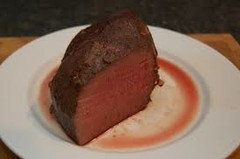
    I found this pic on the internet and it is my goal for this next endeavor.

    P.S. I stand corrected with that 130 measurement, I did mean to write 120.

  • 8 years ago

    That picture is basically what you can get using the sous vide method, every time, regardless of the size of the meat and if the meat is frozen solid or room temperature. You are guaranteed the exact temperature to within one degree, edge to edge. Also, you can never overcook, timing is not that important..

    dcarch


  • 8 years ago

    Like I said whatever works for you. There are many ways, and we all get to choose which one we prefer.

  • 8 years ago

    Actually I think I first heard of cooking turkey from frozen here on this forum. If you google it there’ll be plenty of results. Not sure if they’re exaclty Gary’s method but they’re our there.

    plllog - I know quick freezing is preferred to limit the size of ice crystals tearing the structure but I had not heard about slow melting being preferred. You sure about that?

  • 8 years ago

    What is "slow melting"? In a refrigerator over night is slow, no?
    Maybe you mean slow melting while cooking.
    Interesting.
    Maybe you might call it "Unthaw" as I have heard.....


  • 8 years ago

    I don’t know why I said slow melting, definitely meant slow thawing. Melting meat would be disturbing.

  • 8 years ago

    If the question is we have frozen meat, what do we do with it, I suppose that's fine. My mother used to buy meat by the side, flash frozen, and occasionally frozen pieces went straight into the broiler, too, but I was too young and oblivious to notice much about it. I don't freeze meat at home. If I have to do so in a pinch (to avoid rot and trash), I'll make something stewed with it...or more likely give it away. I don't care for the texture of meat that has been frozen raw at home. The fast vs. slow thaw of raw is more received wisdom, but also taken from cooked foods that have been frozen and thawed. But this might be oversensitivity on my part. I was just asking how the cook frozen accounted for the texture.

  • 8 years ago

    FOAS, I just laughed so hard I actually snorted! Way too spot on a visual there...

  • 8 years ago

    Gary, as I said, I have cooked from frozen and cooked already thawed and find no difference. I owned a Bar & Grille and took all the safety classes required by the state and the federal government, so I'm familiar with the recommendations. I'm still not comfortable taking my 7 pound rolled rump roast and sticking it into the oven at 200 F while still frozen. Everyone else may do as they wish.

    "Unthaw" drives me nuts, incidentally. If you "unthaw" something, you freeze it. If it's frozen, you thaw it. That doesn't stop anyone I know from saying it, though.

    Annie

  • 8 years ago

    I'm thinking it might be one of those older constructions like "unloose" meaning let go of.

  • 8 years ago

    According to Garrison Keilor, it is, if not both are, Minnestoan expressions.

    Regardless, Irregardless, and disirregardless.


  • 8 years ago
    last modified: 8 years ago

    Annie1992:

    "as I said, I have cooked from frozen and cooked already thawed and find no difference."

    I generally don't like turkey breast but when I cooked that whole breast from frozen, it had the best imaginable soft texture all the way through. It was like Turkey Filet Mignon.

    In the past, when I cooked Spoon Roast at the 325 degree (to 115 internal) only the center where the temperature probe indicated rare 1/3 was of the meat was to the texture of my liking. The rest approached medium to well done.

    It is my belief that the lower the temperature, the better the texture. This invites the Sous Vide idea. Not unlike the original Corned Beef Rubin, soft and steamed.

    In about a day or two, I will be cooking my latest roast. I will post pictures then.

  • 8 years ago

    Gary, I had to look up "spoon roast", as it's not something I've ever seen here. Turns out that here we call that "top sirloin".

    FOAS, it's not extremely common here, but I hear it periodically. My daughters do it on purpose so they can laugh at my knee-jerk response of correction. But it's in the dictionary? (sigh) I should have known.

    Annie

  • 8 years ago


    I have cooked meat from frozen solid many many times....back when I would often be gone all afternoon and didn't have an oven that you could set to turn on, but you could set to turn off....I would put a pork shoulder roast in a covered roaster, slice up an onion and lay on top, put on a splash of "something" cider, coffee, beer, wine, water turn the oven to 450 for an hour ( not preheating the oven) and set it to turn off, this was an oven that advertised cooking on retained heart and was so well insulated that you could be baking and a stick of butter on the top would not melt. By the time 5:30 came about the roast was falling apart tender and all I had to do was thicken the gravy, mash some potatoes and steam a vegetable
    And just last week I put a frozen chicken hind quarter on the grill, using indirect heat, and cooked for about 45 minutes and it was perfect.
    With beef and pork, there are no "germs" on the inside to multiply in the danger zone....chicken not so much....and certainly not ground meat nor even stew meat....but a solid roast is pretty clean inside.


  • 8 years ago

    Annie1992:

    I am told that the cut is so tender, you can cut it with,... well, a spoon.....

    Although I am told other names for that cut, I find that it does not satisfy me if it is not actually called a "spoon roast". It neither cooks nor tastes the same. Go figure.....


    Indac92:

    I am told that it is not an oversight for stoves not to have a programmable "On" time and it is for exactly the same reason you are using. Leaving something uncooked in the oven for hours flies back to that misunderstood "Danger Zone".

    I have an idea to reinvent the oven and enable a whole new cooking style but do not have the marketing skills to protect my interests hence I (we) have to live without it.


  • 8 years ago

    This conversation is a bit over my pay grade. But I did understand this from FOAS "Melting meat would be disturbing." LOL!

    Cathy in SWPA

  • 8 years ago

    Footonastump: "I don’t know why I said slow melting, definitely meant slow thawing. Melting meat would be disturbing."

    Not at all, although I understood what you meant, I did picture the "melted meat" that one gets in the drippings from roasting a turkey aside from the rendered fat and juices provided.

  • 8 years ago

    Spoon roast = top sirloin. I've been buying top sirloin a long time and never heard that. These days it's rare that I even freeze larger cuts of meat or poultry.

  • 8 years ago

    I often buy Sterling Silver Top Sirloin roasts from a local store. Never heard it referred to as a spoon roast. One of my favourite roasts. If cooked rare it is very tender and really flavourful. Always roasted on high heat.

  • 8 years ago

    Aha! If soft is what you're after, a little mushiness might not be noticeable. :)

  • 8 years ago

    Just the idea of "soft" mushy meat makes me gag..


  • 8 years ago

    Maybe I might introduce you to making gravy. After the turkey is done, the drippings left in the pan contain oils from the fat, juices from the meat, and that delicious liquid or mushy meat that oozes out from the bird. It is thick, dark brown, and is almost the consistency of jelly (This is not gelatin, a whole different beast.)

    Call it what you want, squiishy, liquefied, mushy, lovely, tasty meat.... I am sure the french have a name for it. It is there in the pan after you pour off the oils and liquids.

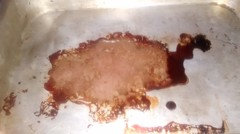
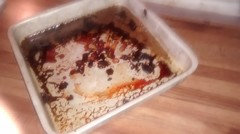
    I wonder how you are cooking meat, I see it in almost everything I roast. Here is what I just retrieved from the first stage of cooking my spoon roast.It is almost 1/4" thick in the center.


  • 8 years ago
    last modified: 8 years ago

    This is a forum of extremely experienced cooks. Why do you think you need to introduce us to making gravy? And what you have in your pan is cooked congealed blood.

  • 8 years ago

    Gary, I'm not sure what you are saying, but a good gravy is easy to master. I suspect that everyone posting here knows how to make gravy.

    You don't need to roast slow or with frozen meat to get drippings. I get drippings when roasting on high heat. Nothing is better than a rich gravy, whether beef, (although I prefer au jus over a thick gravy with beef), pork and chicken or turkey.


  • 8 years ago

    Yes, we know all about gravy. That's made with drippings--one doesn't wish the actual roast to be liquidy mushy slushy, just the juices. The lovely brown stuff is known as "fond". It is reduced and caramelized. The gel stuff is collagen and good for you. And what you have in your picture does look undercooked and bloody...

  • 8 years ago

    Pretty sure everyone here knows how to roast meat, the way they like it, and make gravy. Was there a point to the original post?

  • 8 years ago

    Gary please tell me that is not your gravy drippings.

  • 8 years ago

    "Gary please tell me that is not your gravy drippings."

    hehehehehe
    Why, yes they are....
    Is there a problem with that? (:

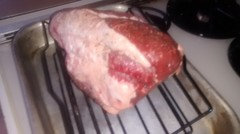
    As I said, that was a pic after the first phase of cooking the 7lb roast. It had just survived 21 minutes (7/side) being blasted on low broil. It now has a very thin crust and that was the drippings as a result.

    I am wondering if the next phase is going to prove/disprove the adage that this would "seal in the juices".

    Since this is a multi-cut roast, bound with string, I decided not to do a roast-from-frozen cook at low temperature. Rather, I placed the roast in the refrigerator to defrost. What was in that pan were basted back onto the roast.

    The internal temperature, after blasting it, was at 27d and after being in the refrigerator a few hours reached 38d. when my thermometer alerted me that it was ready for phase 2. It has been cooking at 200d since then. It is almost done.

    I will hold off divulging whether or not there is a pool of drippings.


  • 8 years ago

    I'm not sure what you're doing there, but the notion that searing (high heat) seals in juices has been disproven. It does caramelize the outside, which is tasty and visually attractive. It also dries the surface bit, which is why the interior seems juicy by comparison. It doesn't seal anything, however.

  • 8 years ago

    I’ve done it, but only because I can’t get downstairs to the freezer to get it, and when I ask DH, he always waits until it’s too late to thaw. It’s ok, but I’d never do it on purpose. To hard to judge cooking time

  • 8 years ago

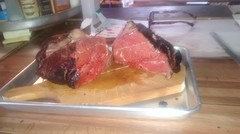
    Here is the result. Finest roast beef I have ever had.

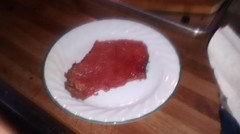
    Cooked for about 3 1/2 hours at 120d to internal temperature of 115d. I think I should have seared the fat layer a bit longer though.The camera seems to have attacked the color a bit. The finished redness was somewhere between the second picture and the third one.


  • 8 years ago

    What you're basically doing is a reverse-sear. But starting with a frozen piece of meat.

    A number of cooks reverse-sear their steaks, but they must be thick steaks, 1 1/2" Slow oven 250° and left to rest while you heat a skillet to sear it.

    I do cook a roast from a frozen state if I get the urge for a well-done roast and forgot to take it out of the freezer. Being well-done, it can cook as long as it wants, without worry about the internal temp which can be hard to gauge from frozen.

  • 8 years ago

    A "reverse sear",... Something I can sink my teeth into and look up for more information.

    This cooking-from-frozen is not new to me. I used to purchase flank steak on sale and cut it to individual portions before freezing. I would grill it on high for the same effect. It was only 3/4" thick or so. The center rare, outside, nicely caramelized.

    I am thinking that I could have sear-broil the surface of the frozen roast then let "unthaw" in the refrigerator before cooking.

    I am going to try a picnic roast next.