

Coal energy. Nuclear energy. Grand child energy.
8 years ago
Featured Answer
Sort by:Oldest
Comments (9)
Related Discussions
China, the cost of US Coal, & Your Electric Bill
Comments (10)Althea, the article doesn't speculate on that, although my impression from other readings is that China will be building infrastructure for many years. I broke down and subscribed to AJC (now I'll probably be bombarded by offers and spam!). So here is the full article for those interested. Sorry, its long! Hey, Monte, whats your take on this. Are coal companies throughout the US (and North America) dumping their steam power contracts to supply coking coal to Europe and are electric power plants all over raising rates to compensate? World markets hit home Coal traffic at crux of Ga. Power rate case Margaret Newkirk - Staff Sunday, April 3, 2005 Looking back, the signs of Georgia Power's 2004 fuel costs debacle were clear. They were lurking in court files in Lexington, Ky., in a series of months-old bankruptcies. They were there in the numbers describing world pig iron production and the cost of shipping cargo around Africa's Cape Horn. The signs were there in the world's half-worried, half-awed speculation that China --- already devouring record levels of steel and the materials needed to make it --- wanted more. Even the suddenly tidy landscapes of Siberia and Mongolia were clues: Would-be entrepreneurs had picked junked cars, abandoned factories and even perfectly good public parks clean of anything resembling the metals China craved. Mix all that together, and it explains why Georgia Power is paying $40 million to $50 million a month more for fuel for its plants than it expected to --- an unforeseeable collision of worldwide events. That's the scenario Georgia Power will be bringing to the Georgia Public Service Commission this month, when the commission begins hearings on the company's request for the biggest single boost in consumer electric bills in Georgia Power history. The other side will argue that at least some of the problem was absolutely predictable and that Georgia Power blew it closer to home. As an attorney representing the state's textile mills put it last month, "The hemorrhaging is in Birmingham," where a Georgia Power affiliate makes decisions about fuel purchases. The company is asking for an increase of nearly 40 percent in the portion of electric bills that pays for fuel for its plants, like coal, natural gas and nuclear fuel. It translates into a 10 percent increase in the average residential customer's bill --- and an even larger boost for industrial customers, which use exponentially more fuel. At $550 million, the hike would be the company's single largest one-year increase of any kind. Only the combined price of the two rate increases, two years apart, that paid for the fabulously expensive Plant Vogtle in the 1980s exceeds it --- and not by much. The fuel cost case will be hard-fought. Among other things, the company will have to explain to regulators how a fuel charge increase approved in August 2003, which the company claimed would be enough to pay for fuel for at least 18 months, put the company and its ratepayers hundreds of millions of dollars in the red instead. Blame it on China The company says its whopper of a fuel boost is about economic globalization come home to roost in Georgia electric bills. Georgia Power says it got caught in a worldwide economic shudder that no one quite predicted, with effects that dominoed from Asia, to Europe and across the Atlantic to the Appalachian coal fields before finding their way to the Georgia PSC. It says developments with the economic world's usual suspect, China, set off shock waves that ended up doubling and sometimes tripling prices of the most unlikely of suspects, good old all-American coal. At the same time, several Appalachian coal mine companies were working their way through bankruptcy. As prices surged, the mines got courts to cancel long-term, lower-priced contracts with utility companies, including Georgia Power. Then, they could command the heady new prices, and Georgia Power was disastrously exposed. That's the company's story. Its opponents, including the Governor's Office of Consumer Affairs, the PSC staff and Georgia Power's largest customers, aren't disputing that it happened. But they say at least part --- and maybe a sizable part --- of Georgia Power's fuel debacle lies with decisions made in Birmingham. Opponents are asking how Georgia Power let its costs spin out of control, why it failed to adequately hedge against commodity price changes and what it did to keep costs as low as possible once trouble arrived. They say Georgia Power should have known its longterm contracts were threatened, before coal prices spiked and the PSC set its last fuel charge increase in August 2003. The opposition also suggests that Georgia Power compensated for its fuel problems by buying power from affiliates, and paying those affiliates too much. Nevertheless, the core of what Georgia Power says happened to its fuel supplies in 2004 did in fact happen, not only to Georgia Power but to other coal-fired power companies. In coal-burning Kentucky, the state's four electric providers reported jumps in their coal costs over the previous two years that ranged from 3 percent to more than 60 percent, and are asking to charge customers more because of it. Even the hardest-hit company's increase request is a little less than Georgia Power's. But even utility opponents concede 2004 was an unusual year. As one expert said in a recent case, "No one predicted the current, severe spike." The witness was a consultant with the McCloskey Group, a leading expert on coal pricing, testifying against Nova Scotia Power. Going international That coal --- the longtime bedrock of reliable, cheap energy --- would become a financial problem is odd. U.S. coal has been affordable for years, in part because it hasn't been a player in world markets. That changed in the second half of 2003, according to a November study by the Arlington, Va.-based Energy Ventures Analysis. After years of going about their business largely independent of the rest of the world, U.S. coal companies began exporting again. The change happened largely in central Appalachian coal country, which includes Kentucky, Virginia and parts of West Virginia and Tennessee. It's the region from which Georgia Power buys most of its coal. Here's the background: Central Appalachia mines two kinds of coal. Steam coal is burned for power. Central Appalachian steam coal is prized because it's cleaner-burning --- producing less sulfur dioxide pollution --- than most other Eastern coals. For companies like Georgia Power, which is only now beginning to install state-of-the-art equipment to control that pollution, the coal helped with Clean Air Act compliance. The region also mines metallurgical or coking coal, used to make steel. For years, that high-grade coal had no real buyers. U.S. steel makers were closing up shop and European countries --- once a market for central Appalachia coking coal --- were getting it cheaper from coal-mining giants like Australia. The result was that central Appalachian coal mine operators in the 1990s sold the higher-grade coking coal as steam coal whenever possible. The situation created a deceptively ample central Appalachian coal supply for power companies, according to the EVA study, and helped keep prices reasonable. Artificially reasonable, as it turned out. The changes that turned the central Appalachian coal market upside down began in China. The country had been gobbling steel for a couple of years before 2003, as it built an industrial infrastructure. In 2003, though, both China's steel consumption and its steel output reached new heights. Chinese and Japanese steel mills ramped up production to meet the demand, inhaling coking coal from Australia and China itself: By the fall, the world had a serious shortage of coking coal. That shortage might have made little difference in the hills of Appalachia, if the Chinese mills hadn't needed huge amounts of ore, too. The job of delivering it fell to ocean freighters, which sharply raised their prices. The cost of ocean shipping tripled between the beginning and end of 2003, almost entirely because of China's demand for ore. The increase affected European steel mills, which had been importing Australian coking coal. Now that coal was not only in short supply and expensive, but had the cost of a long ocean trip tacked on. Appalachian coal mines were closer. Their shipping costs were lower. Central Appalachian coal companies could sell coking coal to Europe more cheaply than Australia could, even while reaping huge prices for the coal itself. According to EVA, coking coal that fetched $32 per ton at U.S. mines in March 2003 cost $54 per ton by that December. With money to be made again in coking coal, mining companies turned on a dime and went after it. They stopped selling higher-grade coal to the power companies as steam coal and sent it off to earn its keep in the metallurgical business. Soon, there was a shortage of central Appalachian steam coal, too. As supplies shrank, prices rose. In August 2003, when the PSC last set Georgia Power's fuel charge, central Appalachian coal was going for $30 to $35 per ton, according to a report by the U.S. Energy Information Administration, based on data from Platt's Coal Outlook. The price hit $45 per ton by January, about $57 per ton by March and more than $65 by the end of 2004. The EIA numbers are based on one coal source per region. The new prices were a windfall for all central Appalachian coal companies. But they posed an even greater opportunity for a subset of them --- those that had filed for Chapter 11 bankruptcy protection before coal prices turned, including some with long-term contracts to supply Georgia Power. 3 contracts scrapped Federal bankruptcy law allows companies in Chapter 11 to shuck uneconomical contracts, with a bankruptcy judge's approval. And that's exactly what three of Georgia Power's coal suppliers did, scrapping contracts that required them to sell coal at prices less than the new market was paying. It cost Georgia Power 10 million tons of coal. It was in response to that, largely, that the company bought power produced by affiliates in 2004 --- at prices critics say were too high and the firm says were still lower than the price of spot coal. It's hard to argue that the company didn't see the lost contracts coming. Two of its biggest bankrupt suppliers --- Horizon Energy and James River Coal --- filed in 2002 and 2003, months before Georgia Power got its last fuel charge boost. Horizon had been into, out of and back into bankruptcy over a period of several months starting in 2002. The companies made no secret of their intentions, either. The Kentucky Coal Association, which represents coal firms, explained the James River bankruptcy in a spring 2003 newsletter: Chapter 11 is the only way coal companies can get out from under utility contracts, the newsletter said. And Horizon Energy asked its bankruptcy judge for a streamlined procedure to cancel contracts in early 2003, and then spent the entire year taking advantage of it. The company scrapped coal contracts with four major utility companies before getting to Georgia Power. Georgia Power got its own cancellation notice from Horizon two days after Christmas in 2003, giving the company 15 days to object. Perhaps because the outcome seemed inevitable, Georgia Power never answered. By Jan. 8, 2004, its coal contract with Horizon was gone....See Morefree energy?
Comments (9)Yes, I understand a heat-pump is not a net producer of energy (if it was, our energy crisis would be solved).The way the proponents of heat-pumps present the data makes it seem like it, though. I think it's intentionally misleading. What I'm getting at is, what is the embedded energy cost of a heat-pump intallation? And does it pay back in terms of energy, not just dollars? Fossil-fuel energy, as we know, is absurdly under-priced, and consequently so is electricity. It's a question we have to ask of all the alternative technologies: are they a net gain, when the whole energy cost is taken into account? Ethanol is not a gain, with current practice. Hydrogen fuel cells do not seem to be a gain, with current technology. Recently I bought an expensive, well-made solar-powered outdoor light. I wonder: if the total amount of fossil-fuel used in it's manufacture were instead burned in a gas-fired lantern, for instance, would it be less light or more than that which the solar light will emit in it's total lifetime? Will the hybrid cars pay back the embedded energy cost of the huge battery packs and other expensive elements? They work out ok for the consumer in terms of dollars, but I'm guessing that toyota et al are eating some of the increased energy cost. IOW, in the post fossil-fuel world, will we possibly be able to afford and sustain these kinds of high-tech gadgets? When all of industry has to operate on alternative energies? It seems very unlikely to me at this point....See MoreEnergy demands outpace supply
Comments (20)Wind turbines have been pretty tough on the raptor population here in CA. I'm much more excited about the possibility of learning from wind turbines technology applying it towards creating ocean turbines in the Pacific. Wave power can spin magnets (like all turbines) to create electricity directly (which requires a netwotk of cables for transmission) or it can be used for electrolysis of seawater to create hydrogen gas, it the US can ever get the hydrogen fuel cell to be practical. Wave power devices extract energy directly from surface waves or from pressure fluctuations below the surface. Renewable energy analysts believe there is enough energy in the ocean waves to provide up to 2 terawatts of electricity. (A terawatt is equal to a trillion watts.) Offshore systems are situated in deep water, typically of more than 40 meters (131 feet). Sophisticated mechanismsÂlike the Salter DuckÂuse the bobbing motion of the waves to power a pump that creates electricity. Other offshore devices use hoses connected to floats that ride the waves. The rise and fall of the float stretches and relaxes the hose, which pressurizes the water, which, in turn, rotates a turbine. Specially built seagoing vessels can also capture the energy of offshore waves. These floating platforms create electricity by funneling waves through internal turbines and then back into the sea. Built along shorelines, onshore wave power systems extract the energy in breaking waves. Onshore system technologies include the following: Oscillating water column The oscillating water column consists of a partially submerged concrete or steel structure that has an opening to the sea below the waterline. It encloses a column of air above a column of water. As waves enter the air column, they cause the water column to rise and fall. This alternately compresses and depressurizes the air column. As the wave retreats, the air is drawn back through the turbine as a result of the reduced air pressure on the ocean side of the turbine. Tapchan The tapchan, or tapered channel system, consists of a tapered channel, which feeds into a reservoir constructed on cliffs above sea level. The narrowing of the channel causes the waves to increase in height as they move toward the cliff face. The waves spill over the walls of the channel into the reservoir and the stored water is then fed through a turbine. Pendulor device The pendulor wave-power device consists of a rectangular box, which is open to the sea at one end. A flap is hinged over the opening and the action of the waves causes the flap to swing back and forth. The motion powers a hydraulic pump and a generator. Clearly, we can't keep burning carbon-based fuels....See MoreThree Energy and Money Saving Tips You Can Use TODAY
Comments (39)Happy new year! I would normally have replied much sooner, but everything has been so busy with Christmas, then new year and all the rest. Anyway, I have to agree that conservation is by far the best thing we can do right now, and I believe that it will allways be useful as almost all energy comes with a penalty. Both environmental and financial. I've been thinking about conservation quite a bit recently as I'm trying to get a rough idea how much it would cost to build an affordable house (you might have seen my posts about it?) and I want it to be economical to live in. This is partly an environmental concern, but also because it would be misguided to build an affordable house that isn't also affordable to live in. The majority of most anyone's wages go towards their house, so if I can build a house that uses minimal energy I can spend the money in other more enjoyable ways. I can also design it in such a way it comes in to the lowest possible tax category, but that's beyond the scope of this forum. One of the things that surprises me is when I say I want to build a low energy house that uses renewable energy, people tend to picture something very expensive and custom built. When I researched it I found that commonly they're high end houses built for wealthy customers who were willing to spend a lot of money to have luxury items, like solar PV panels and houses built half underground. I don't however see why houses that use very little energy have to be reserved for wealthy people building custom houses, after all one of the main attractions of a low energy house is the very small monthly bills. A low energy house design/concept that comes within (preferably below) average house prices is long overdue, and also has a massive market potential. Admittedly domestic energy use is a fraction of that used by industrial processes, and also accounts for a similarly small percentage of pollution, but I know nothing about industrial processes and (thankfully) don't pay the bills for them either. At least not directly. I do however know something about houses and how I believe they could work better. My main aim is to build it smaller, but use the space in such a way it's relatively spacious with plenty of storage. I also want to exchange traditional and generally energy wasting and expensive materials for newer materials that cost less. Insulation, and lots of it, is important. I also want high quality finishing materials, but avoiding ornate details and using a more minimalist style should keep the costs reasonable. The other main issue is using the most energy efficient appliances possible, and also installing some renewable stuff like solar hot water heating. At least in concept it seems to work, and hopefully one day I will be able to try it out....See More 8 years ago


Related Stories

GREEN BUILDINGHouzz Tour: See a Concrete House With a $0 Energy Bill
Passive House principles and universal design elements result in a home that’ll work efficiently for the long haul
Full Story
CONTRACTOR TIPSBuilding Permits: What to Know About Green Building and Energy Codes
In Part 4 of our series examining the residential permit process, we review typical green building and energy code requirements
Full Story
HOUZZ TOURSMy Houzz: Goodwill and Good Taste in a Grand Colonial
Welcoming the community for charity fundraisers and more, this Massachusetts home radiates graciousness
Full Story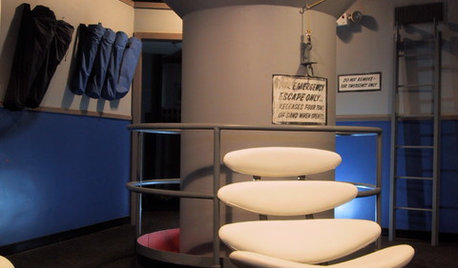
FUN HOUZZTaking Cover in a Former Nuclear Missile Silo
A Cold War relic is now a modern home, thanks to an Australian architect with a flair for the unusual
Full Story
TRADITIONAL HOMESMy Houzz: Step Inside a Grand 1800s Victorian
A 7,000-square-foot historic estate returns to glory, thanks to loving renovations by a tireless Texas couple
Full Story
GREEN BUILDINGMeet a High-Tech Home That Monitors Itself
Energy vampires have nowhere to hide in this LEED Platinum home, as energy efficient as it is architecturally beautiful
Full Story
GREEN BUILDINGOff the Grid: Ready to Pull the Plug on City Power?
What to consider if you want to stop relying on public utilities — or just have a more energy-efficient home
Full Story
GREEN BUILDINGWhat's LEED All About, Anyway?
If you're looking for a sustainable, energy-efficient home, look into LEED certification. Learn about the program and its rating system here
Full Story
PRODUCT PICKSGuest Picks: Obsessed With Otomi
Bring the energy of Mexico’s dynamic colors and patterns to your walls, bedding, furniture and more
Full Story
GREAT HOME PROJECTSHow to Add a Radiant Heat System
Enjoy comfy, consistent temperatures and maybe even energy savings with hydronic heating and cooling
Full Story
glenda_al