

Term Life Insurance
8 years ago
Featured Answer
Sort by:Oldest
Comments (7)
 8 years ago
- 8 years ago
Related Discussions
Life Insurance
Comments (7)Thanks for the additional thoughts. I know I explained things sort of clinically and coldly, but DH and his ex-wife are very realistic about these things and we often talk about the possibilities of the future. When you have a kid like this, you DO need to be very practical. For example, when she turns 18 next year, she'll need to be adopted by us (her mother is bowing out), otherwise, she'll become a ward of the state and we don't want that to happen. WE want to make the decisions about where she'll live and who will care for her, not leave that up to the state. That's not to say that this isn't an emotional decision for DH, as has been pointed out. It certainly is, however, DH has had to remove himself from some of the emotion to make these decisions. The funeral is already planned, right down to who is doing what at the service - precisely so they don't have to worry about making those decisions when emotions are running high. There won't be a squabble about the finances, because we pay for everything as it is, even though step-daughter lives with her mother...we'll pay every last dime of the funeral, just as we'll pay every last dime of her existence until that point, and will do the same for step-son's college. That's just a given, since ex-wife has no money whatsoever (there was never any alimony required when they divorced, additionally she remarried before DH and I got married). Even though we foot the bill, in the interest of keeping the peace and out of respect for the kids, we do take ex-wife's opinions into consideration and more often than not, decisions are made jointly. As suggested, I guess I'll tell DH to decide if we do more research into insurance or pay the premium for this year and see where that takes us. We do expect the premium to go up every year and no, we have no idea of what life expectancy looks like. It could be next week or it could be several years. Sorry, looks like I've rambled a bit but wanted to provide a bit more context for the question. Thank you....See MoreRetirement savings or long-term disability insurance?
Comments (4)Am in my late 50's. We don't have longterm disability insurance. It's a real gamble. My dad died young, was cared for at home by my mom--no real expense there. My mother just died this past November at age 85--she was at Thanksgiving dinner with us one night, and gone the next. Long term disability? Nope--she was still living independently in her own apartment. Now, note that in her 40's she had a number of health issues--anyone guessing would probably have figured that she'd either have died early, or have been disabled for a long time, and needed a lot of care in later years. Fact is, other than her regular check ups, visits to the podiatrist to care for her feet, and having her cataracts operated on, Mom hadn't had any serious medical treatment for over 20 years when she died. My father-in-law went very quickly, too--at age 82. He was still working as a plumber in November, spent a couple of months in the hospital, then died the beg. of February. I'm not saying you should or shouldn't get the insurance--only you can decide if it's right for you. But to my way of thinking, I don't see all that many people in my life who actually need longterm care. Most seem to either go quickly, or be able to manage their needs anyway. And the insurance companies are banking on the fact that their scare tactics will get lots of people to sign up--many who will never make a claim. For example, I've got an aunt who has had earthquake insurance for many years--no matter to her that we live in an area of the country that has never had a major earthquake in anyone living's memory. But they were more than happy to sell her a policy. I think she also has flood insurance--but she lives on the 6th floor of an apartment building. We also don't get floods of any size around here. That would have to be some departure from the norm for her to collect! And what about the safety of investing in an insurance company? What if the company goes out of business in years to come? Or waht if the funds are mismanaged or depleted by embezzlement. There is a huge scandal in the country right now regarding pre-paid funerals. People paid ahead to make sure their wishes would be taken care of, and many of the funeral homes have stolen those funds and families are having to come up with money to pay the cost of a funeral twice--the second time at a much higher price. Personally (and I'm not telling you what to do)--I prefer to save and control my own money. I'm not a fan of allowing others to take my funds--as in prepaid funerals, extra insurance, IRA's, etc. I do have one small SEP account, but only because I had a year where I needed some serious deductions, and that one was a reasonable way of keeping a few more of my own dollars. It's important to me to have the freedom to invest as I choose, and to move my money from here to there, depending upon what the economy is doing. I've just known too many people who have relied on others to nurture their savings, and lost everything. My sister is a case in point--worked for over 30 years for one company, was up in corporate management when the company was sold and dessimated by a larger one. She had a GOOD pension plan--but the funds were stolen by the new management, and when the company folded, she got a measely, one-time payout of $16,000!...See MoreWills,homes,life insurance,etc questions
Comments (5)Other things being equal, many of us prefer to get life, and possibly also disability insurance, related to paying a mortgage off on our own as a separate contract. The mortgage insurance's beneficiary is the bank, not the mortgage holder, who, though paying the premium, has no flexibility in case of need. The amount of coverage decreases over the years, as it covers only the portion of the mortgage remaining unpaid, while usually for a similar cost (sometimes lower), a mortgagee can get regular term life insurance for the full amount originally owing on the mortgage ... and it usually stays at that level throughout, if they so choose. Premium rate may increase at the end of the agreed term, if it is shorter than the years that the mortgage is to run. If premium rates are comparable, if the mortgagee dies the amount of benefit making up the difference between the original amount owing and the amount remaining owing at the time (which they would likely pay to the bank to retire the mortgage) would be really helpful to the survivors. It's wise to carry disability insurance, as well, as there's a far greater possibility of long-term disability (about 4 times) than of death during one's years of employment ... lacking employment income, how does one pay mortgage should s/he become disabled? Lacking a will ... no problem ... as long as the owner of the family's assets ... remains alive. Suppose someone were to come to your house tomorrow and, reading from a clipboard, ask you what your family owns, then say that this and that was to be done with each of the various pArts of it. As you listened, you'd likely object strongly, sputteringly saying, "But ... but ... we don't want our things and money to be dealt with that way!!". That person would just be telling you what your state's rules are, that would come into effect ... ... if the owner of the assets dies without a will!! So - get the will in place ... before you die. Can't do it after!! ole joyful P.S. Confession time. I'm close to 80 ... and I don't got one, either. Stupid. My kids'd get the stuff ... but they'd get a lot less, after all of those admin. costs. And they'd get the stuff later. And the charities'd get ... nothing! o j...See More28 Tips To Save Money
Comments (5)On #s 15 & 16, I think it's important to point out that often the alternative to refi and the like is simply pay down the principle! Especially if you're early in the mortgage, every nickel you pay toward the principle means the balance of the loan's interest on that nickel goes into your pocket. Ol' Joyful, I'll need some of your expertise here, but could you figure a rough calculation of an average type house loan, average refi costs applied to the current loan and how that would compare in the end? I think it'd be interesting. Also, said before, but often people think they "need" a new car and don't consider if they put some money into the old one, it'd save in the long run. Remember, new cars have higher insurance and license costs so there's more than the initial price to consider. I would take a bit of issue too with the convenience store avoidance. You could actually save money if wise. Often, convenience stores sell eggs, milk, bread etc at very low prices, often far less than the markets. Plus it's not a special trip, saves time plus there can be (tho not guaranteed - it's up to you) fewer impulse buys. The longer you're in the grocery store, stats say you'll spend more. Again, it's how savvy you are, but be careful. #18 (Shudder) Buyer's Brokers are seldom a good thing. Let's face facts, no real estate agent/realtor or the like works FOR the buyer! Who pays them? The seller. How do they get paid more? By "benefitting" the seller. There's no way the buyer benefits from realtors. The fewer the better in most cases. Why? Because you can often negotiate the realtor fees. If you have one realtor taking the entire commission, it's far easier to negotiate them down than to negotiate with multiple agents and try to negotiate down when they're getting 1/4 or less of the commission. Beware of this statement and check into these claims. You're far better off to have a good real estate attorney on your side. S/He'll be working for YOUR benefit. Mine found problems in the paperwork and embarrassed the daylights out of the stack of realtors, closers and the like at my closing! It was hilarious! Now as for the inspector, yes, that can be worthwhile, but don't use one recommended by the realtor (kickbacks) and make sure you know what they're inspecting, their qualifications and the like. A good alternative can be a trusted friend with qualifications. Hire like any professional. Realize, though, that the inspectors DO NOT GUARANTEE the house! So if they overlook something, it's not their fault or responsibility and they won't be doing anything for you so know what you're getting. A title examination, especially of abstract properties, can be very important especially if you don't know how to read an abstract. Torrens is less problematic. Buying a home brings up a pandora's box of potential problems and far too many to go into here, but there's some things to be careful of. #21 Consumer Reports is a pet peeve of mine. They're often very biased in their reporting. Plus, keep in mind that they do not "test" ALL models and versions, even of similar products! Do you realize that the washer you buy at Home Depot is different than the one you buy at Best Buy and they're both different than the one you buy from a mom-n-pop dealer? That can have significant differences in the specs and needs. One can have cycles and features the other doesn't. Don't get caught up in the CR myth. Read their magazine with a shaker full of salt and do far more research than CR. You'll be doing yourself a favor. That's enough for now. There's more opinions coming, I'm sure! :) Happy saving all! Enjoy the frugal season!...See More- 8 years ago
- 8 years ago
- 8 years ago
- 8 years ago
Related Stories
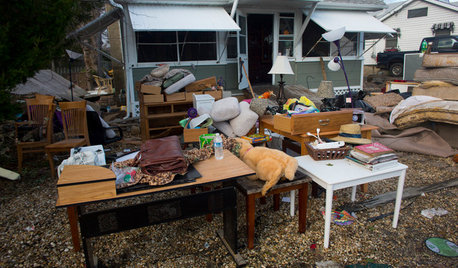
DISASTER PREP & RECOVERYHow to Prep for Disaster Insurance Claims
Tools and tips for making an inventory list, documenting damage to your home, and working with your adjuster
Full Story
DECORATING GUIDES13 Decorating Tips for Short-Term Renters
Mirrors, curtains, lamps and other features set a stylish tone you can take with you
Full Story
GREEN BUILDINGZero Net Energy: A Hardworking-House Term to Know
Homes that consume only as much energy as they produce by renewable means are a goal for builders. Learn what ZNE means for you
Full Story
DECORATING GUIDESSmall Changes to Simplify Your Long-Term Storage
Conquer your attic and basement storage in more than a day, with these easy, bite-size steps for sorting, storing and protecting your stuff
Full Story
SMALL HOMESTiny Houzz Tour: Living the Good Life Their Way
This owner-built home in Australia may be on the small side, but it provides the perfect space for the family’s big dreams to come true
Full Story
TASTEMAKERSNew Series to Give a Glimpse of Life ‘Unplugged’
See what happens when city dwellers relocate to off-the-grid homes in a new show premiering July 29. Tell us: Could you pack up urban life?
Full Story
ORGANIZINGWant to Streamline Your Life? Get a System
Reduce stress and free up more time for the things that really matter by establishing specific procedures for everyday tasks
Full Story
HOUZZ TV FAVORITESMy Houzz: New Life and Style for a 1976 Airstream
The owner of this 1976 Ambassador Airstream embraces flexible furniture and clean, organized spaces
Full Story
TRADITIONAL HOMESHouzz Tour: New Life for a Historic Mill House
Respectful reconstruction, an addition and a new site take a Delaware home from the 18th century to the present
Full Story
MOST POPULARThree Magic Words for a Clean Home and a Better Life
Not a natural tidying and organizing whiz? Take hope in one short phrase that can change your life forever
Full StorySponsored

Central Ohio's Trusted Home Remodeler Specializing in Kitchens & Baths
Elmer J Fudd