

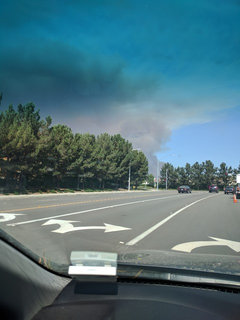
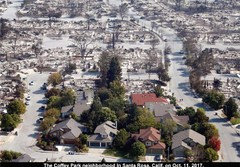
CA wine country wild fires
9 years ago
Featured Answer
Sort by:Oldest
Comments (39)
Related Discussions
Sonoma, CA?
Comments (11)Nanelle, your $330K home price sounds way low. Maybe Vacaville is a lot cheaper than Sonoma and the Bay area. For someone from Washington or Oregon, the Spring wildflowers in California will amaze you. Good website: http://www.calphoto.com/wflower.htm. Sonoma is also close to the coast, where you can find Muir Woods, redwood groves, and Point Reyes National Seashore. You will also be a few hours drive from Yosemite and Sequoia National Parks, and seven hours drive from Death Valley, with its amazing wildflowers in late Winter. California is a stunningly beautiful place. Don't go to Muir Woods or Yosemite on Summer weekends; they are packed with visitors. Winters are 10-15 degrees warmer than in Portland, with some rainy, overcast days. Summers can get quite hot and uncomfortable. The closer you are to the coast, the cooler it will be in the Summer, and the milder it will be in the Winter. A big difference between western WA/OR and Sonoma is that the natural Sonoma landscape gets brown and dry in Summer and Fall. I think of the climate there as a cool desert. Compared to WA/OR, summers are very dry, and you will need to irrigate a lot more. Gardens to visit: Tilden Regional Parks Botanic Garden, UC Berkeley Botanic Garden, Strybing Arboretum and Botanic Garden, Quarry Hill Botanic Garden. I lived in San Leandro for 6 years, and enjoyed gardening there. I grew blueberries and black raspberries very successfully, even though they are not supposed to grow there because of their winter chilling requirements. The big negative for me was the snails. They destroyed everything until I decimated the population with massive amounts of bait over a several year period. Daytime summer temperatures in San Leandro are actually lower than in Portland, because it is so close to the Pacific Ocean. The hottest weather seems to happen all through September, which is very strange for someone from Portland....See MoreCheap wine, or wine snobs (long)
Comments (7)Allison - wine mentor? What a cool job that would be. I don't know. I've been drinking wine for years and ask questions all the time. Now that I'm selling it I end up answering a few questions too, but my suggestion is to read and taste. And if you ever get out to NYC, call me. That's serious incidentally. Anyway, I can offer a few suggestions for people. First, don't overlook Beaujolais. It's been producing wine for centuries, mostly for cafes around Lyon, where there were a number of silk merchants. They make a young wine for drinking within a few months and back in the 80s a couple British guys were drinking and made a bet with each other about which one could get the wine to London fastest. That set off a trend for about 10 - 20 years and increased sales of that young Beaujolais. Production shot up and a lot of second rate wine was made to cash in. Then the fad faded, the market crashed, and the area is suffering today. BUT - in the hills around Beaujolais they also have what are called "cru" sites and those are very much worth investigating. For education, bypass the young stuff and look for the crus - they will have a name like Fleurie, Julianas, Morgon, Moulon au Vent, Regnie, or something like that. This area is just south of Burgundy, and some of the winemakers in Burgundy work in both places and you can learn a lot and have fun. Find a producer, say Chermette, or Brun, for example, and sample the wine of the same producer from Fleurie, Morgon and Julianas. Even buy George Dubeouf wines from those places - they are great values and will show you the differences in the soils and environment and microclimates, which the French call "terroir". Because it is the same winemaking, you take that variable out of the equation and presumably taste only the differences that result from the terroir. It's a good lesson and the wine is wonderful, inexpensive, and not high in alcohol. And even try the young Beaujolais just to compare. As a rule it will be simpler, but quite nice. If you can start to understand those, you start to understand what people get excited about when they talk of Burgundy or Piedmont. You can do it with riesling too - they pretty much never use oak barrels in Germany for the rieslings, so you only taste the winemaker and the vineyard. For example, find some Prum - J.J. Prum, S.A. Prum, Weins Prum. They are related family and they make wine from the same vineyard. You can learn about the differences in winemaking. Or or St Urbans Hof and Zillikin who both use the Ockfener Bockstein vineyard and who are probably cheaper than the Prums. Or find a producer who uses multiple vineyards, like St Urbans Hof again, and try their Ockfener Bockstein vs their wine from Piesporter Goldtropfchen, looking at the same winemaker but different vineyards. Try to find Kabinett wines and don't mix Kabinett and Spatlese, etc., for this study, because the sugar will through you off. Write down the differences between the wines that you observe. You can do it in CA too - Andy Beckstoffer owns vineyards that produce really great wines, but those are going to be much more costly than those rieslings are. Schrader for example, is one of many people making wine from the Tokalon property, but you're talking $100 a bottle. The Prums have had their vineyards for years, maybe centuries. Beckstoffer moved to CA from Virginia, bought property, and sells his grapes at a price based on what the winery is going to charge for the wine! So those CA wineries, being pretty new and only recently opened by guys who became millionaires somewhere else and who paid $200,000 and acre, or else whatever Beckstoffer wants per ton, charge a lot of money for their wines, whereas Prum can sell a wine for $26 or less. I love the idea of Two Buck Chuck, but the wine isn't so great IMO. I'd rather pay another dollar and get a better wine and I think they could do it. What you won't have however, is the distinction you get from the other wines I suggested. That's because it is designed specifically NOT to have it. The idea is to create consistency, not personality. Again, no problem here and more power to him, but for me it would be boring to drink the same thing all the time, and I collect wine specifically to have variety. In 2005, the cabernet sauvignon harvest in Napa was pretty big and pretty good. People thinned the crop several times in some vineyards but the grape clusters were large so they still got more tonnage per acre than they normally do, although the wines are top notch anyhow. Prices? Not going anywhere good as far as I can see. As long as wines are selling for $100 and up, the prices aren't coming down. And about that thinning - in France and other regions, there are often regulations regarding yield per acre. They think that if you cut some young grape bunches off, called "green harvesting", the remaining ones will be more concentrated. That's becoming a basic tenet of winemaking. But there is some evidence and some opinion that this is BS. The concept was developed before there were adequate ways to measure. So a long time ago in France they thought they could improve quality by limiting yield. But maybe that's artificial, as illustrated by the 2005 vintage in CA. In a nice warm year, with adequate rain and no heat and healthy vines, the plants just might want to produce a little more with no drop in quality. In 1997 and 2005, that happened in Napa. If one were only to go by yield, we would have less wine but in fact, there was no reason to reduce production since the quality is fine. But as long as people are willing to pay, others will produce wine at $100 and up. In much of France today, they are trying to reduce production to keep prices high. You can figure out the economics of that, but IMO the idea is flawed because the competition is not simply air, it is wine from elsewhere. So if I can't buy or afford French wine, I'll buy Australian wine or Spanish or Chilean. It's a huge generalization and not 100% true, but you might say that in Napa the high prices are the result of extraordinary entry costs while in Bordeaux or Burgundy or Champagne, they are the result of production decisions designed to keep prices high. Again, that's not entirely true but its a shorthand explanation. So you look for areas like Beaujolais, Cotes du Ventoux, Cotes du Rhone, Languedoc in France, or the Rhine in Germany, or Umbira and Puglia in Italy, or Paso Robles or Mendocino in CA, or Walla Walla or Columbia Valley in WA and you can find much better deals. Or look at Argentina - some nice stuff coming out of there. And in the Texas Hill Country, they're working and in Arizona and in other states as well. Some people disparage those wines, but the people have to start somewhere. I used to disparage the wines from Michigan. Then I tried some. Taught me a lesson. I only knew the cheap sugary stuff but there are now some serious producers making good whites on the west of the state. Also in Ohio there are one or two - Kincaid makes really nice cabs down near Kentucky. I would never have believed it if I hadn't tried them. And in fact, they were in some pretty stiff competition - I had them at a dinner with people who brought some serious wine to the table and brought these just to educate us. So if someone is open minded, there is no reason to listen to wine snobs and you can find some great values out there, that are interesting, complex, and even educational if you care to go that way. Cheers all....See MoreOnly in the Country
Comments (46)I was worried about foxes and cats, but they really do not hunt them. As I did research, I found that foxes don't want anything that fights back. I had a 6 lb manx Kitty that looked like a little bunny and I worried and worried about her when I spotted my first fox here. One day, she was sleeping on a small deck in my back yard (no railings) and I saw the fox approaching from the forest behind the house. I watched to see what would happen, (I was in the house but near the door to the deck and her) believing I could save her if he looked like he might grab her. She saw him approach and raised her head, but did not move from her spot and did not appear alarmed. He saw her when she raised her head and they looked right at each other, while he just kept on walking around the house. She went right back to sleep! It appeared they had an agreement of some kind. Another time she was lounging under my chair in the garden, with me in it. The fox saw her (maybe a different one) and tried to figure out how to get to her without her seeing (he seemed to be ignoring me). She wasn't asleep but was rolling around on her back looking for tummy scratches. He was walking up from the side; she flopped over and saw him and shot out after him - he flew out of the yard with her in pursuit. She came back to her spot and he tried it again, and she took off after him again. He then took a very circuitous route around the house, avoiding the area she was in. After that I never worried and she lived to be 18. I also saw a fox chase the neighbor's young cat around my house. That worried me until I heard a big fuss and here they came back around with the kitty chasing the fox. So I don't think you have to worry about cats and foxes. It's the coyotes and owls that are the worry...and cougars if you have them nearby....See MoreThe Hypothetical KT Country
Comments (143)We still need an Agricultural Commissioner, don't we? And a Land Commissioner? We've got to have fresh fruits and vegetables! Also, fresh meat and poultry, and seafood, so we need farmers and ranchers, fisheries, etc. Our AC and LC would oversee all of that, right? And I can't think of the proper name for it right now, but someone to see that the cereals, grains, canned & frozen foods we import come from reliable sources and are safe and healthy. Oh, and a modern, up to date, state of the art grocery store, which will need someone to manage it. Rusty...See More 9 years agolast modified: 9 years ago
- 9 years ago
- 9 years ago
- 9 years ago
 9 years agolast modified: 9 years ago
 9 years ago
 9 years ago
- 9 years ago
- 9 years ago
- 9 years ago
- 9 years ago
- 9 years ago
- 9 years ago
- 9 years agolast modified: 9 years ago
- 9 years ago
- 9 years ago
- 9 years ago
- 9 years ago
- 9 years agolast modified: 9 years ago


Related Stories
LANDSCAPE DESIGNLandscape Tour: A Place to Savor Life in California’s Wine Country
A couple’s Napa Valley weekend getaway is designed for outdoor living with a low-maintenance, drought-tolerant landscape
Full Story
LANDSCAPE DESIGNGet the Look: California Wine Country Garden Style
Design your garden for laid-back outdoor living inspired by Napa and Sonoma
Full Story
GARDENING GUIDESCreate a Fire-Safe Garden — With Style
Defend your home against wildfire with a well-planned mix of plants, materials and open space
Full Story
DISASTER PREP & RECOVERYNorthern California Fires: How You Can Help
Want to donate to fire victims in Northern California? Here are groups assisting people affected by the wildfires
Full Story
RUSTIC STYLEHouzz Tour: A California Country Home With a French Accent
A new house mixes modern touches with the timeless beauty of stone walls, rustic doors, old olive trees — and vineyards all around
Full Story
DECORATING GUIDESSo Your Style Is: French Country
With an artful balance between earthy and chic, French country style infuses a home with incomparable warmth and welcome
Full Story
MOST POPULAR9 Real Ways You Can Help After a House Fire
Suggestions from someone who lost her home to fire — and experienced the staggering generosity of community
Full Story
LANDSCAPE DESIGNFire-Wise Landscapes Can Help Keep Your Home and Property Safe
Choose fire-resistant plants and materials and create defensible areas using these design strategies
Full Story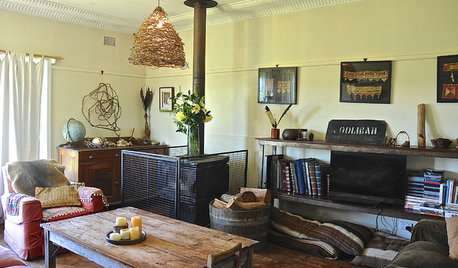
HOUZZ TOURSMy Houzz: Cozy Country Meets Bohemian Artistic in Australia
Healthy helpings of salvage and rustic art give a pastureland home free-spirited style
Full Story
PATIOSSee How 20 Patios Celebrate the Fire Pit
Just steps from the house, these outdoor fire features offer warmth and backyard style
Full Story
jakkom