

Gas vs electric cooking
9 years ago
last modified: 9 years ago
Featured Answer
Sort by:Oldest
Comments (56)
Related Discussions
Induction vs. Gas Cooking pros and cons
Comments (57)Back to the poster’s original question, if you are considering induction, buy a portable induction unit (less than $100) and see for yourself what you think. You can also test cookware and cookware noise. Even the “wimpy” portable units that plug into 110 volt outlet are surprisingly powerful. I bought a portable unit as a stop gap while waiting for our cooktop to be repaired. Now that it’s repaired I still use the portable unit instead of the built in electric. i was set on a gas range for an upcoming remodel, but now I want induction. As far as noise from cookware, Viking pots make noise on our portable induction cooktop. I have never had any noise from fissler pans or ikea sensuell pots and pans, even on high. I use the latter a lot. The IKEA sensuell cookware is as good as fissler but at 20% of the price (best kept cookware secret). Cooks evenly, holes heat, doesn’t warp, food doesn’t stick, easy to clean .......See MoreGas vs Electric Cooking
Comments (31)I also am trying to make this decision, but I have restricted the argument (for myself) to induction versus gas. I have lived with gas and currently use an induction hob (underpowered and featureless). Nevertheless, I have come up with my own list of pros and cons for gas, induction, and radiant electric and would love to hear comments on their validity and on where I am misinformed. (I am leaning towards induction despite my long list of cons--cleanup and quick, even heat are so important to me!) GAS PROS: 1. easily adjustable--continuous control from simmer to boil 2. intuitive to use--small flame versus big flame 3. familiar to most repair services--cheaper and easier to fix (parts not ridicuolously expensive) 4. can use the same pot on all burners (not always true--some ranges have different size burner heads which dictate small or large pots) 5. can span burners with griddle or roasting pan 6. no need to buy special pots 7. cooktop will work in a power outage (may not be true for oven) 8. heats the kitchen in the winter 9. cooktop/range makes a statement unlike a flat piece of glass 10. can char a pepper CONS: 1. difficult and time consuming to keep clean 2. knobs, if too close to burners get hot 3. requires vigilance to avoid burning/melting equipment (plastic pot handles or utensils) that gets too close to flame 4. some burners cannot achieve a true simmer, so sauces can burn since the flame is not evenly distributed across the bottom of the pan (a simmer plate can help with this) and hot spots at higher temps depending on the pot/pan 5. heats the kitchen in the summer 6. depending on btus, may require a high level of ventilation 7. some electric wall ovens cannot be placed under a gas cooktop INDUCTION PROS: 1. easy to clean in seconds 2. spills don't burn onto the cooktop 3. cooktop doesn't pose the same burn hazard as does gas or radiant electric 4. doesn't heat the kitchen 5. easily adjustable with a finger 6. easy to maintain a constant low temp with no hot spots--evenly heats the pan 7. doesn't melt the handles of neighboring pots or equipment 8. ventilation requirements are less due to less residual heat from cooktop 9. efficient in terms of power to the pan versus lost to the surrounding air 10. fast to heat CONS: 1. May require expensive wiring upgrade 2. Won't work in a power outage 3. Requires pans that the cooktop can recognize (i.e., magnetic and flat on the bottom) 4. Size matters when it comes to recognition of pot or pan and the hob--can't switch pots around easily 5. Not intuitive when deciding 'levels of power'--no visual on the differences between the levels 6. Restricted to the levels of power of the cooktop--"some may have various 'steps' and 'halfsteps' to create a broad range, others my not have as many levels, so you don't have as much control--not continuous 7. May have difficulty getting the cooktop to recognize finger presses (learning curve for the 'right' touch 8. Cookware may buzz even if magnetic 9. Cooktop may buzz and click as it cycles off and on--some are louder, longer, and more annoying than others 10. Power sharing can limit when you can use boost on the different hobs 11. Special requirements for install clearances and ventilation in the cabinet 12. May require for warranty purposes that the same brand of wall oven be used under induction cooktop 13. Sliding pans may scratch the cooktop as will salt 14. Controls on the actual cooktop surface reduce the available space for pots 15. Often expensive to repair due to electronics involved 16. Not as much of a statement in a kitchen--just a piece of glass on the counter 17. Cannot span hobs with a roaster or griddle on most induction cooktops (unless cast iron to radiate the heat but may risk damaging the electronics under the cooktop by doing so)--few cooktops have a griddle feature 18. Cannot char a pepper--or light a candle! RADIANT ELECTRIC PROS are similar to induction EXCEPT no special pots required CONS 1. food burns onto the cooktop and is difficult to clean if left 2. surface gets hot and can burn hands or items on cooktop 3. don't have immediate control over cooking temps (i.e., can't reduce temp without lifting the pot due to the residual heat of the cooktop) 4. Slow to heat 5. Sliding pans can scratch cooktop...See MoreChanging a Thermador Cook'n'Vent electric cooktop to gas
Comments (14)The bad news was that it was impractical to bring a gas line to the island (more of a penninsula really) in our kitchen where the cooktop is located. Yes, we tried everything we could think of, but we have a slab foundation (common for Southern California) and our roof design prevented running a line to the roof and down to the wall next to the cooktop. Only option was to knock a 10 foot long hole in the kitchen wall, which we didn't want to do. Thus we had to continue using electric. After a lot of soul searching, we decided to replace the Thermador units with a new Kitchenaid downdraft and black glass cooktop. The age of the existing units (which I've had to repair on my own on occassion) were major factors in the decision. I found the installation to be surprisingly easy, though I did have to do a lot of cutting of the interior of the island to make it fit. The downdraft is superior to the old Thermador (much taller when extended) and while it does have an internal fan I also kept the original Thermador external blower on the roof (I cannibalized the controls and built an auxillary switch under the cabinet). This gives me the option of running the roof blower when I want quieter operation. As for the cooktop, well, I'll probably never get used to a new style black glass type. Far more maintenance that the old Thermador coil radiant unit, and I find it nearly impossible to see where the cookrings are without strong light. Coil units are obvious where the hot places on a cooktop are, glass radiant are not, as my many burnt pot holders will now attest. I'll live, but for you folks deciding to move away from coils, then do whatever you have to do to get a gas line to your new cooktop. Selling your first born child might not be too high of a price.... Cheers, Nick in Palm Springs...See MoreGas vs electric ranges--had never considered electric, but now...
Comments (43)Another take on the induction question with a little sprinkle of humor. https://www.eevblog.com/forum/chat/induction-cooking-emf-magnitude-vs-other-things-missus-is-a-bit-concerned/ Tim says, Ugh... If she's worried about cancer... dump her now? There's no convincing someone like that, to understand statistics and significance. At least that I've heard of. If you're looking for the opinion of an EE, I would gladly give you my opinion on the subject -- if you'd like it in writing, I can even sell your wife a certificate saying as much! Maybe that wouldn't help. I don't know. What are we talking about, anyway? Cooktops aren't always-on. They're either off until turned on, or pulsing infrequently to check if a pot is present. The RMS EMF at the surface is not very large either way, when not actively heating something. When heating, it's only large under the work being heated. EMF drops off rapidly with distance. If your wife is so strange that she finds it enjoyable to read books while laying over the cooktop, I might be concerned, but only for mental health reasons, not for EMF reasons. Or if shoving her head towards a pot that's being heated, I would be more concerned for safety reasons, and then mental health reasons... There are biological effects of EMF, but not at these field strengths. Not by orders of magnitude. The primary effect is simply dumb old heating. Diathermy machines, microwave ovens, and the military's ADS, operate on this mechanism. There is no biological effect beyond heating (obviously, too much heat and you cause burns, but that's not unique to EMF). Strong pulsed fields can induce voltages in neural tissue (transcranial magnetic stimulation), which do have direct neural effects, but these are temporary. Anything that produces fields with too little energy to cause noticeable heating, or pulse peaks strong enough to cause noticeable induction, is completely and utterly inconsequential. Example: ESD can have quite large (peak) EMF, but is over very quickly, and delivers very little energy (on a human scale). (Anyway, sparks are well known to cause people to involuntarily jump or twitch. But again, that's just a neural stimulation thing, nothing more.)...See More 9 years ago
 9 years agolast modified: 9 years agolucillle thanked Rita / Bring Back Sophie 4 Real


Related Stories
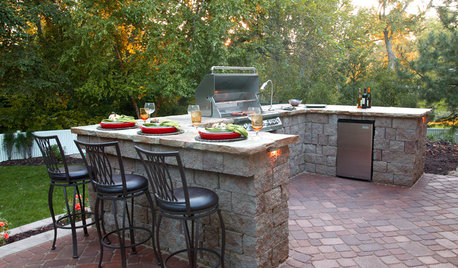
OUTDOOR KITCHENSYour Guide to Grills and More for Great Outdoor Cooking
Learn the pros and cons of gas versus charcoal grills, and about neat add-ons that let you do more
Full Story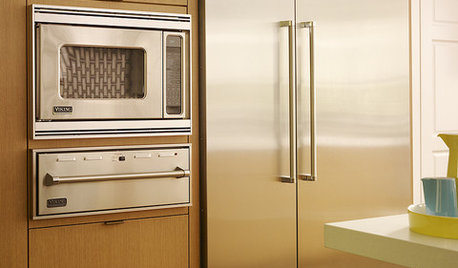
KITCHEN DESIGNA Cook’s 6 Tips for Buying Kitchen Appliances
An avid home chef answers tricky questions about choosing the right oven, stovetop, vent hood and more
Full Story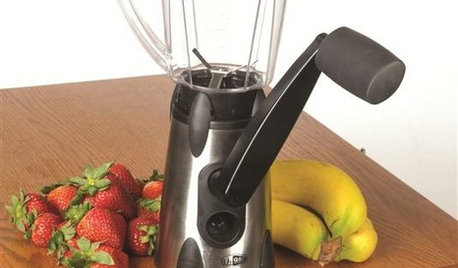
ACCESSORIESEasy Green: Cut Electricity Use With 15 Unplugged Home Devices
Crank up the energy savings, courtesy of household items that come into power the old-fashioned way: manually
Full Story
HEALTHY HOMEDetox Your Kitchen for the Healthiest Cooking
Maybe you buy organic or even grow your own. But if your kitchen is toxic, you're only halfway to healthy
Full Story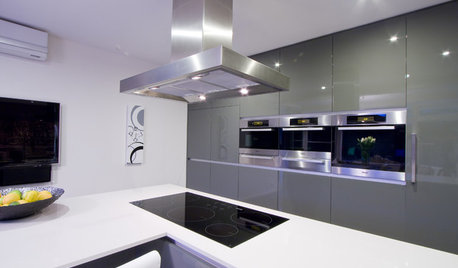
KITCHEN APPLIANCESFind the Right Cooktop for Your Kitchen
For a kitchen setup with sizzle, deciding between gas and electric is only the first hurdle. This guide can help
Full Story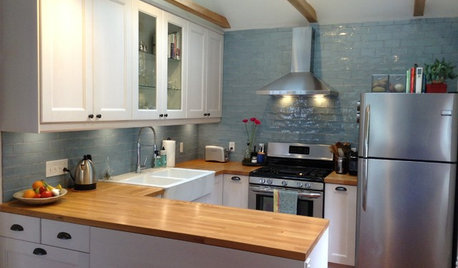
MOST POPULARThe 100-Square-Foot Kitchen: A Former Bedroom Gets Cooking
DIY skill helps create a modern kitchen where there wasn’t one before
Full Story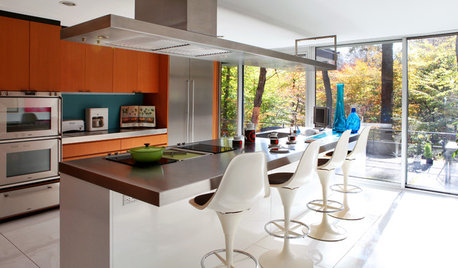
KITCHEN APPLIANCESLove to Cook? You Need a Fan. Find the Right Kind for You
Don't send budget dollars up in smoke when you need new kitchen ventilation. Here are 9 top types to consider
Full Story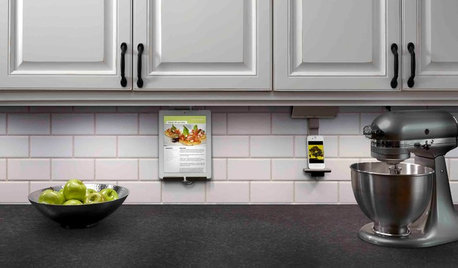
KITCHEN DESIGNHouzz Call: What’s Cooking in Your Kitchen?
Most of us turn to recipes, videos and culinary shows when we cook. Where do you set your cookbook, tablet or TV screen?
Full Story
KITCHEN DESIGNNot a Big Cook? These Fun Kitchen Ideas Are for You
Would you rather sip wine and read than cook every night? Consider these kitchen amenities
Full Story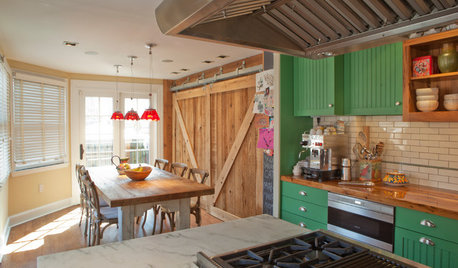
TASTEMAKERSPro Chefs Dish on Kitchens: How Marc Vetri Cooks at Home
Learn an Iron Chef's kitchen preferences on everything from flooring to ceiling lights — and the one element he didn't even think about
Full StorySponsored

Customized Award-Winning Interior Design Solutions in Franklin Cnty OH

sprtphntc7a